Xi Jinping
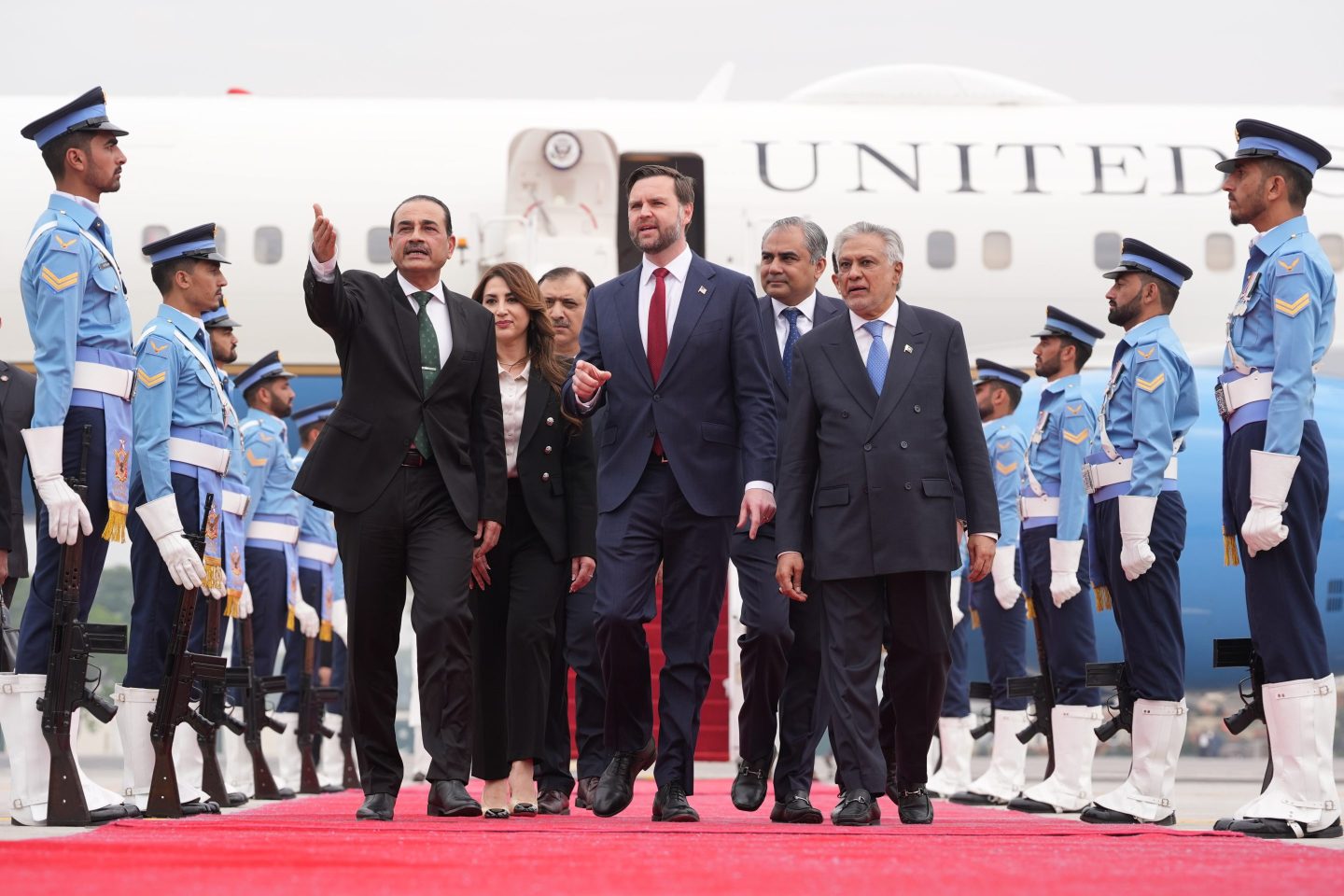
FORTUNE — How will China overcome its own cliff? That was the question for a group of Chinese economists Monday who gathered at the New York Stock Exchange to offer their forecast for the world’s second-largest economy. The annual conference sponsored by the National Committee on U.S.-China relations had a twist this year. For the first time in a decade, the country faced a political cliff after the communist leadership turned over at the top. Xi Jinping replaced Hu Jintao as the country’s top leader, and the second in command changed as well. Are these leaders ready to move China toward a consumption economy? Are they willing to enact social reforms?
The transition comes at an interesting time for China. Under its old economic model dependent on domestic investment—building huge roads, huge bridges, huge housing for its 1.3 billion people—things seem to have petered out. GDP growth slowed last year to somewhere around 8%—with economists expecting it to further fall to 7.7% in 2013— and economists have warned that imbalances in investment vs. consumption are the worst they’ve been in over a decade. What happens next is largely left to Xi Jinping, in his role as China’s most powerful communist, and his deputy Li Keqiang.
MORE: China’s 2-million iPhone 5 launch: What the analysts say
Justin Lin, the former World Bank chief economist who resides in China and spoke on Monday, expects the new leaders to push badly needed reforms through the economy.
“China will try to do this kind of marginal reform,” he told a gathering of reporters Monday. “You have to be patient. It may not be as rapid as you might hope. But China is very close to a well-functioning market economy.”
Lin says China’s economy still faces challenges. Between growing income disparity and corruption, China breeds the kind of social resentment that causes negative headlines around the world. But that may be solved by a reform-minded new leadership. “The new leadership can take this on,” he says. Lin’s sanguine outlook for the new communist leaders and China’s economy — this year he expects GDP to grow north of 8% — was supported by the rest of the gaggle of economists on Monday.
Western observers are also chiming in on China’s new leaders — and sounding similarly bullish. Longtime Wall Street strategist Byron Wien wrote recently that “the new leaders in China seem determined to implement reforms to root out corruption, to keep the economy growing at 7% or better and to begin to develop improved health care and retirement programs.” Wien expects leaders to surprise people by jump starting China’s sagging stock market, which he forecasts to return more than 20% in 2013.
MORE: Byron Wien’s 2013 surprises
New York Times columnist Nicholas Kristof, a veteran observer of China, wrote over the weekend that he expects Xi Jinping to spearhead economic reform and ease some of China’s harsher social policies. “It’s in his genes,” writes Kristof. “His father, Xi Zhongxun, was a pioneer of economic restructuring and publicly denounced the massacre of pro-democracy protesters in 1989. Xi’s mother chooses to live in Shenzhen, the most capitalist enclave in the country.”
Lastly, onetime George Soros partner and current China bull Jim Rogers sounds as happy as ever with his bullish take. With developed countries sagging under huge debt loads, he’s predicting China to continue moving towards becoming a knowledge economy — built by innovation rather than state-sponsored construction–and that its new leaders will drive it.
He told CNN in November, “They are going to continue to open up. They are going to open the currency sometime during his [Xi Jinping] regime. They are going to open up more and more to outside investment, they are going to open up more and more to outside trading on the exchanges,” he said. “Mao Zedong is not coming back.”
During a Q&A at the Monday conference, a questioner asked the panel of Chinese economists about potential Black Swans. What might they be missing in their sanguine outlook for the country’s economy and its new leadership? What scares them?
The panel sat quiet for a few seconds. The moderator finally pushed someone to answer. Recessions in Japan and the eurozone are their biggest fears. The Chinese economy and its new leaders? About those, they feel just fine.