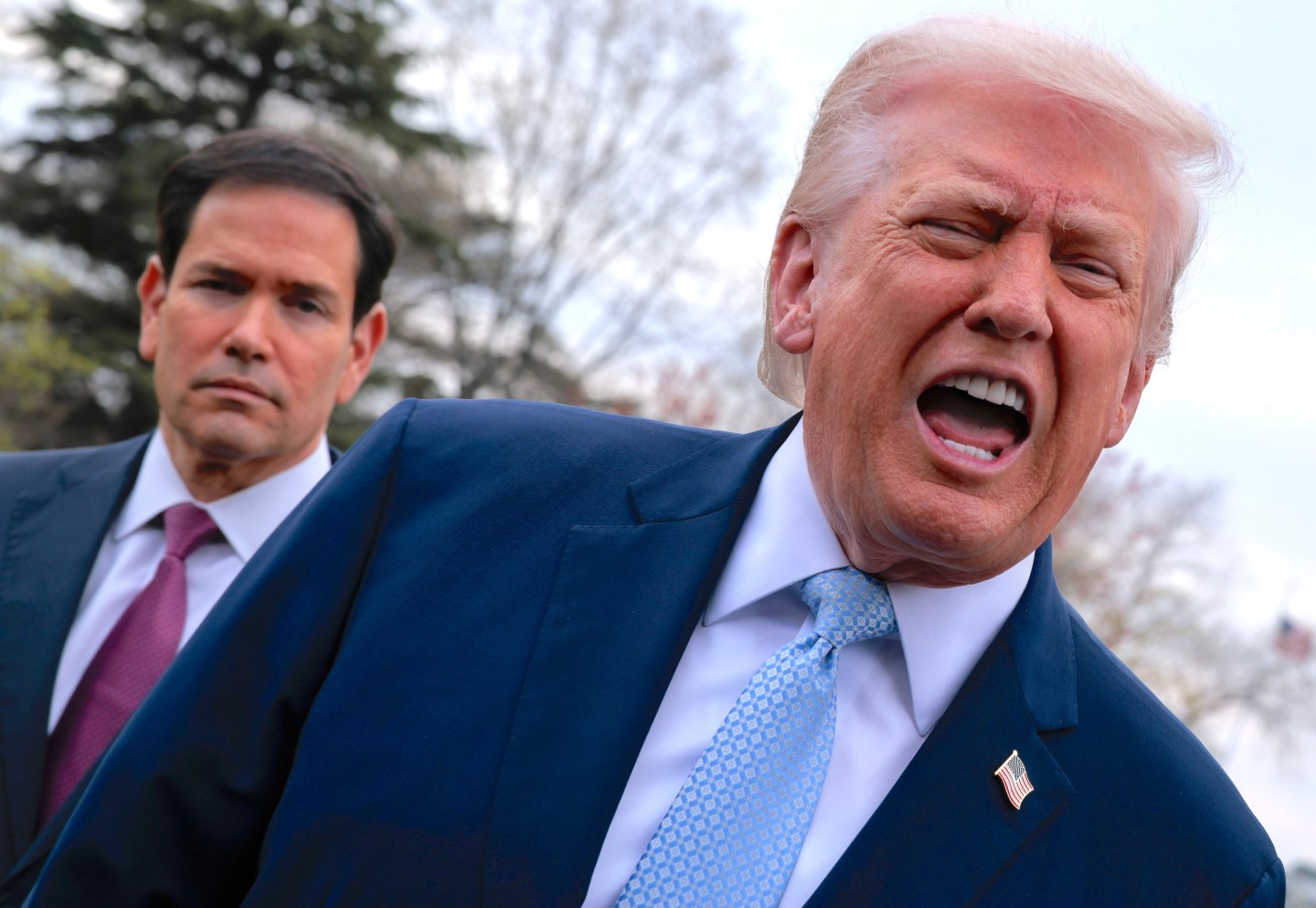
Discussing the crisis at the G8 conference
FORTUNE — The eurozone crisis is on the verge of spinning out of control. For over two years, European leaders and the European Central Bank have been both unwilling and unable to address the real structural issues that plague the common currency. But with the threat of a bank run looming in the periphery, it’s now time for Europe’s leaders to face reality and start moving toward full economic integration.
European leaders are meeting Wednesday in an informal session to try and address the growing crisis of confidence in the European banking sector. Some of the solutions expected to be presented have merit, but they cannot realistically be implemented unless there is true fiscal and monetary integration. For this to happen, the core eurozone members, namely Germany, must be willing to take on the debts of the periphery nations with no caveats. In return, the periphery, along with the core members, must be willing to give up control of their national budgets to a central European monetary authority, with Germany at the helm. Such a change won’t be easy, but it will serve to boost investment in the struggling countries and deliver the growth Europe so badly needs.
Greeks have been steadily pulling their money out of their banks since the crisis began in 2010. Back then there was 250 billion euros deposited in Greek banks, while today there is only around 177 billion euros, nearly a third less. But recent uncertainty surrounding the outcome of the Greek elections accelerated the deposit withdrawals as Greek politicians talked about leaving the euro. Such a scenario would force the ECB to stop funding Greek banks, causing them to collapse. Meanwhile, in Spain, the failure of a major local bank, along with a Moody’s downgrade of the Spanish banking sector, caused billions of euros to leave Spanish banks for safer shores. While it wasn’t a full on bank run, deposits have now started to trickle out of the country at a healthy clip.
MORE: Maybe Greece needs a run on the banks
Bank runs are rare because most countries have deposit guarantee schemes whereby the government insures all bank accounts up to a certain value. In Europe, the ECB acts like the U.S. Federal Reserve by providing cheap loans to banks with liquidity issues. But those loans need to be backed by top-rated collateral, something that is in short supply at many Spanish and Greek banks.
Italy’s Prime Minister, Mario Monti, proposed a bold plan at the G8 summit at Camp David over the weekend to deal with this problem of internal capital flight within the eurozone. He made a case for the creation of a European bank deposit scheme whereby the ECB would essentially guarantee the deposits of all banks in the eurozone. That would mean Greek and Spanish banks would have the same level of protection as German and Dutch banks.
Monti’s plan, which will be discussed at length at Wednesday’s meeting, has good bones, but it still doesn’t go far enough to solve the bank run issue. Greece and Spain already have their own national deposit insurance, which is comparable to those in other eurozone nations. Greeks are pulling their money out of their banks at an accelerated pace, not only because they fear a bank failure, but also on concern that Greece might exit the euro. If that occurred, the deposits left in the Greek banking system would be converted to a new currency and would instantly be devalued. Simply put, a euro in a Greek bank is simply not worth as much as one in a German bank.
MORE: The government is still trying to say the bailouts made money
There is no easy fix to this problem. It is simply too easy to move a deposit from a Greek bank to another bank in the eurozone. There is no exchange-rate or interest rate risk in moving funds to another eurozone nation, since they all share the same monetary policy. Even if the Greek government instituted capital controls limiting deposits, money could still flow to other eurozone banks.
Furthermore, even if Monti’s plan somehow gets approved and quells the current panic, it probably won’t stop the slow leak of Greek deposits to core eurozone members. If the capital flight continues, Greek banks will be crippled. And since, for the most part, only Greek banks are willing to lend to Greeks, it basically dooms any hope of economic growth in the country.
Francois Hollande, France’s new president, supports Monti’s plan, but he will be busy pushing his own agenda on Wednesday. In addition to a bank deposit scheme, Hollande wants to create a common debt instrument, which would be issued by the ECB and backed by all 17 members of the eurozone — the eurobond.
The eurobond would effectively mitigate risk at the periphery by transferring it to the core. This allows countries on the periphery to borrow more cash at much lower rates than they currently can through issuing sovereign debt. The eurobond debt would be held at the ECB, so it won’t add to the debts and burdens of the peripheral nations. The bonds could end up funding anything from fiscal deficits in Italy and Greece to large capital projects in France and Spain.
MORE: Greece: The anatomy of a default
Germany and the other fiscally prudent eurozone members have been vehemently opposed to the idea of a shared debt instrument. After all, they would turn out to be the instant loser in the deal. While borrowing costs would drop at the periphery, they would go up at the core. Germany cannot be expected to simply let the periphery use its good credit and its balance sheet to run up a tab without any say as to what the money is being used for.
Both plans seem to be steps in the right direction, but they have a slim chance of being implemented successfully given the state of the eurozone today. The transferring of risk and liabilities between member states will be a hard pill to swallow for many eurozone members who could see their economies negatively impacted by the unification. To get all the members to buy in will therefore require a transfer of power from the periphery to the core.
Germany provides a good example of such a trade-off. In 1990, when West Germany absorbed East Germany, power was transferred to the west and money was transferred to the east. As a result, the west experienced a decade of sluggish growth as cash that would have been used in the west went to go rebuild the east. The sacrifice, though, seems to have been worth it as the country has become more productive than ever. It also offered many exciting business opportunities for West German companies.
But imagine if East Germany wanted the money and support but also wanted to remain independent with its own fiscal policies. Would West Germany still transfer billions to help the east get back on its feet? Surely not.
It should therefore come as no surprise that Germany isn’t too keen on smudging up its credit and taking hits to its growth rate to help lift up the eurozone periphery. Germany and the other wealthy eurozone members need some upside to justify taking on such a massive amount of debt and risk. Promises of maintaining fiscal discipline simply won’t do anymore – it’s time for Europe to get real.