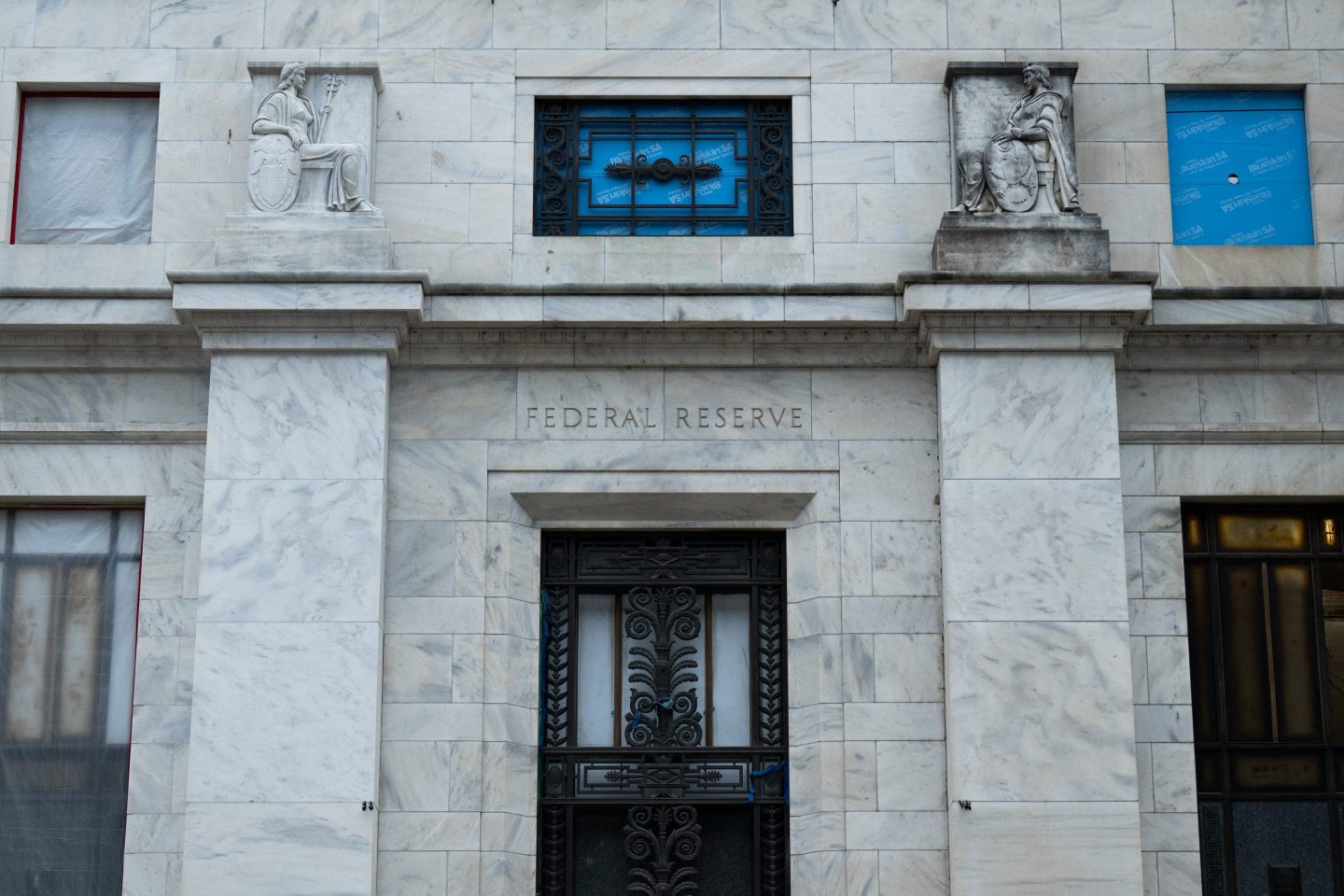
With yesterday’s House vote on raising the debt ceiling (unsurprisingly, a resounding ‘no’), we thought we’d use this opportunity to equip you with an in-depth guide for navigating the next few months of what is likely to be heightened volatility for global currency, bond, and equity markets. Even as the Federal Reserve’s bond purchasing program (QE2) expires in June, macro markets are likely to continue to gyrate on the whims and words of a few “inspired” politicians within our nation’s capital.
In short, while we accept the consensus belief that the debt ceiling will eventually be extended prior to any sort of default on the US government’s obligations, we do believe the events and rhetoric leading up to the passage of any deal will be anything but “smooth sailing.” As such, we’re preparing for heighted volatility in the months ahead.

Hitting the Ceiling: Congress created the statutory federal debt limit in the Second Liberty Bond Act of 1917 as a result of negotiations which resulted in securing financing for WWI and creating an additional check on the fiscal power of the executive branch/ruling party. While federal debt is appropriately divided between debt held by the public and intra-governmental debt, nearly all of it is subject to the limit. The powers that be at the time of creation appropriately intended the debt ceiling to be a reoccurring opportunity to reassess the direction of the U.S.’s fiscal policy. It is, however, not without limitations, as the current consequences of not increasing the debt ceiling almost always outweigh the current consequences of extending it, making it quite toothless from a policy-making point of view.
Treasury Secretary Tim Geithner has said the government will reach its debt limit on August 2. After that, the U.S. government will begin to default on its obligations absent an increase in the debt ceiling or some form of temporary legislation exempting new issuance from being counted towards the statuary debt limit. What is being made clear by Geithner’s letters to Congress is that he considers any failure to pay any of the U.S. government’s obligations (not just interest payments and principal redemptions on Treasury securities) as a detriment to the full faith and credit backing America’s handshake.
While we don’t often agree with the man, we do find common ground on this principle and we believe the vast majority of Americans would agree. Below is a list of federal government liabilities that would be directly impacted should the debt ceiling not get raised in time:
- US military salaries and retirement benefits;
- Social Security and Medicare benefits;
- Veteran’s benefits;
- Federal civil service salaries and retirement benefits;
- Individual and corporate tax refunds;
- Unemployment benefits to States;
- Defense vendor payments;
- Student loan payments;
- Medicaid payments to States; and
- General operational expenses for federal government facilities.
The sheer breadth of this list alone gives us conviction that Congress will ultimately enact a permanent increase in the debt ceiling or at least kick the can down the road by temporarily upping the limit to accommodate borrowing needs through the either the remainder of the fiscal or calendar year 2011. Of course, as with all of life’s many destinations, it’s the journey there that matters most. Given that, we offer a guide for the road ahead.
Political Stakes: Since 1960, Congress has passed legislation that increased (permanently or temporarily) or revised the definition of the debt ceiling 78 times – 49 times under Republican presidents and 29 times under Democratic presidents. So while it may seem like reaching the debt ceiling is a big deal at face value, in reality, increasing the debt limit is quite a common occurrence.
Judging by the political posturing and partisan rhetoric being thrown around Capitol Hill currently, however, we expect this round of piling debt upon debt to be anything but commonplace – especially with characters like Boehner and Reid leading the charge. The next few months will be full of enough headline-worthy news quotes, political posturing, brinksmanship, and enough fear mongering to rattle global financial markets. As we outlined at the beginning of the year, the 112th Congress is among the greatest risks to global financial stability. This summer we expect them to prove us right in spades.
If we’ve learned anything from the near government shut down earlier this spring, it’s that neither side is afraid to send us to the edge of chaos in order to advance their political agenda.
All in all, the gaping divide between the two ideologies on what it would take to collectively lift the debt ceiling by early August is omnipresent in their recent commentary. While it’s clear that some fiscal reform will be included in any legislation towards increasing the debt ceiling (U.S. dollar bullish), it’s almost equally as clear that: a) it will fall short of current Republican demands (U.S. dollar bearish) because the Democrats are, on the margin, willing to stand their ground and engage in this game of political brinksmanship (evidenced by GOP leaders backing away from their recent support of Paul Ryan’s Medicare reform plan); and b) as political brinksmanship inches us closer to the deadline, we are likely to see a measured increase in fear-mongering quotes that are likely to be the source of much consternation for global financial markets.
As such, we anticipate a broad-based pickup in volatility, given the heighted correlation risk we’ve seen across all asset classes to date. This tug-of-war on the U.S. dollar is an acute risk that needs to be managed around, particularly from a timing perspective.
In short, the playbook is as follows: Republican compromise = dollar down; Democrat compromise = Dollar up. Gaming policy is about to get a little more challenging in the coming months.
Historic Impasses
We’ve been here before, of course. Below we briefly touch upon prior debt limit impasses and how key financial markets fared in the months leading up to and just beyond the eventual increases. These are not at all an attempt to forecast what might happen in the coming months; like history itself, no two debt ceiling periods are alike. Rather, the illustrations below are merely points of reference for pondering how the markets will react this time around.
1985: In September of 1985, the Treasury Department became unable to issue new securities as a result of the statutory limit on federal debt being reached. As such, it was forced to take “extraordinary measures” consisting of and similar to the maneuvers listed in the section above. The debt limit was temporarily increased on November 14, 1985 and permanently increased on December 12,1985 from $1.82T to $2.08T. In addition, the accompanying legislation granted the Treasury Department authority to declare a “debt issuance suspension period” in future debt limit impasses.

1995-96: On November 15, 1995, the Treasury Department declared the first ever “debt issuance suspension period” and used “extraordinary measures” to finagle its way through the beginning of the next year. It subsequently notified Congress that it did not have enough cash on hand to pay the March 1996 Social Security benefits, at which point Congress responded by temporarily increasing the debt limit in an amount commensurate to the upcoming benefit distribution ($29B). Just one day before the March 15th deadline, Congress acted to extend the temporary increase by two weeks until March 30th. And just one day before that deadline, Congress passed legislation permanently increasing the debt limit to $5.5T from $4.9T.

2002-03: At several instances during this two year period, the Treasury Department had to declare “debt issuance suspension periods” (April 4, 2002-April 16, 2002; May 16, 2002-June 28, 2002; and February 20, 2003-May 27, 2003) and take “extraordinary measures” to smooth the timing of cash flows in order to meet the federal government’s obligations. The debt limit was permanently increased twice during this legislative impasse; first on June 28, 2002 to $6.4T from $5.95T and subsequently on May 27, 2003 to $7.38T.

While we expect the U.S. dollar to find a bid at some point in the coming months due to the market eventually looking through this impasse to the increased likelihood of meaningful fiscal reform in the intermediate term, we do think the weeks leading up this occurrence will provide another opportunity for the global currency market to vote against the short-term political compromises we continue to see out of Washington D.C. If anything, this exercise will continue to expose to the world just how far away both sides are from agreeing on a credible solution to the #1 issue driving the U.S.’s long-term fiscal and balance sheet deterioration – entitlement spending. Over the near term, however, we expect the tough choices to continue to get punted to future sessions of Congress.