• Home
  • News
  • Fortune 500
  • Tech
  • Finance
  • Leadership
  • Lifestyle
  • Rankings
  • Multimedia

Debt market strips U.S. of triple-A rating

By
Colin Barr
Colin Barr
Down Arrow Button Icon
By
Colin Barr
Colin Barr
Down Arrow Button Icon
October 12, 2010, 6:14 PM ET

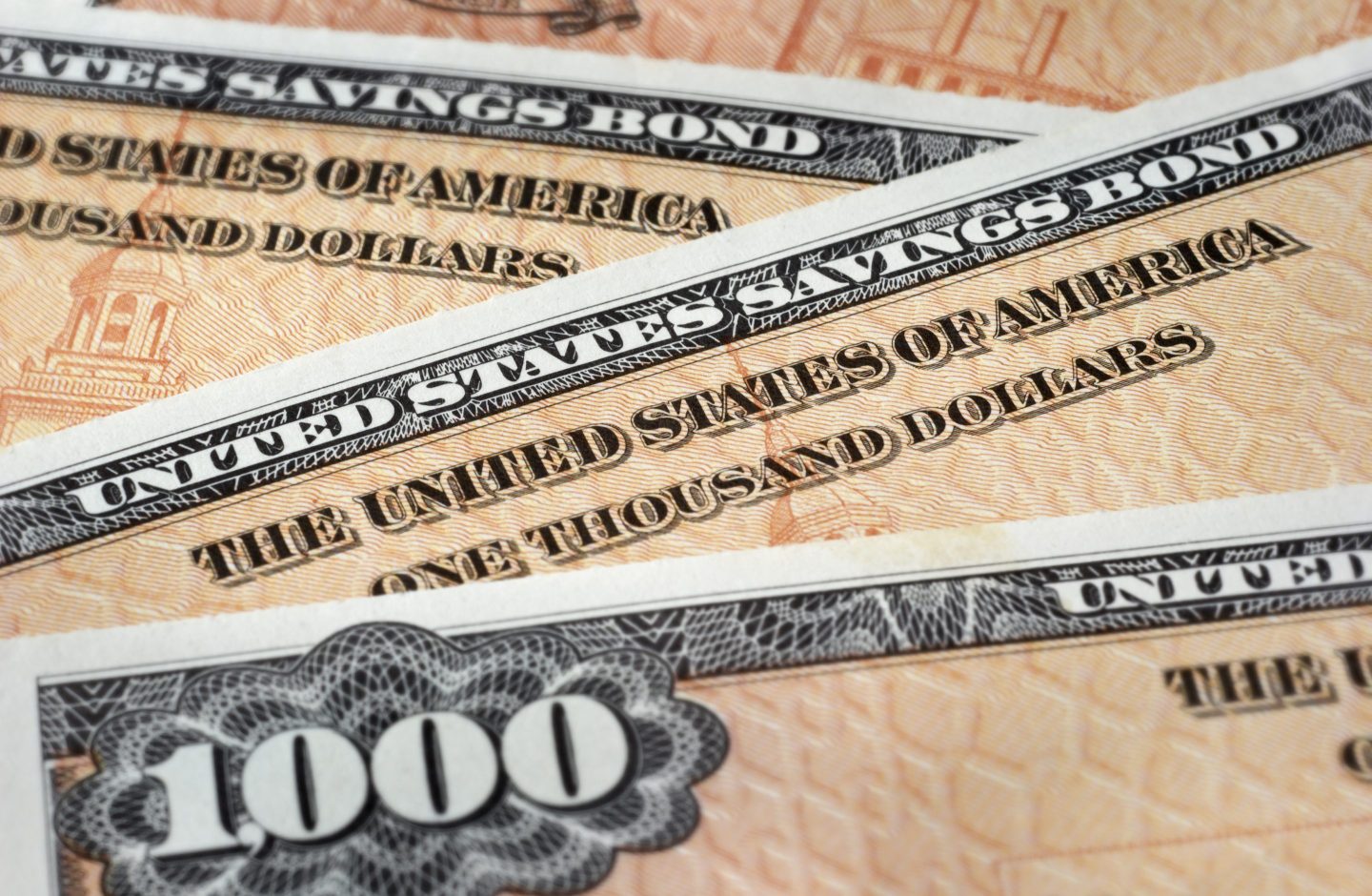
The United States has lost its gold-plated triple-A rating — in the eyes of credit traders, at least.

U.S. sovereign debt was the third-worst performer in a closely watched derivatives market during the third quarter, CMA said Tuesday in its quarterly review of global sovereign credit risk.


Not a vote of confidence

The cost of insuring against a default on U.S. government bonds via so-called credit default swaps rose 28% in the quarter ended Sept. 30, the firm said.

That puts the United States’ third-quarter performance behind only two other nations, both of which are struggling with the early stages of sovereign debt crises: Ireland, whose CDS prices rocketed 72% to a record amid growing questions about the costs of a massive bank bailout, and Portugal, whose costs jumped 30%.

What’s  more, the decline leaves U.S. debt trading at an implied rating of double-A-plus for the first time in memory.

Despite building worries about its financial outlook, the U.S. had traded in recent quarters in line with its triple-A rating from S&P and Moody’s.  But some skeptics have been arguing the U.S. is overrated, and that argument now seems to be gaining steam.

“You can see an indication of concern about the easing course the Fed is likely to continue on,” said Sean Egan, who runs the Egan-Jones credit rating agency in Haverford, Pa. “There’s a number of items that are going to be difficult to reverse as we get down that road, starting with the dramatic underfunding of state pension funds.”

The shift comes at a head-spinning time for the U.S. economy. The government has run two straight trillion-dollar-plus budget deficits, with more to come. Yet Treasury bonds are trading at record-low yields, reflecting questions about the economic outlook.

Meanwhile, the Federal Reserve is considering another round of major asset purchases in a policy observers have dubbed QE2, for the central bank’s second attempt at quantitative easing – a bid to boost economic activity by expanding the size of the Fed’s balance sheet.

Comments by Fed chief Ben Bernanke and other policymakers have sent the dollar tumbling to its lowest level since January and helped light a fuse under commodity prices. Those remarks have had the effect of making even weak economic numbers look bullish, by suggesting the Fed will ride in if jobs data, for instance, get too ugly.

The rising price of insuring against a default on U.S. government debt is of a piece with these moves and suggests the full tab for the profligacy of the past decade has yet to be presented.

To be sure, a default on U.S. debt remains a remote possibility. Even after the third quarter’s runup, it costs just $48,000 annually to insure for five years against a default on $10 million worth of Treasury securities. That’s a tenth the going rate on Irish debt and about one-eighth the price prevailing in Portugal.

And at that, CDS spreads are far from a pure read on default risk. A report by rating agency Fitch on Tuesday noted that credit default swaps performed “unevenly” during the credit crisis in predicting defaults by companies and other private-sector debt issuers.

“While there are notable instances in which CDS spread widening preceded eventual defaults, there have also been numerous false positives where spreads ramped up dramatically even though few if any defaults ensued,” Fitch wrote.

Even so, the third-quarter rise in its CDS spreads knocks the U.S. out of the triple-A league it has long shared with the likes of Germany, Switzerland and the Nordic countries, all of which regularly run trade surpluses and have relatively manageable debt positions.

It’s early to say there’s no going back, but our political leaders certainly have their work cut out for them – without any particular sign they’re up to the task.


About the Author
By Colin Barr
See full bioRight Arrow Button Icon

Latest in

CryptoBinance
Binance has been proudly nomadic for years. A new announcement suggests it’s finally chosen a headquarters
By Ben WeissDecember 7, 2025
4 hours ago
Big TechStreaming
Trump warns Netflix-Warner deal may pose antitrust ‘problem’
By Hadriana Lowenkron, Se Young Lee and BloombergDecember 7, 2025
8 hours ago
Big TechOpenAI
OpenAI goes from stock market savior to burden as AI risks mount
By Ryan Vlastelica and BloombergDecember 7, 2025
8 hours ago
InvestingStock
What bubble? Asset managers in risk-on mode stick with stocks
By Julien Ponthus, Natalia Kniazhevich, Abhishek Vishnoi and BloombergDecember 7, 2025
8 hours ago
EconomyTariffs and trade
Macron warns EU may hit China with tariffs over trade surplus
By James Regan and BloombergDecember 7, 2025
8 hours ago
EconomyTariffs and trade
U.S. trade chief says China has complied with terms of trade deals
By Hadriana Lowenkron and BloombergDecember 7, 2025
8 hours ago

Most Popular

placeholder alt text
Real Estate
The 'Great Housing Reset' is coming: Income growth will outpace home-price growth in 2026, Redfin forecasts
By Nino PaoliDecember 6, 2025
2 days ago
placeholder alt text
AI
Nvidia CEO says data centers take about 3 years to construct in the U.S., while in China 'they can build a hospital in a weekend'
By Nino PaoliDecember 6, 2025
2 days ago
placeholder alt text
Economy
The most likely solution to the U.S. debt crisis is severe austerity triggered by a fiscal calamity, former White House economic adviser says
By Jason MaDecember 6, 2025
1 day ago
placeholder alt text
Economy
JPMorgan CEO Jamie Dimon says Europe has a 'real problem’
By Katherine Chiglinsky and BloombergDecember 6, 2025
1 day ago
placeholder alt text
Big Tech
Mark Zuckerberg rebranded Facebook for the metaverse. Four years and $70 billion in losses later, he’s moving on
By Eva RoytburgDecember 5, 2025
3 days ago
placeholder alt text
Politics
Supreme Court to reconsider a 90-year-old unanimous ruling that limits presidential power on removing heads of independent agencies
By Mark Sherman and The Associated PressDecember 7, 2025
16 hours ago
Rankings
  • 100 Best Companies
  • Fortune 500
  • Global 500
  • Fortune 500 Europe
  • Most Powerful Women
  • Future 50
  • World’s Most Admired Companies
  • See All Rankings
Sections
  • Finance
  • Leadership
  • Success
  • Tech
  • Asia
  • Europe
  • Environment
  • Fortune Crypto
  • Health
  • Retail
  • Lifestyle
  • Politics
  • Newsletters
  • Magazine
  • Features
  • Commentary
  • Mpw
  • CEO Initiative
  • Conferences
  • Personal Finance
  • Education
Customer Support
  • Frequently Asked Questions
  • Customer Service Portal
  • Privacy Policy
  • Terms Of Use
  • Single Issues For Purchase
  • International Print
Commercial Services
  • Advertising
  • Fortune Brand Studio
  • Fortune Analytics
  • Fortune Conferences
  • Business Development
About Us
  • About Us
  • Editorial Calendar
  • Press Center
  • Work At Fortune
  • Diversity And Inclusion
  • Terms And Conditions
  • Site Map

© 2025 Fortune Media IP Limited. All Rights Reserved. Use of this site constitutes acceptance of our Terms of Use and Privacy Policy | CA Notice at Collection and Privacy Notice | Do Not Sell/Share My Personal Information
FORTUNE is a trademark of Fortune Media IP Limited, registered in the U.S. and other countries. FORTUNE may receive compensation for some links to products and services on this website. Offers may be subject to change without notice.