• Home
  • Latest
  • Fortune 500
  • Finance
  • Tech
  • Leadership
  • Lifestyle
  • Rankings
  • Multimedia
RetailE-commerce

Hudson’s Bay CEO Says Closing Stores Starts A Spiral That ‘Can’t Be Stopped’

Phil Wahba
By
Phil Wahba
Phil Wahba
Senior Writer
Down Arrow Button Icon
Phil Wahba
By
Phil Wahba
Phil Wahba
Senior Writer
Down Arrow Button Icon
October 9, 2017, 12:06 PM ET

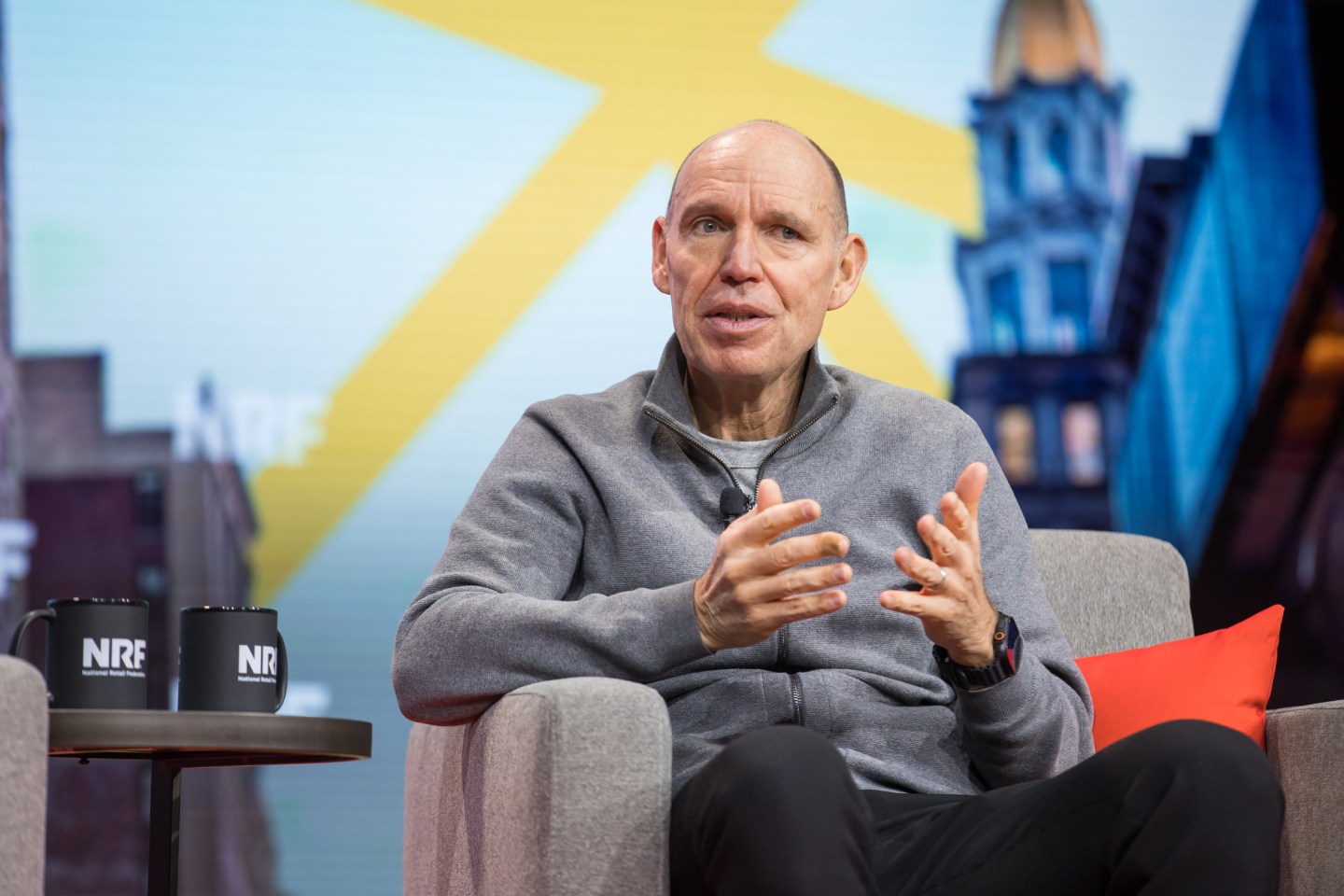
COPENHAGEN—Retailers that close a big chunk of their store fleet are likely only hastening their demise, predicted Hudson’s Bay Company (HBC) CEO Gerald Storch.

Storch, speaking on Monday at the Shoptalk conference in Copenhagen, Denmark, said his company would instead “play to win” in the radically changing world of retail, and not retrench and close stores.

Hudson’s Bay, which owns Saks Fifth Avenue and Lord & Taylor in the United States (as well as a namesake chain in Canada and the Netherlands and a pair of retailers in Belgium and Germany) continues to expand, opening dozens of Saks Off Fifth discount stores in the last year and renovating and rebranding 15 stores in the Netherlands. It is doing so even as it invests in e-commerce, a formula Storch told the conference is the key to being one of the survivors.

There have been a record number of store closings in the United States this year, with everyone from Abercrombie & Fitch (ANF) and Michael Kors (KORS) trimming down, and many others like Gymboree using bankruptcy protection to shrink their store fleet. And one of HBC’s most direct rivals, Macy’s Inc (M), has closed 68 stores this year with dozens more planned.

A big culprit for this trend was decades of overbuilding as well as a slow reaction to the growth of the Internet. But Storch said retailers tempted to rightsize by eliminating stores are taking a big risk.

“I believe that’s a process of slow dissolution and once the spiral starts it can’t be stopped,” Storch said. The better approach is to make improve stores and build up e-commerce and make sure both are fully integrated.

It’s true that closing stores is risky, particularly for large department store chains. It can erode their clout with vendors, which rely and require on a certain volume of sales. And it can create an aura of decline that makes it hard to recruit top talent.

At the same time, HBC has not been spared the winds whipping brick-and-mortar retailers. Saks Fifth Avenue was the only HBC business division with comparable sales increases last quarter, but the luxury department store, like rivals Nordstrom (JWN), Barneys New York, Neiman Marcus and Bloomingdale’s (part of Macy’s Inc), had been struggling not long before. Earlier this year, HBC announced 2,000 job cuts and the company is dueling with an activist investor dissatisfied with its financial performance.

What’s more, to some degree, Storch has been spared from having to close stores because Saks Fifth Avenue had already closed more than a dozen stores in the few years before HBC bought it in 2013, and Lord & Taylor is a much smaller chain than say Macy’s, which has many duds among its 670 stores, as well many gems.

Still, his overall message, that investing in stores and e-commerce has to happen simultaneously to ever hope of thriving in the era of Amazon, is one many other chains, even indirect rivals, are clearly adopting. Walmart, for example, is using its stores to speed up the handling of returns and offer incentives to customers to pick up online orders at a physical location, saving the retailer shipping costs. Kohl’s (KSS)and Target (TGT) used their hundreds of stores to speed up delivery.

But retail’s losers, those that can’t do that or have the capital to invest, are in for a world of pain, Storch predicted.

“They’re nowhere near done,” he said of store closings. “Chain after chain after chain is going to bankrupt entirely until you reach the right supply and demand balance.”

As for HBC, it won’t recoil defensively, he pledged. “Option 2 is to play to win to be one great stores and great Internet,” he said. “That’s the path we’re on.”
About the Author
Phil Wahba
By Phil WahbaSenior Writer
LinkedIn iconTwitter icon

Phil Wahba is a senior writer at Fortune primarily focused on leadership coverage, with a prior focus on retail.

See full bioRight Arrow Button Icon

Latest in Retail

millennial
CommentaryConsumer Spending
Meet the 2025 holiday white whale: the millennial dad spending $500+ per kid
By Phillip GoerickeDecember 12, 2025
1 day ago
McDonald
RetailRetail
Lululemon CEO Calvin McDonald to step down as quarterly profit dips 13%
By Anne D'Innocenzio and The Associated PressDecember 12, 2025
1 day ago
Sarandos
CommentaryAntitrust
Netflix, Warner, Paramount and antitrust: Entertainment megadeal’s outcome must follow the evidence, not politics or fear of integration
By Satya MararDecember 12, 2025
1 day ago
InvestingMarkets
Retail investors drive stocks to a pre-Christmas all-time high—and Wall Street sees a moment to sell
By Jim EdwardsDecember 12, 2025
1 day ago
Five panelists seated; two women and five men.
AIBrainstorm AI
The race to deploy an AI workforce faces one important trust gap: What happens when an agent goes rogue?
By Amanda GerutDecember 11, 2025
2 days ago
Oreo
RetailFood and drink
Zero-sugar Oreos headed to America for first time
By Dee-Ann Durbin and The Associated PressDecember 11, 2025
2 days ago

Most Popular

placeholder alt text
Economy
Tariffs are taxes and they were used to finance the federal government until the 1913 income tax. A top economist breaks it down
By Kent JonesDecember 12, 2025
1 day ago
placeholder alt text
Success
Apple cofounder Ronald Wayne sold his 10% stake for $800 in 1976—today it’d be worth up to $400 billion
By Preston ForeDecember 12, 2025
1 day ago
placeholder alt text
Success
40% of Stanford undergrads receive disability accommodations—but it’s become a college-wide phenomenon as Gen Z try to succeed in the current climate
By Preston ForeDecember 12, 2025
1 day ago
placeholder alt text
Economy
The Fed just ‘Trump-proofed’ itself with a unanimous move to preempt a potential leadership shake-up
By Jason MaDecember 12, 2025
23 hours ago
placeholder alt text
Economy
For the first time since Trump’s tariff rollout, import tax revenue has fallen, threatening his lofty plans to slash the $38 trillion national debt
By Sasha RogelbergDecember 12, 2025
1 day ago
placeholder alt text
Success
Apple CEO Tim Cook out-earns the average American’s salary in just 7 hours—to put that into context, he could buy a new $439,000 home in just 2 days
By Emma BurleighDecember 12, 2025
1 day ago
Rankings
  • 100 Best Companies
  • Fortune 500
  • Global 500
  • Fortune 500 Europe
  • Most Powerful Women
  • Future 50
  • World’s Most Admired Companies
  • See All Rankings
Sections
  • Finance
  • Leadership
  • Success
  • Tech
  • Asia
  • Europe
  • Environment
  • Fortune Crypto
  • Health
  • Retail
  • Lifestyle
  • Politics
  • Newsletters
  • Magazine
  • Features
  • Commentary
  • Mpw
  • CEO Initiative
  • Conferences
  • Personal Finance
  • Education
Customer Support
  • Frequently Asked Questions
  • Customer Service Portal
  • Privacy Policy
  • Terms Of Use
  • Single Issues For Purchase
  • International Print
Commercial Services
  • Advertising
  • Fortune Brand Studio
  • Fortune Analytics
  • Fortune Conferences
  • Business Development
About Us
  • About Us
  • Editorial Calendar
  • Press Center
  • Work At Fortune
  • Diversity And Inclusion
  • Terms And Conditions
  • Site Map

© 2025 Fortune Media IP Limited. All Rights Reserved. Use of this site constitutes acceptance of our Terms of Use and Privacy Policy | CA Notice at Collection and Privacy Notice | Do Not Sell/Share My Personal Information
FORTUNE is a trademark of Fortune Media IP Limited, registered in the U.S. and other countries. FORTUNE may receive compensation for some links to products and services on this website. Offers may be subject to change without notice.