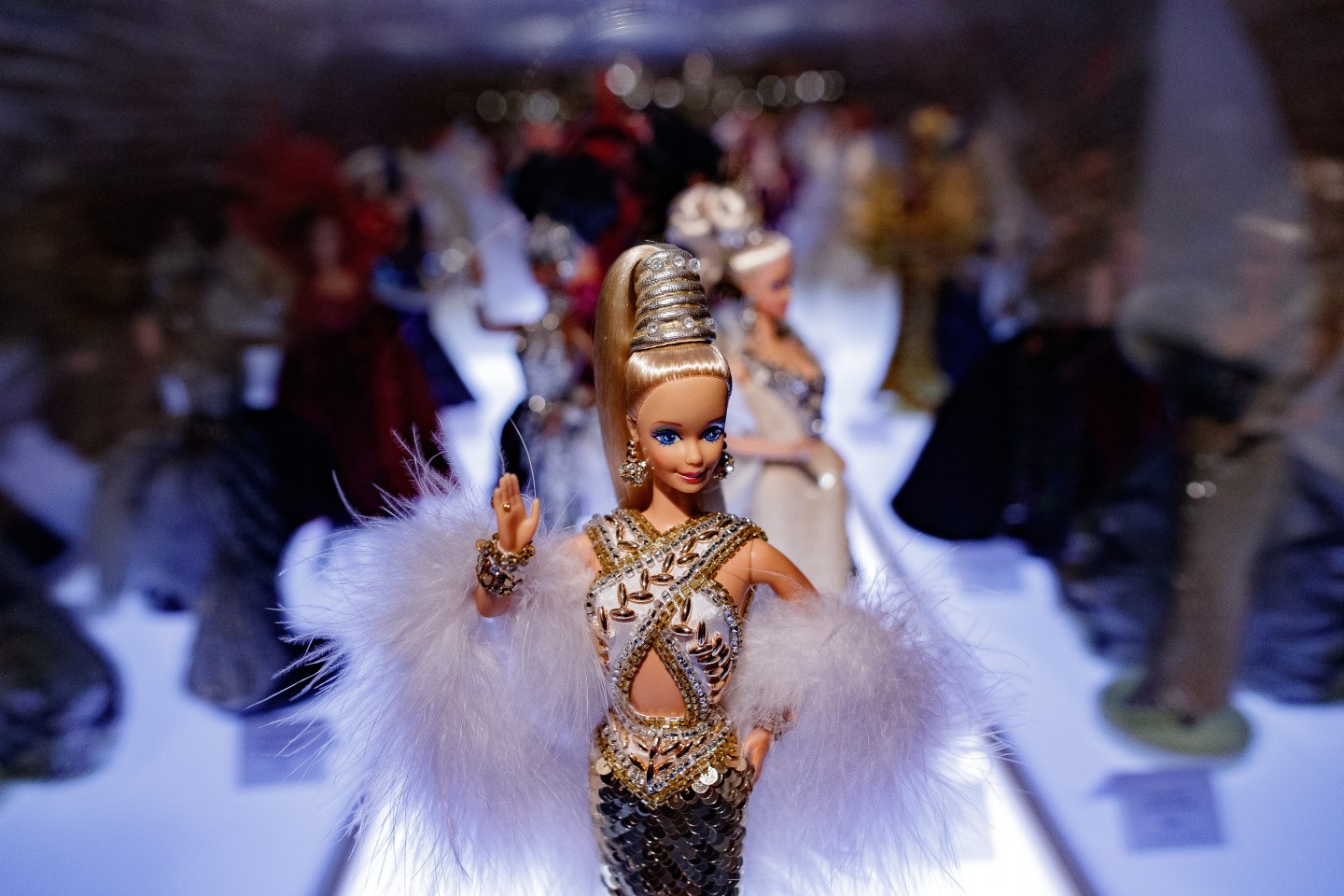
Mattel CEO Margo Georgiadis told investors that the ailing toy maker behind iconic brands including Barbie and Fisher-Price would get back on track by placing firmer bets on emerging markets, a faster pace of toy development, and by focusing more on the digital play experience.
“It is time to reinvent this company because of where the world is headed,” Georgiadis told Fortune in an interview ahead of the toy maker’s investor day presentation on Wednesday. “As an industry, we all are challenged to do things differently.”
Georgiadis, CEO at Mattel (MAT) since February after steering search giant Google’s (GOOG) commercial operations in the U.S., faced investors to outline her vision for the toy maker that has struggled in an industry that has largely remained resilient even as consumer spending patterns have hurt many legacy brick-and-mortar shops. Over the past three years, sales slipped from $6.5 billion to $5.5 billion, gross margin tumbled from 53.6% to 46.8%, while net income dropped from $904 million to $318 million. In just the last year alone, Mattel’s shares have shed 28% of their value while the company’s closest rival, Hasbro (HAS), has gained 29% over the same period. Hasbro earlier this year reported record-breaking sales and is now worth almost $6 billion more than Mattel.
Georgiadis told investors that many of Mattel’s woes were self inflicted. The toy development cycle remains too slow and stagnant for a fast-changing world. Several marquee brands—including American Girl, Monster High and the Disney Princess line (which was ceded to rival Hasbro)—have been managed poorly. There’s also been limited portfolio planning for new initiatives and few efforts to develop brand strategies locally, she further explained.
“We will have to make some tough decisions as we transform the company,” Georgiadis told Fortune. One painful move: Mattel had to slash its lofty dividend payout by more than half to free up some cash for some of Georgiadis’ initiatives. It also now sees 2017 revenue increasing in the low-single digits, down from the prior target of mid-single digit growth. Revitalization plans for major brands like Thomas, American Girl, and Mega Bloks will take longer than previously expected.
Shares were down about 3% on Wednesday afternoon.
There are some areas of the business where Mattel is bullish. Georgiadis argues that the company’s business in China could be as much as four times larger than the current size in the new handful of years, citing data that shows 210 million children reside in the Asian nation but average toy spending is just one-ninth of what it is in the U.S. To encourage growth, Mattel earlier this year inked a strategic partnership with e-commerce giant Alibaba (BABA) and on Wednesday, it announced it would open child development learning clubs in the region through a joint venture.
Mattel is hopeful future growth can be powered by emerging markets. The global toy industry is expected to grow by $20 billion over the next four years, with emerging markets expected to power two-thirds of those sales increases, Georgiadis claims. But Mattel’s international sales actually declined by 6% last year to $2.1 billion, so the toy maker needs to figure out how to quickly boost results abroad.
Georgiadis also promised that Mattel would develop toys and content that would better align with the increasingly digital world. In the U.S., 85% of kids between the ages of three to five have a tablet and already a third of them are creating their own content. “Toy time is holding steady but kids are spending more time on digital and toys need to adapt,” said Georgiadis.
Mattel also argued that the toy maker needs to speed up the development process to get new toys onto shelves faster. Traditionally, the industry takes about 18 months to get a concept onto store shelves, having to factor in travel time from factories in Asian that produce the toys. But Georgiadis wants that innovation cycle to be as short as six months.
She added Mattel also had to invest more behind some of the company’s most iconic “power brands.” One example Georgiadis often cited: Hot Wheels, which she claims could be far larger than it is today. One way Mattel aims to make it more relevant: sell shoppers and educators on the idea that it actually an education toy. Mattel has tried to lure educators via the company’s so-called Hot Wheels Speedometry, which tries to provide proof toy cars can be helpful for lesson planning. It remains to be seen if that initiative can scale up in a meaningful way.
Georgiadis argues that with decades of insights into how toys can benefit childhood development, the toy maker could do more to link their brands with education. That shift in strategic thinking could be beneficial if done correctly, especially considering the fact that one toy trend in recent years has been increased popularity for toys that are viewed as falling into STEAM (which stands for science, technology, engineering, the arts and mathematics). For Mattel to find success in the toy aisle, it wants to do a better job to prove toys can be both educational and fun.