• Home
  • Latest
  • Fortune 500
  • Finance
  • Tech
  • Leadership
  • Lifestyle
  • Rankings
  • Multimedia
Tech

Intel Keeps Insisting Moore’s Law Isn’t Dead

By
Aaron Pressman
Aaron Pressman
Down Arrow Button Icon
By
Aaron Pressman
Aaron Pressman
Down Arrow Button Icon
March 28, 2017, 6:11 PM ET
Intel Reports Quarterly Earnings
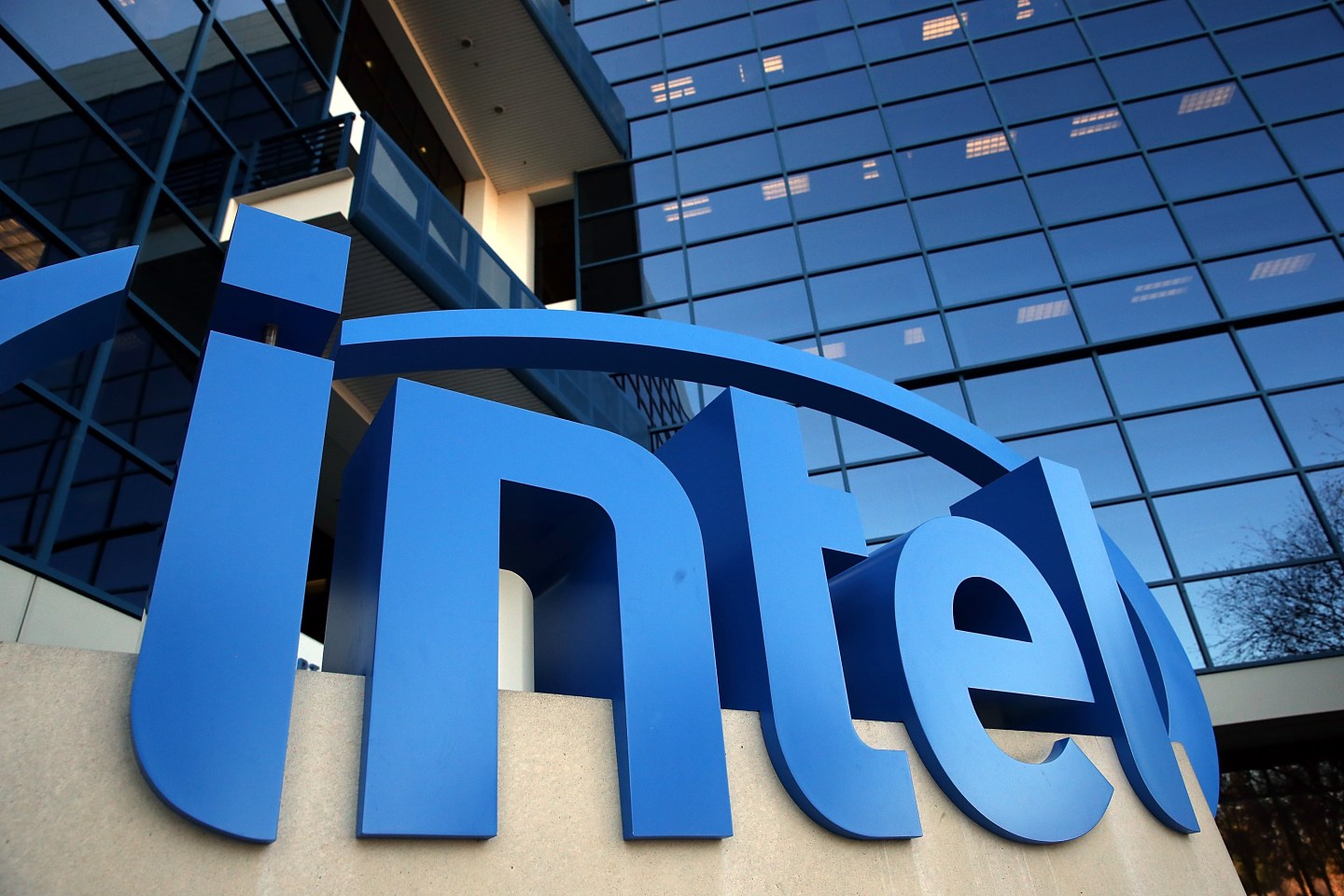
SANTA CLARA, CA - JANUARY 16: The Intel logo is displayed outside of the Intel headquarters on January 16, 2014 in Santa Clara, California.Justin Sullivan Getty Images

Intel’s efforts to improve its prospects usually involve pitching the products it sells, but on Tuesday the chip giant went in another direction, offering a deep dive into the company’s manufacturing techniques.

The goal was to prove that Moore’s Law—the prediction by the Intel co-founder that transistor density can double every two years or less—remains in force, even though the rate of introducing smaller-scale chips has slowed. A second aim was to attract more customers in Intel’s growing effort to manufacture chips for others.

Instead of talking about how it might power the next wave of slick laptops, automated drones, or self-driving cars, Intel executives on Tuesday explained how the company could make its chips more powerful and energy efficient by cramming more transistors and other features onto the silicon wafers. One clear aim was to reset expectations around Moore’s Law, as the company has been penalized by investors and analysts in recent years for failing to meet its decades-old strategy of shrinking the size of transistors every other year.

Get Data Sheet, Fortune’s technology newsletter.

In the past five years, Intel’s stock price has gained only 28%, less than half the gain of the S&P 500. But this lag is about far more than missed expectations, as the company missed the mobile wave, which has greatly hurt sales of PCs and the Intel processors that run them.

For decades, Intel (INTC) followed what it called a “tick, tock” strategy. In one year, representing the “tick,” it would improve its microprocessors by printing the transistors on the chips closer together, reducing the scale of the process, say, from 32 nanometers to 22 nanometers. In the second year, the “tock,” the scale would stay the same and Intel would improve the chips by adding new features.

But Intel hasn’t been able to hit the every-other-year schedule for reducing scale. To get from 45 nm to 32 nm took about 27 months, 28 months to go down from there to 22 nm and 30 months to shrink to the current 14 nm process. And that’s where Intel has been stuck since September 2014. New 10 nm chips are finally expected towards the end of 2017.

How to Save Money on Video Games

The point of Tuesday’s presentations was to explain—and magnify the focus on—all the other techniques Intel uses to improve its chips.

“The world moves on,” Intel executive vice president Stacy Smith, who oversees the manufacturing side, tells Fortune. The company is “constantly looking to find that optimization point” of all the different methods for improving its chips every year. “And our commitment to our customers is that we do that on an annual cadence,” he says.

It fell to Intel president Murthy Renduchintala during the presentations to explain the changing metaphor. “We’re going to do away with the tick-tock metaphor and replace it with a metaphor based on waves of innovation,” he said. As Intel moved to a new scale for printing chips, it could would follow for several years with annual “waves” of improvements, he explained.

Another goal of the over-four-hour program was to attract the growing legions of companies that design chips but don’t own their own semiconductor manufacturing factories. Apple (AAPL), for example, runs the iPhone 7 using its custom A10 chip which is made by others, though not Intel.

Why AMD Shares Jumped 7%

CEO Brian Krzanich has been building Intel’s business as a chip maker for hire, printing up chips designed by other companies at its cutting-edge foundries, instead of using the factories exclusively for its own designs.

With massive consolidation in the semiconductor industry, only a handful of companies can even compete to make the most advanced chips, down from 13 ten years ago. Beyond Intel, the list currently includes only Samsung (SSNLF), Taiwan Semiconductor (TSM) and GlobalFoundries, the AMD (AMD) spinoff created in 2009.

“It’s something we’re not just willing to do—we’re embracing it,” Smith says. Tuesday’s presentations were “a bit of a coming out party,” he says. “We’ve been building these capabilities, we’ve had some announcements along the way… but today we put it all together.”


About the Author
By Aaron Pressman
See full bioRight Arrow Button Icon

Latest in Tech

Sarandos
Arts & EntertainmentM&A
It’s a sequel, it’s a remake, it’s a reboot: Lawyers grow wistful for old corporate rumbles as Paramount, Netflix fight for Warner
By Nick LichtenbergDecember 13, 2025
3 hours ago
Oracle chairman of the board and chief technology officer Larry Ellison delivers a keynote address during the 2019 Oracle OpenWorld on September 16, 2019 in San Francisco, California.
AIOracle
Oracle’s collapsing stock shows the AI boom is running into two hard limits: physics and debt markets
By Eva RoytburgDecember 13, 2025
4 hours ago
robots
InnovationRobots
‘The question is really just how long it will take’: Over 2,000 gather at Humanoids Summit to meet the robots who may take their jobs someday
By Matt O'Brien and The Associated PressDecember 12, 2025
17 hours ago
Man about to go into police vehicle
CryptoCryptocurrency
Judge tells notorious crypto scammer ‘you have been bitten by the crypto bug’ in handing down 15 year sentence 
By Carlos GarciaDecember 12, 2025
18 hours ago
three men in suits, one gesturing
AIBrainstorm AI
The fastest athletes in the world can botch a baton pass if trust isn’t there—and the same is true of AI, Blackbaud exec says
By Amanda GerutDecember 12, 2025
19 hours ago
Brainstorm AI panel
AIBrainstorm AI
Creative workers won’t be replaced by AI—but their roles will change to become ‘directors’ managing AI agents, executives say
By Beatrice NolanDecember 12, 2025
19 hours ago

Most Popular

placeholder alt text
Economy
Tariffs are taxes and they were used to finance the federal government until the 1913 income tax. A top economist breaks it down
By Kent JonesDecember 12, 2025
1 day ago
placeholder alt text
Success
Apple cofounder Ronald Wayne sold his 10% stake for $800 in 1976—today it’d be worth up to $400 billion
By Preston ForeDecember 12, 2025
23 hours ago
placeholder alt text
Success
40% of Stanford undergrads receive disability accommodations—but it’s become a college-wide phenomenon as Gen Z try to succeed in the current climate
By Preston ForeDecember 12, 2025
23 hours ago
placeholder alt text
Economy
For the first time since Trump’s tariff rollout, import tax revenue has fallen, threatening his lofty plans to slash the $38 trillion national debt
By Sasha RogelbergDecember 12, 2025
18 hours ago
placeholder alt text
Economy
The Fed just ‘Trump-proofed’ itself with a unanimous move to preempt a potential leadership shake-up
By Jason MaDecember 12, 2025
17 hours ago
placeholder alt text
Success
At 18, doctors gave him three hours to live. He played video games from his hospital bed—and now, he’s built a $10 million-a-year video game studio
By Preston ForeDecember 10, 2025
3 days ago
Rankings
  • 100 Best Companies
  • Fortune 500
  • Global 500
  • Fortune 500 Europe
  • Most Powerful Women
  • Future 50
  • World’s Most Admired Companies
  • See All Rankings
Sections
  • Finance
  • Leadership
  • Success
  • Tech
  • Asia
  • Europe
  • Environment
  • Fortune Crypto
  • Health
  • Retail
  • Lifestyle
  • Politics
  • Newsletters
  • Magazine
  • Features
  • Commentary
  • Mpw
  • CEO Initiative
  • Conferences
  • Personal Finance
  • Education
Customer Support
  • Frequently Asked Questions
  • Customer Service Portal
  • Privacy Policy
  • Terms Of Use
  • Single Issues For Purchase
  • International Print
Commercial Services
  • Advertising
  • Fortune Brand Studio
  • Fortune Analytics
  • Fortune Conferences
  • Business Development
About Us
  • About Us
  • Editorial Calendar
  • Press Center
  • Work At Fortune
  • Diversity And Inclusion
  • Terms And Conditions
  • Site Map

© 2025 Fortune Media IP Limited. All Rights Reserved. Use of this site constitutes acceptance of our Terms of Use and Privacy Policy | CA Notice at Collection and Privacy Notice | Do Not Sell/Share My Personal Information
FORTUNE is a trademark of Fortune Media IP Limited, registered in the U.S. and other countries. FORTUNE may receive compensation for some links to products and services on this website. Offers may be subject to change without notice.