• Home
  • News
  • Fortune 500
  • Tech
  • Finance
  • Leadership
  • Lifestyle
  • Rankings
  • Multimedia
Tech

Self-Driving Car Sensor Startup Raises $90 Million

By
Kirsten Korosec
Kirsten Korosec
Down Arrow Button Icon
By
Kirsten Korosec
Kirsten Korosec
Down Arrow Button Icon
August 22, 2016, 8:38 PM ET
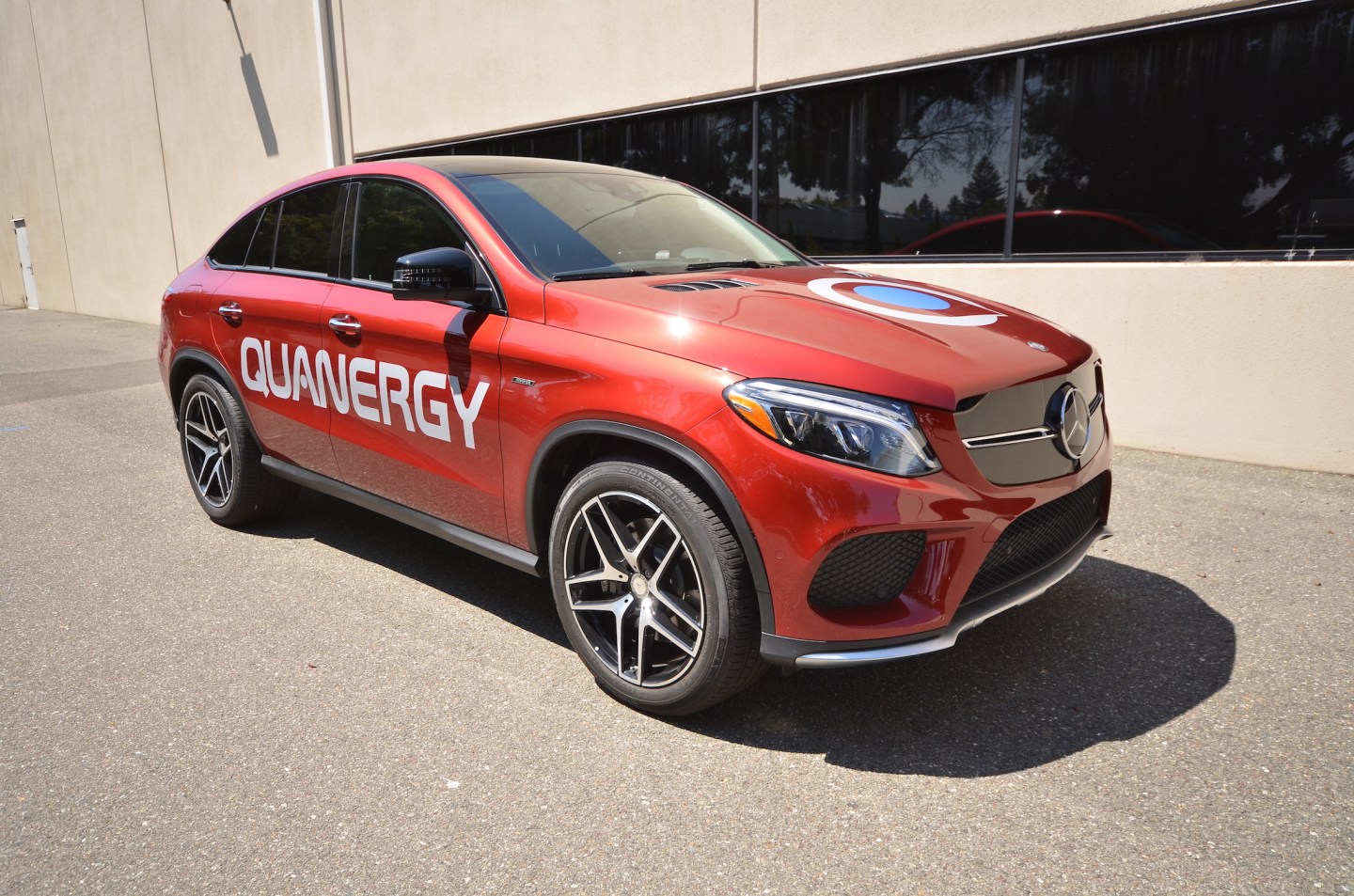
Leon Smith/Courtesy of Quanergy

Quanergy Systems, a Silicon Valley startup that makes light detection and ranging sensors used in self-driving cars, has raised $90 million from investors, illustrating their growing interest in autonomous vehicle technology.

The funding round, led by Sensata Technologies, also included investments from auto parts manufacturer Delphi Automotive (DLPH), Samsung Ventures, Motus Ventures, and GP Capital. Quanergy’s post-funding valuation is $1.59 billion, CEO Louay Eldada told Fortune.

This investment brings the company’s total funds raised to about $150 million.

Self-driving cars use a combination of sensors, cameras, and GPS to detect what’s around them and safely navigate city streets and highways. A number of companies developing self-driving vehicles also rely on light-sensitive radar, known as LiDAR.

LiDAR emits short pulses of laser light so that software in the self-driving vehicle can create a real-time, high-definition 3D image of what’s around it. These sensors shoot out millions of laser pulses a second to detect nearby objects and determine the best driving path.

Get Data Sheet, Fortune’s technology newsletter.

LiDAR (or it’s radar cousin) can be particularly useful on roads with faded on non-existent lane markings. Google and Ford both use LiDAR on their self-driving test vehicles. But LiDAR sensors are also incredibly expensive. For instance, some of the first LiDAR systems developed by Velodyne cost $80,000. That price has fallen to about $8,000 today for Velodyne’s latest prototype, which is used in the testing of autonomous vehicles.

The high price tag has created an obvious opportunity for companies that figure out how to make a cheap, reliable LiDAR sensor. And investors are taking notice.

Last week, Ford Motor Co. and Chinese search engine Baidu invested $150 million in Velodyne, a leading supplier of LiDAR sensor technology. The money will be used to help Velodyne lower the cost of its LiDAR to a target price in the mid- to lower-$100s by 2018.

Why Ford’s venture into self-driving cars is smart:

Quanergy, which was named one of the 10 most innovative startups last year by Los Angeles Auto Show’s Connected Car Expo, is also chasing a cheaper LiDAR sensor. In January, the Sunnyvale, Calif.-based company introduced a solid state LiDAR sensor, called the S3, that is supposed to cost $250 or less once it reaches production volume. The company has also developed a much smaller and simplified version of this sensor called the S3-Qi that costs about $100 and is designed for drones.

Eldada says the $90 million in new funding will be used to ramp up production with two partners—one in the transportation sector and the other in the security space. Sensata Technologies, the former sensing division of Texas Instruments, will produce the sensors for automotive. Flex, the global electronics manufacturer formerly known as Flextronics, will produce the sensors for security, industrial automation, and 3D mapping applications.

Both companies are building production lines for Quanergy’s S3 LiDAR sensors with plans to be operating by the fourth quarter. The expectation is for both production lines to be at full capacity within the first three months of 2017, Eldada says.

While automotive has always been Quanergy’s focus, demand for the sensors in the security market will drive the company’s volume in the near term, Eldada says.

Quanergy’s LiDAR sensors are being used by five automakers that are developing automated vehicles. The earliest that a consumer could buy a vehicle equipped with Quanergy’s LiDAR will be 2018, according to Eldada, who declined to name any of the automakers the company is working with. The LiDAR could be deployed sooner on non-passenger vehicles used mining and agriculture industries, he added.

About the Author
By Kirsten Korosec
See full bioRight Arrow Button Icon

Latest in Tech

Big TechSpotify
Spotify users lamented Wrapped in 2024. This year, the company brought back an old favorite and made it less about AI
By Dave Lozo and Morning BrewDecember 4, 2025
8 hours ago
InnovationVenture Capital
This Khosla Ventures–backed startup is using AI to personalize cancer care
By Allie GarfinkleDecember 4, 2025
12 hours ago
AIEye on AI
Companies are increasingly falling victim to AI impersonation scams. This startup just raised $28M to stop deepfakes in real time
By Sharon GoldmanDecember 4, 2025
12 hours ago
Jensen Huang
SuccessBillionaires
Nvidia CEO Jensen Huang admits he works 7 days a week, including holidays, in a constant ‘state of anxiety’ out of fear of going bankrupt
By Jessica CoacciDecember 4, 2025
12 hours ago
Ted Pick
BankingData centers
Morgan Stanley considers offloading some of its data-center exposure
By Esteban Duarte, Paula Seligson, Davide Scigliuzzo and BloombergDecember 4, 2025
12 hours ago
Zuckerberg
EnergyMeta
Meta’s Zuckerberg plans deep cuts for metaverse efforts
By Kurt Wagner and BloombergDecember 4, 2025
13 hours ago

Most Popular

placeholder alt text
Economy
Two months into the new fiscal year and the U.S. government is already spending more than $10 billion a week servicing national debt
By Eleanor PringleDecember 4, 2025
18 hours ago
placeholder alt text
Success
‘Godfather of AI’ says Bill Gates and Elon Musk are right about the future of work—but he predicts mass unemployment is on its way
By Preston ForeDecember 4, 2025
13 hours ago
placeholder alt text
North America
Jeff Bezos and Lauren Sánchez Bezos commit $102.5 million to organizations combating homelessness across the U.S.: ‘This is just the beginning’
By Sydney LakeDecember 2, 2025
3 days ago
placeholder alt text
Success
Nearly 4 million new manufacturing jobs are coming to America as boomers retire—but it's the one trade job Gen Z doesn't want
By Emma BurleighDecember 4, 2025
14 hours ago
placeholder alt text
Success
Nvidia CEO Jensen Huang admits he works 7 days a week, including holidays, in a constant 'state of anxiety' out of fear of going bankrupt
By Jessica CoacciDecember 4, 2025
12 hours ago
placeholder alt text
Health
Bill Gates decries ‘significant reversal in child deaths’ as nearly 5 million kids will die before they turn 5 this year
By Nick LichtenbergDecember 4, 2025
1 day ago
Rankings
  • 100 Best Companies
  • Fortune 500
  • Global 500
  • Fortune 500 Europe
  • Most Powerful Women
  • Future 50
  • World’s Most Admired Companies
  • See All Rankings
Sections
  • Finance
  • Leadership
  • Success
  • Tech
  • Asia
  • Europe
  • Environment
  • Fortune Crypto
  • Health
  • Retail
  • Lifestyle
  • Politics
  • Newsletters
  • Magazine
  • Features
  • Commentary
  • Mpw
  • CEO Initiative
  • Conferences
  • Personal Finance
  • Education
Customer Support
  • Frequently Asked Questions
  • Customer Service Portal
  • Privacy Policy
  • Terms Of Use
  • Single Issues For Purchase
  • International Print
Commercial Services
  • Advertising
  • Fortune Brand Studio
  • Fortune Analytics
  • Fortune Conferences
  • Business Development
About Us
  • About Us
  • Editorial Calendar
  • Press Center
  • Work At Fortune
  • Diversity And Inclusion
  • Terms And Conditions
  • Site Map

© 2025 Fortune Media IP Limited. All Rights Reserved. Use of this site constitutes acceptance of our Terms of Use and Privacy Policy | CA Notice at Collection and Privacy Notice | Do Not Sell/Share My Personal Information
FORTUNE is a trademark of Fortune Media IP Limited, registered in the U.S. and other countries. FORTUNE may receive compensation for some links to products and services on this website. Offers may be subject to change without notice.