
• Home
  • News
  • Fortune 500
  • Tech
  • Finance
  • Leadership
  • Lifestyle
  • Rankings
  • Multimedia
Tech

No, NSA Has Not Changed Stance on Encryption

Robert Hackett
By
Robert Hackett
Robert Hackett
Down Arrow Button Icon
Robert Hackett
By
Robert Hackett
Robert Hackett
Down Arrow Button Icon
January 23, 2016, 3:26 PM ET
US-TECHNOLOGY-WSJD LIVE
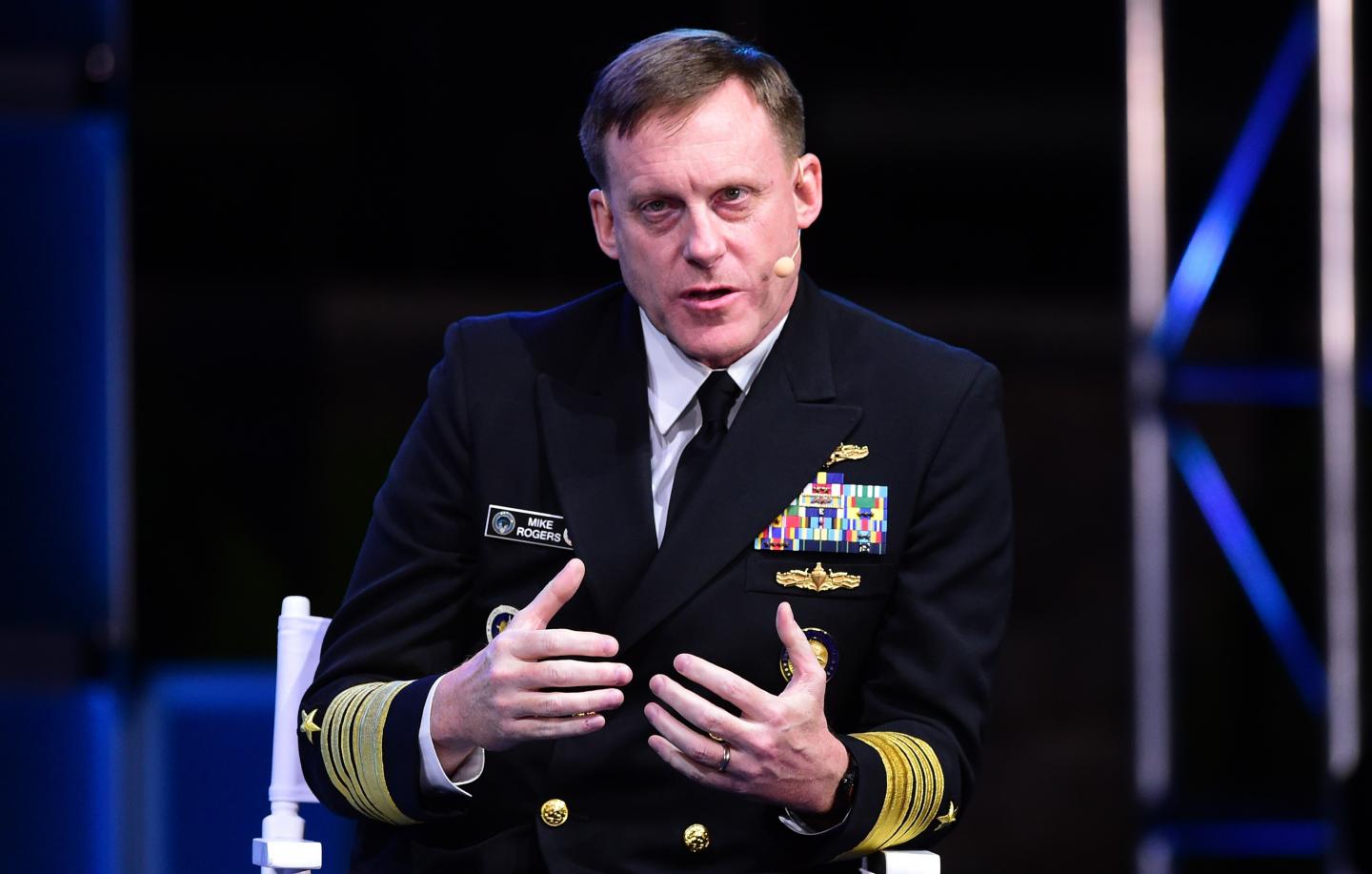
Admiral Michael Rogers, Director of the National Security Agency, gestures while speaking on October 19, 2015 in Laguna Beach, California at the opening of the 2015 WSJD Live. The event brings together top CEOs, founders, pioneers, investors and luminaries to explore the most exciting tech opportunities emerging around the world. AFP PHOTO / FREDERIC J. BROWN (Photo credit should read FREDERIC J. BROWN/AFP/Getty Images)Photograph by Frederic J. Brown—AFP via Getty Images

A version of this post titled “NSA’s encoded intent” originally appeared in Cyber Saturday edition of Data Sheet, Fortune’s daily tech-business newsletter. Subscribe here.

If you tuned into a talk by Michael Rogers, director of the National Security Agency, at the Atlantic Council in Washington, D.C., this week, you might think the NSA had begun to change its tune about encryption—the technology favored by Apple and its Silicon Valley brethren to scramble users’ data and communications (much to criminal investigators’ chagrin), making them unintelligible to spies and hackers alike.

Not so.

Rogers, who also heads the U.S. Cyber Command, surprised some commentators with a number of strong assertions about strong crypto that day. His statements could make a privacy advocate’s heart swoon: “Encryption is foundational to the future,” he said, adding that no one should expend a breath debating the point. Doing so, he stressed, would be a “waste of time.” (Fast-forward to around 25:30 in this video clip posted to the think tank’s website.)

Roger’s remarks do not, in fact, indicate that he has bailed on his quest to gain access to people’s encrypted data. To be sure, the intelligence boss’ stance is entirely consistent with views he has expressed in the past—as well as with ones propounded by other members of the law enforcement set. For instance, James Comey, who heads the Federal Bureau of Investigation (and who is often painted as an encryption bogeyman), told the Senate last year that “it is important for our global economy and our national security to have strong encryption standards.” That doesn’t mean either doesn’t still want access, of course.

For more on encryption, watch:

Rogers’ posturing calls to mind other statements he’s made on the national stage. “Strong encryption is in our nation’s best interest,” he said at a Wall Street Journal conference last fall, as Fortune’s Kia Kokalitcheva reported. He then clarified, as my colleague paraphrased, that “he means strong, not full encryption of email and online files. The nuance is that strong encryption would still give his agency access to user information while full encryption would make the data unreadable.” Strong versus full, huh?

https://twitter.com/csoghoian/status/656617064174477312

Actually, no policy change has taken place. The government top dogs still seek entrée into encrypted data—even as other countries, such as the Netherlands and France, have scrapped plans to mandate that “backdoor” vulnerabilities be built into tech products. The only difference is that the Feds have begun to refine their talking points in such a way as not to cause a stir, as happened almost a year ago at a New America Foundation conference on cybersecurity, in which Alex Stamos, Facebook’s security chief (then Yahoo’s chief information security officer), went toe to toe with the admiral. (Not to mention Apple CEO Tim Cook’s relentless criticism of the pro-crypto-cracking cohort.)

No, the NSA has remained on message. It is just getting better, perhaps, at encoding its intent.

About the Author
Robert Hackett
By Robert Hackett
Instagram iconLinkedIn iconTwitter icon
See full bioRight Arrow Button Icon

Latest in Tech

Mark Zuckerberg laughs during his 2017 Harvard commencement speech
SuccessMark Zuckerberg
Mark Zuckerberg says the ‘most important thing’ he built at Harvard was a prank website: ‘Without Facemash I wouldn’t have met Priscilla’
By Dave SmithDecember 6, 2025
1 hour ago
AIMeta
It’s ‘kind of jarring’: AI labs like Meta, Deepseek, and Xai earned some of the worst grades possible on an existential safety index
By Patrick Kulp and Tech BrewDecember 5, 2025
13 hours ago
Elon Musk
Big TechSpaceX
Musk’s SpaceX discusses record valuation, IPO as soon as 2026
By Edward Ludlow, Loren Grush, Lizette Chapman, Eric Johnson and BloombergDecember 5, 2025
13 hours ago
data center
EnvironmentData centers
The rise of AI reasoning models comes with a big energy tradeoff
By Rachel Metz, Dina Bass and BloombergDecember 5, 2025
13 hours ago
netflix
Arts & EntertainmentAntitrust
Hollywood writers say Warner takeover ‘must be blocked’
By Thomas Buckley and BloombergDecember 5, 2025
13 hours ago
person
CybersecurityDigital
Dictionaries’ words of the year are trying to tell us something about being online in 2025
By Roger J. KreuzDecember 5, 2025
14 hours ago

Most Popular

placeholder alt text
Economy
Two months into the new fiscal year and the U.S. government is already spending more than $10 billion a week servicing national debt
By Eleanor PringleDecember 4, 2025
2 days ago
placeholder alt text
Success
‘Godfather of AI’ says Bill Gates and Elon Musk are right about the future of work—but he predicts mass unemployment is on its way
By Preston ForeDecember 4, 2025
2 days ago
placeholder alt text
Success
Nearly 4 million new manufacturing jobs are coming to America as boomers retire—but it's the one trade job Gen Z doesn't want
By Emma BurleighDecember 4, 2025
2 days ago
placeholder alt text
Success
Nvidia CEO Jensen Huang admits he works 7 days a week, including holidays, in a constant 'state of anxiety' out of fear of going bankrupt
By Jessica CoacciDecember 4, 2025
2 days ago
placeholder alt text
Real Estate
‘There is no Mamdani effect’: Manhattan luxury home sales surge after mayoral election, undercutting predictions of doom and escape to Florida
By Sasha RogelbergDecember 4, 2025
2 days ago
placeholder alt text
Big Tech
Mark Zuckerberg rebranded Facebook for the metaverse. Four years and $70 billion in losses later, he’s moving on
By Eva RoytburgDecember 5, 2025
17 hours ago
Rankings
  • 100 Best Companies
  • Fortune 500
  • Global 500
  • Fortune 500 Europe
  • Most Powerful Women
  • Future 50
  • World’s Most Admired Companies
  • See All Rankings
Sections
  • Finance
  • Leadership
  • Success
  • Tech
  • Asia
  • Europe
  • Environment
  • Fortune Crypto
  • Health
  • Retail
  • Lifestyle
  • Politics
  • Newsletters
  • Magazine
  • Features
  • Commentary
  • Mpw
  • CEO Initiative
  • Conferences
  • Personal Finance
  • Education
Customer Support
  • Frequently Asked Questions
  • Customer Service Portal
  • Privacy Policy
  • Terms Of Use
  • Single Issues For Purchase
  • International Print
Commercial Services
  • Advertising
  • Fortune Brand Studio
  • Fortune Analytics
  • Fortune Conferences
  • Business Development
About Us
  • About Us
  • Editorial Calendar
  • Press Center
  • Work At Fortune
  • Diversity And Inclusion
  • Terms And Conditions
  • Site Map

© 2025 Fortune Media IP Limited. All Rights Reserved. Use of this site constitutes acceptance of our Terms of Use and Privacy Policy | CA Notice at Collection and Privacy Notice | Do Not Sell/Share My Personal Information
FORTUNE is a trademark of Fortune Media IP Limited, registered in the U.S. and other countries. FORTUNE may receive compensation for some links to products and services on this website. Offers may be subject to change without notice.