• Home
  • Latest
  • Fortune 500
  • Finance
  • Tech
  • Leadership
  • Lifestyle
  • Rankings
  • Multimedia
TechApple

Why Apple, Tesla, and Uber Are Not ‘Disruptive’

By
Philip Elmer-DeWitt
Philip Elmer-DeWitt
Down Arrow Button Icon
By
Philip Elmer-DeWitt
Philip Elmer-DeWitt
Down Arrow Button Icon
December 17, 2015, 12:49 PM ET
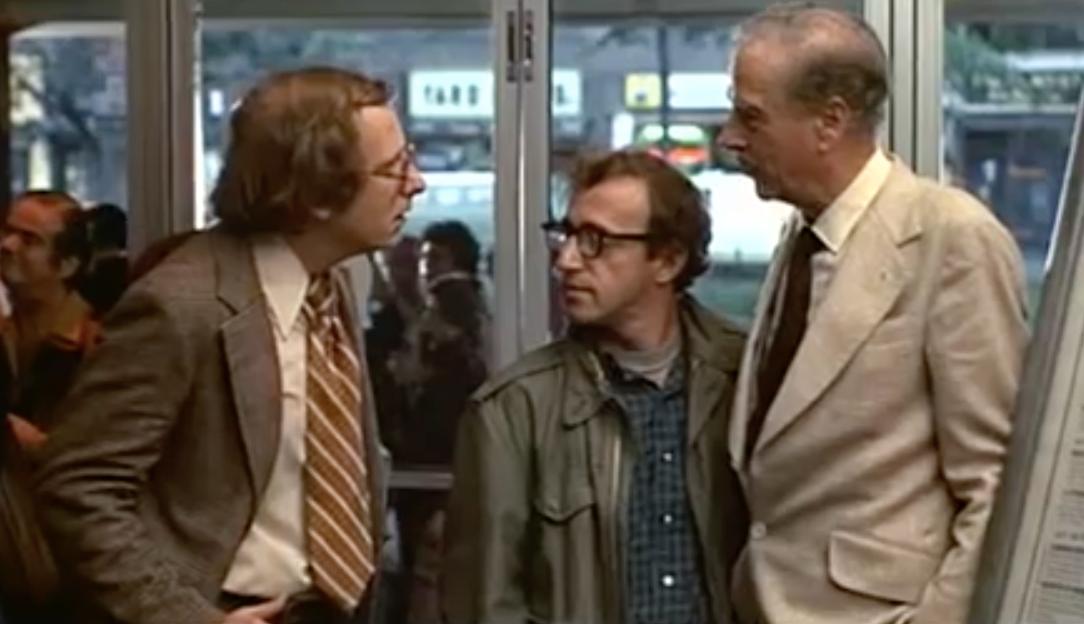
Courtesy of United Artists

Overhearing people talk about how Apple, Tesla, and Uber disrupted their respective markets, I’m reminded of that scene in Annie Hall, pictured above, where Woody Allen settles an argument about Marshall McLuhan’s theories of hot and cool media by turning to the highest authority at hand—McLuhan himself, dragged in from offstage.

“You know nothing of my work,” says McLuhan to Allen’s foil, a pretentious academic from Columbia University. “How you ever got to teach a course in anything is totally amazing.”

Enter, stage left, Clayton Christensen. He’s the Harvard professor who popularized the theory of disruptive innovation in two seminal works: The Innovator’s Dilemma (1997) and, with Michael Raynor, The Innovator’s Solution (2013).

He’s here to tell both his critics (notably in the New Yorker) and his admirers that most of them know nothing of his work.

In an article in the December issue of the Harvard Business Review, Christensen and Raynor have, with Rory McDonald, drawn a line in the sand. On one side is disruptive innovation. On the other is everything else.

“Despite broad dissemination,” they write, trying to re-take control of a powerful idea they loosed on the world nearly 20 year ago, “the theory’s core concepts have been widely misunderstood and its basic tenets frequently misapplied.”

What are those basic tenets? Putting it as simply as I can, there are three necessary conditions:

  1. There’s a small, scrappy start-up that is taking on the big guys with a new business model.
  2. There’s a new class of low-end customers who are either over-served by established companies (that are always trying to please their best customers) or not being served at all.
  3. There’s a technological accelerant that gives the little guy an edge he can use to move up-market. By the time the big guys realize they’re in danger, it’s already too late.

These are necessary conditions. If you don’t have all three, you don’t have technological disruption.

Or so say the guys who created the theory.

And by their measure, Apple (AAPL), Tesla (TSLA), and Uber don’t fit the bill.

  • Apple was hardly a scrappy start-up when it introduced the iPhone.
  • Tesla was a startup, but it entered the car business from the high end.
  • Uber’s market is neither new nor over-served. You don’t hear many taxi customers complaining that their cab came too fast or the ride was too comfortable.

All three companies, the disruption theorists argue, merely built better mousetraps. They took existing markets and made things better .

So what IS a disruptive innovation? What does THAT look like? Wikipedia offers a useful example:

“The automobile was not a disruptive innovation, because early automobiles were expensive luxury items that did not disrupt the market for horse-drawn vehicles. The market for transportation essentially remained intact until the debut of the lower-priced Ford Model T in 1908. The mass-produced automobile was a disruptive innovation, because it changed the transportation market, whereas the first thirty years of automobiles did not.”

By now you are probably asking what difference it makes. Does it matter what terms we use?

Team Christensen argues that it does. The ideas, drawn originally from a study of innovation in the computer disk drive market, offer not just a theory, but prescriptions for management in a time of great innovation and market upheaval.

“Applying the theory correctly is essential to realizing its benefits,” they write. “Small competitors that nibble away at the periphery of your business very likely should be ignored—unless they are on a disruptive trajectory, in which case they are a potentially mortal threat.”

Knowing the difference probably matters.

See also: Apple and the crisis of disruption

Below: Woody Allen at his best.

Follow Philip Elmer-DeWitt on Twitter at @philiped. Read his Apple coverage at fortune.com/ped or subscribe via his RSS feed.

Be sure to sign up for Data Sheet, Fortune’s daily newsletter about the business of technology.

For more on Apple, watch the Fortune video below.

About the Author
By Philip Elmer-DeWitt
See full bioRight Arrow Button Icon

Latest in Tech

AIchief executive officer (CEO)
Microsoft AI boss Suleyman opens up about his peers and calls Elon Musk a ‘bulldozer’ with ‘superhuman capabilities to bend reality to his will’
By Jason MaDecember 13, 2025
9 hours ago
InvestingStock
There have been head fakes before, but this time may be different as the latest stock rotation out of AI is just getting started, analysts say
By Jason MaDecember 13, 2025
14 hours ago
Politicsdavid sacks
Can there be competency without conflict in Washington?
By Alyson ShontellDecember 13, 2025
14 hours ago
InnovationRobots
Even in Silicon Valley, skepticism looms over robots, while ‘China has certainly a lot more momentum on humanoids’
By Matt O'Brien and The Associated PressDecember 13, 2025
16 hours ago
Sarandos
Arts & EntertainmentM&A
It’s a sequel, it’s a remake, it’s a reboot: Lawyers grow wistful for old corporate rumbles as Paramount, Netflix fight for Warner
By Nick LichtenbergDecember 13, 2025
21 hours ago
Oracle chairman of the board and chief technology officer Larry Ellison delivers a keynote address during the 2019 Oracle OpenWorld on September 16, 2019 in San Francisco, California.
AIOracle
Oracle’s collapsing stock shows the AI boom is running into two hard limits: physics and debt markets
By Eva RoytburgDecember 13, 2025
21 hours ago

Most Popular

placeholder alt text
Success
Apple cofounder Ronald Wayne sold his 10% stake for $800 in 1976—today it’d be worth up to $400 billion
By Preston ForeDecember 12, 2025
2 days ago
placeholder alt text
Economy
Tariffs are taxes and they were used to finance the federal government until the 1913 income tax. A top economist breaks it down
By Kent JonesDecember 12, 2025
2 days ago
placeholder alt text
Success
40% of Stanford undergrads receive disability accommodations—but it’s become a college-wide phenomenon as Gen Z try to succeed in the current climate
By Preston ForeDecember 12, 2025
2 days ago
placeholder alt text
Economy
The Fed just ‘Trump-proofed’ itself with a unanimous move to preempt a potential leadership shake-up
By Jason MaDecember 12, 2025
1 day ago
placeholder alt text
Success
Apple CEO Tim Cook out-earns the average American’s salary in just 7 hours—to put that into context, he could buy a new $439,000 home in just 2 days
By Emma BurleighDecember 12, 2025
2 days ago
placeholder alt text
Economy
For the first time since Trump’s tariff rollout, import tax revenue has fallen, threatening his lofty plans to slash the $38 trillion national debt
By Sasha RogelbergDecember 12, 2025
1 day ago
Rankings
  • 100 Best Companies
  • Fortune 500
  • Global 500
  • Fortune 500 Europe
  • Most Powerful Women
  • Future 50
  • World’s Most Admired Companies
  • See All Rankings
Sections
  • Finance
  • Leadership
  • Success
  • Tech
  • Asia
  • Europe
  • Environment
  • Fortune Crypto
  • Health
  • Retail
  • Lifestyle
  • Politics
  • Newsletters
  • Magazine
  • Features
  • Commentary
  • Mpw
  • CEO Initiative
  • Conferences
  • Personal Finance
  • Education
Customer Support
  • Frequently Asked Questions
  • Customer Service Portal
  • Privacy Policy
  • Terms Of Use
  • Single Issues For Purchase
  • International Print
Commercial Services
  • Advertising
  • Fortune Brand Studio
  • Fortune Analytics
  • Fortune Conferences
  • Business Development
About Us
  • About Us
  • Editorial Calendar
  • Press Center
  • Work At Fortune
  • Diversity And Inclusion
  • Terms And Conditions
  • Site Map

© 2025 Fortune Media IP Limited. All Rights Reserved. Use of this site constitutes acceptance of our Terms of Use and Privacy Policy | CA Notice at Collection and Privacy Notice | Do Not Sell/Share My Personal Information
FORTUNE is a trademark of Fortune Media IP Limited, registered in the U.S. and other countries. FORTUNE may receive compensation for some links to products and services on this website. Offers may be subject to change without notice.