• Home
  • News
  • Fortune 500
  • Tech
  • Finance
  • Leadership
  • Lifestyle
  • Rankings
  • Multimedia
TechFortune 500

Intel and Micron team up to launch a new class of computer memory

By
Stacey Higginbotham
Stacey Higginbotham
Down Arrow Button Icon
By
Stacey Higginbotham
Stacey Higginbotham
Down Arrow Button Icon
July 28, 2015, 12:00 PM ET
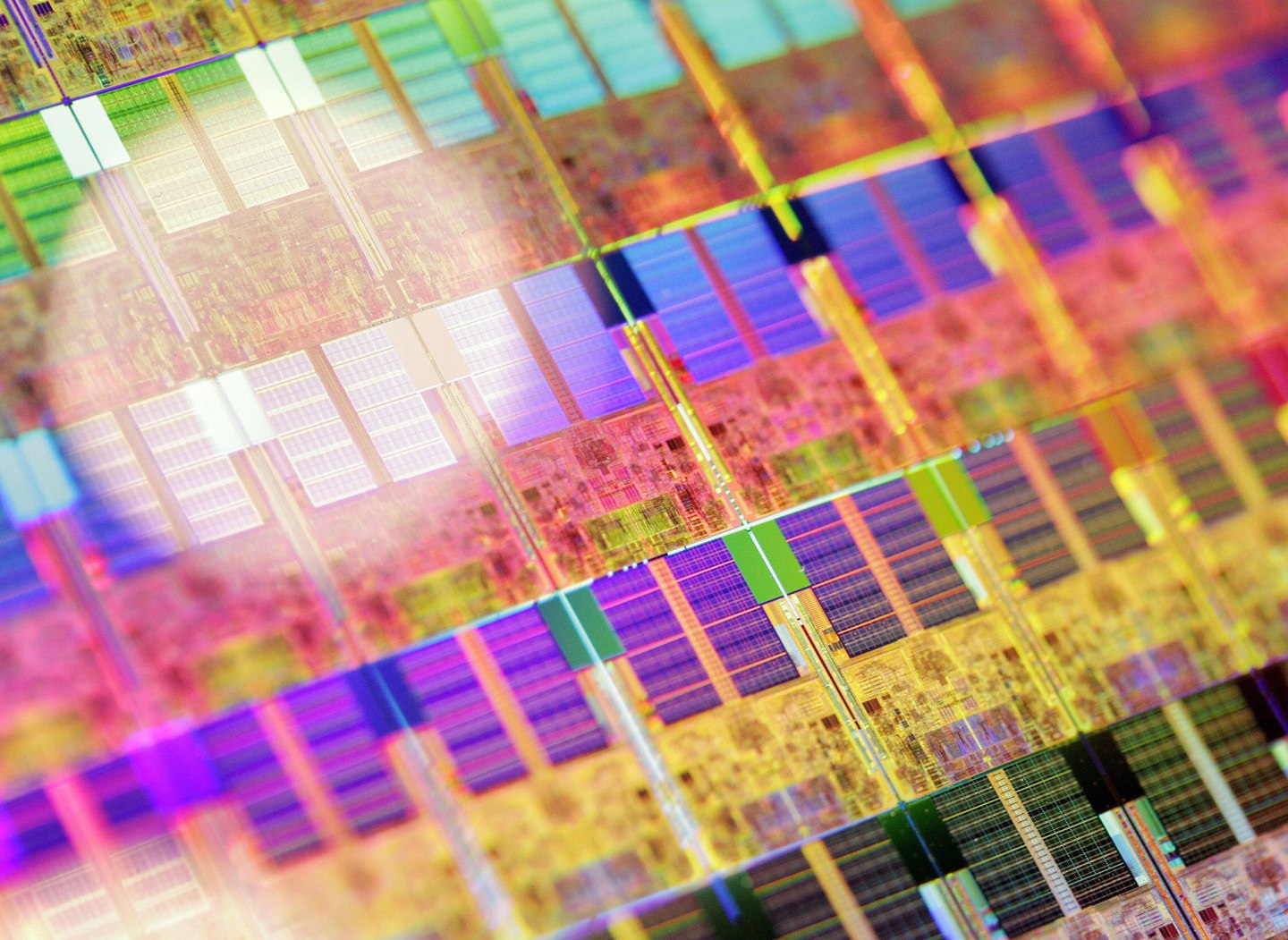
A 45nm process 300mm silicon wafer is di
IntelYoshikazu Tsuno/AFP—Getty Images

The decade-long partnership between Intel and Micron to build better NAND (or Flash) memory used in solid-state drives has yielded an entirely new form of computer memory. This is a big deal. It’s as if a 10-year effort by Ford and GM to build a better car also produced a Segway.

New types of computer memory pop up every few years as firms such as HP, IBM, Motorola/Freescale and even startups try to create alternatives that are cheaper, faster, more dense or otherwise offer a different series of trade-offs than the dominant forms of memory used today. Some will find specialty applications in embedded systems, but most are too expensive or fragile to find mainstream use cases.

What Intel and Micron are hoping with this product is that is can achieve mass popularity.

memorytech
image courtesy of Intel

The two companies are calling their new memory 3D XPoint memory (pronounce 3D crosspoint memory) because its structure creates an lattice-like stacked layer of wires that looks like Xes when viewed from above. It combines properties of NAND Flash memory that is currently used inside solid state drives (SSDs) inside computers and phones, but it is 1,000 times faster and can last through 1,000 times more data writes.

That speed and endurance isn’t as important in your personal computer, but as SSDs are gaining use inside data centers because of their speed, both factors open up new use cases for the 3D Xpoint memory. One might be use for in-memory databases such as those made by Oracle and SAP, where the memory is located close to the compute. Usually in-memory databases require a lot of dynamic random access memory (DRAM) which is co-located with the processor, but DRAM is in limited supply and it loses everything when the power is turned off.

But Rob Crooke, senior vice president and general manager of Intel’s Non-Volatile Memory Solutions Group, explained that because the 3D Xpoint memory combines some of the elements of NAND and DRAM, you can have a lot of it (10 times more than current DRAM) and it’s non-volatile, which means that when the power goes off the data stored in it will stick around.

The new memory sounds like it’s going to be more power-intensive than NAND Flash, but the performance boost may make it worthwhile, while it should consume less power than DRAM since it won’t have to continuously refresh itself to ensure that the data stays in place.

The breakthrough that allowed the creation of 3D XPoint is one of materials science. Intel and Micron researchers have made the wires out of a new material as well as the wells that make up the memory cell where each bit of data is stored. When asked if manufacturing this new form of memory would require a significant change of equipment or investment, Crooke said it was as easy as moving to the next step in manufacturing smaller chips.

Since that’s a pretty tough thing to do (Intel just announced that it will spend two and half years getting to the next smallest generation of chips instead of two), I asked Crooke if that meant that manufacturing these chips was difficult. “This is pretty tough stuff,” he said. “But we’re used to the challenge, and manufacturing pretty tough stuff.”

For those eager to see 3D XPoint in action, you’ll have to wait. Crooke said the manufacturing has only recently been moved from a research line in Micron’s Boise, Idaho fab to an Intel production fab in Utah. The firms will provide sample wafers to customers by the end of this year and the chips would be in actual products shipping to customers in 2016. My expectation is that big name data center customers such as Facebook, Baidu, Amazon or Microsoft will be the first ones to put something like this through its paces to see if they can find a home for the new technology.

Subscribe to Data Sheet, Fortune’s daily newsletter on the business of technology.

About the Author
By Stacey Higginbotham
See full bioRight Arrow Button Icon

Latest in Tech

AIpalantir
New contract shows Palantir is working on a tech platform for another federal agency that works with ICE
By Jessica MathewsDecember 9, 2025
5 hours ago
Databricks CEO speaking on stage.
AIBrainstorm AI
Databricks CEO Ali Ghodsi says his company will be worth $1 trillion by doing these three things
By Beatrice NolanDecember 9, 2025
5 hours ago
AIBrainstorm AI
CoreWeave CEO: Despite see-sawing stock, IPO was ‘incredibly successful’ after challenges of Liberation Day tariff timing
By Sharon GoldmanDecember 9, 2025
5 hours ago
Arm CEO on stage at Brainstorm AI
AIBrainstorm AI
Physical AI robots will automate ‘large sections’ of factory work in the next decade, Arm CEO says
By Beatrice NolanDecember 9, 2025
7 hours ago
AIBrainstorm AI
‘Customers don’t care about AI’—they just want to boost cash flow and make ends meet, Intuit CEO says
By Jason MaDecember 9, 2025
9 hours ago
A man and robot sitting opposite each other.
AIEye on AI
The problem with ‘human in the loop’ AI? Often, it’s the humans
By Jeremy KahnDecember 9, 2025
9 hours ago

Most Popular

placeholder alt text
Success
When David Ellison was 13, his billionaire father Larry bought him a plane. He competed in air shows before leaving it to become a Hollywood executive
By Dave SmithDecember 9, 2025
18 hours ago
placeholder alt text
Economy
‘Fodder for a recession’: Top economist Mark Zandi warns about so many Americans ‘already living on the financial edge’ in a K-shaped economy 
By Eva RoytburgDecember 9, 2025
8 hours ago
placeholder alt text
Real Estate
The 'Great Housing Reset' is coming: Income growth will outpace home-price growth in 2026, Redfin forecasts
By Nino PaoliDecember 6, 2025
4 days ago
placeholder alt text
Success
Craigslist founder signs the Giving Pledge, and his fortune will go to military families, fighting cyberattacks—and a pigeon rescue
By Sydney LakeDecember 8, 2025
2 days ago
placeholder alt text
Uncategorized
Transforming customer support through intelligent AI operations
By Lauren ChomiukNovember 26, 2025
13 days ago
placeholder alt text
Banking
Jamie Dimon taps Jeff Bezos, Michael Dell, and Ford CEO Jim Farley to advise JPMorgan's $1.5 trillion national security initiative
By Nino PaoliDecember 9, 2025
10 hours ago
Rankings
  • 100 Best Companies
  • Fortune 500
  • Global 500
  • Fortune 500 Europe
  • Most Powerful Women
  • Future 50
  • World’s Most Admired Companies
  • See All Rankings
Sections
  • Finance
  • Leadership
  • Success
  • Tech
  • Asia
  • Europe
  • Environment
  • Fortune Crypto
  • Health
  • Retail
  • Lifestyle
  • Politics
  • Newsletters
  • Magazine
  • Features
  • Commentary
  • Mpw
  • CEO Initiative
  • Conferences
  • Personal Finance
  • Education
Customer Support
  • Frequently Asked Questions
  • Customer Service Portal
  • Privacy Policy
  • Terms Of Use
  • Single Issues For Purchase
  • International Print
Commercial Services
  • Advertising
  • Fortune Brand Studio
  • Fortune Analytics
  • Fortune Conferences
  • Business Development
About Us
  • About Us
  • Editorial Calendar
  • Press Center
  • Work At Fortune
  • Diversity And Inclusion
  • Terms And Conditions
  • Site Map

© 2025 Fortune Media IP Limited. All Rights Reserved. Use of this site constitutes acceptance of our Terms of Use and Privacy Policy | CA Notice at Collection and Privacy Notice | Do Not Sell/Share My Personal Information
FORTUNE is a trademark of Fortune Media IP Limited, registered in the U.S. and other countries. FORTUNE may receive compensation for some links to products and services on this website. Offers may be subject to change without notice.