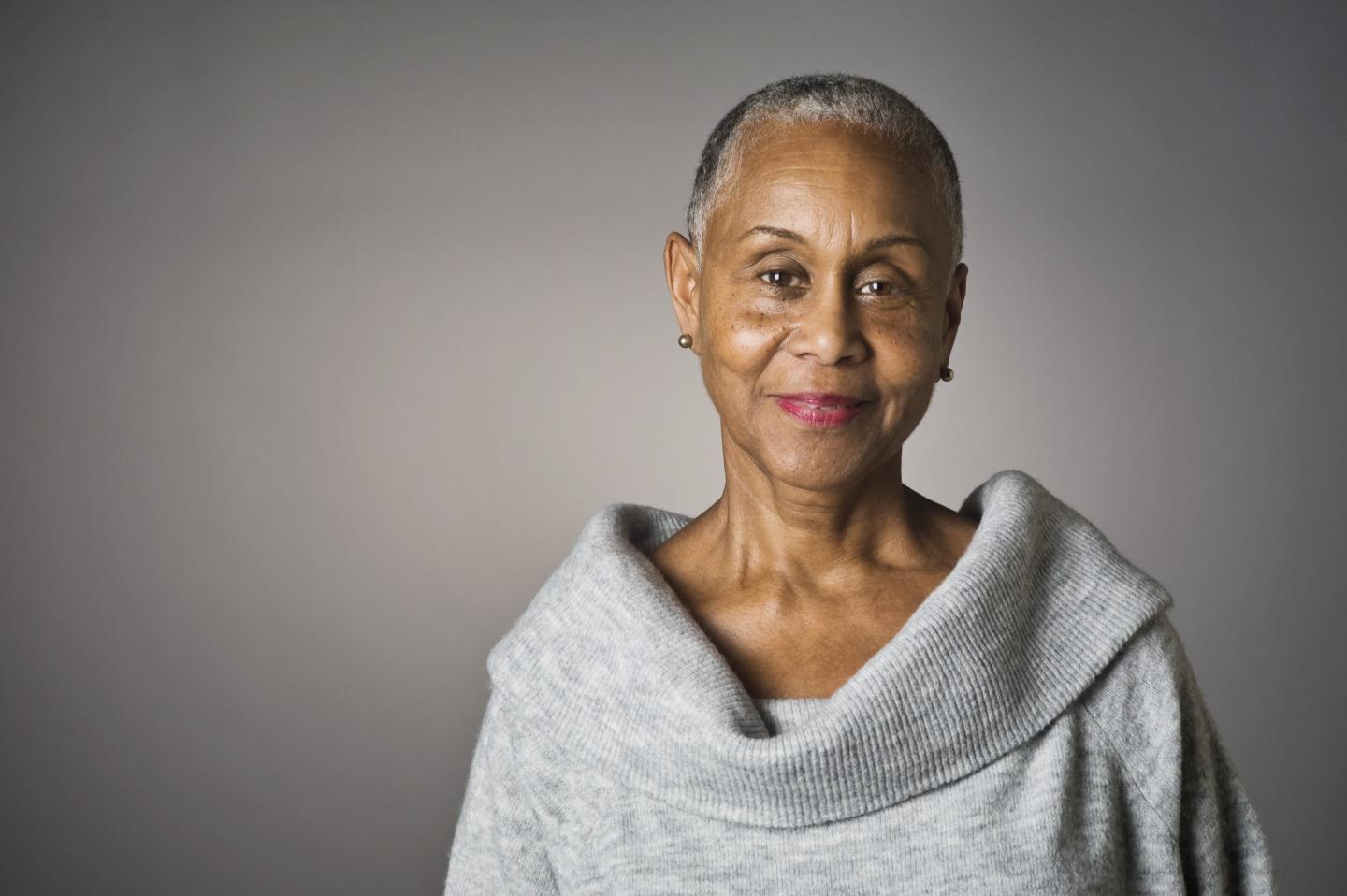
Carlene Davis, 57, started thinking about aging when she was still in her 30s, having spent eight years as her parents’ primary caretaker. Davis, a Black woman from Los Angeles, does not have a spouse, siblings, or children, and it dawned on her that there was no other family member to care for her needs as she got older. Davis is one of the nearly 1 million Americans who are “kinless.”
Family members provide more than 95% of the informal care for older adults who don’t live in nursing homes, according to the Population Reference Bureau. But with rising rates of single adults (through divorce and never marrying), at the same time births are declining, there’s a growing concern over who will look after this large cohort of kinless seniors who don’t have a partner or family member to provide care. The concern is particularly acute for Black women, who, according to a 2017 study, have lower levels of wealth and the highest rates of kinlessness.
University of Maryland sociologist Kris Marsh, Ph.D., tells Fortune this conclusion is “short-sighted” because it overlooks the support systems single Black women build. A 2013 study found Black Americans and Black Caribbeans have more extensive fictive kin networks, or family you choose, than their non-Hispanic white counterparts. Black Americans were also more likely to have support from—and daily interactions with—extended family members.
“We do have kin,” Marsh says. In her book The Loves Jones Cohort, she notes that single, middle-class Black Americans have tapped into a long cultural tradition of creating “kin” with people not related by blood, expanding their “families” beyond the traditional nuclear model.
The cost of being single
Like other experts who study singlehood, Marsh, says standards and policies, like those determining Social Security benefits and health insurance coverage, don’t align with U.S. single adults’ unique bonds and networks. As a result, being single is costly due to the lack of equitable coverage, reduced Social Security benefits, and limited ability to preserve money by there being only one person to generate income and benefits for a given household.
Furthermore, experts say U.S. policy around single status is damaging to people’s economic well-being, and that the treatment of this growing number of unmarried adults could have political ramifications. “Single status is the most important policy issue that we’re not discussing as a nation full stop, period,” says Jessica Moorman, Ph.D., professor at Wayne State University who studies Black women’s single socialization. She says the various benefits designated for married people are “policy fixes” that could easily apply to single adults.
“Marital policies exacerbated [an] already grim economic reality, “ she says, “I would argue that because more than half of this country is unmarried, that is one of the largest political causes of voters we could possibly have, right? All you need is half of all singles to get on the same page politically about something.”
The state of singlehood
Nearly half of U.S. adults are single, including people who are divorced, widowed, and never married, according to September 2023 data from the American Community Survey. In 2020, over a quarter of U.S. households were one-person households, according to the survey. In addition, most U.S. women are single, with significant labor force participation that has been particularly beneficial to the post-pandemic economy. Despite these significant shifts, policies that provide social and legal benefits tend to rely on Western nuclear family models.
“The women in my interviews were cognizant of the fact that they did not have a marital partner,” particularly for additional social security benefits or caretaking, which led them to build “intentional communities of found family,” says Moorman. Davis embodies this pursuit of intentional communities as she has made arrangements for support and caregiving with long-time friends. “My healthcare power of attorney is a friend who I’ve known since kindergarten,” says Davis, “I have a list in my trust of people to whom I have given HIPAA authorization,” she says.
Planning for the future as a ‘kinless’ adult
Carol Tucker, 63, is a lab manager at a medical school in Atlanta, Georgia, and has been divorced for about five years after a 27-year marriage. She says being single can be challenging regarding insurance and thinking about the future, “Who will care for me if I’m unable to care for myself?”
Carol did her research and turned to friends to learn their strategies for dealing with the fallout from divorce. She says being single has made her agile in preparing for aging and the future. She’s “ready to pivot,” as she calls it. As a result, she’s modified her will and invested more of her income in her long-term disability insurance, and each year, she reassesses her plans and financials. When seeking mental and financial support as a single woman, Carol says she turns to her trusted circle that she calls her “Senior Cabinet.”
“I’m quite fortunate to have a wonderful network from extended family, friends, and church community.”
Bella DePaulo, Ph.D., a psychologist who has written extensively on the single experience, says, “research shows that single people are more likely than married people to stay in touch with their friends, parents, siblings, and neighbors and exchange help with them,” contrary to married couples who tend to “become more insular,” she says. DePaulo, who is the author of the forthcoming book Single at Heart: The Power, Freedom, and Heart-Filling Joy of Single Life, summarizes the unique social networks that often thrive in the lives of single people this way: “Single people…have ‘The Ones’ rather than ‘The One.’” They are “tending to their bonds with the people who matter to them,” she says.
Delores Bushong, 76, is a retired school teacher of over 40 years who resides in Washington, D.C. She is never married and has no children, and relies on her long-time friends who have remained in the city.
She says single adults have to, or should, engage in “a lot of forward-thinking,” that is planning and anticipating scenarios for aging and death. “My personal representative is a friend right now,” she says, “One of the things he does is [say] ‘let’s pretend you’ve died. I knock on the door…I come in. Can I locate all the documents? Do I have access to all the account numbers and passwords?’”
Delores’s core community consists of “really long-term” friends and acquaintances from “being involved in different civic things,” including working to improve street lighting and protect forest areas within the city, as well as volunteering in her yoga and water aquatics classes and participating in her local Village, a membership organization consists of older people living in their own homes. “So through that. I’ve met lots of people.”
Inequity in aging
To consider children, siblings, partners, spouses, and parents as a person’s only options for caretaking ignores cultural norms for families that are not white, experts say. Black Americans have always considered relations beyond the biological. However, these supportive networks do not receive the benefits often reserved for marital and familial bonds. “We have to think about marital status as a line of inequity, both in terms of policy and how it functions to exacerbate other inequities,” says Moorman.
In the last decade, marriage has become increasingly linked to socioeconomic status and race, with more marriages among white people and those with higher income and education. Additionally, couples receive more economic benefits after marriage. “Marriage is a result of inequality and then perpetuates that inequality going forward,” says Geoffrey Sanzenbacher, an economics professor at Boston College.
Married people have “two shots” at health insurance and Social Security benefits—having a spouse provides a second chance at any set of benefits, says Sanzenbacher. This disadvantages single people, he says. “Right off the bat, you have this systemic choice to reward marriage because we allow two people, instead of one, to take advantage of this employer-sponsored benefit.”
He points out that the Social Security policy was implemented in 1935 when most U.S. adults were married and most white women did not work. That policy gave spouses access to their partner’s Social Security benefits. “Single people aren’t getting the same bang for their buck out of their social security contributions that a married person would,” he says. “When married people are showered with a whole array of benefits and protections, just because they are married when single people are denied those benefits, that is fundamentally unjust,” says DePaulo.
The number of single U.S. adults is growing. Those who marry do so at later ages; divorce remains high, and remarriage rates are decreasing, DePaulo points out. This means people spend more of their time unmarried than married, Scholars say it’s time policy recognizes the intentional communities and supportive networks single people create.
“It’s very easy to give single adults the tax rate of married adults. It’s very easy to say insurers, any legal adult attached to this person in whatever way they want to be attached to them, whether they’re a sibling, a friend, or a non-marital partner, you can have access to these benefits,” says Moorman.
Some developed nations have figured it out. In the U.K., people who live alone get a 25% discount on council tax, the U.S. equivalent to property tax. Single senior adults in New Zealand get a “living-alone allowance,” in which adults over 65 who live solo get a higher government pension payment to offset the “extra costs of running a household on your own.” Low-income residents who live alone in Quebec, Canada, can claim a tax credit. In Dublin, Ireland, people who live alone and already receive social welfare benefits may qualify for extra payments.
In the meantime, these inequities inspired Davis to cofound Sistahs Aging with Grace and Elegance in 2019, a research and policy project centering Black women within California’s Master Plan for Aging, which is a framework for supporting California’s population of residents who are 60 years and older. The initiative stems from Governor Gavin Newsome’s executive order to develop a strategy to promote the health and well-being of older Californians, whose population is projected to reach 10.8 million by 2030. “I wanted to think about what would equity in aging look like for Black women in California,” says Davis.
The perspectives of Davis and insight from scholars like DePaulo show that achieving equity in aging requires policy shifts and political will to support older adults, as well as redefining norms around relationship status and worth. “Everyone deserves the basics of human dignity. A person’s value is not defined by their marital or romantic relationship status, and their rights, benefits, and protections should not be linked to those statuses,” says DePaulo.