As many as 10 million people a year could die by 2050 due to the failure of prescription drugs, as viruses, bacteria, and other pathogens evolve to evade them, and science fails to keep up.
That was the assertion of experts at the World Economic Forum’s session on antimicrobial resistance, held Tuesday in Davos, Switzerland. In 2019, before the pandemic, nearly 1.3 million people died due to the problem, which contributed to another 5 million deaths, according to the World Health Organization.
What’s more, the issue comes with an enormous economic price tag—potentially $100 trillion or more by 2050, according to some estimates, due to factors like health care costs and lost productivity. That’s approximately 1% of global GDP.
“That’s trillion with a T,” Shyam Bishen—head of the Centre for Health and Healthcare and member of the World Economic Forum’s executive committee—emphasized at the event.
What is antimicrobial resistance?
Antimicrobial resistance (AMR) occurs when pathogens genetically alter themselves in response to the medications used against them. Already, infections are becoming more difficult—and sometimes impossible—to treat, with reports of multidrug resistant (MDR) and extensively drug resistant (XDR) infections—like pneumonia, tuberculosis, and sexually transmitted infections—on the rise.
Eventually, the slow burn of AMR could ignite a blazing firestorm, experts warn, ushering in a “post-antibiotic era.”
Even appropriate use of antimicrobials can contribute to the issue; inappropriate use only makes matters worse. Some patients demand such prescriptions from health care providers when they’re not needed. And some practitioners bend under the pressure. Perhaps a doctor prescribes antibiotics—which should be used to treat bacterial infections—for a viral condition. Or maybe they dole out antibiotics to a patient with a minor unknown illness while they wait for diagnostics to return.
Heavy use of antimicrobials in critically ill patients can create a breeding ground for pathogen evolution, with the hospitals ripe for spread. Outside of human medicine, antibiotics are added to agricultural feed in a bid to keep livestock healthy, inadvertently fueling AMR. In fact, more than half of the antibiotics produced in the U.S. are used in agriculture, according to the U.S. National Institute of Allergy and Infectious Disease.
An underappreciated scourge
Tuesday’s panel highlighted growing concerns on the topic, one of the top 10 public health threats facing humanity, according to the World Health Organization.
AMR kills more people each year than HIV and malaria, Bishen said. In fact, it’s the world’s third most lethal condition when compared to infectious diseases, coming in behind only COVID and tuberculosis, depending on the year. It may soon rank among the top 10 causes of death worldwide.
But “not enough resources are going into the research and development side” to discover and produce alternative drugs, he said. “There’s not enough push and pull.”
The clinical pipeline of new antimicrobials is “almost dry,” according to a November 2023 statement by the WHO. In its latest annual review, the organization found that there were only 27 new antibiotics in clinical development, only six of which were classified as innovative. What’s more, shortages of approved antibiotics, including quality generics, pose issues in countries of all income levels.
The topic is a difficult one for even professionals to wrap their head around, no less average citizens, further complicating the matter.
“I think lay people right now would probably be astonished to learn that [antimicrobial resistance is] the third leading cause of death” when compared against infectious diseases, said Helen Clark—former prime minister of New Zealand and former administrator of the United Nations Development Programme—at Tuesday’s panel.
Peter Sands, executive director of the Global Fund, referred to the alphabet soup of AMR as a “disastrous bit of branding.”
“The public doesn’t understand it,” he said. “And even within the global health community, there’s ambiguity about it.”
The term is confusing, Sands said, because people aren’t sure if it applies just to antibiotics or other drugs as well (it does), and what antibiotics should even be used for (to treat bacterial infections, not viral ones).
“I think if we can come up with sharper terminology that makes it easier for people to understand what we’re talking about,” he added. “That will be important.”
A ‘silent pandemic’
Causing more than 1 million deaths and contributing to nearly 5 million annually, “the time for action, I guess, was yesterday,” Clark said. “But if we didn’t act yesterday, we can act today.”
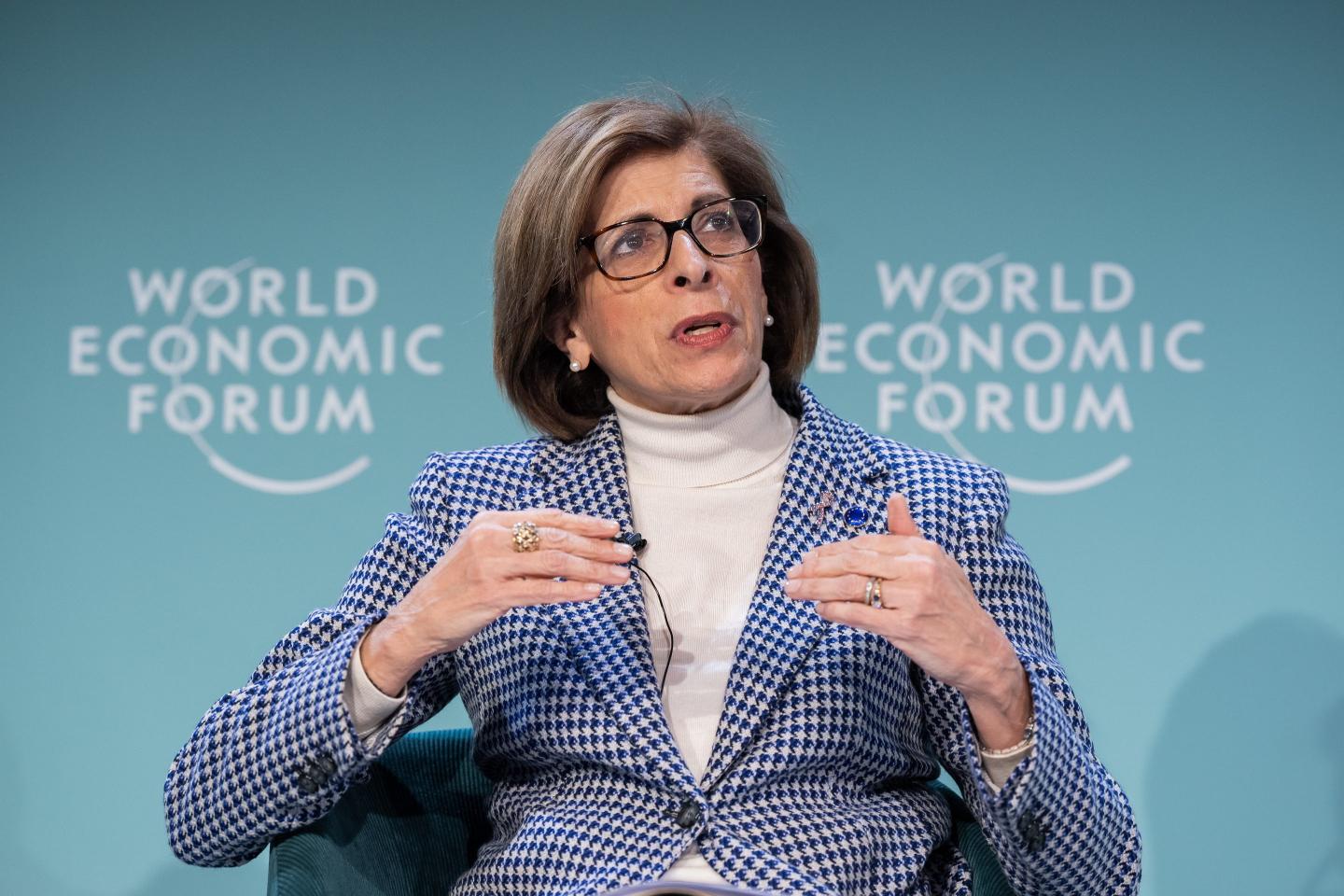
Stella Kyriakides, European Union commissioner for health and food safety, referred to the issue as a “silent pandemic during COVID.”
Case in point: From March 2020 through May 2022, antibiotics were prescribed to about 75% of COVID patients, according to a February 2023 article in The Lancet’s eClinicalMedicine.
But COVID is a virus, not a bacteria. And only 10% of patients were estimated to have a bacterial coinfection.
Another study, published in January 2023 in the journal Antibiotics, found that nearly 80% of the thousands of COVID patients involved in 130 studies worldwide from late 2019 through late 2021 were prescribed antibiotics. Its authors called such use during the pandemic “gratuitous.”
AMR “may be silent in terms of, it’s creeping up on us, but it’s very obviously there and impacting people’s lives,” Clark said. “That would be my call to action, for us to use our voices in every single forum to keep this at the top of the political agenda.”
The good news, according to Bishen: World authorities are beginning to take action. The G7 has made antimicrobial resistance one of three priority areas, and G4 finance minister Lawrence Wong is working to create incentives for new antimicrobial research, he said.
While the EU has been working on the growing problem of antimicrobial resistance for two decades using a “one health” approach—one that recognizes that the health of people, animals, and the environment are connected—“we need to turn this commitment into a reality,” Kyriakides said.
One way to do so: Governments can issue exclusivity vouchers for new antimicrobials. Such vouchers allow companies to extend the period during which they hold a monopoly on selling the drug, and can be sold to other companies. Such vouchers can be used to address market failure, she said.
But market failure is not the issue, asserted Dr. Severin Schwan, chairman of the board of directors of Roche Holding AG. The idea that it is, is “utter nonsense,” he said. “The market is working. … What we have is a market that is listening to signals that aren’t coming.”
Clark agreed, saying that “it’s hard to have a market failure when you have such a high level of use.”
“Something else is missing, and maybe it’s innovation,” she said.
Orphan drugs as a model market
Schwan thinks that drug companies should view the development of new antimicrobials like it now views orphan drugs—treatments for patients of rare diseases that affect a limited population, sometimes as few as a handful.
For a long time it was challenging to get drugmakers to invest in products that would only be used by a couple thousands patients worldwide, at most—a major hurdle to profitability.
“What happened with orphan drugs was that, at some point, there was a change in the thinking, … with regulators and drugmakers and payers and societies willing to pay very high prices for orphan drugs,” he said. “Out of solidarity, people said, ‘If you’re unfortunate enough to have a genetic disease, society is prepared to pay a high amount of money.’”
At that point—with exclusivity vouchers in play—the orphan drug industry took off, he said.
Companies are hesitant to invest in the development of new antibiotics because current ones are obtainable for mere pennies, Schwan said. But payers should view new antimicrobials as orphan drugs because—at least right now—a relatively small number of people need them. Providers first try first-line drugs, which are known to be the most effective (before the development of antimicrobial resistance) and the least toxic. If necessary, they move to second-line drugs—which are usually less effective, more toxic, and more expensive—and so on, as necessary. Only patients who have the most drug-resistant of cases would require the new drugs.
“If we could somehow change the thinking and not always look at it as a mass market, which it isn’t, I think we could potentially change the dynamic substantially,” he said.
‘A global problem like climate change’
To tackle the problem, all parties—from citizens to employers and governments to nonprofits—will need to be involved, from all around the world.
People will need to use antimicrobials properly, finish their full course, and take them only when necessary. Providers will need to prescribe them appropriately, ideally after the results of diagnostics are received. Researchers will need to develop additional antimicrobials and quicker diagnostic tests. Companies must choose to manufacture them. And agricultural producers must cease using antibiotics unnecessarily on livestock.
“A global problem like climate change,” AMR presents daunting logistical challenges, Sands said. And as evidenced by climate change, the global community does a poor job tackling slowly building issues.
It’s “much better at dealing with a blazing fire and marshaling the fire engines,” he said.
The issue won’t be a high priority for poorer countries because they can’t afford to focus on it. “So there is going to be an equity and resourcing issue here,” he added. “If we pretend there isn’t, it’s not going to work.”
If entities are serious about tackling the problem, “there has to be a funds flow to the proper countries of the world, to help them deal with it,” Sands said. “Otherwise we’ll have a problem half-solved.”
If the world waits to act until the smoldering fire of AMR bursts into a raging inferno, “it’s going to be really, really, really dangerous,” he said. The problem “requires us to do something we’re not good at, which is dealing with creeping, silent problems.”