• Home
  • Latest
  • Fortune 500
  • Finance
  • Tech
  • Leadership
  • Lifestyle
  • Rankings
  • Multimedia
TechAI
Europe

Self-driving taxis are speeding ahead in America—so why is Europe still waiting?

By
Samuel Burke
Samuel Burke
Down Arrow Button Icon
By
Samuel Burke
Samuel Burke
Down Arrow Button Icon
March 3, 2025, 1:00 AM ET
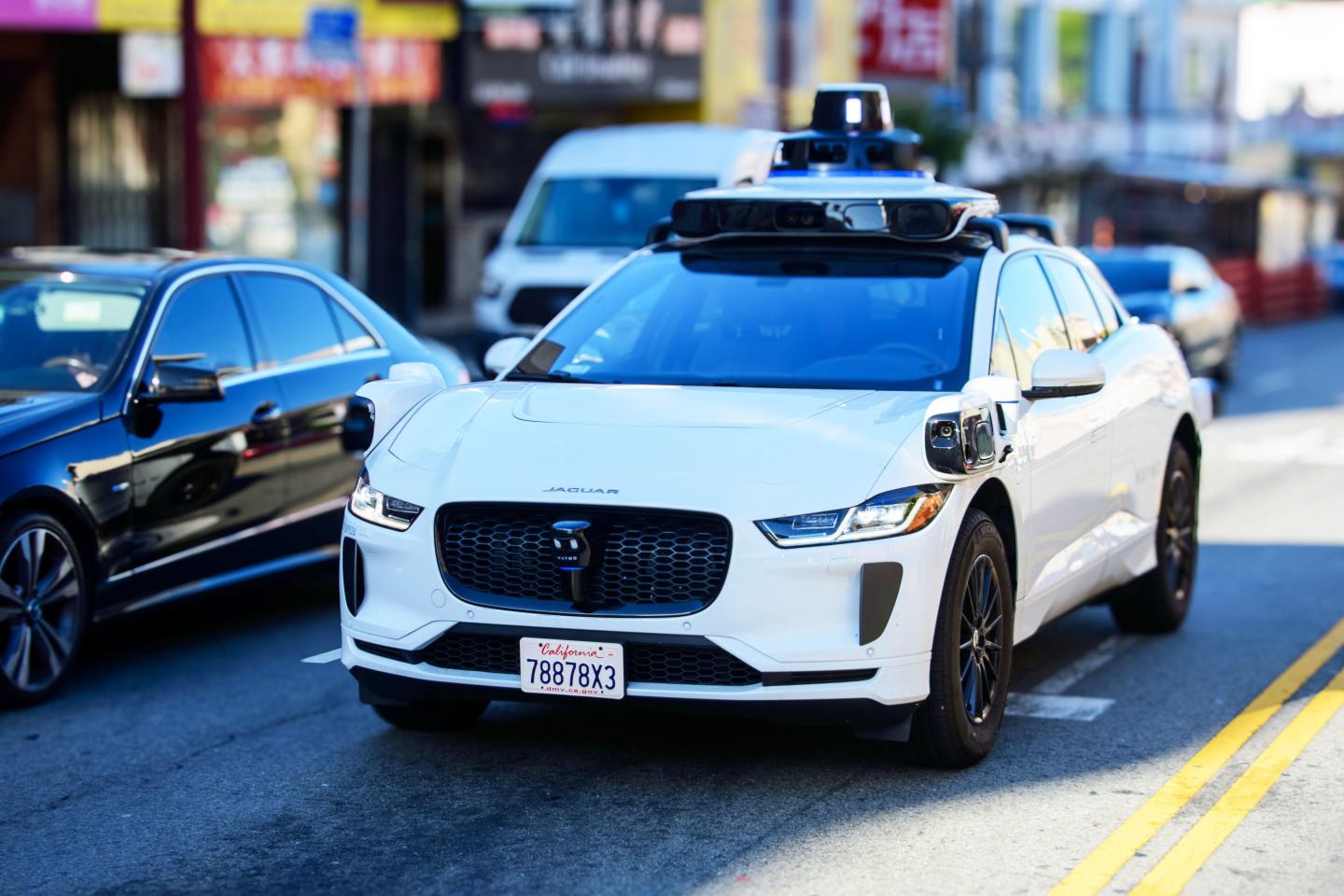
A Waymo driverless Jaguar in San Francisco.
A Waymo driverless Jaguar in San Francisco.Getty Images

On a warm winter day in Phoenix, self-driving taxis zoom past every few blocks, their empty front seats barely raising an eyebrow. The real surprise? How little the locals seem to notice. 

Recommended Video

The only people doing double takes are European tourists—here for the sunshine but suddenly eager to ditch their rental cars for a spin in a robotaxi.

That level of normalization across multiple American cities is the result of years of aggressive investment and regulatory flexibility. Alphabet’s Waymo first launched public trials of autonomous vehicles in Phoenix in 2017 and rolled out a full commercial service in 2018. Yet in Europe there isn’t a single commercial robotaxi service. 

Despite active testing in various cities, Europe lags far behind the U.S. and China in deploying self-driving taxis at scale. Three challenges explain this lag: money, infrastructure, and regulatory roadblocks across the continent.

Money talks—and Europe’s not listening

The biggest issue, according to Tal Brener, former CFO of ride-hailing app Gett, is capital—or rather, the lack of it. “U.S. venture capital and private equity investors are willing to take huge risks on technology they believe has massive potential,” Brener says. “In Europe, the investment industry is much more conservative.”

American investors saw the long-term potential of autonomous mobility and poured billions into it, knowing it would require years of development. That led to the rise of companies like Waymo, which has operated extensive real-world deployments. In contrast, European robotaxi ventures have been more fragmented, smaller in scale, and often tied to traditional automakers that move more cautiously.

“In Europe, the investment industry is much more conservative.”

Tal Brener, former CFO of Gett

Even when European companies have dabbled in autonomous transport, they’ve struggled to scale. Volkswagen attempted to launch its own ride-hailing service in 2018, but the project—focused on autonomous shuttles rather than taxis—still hasn’t become commercially viable. Meanwhile, Waymo has been operating at Level 4 autonomy in Phoenix for nearly seven years (autonomous driving is classified into six levels, from Level 0, no automation, to Level 5, full autonomy).

Innoviz Technologies CEO Omer Keilaf
Courtesy of Innoviz Technologies

A litany of U.S. advantages

The U.S. lead in autonomous driving isn’t just about private investment. Innoviz Technologies CEO Omer Keilaf attributes it to decades of government-funded programs and research. “Long-term projects from DARPA [Defense Advanced Research Projects Agency] and expertise from institutions like Carnegie Mellon—Europe never developed that knowledge,” he says. Early government investment in self-driving technology built a talent pipeline that now powers commercial ventures.

Brener highlights another structural advantage: Scaling robotaxi operations is far easier in the U.S. than in Europe. “Once you’ve launched in one U.S. state, it’s relatively easy to expand into others,” he explains. “But in Europe, every country has different regulations, and even within a single country like Germany, different regions have different rules.” The fragmented nature of European governance has slowed down deployment, making it difficult for companies to scale in the same way U.S. firms have.

The challenges of European roads

One reason often cited for the slow rollout of robotaxis in Europe is the continent’s dense urban environments. Brener points to the sheer complexity of European roads compared with U.S. cities like Phoenix and Austin, which have wide streets and grids. “European city centers weren’t designed for cars the way American cities were,” he says. “You’re dealing with winding streets, irregular intersections, and a lot of pedestrian-heavy areas. That’s a huge challenge for autonomous vehicles.”

Yet while the complexity of European streets is a factor, not everyone sees it as an insurmountable obstacle. Keilaf argues that infrastructure alone isn’t the main thing holding Europe back. “People say it’s the narrow roads, the winding streets, the historical city centers—but come on,” he says. “San Francisco is one of the hardest places to drive, with slopes, tight streets, and heavy congestion. If Waymo can handle that, then Europe’s streets aren’t an excuse.”

The reality is that while these challenges make deployment more complicated, they are problems that can be solved with enough investment and regulatory willpower—both of which have been lacking in Europe.

“San Francisco is one of the hardest places to drive, with slopes, tight streets, and heavy congestion. If Waymo can handle that, then Europe’s streets aren’t an excuse.”

Omer Keilaf, CEO of Innoviz Technologies

Another major factor slowing down European robotaxi deployment is the difficulty of working with regulators. Brener notes that in the U.S., companies have formed direct relationships with government agencies, allowing them to negotiate regulatory approvals more efficiently.

“In Europe, it’s much harder to connect vision with regulation,” he explains. “There’s more bureaucracy, more caution, and fewer direct pathways for business leaders to shape policy.” This dynamic has made it tougher for European robotaxi projects to get off the ground. 
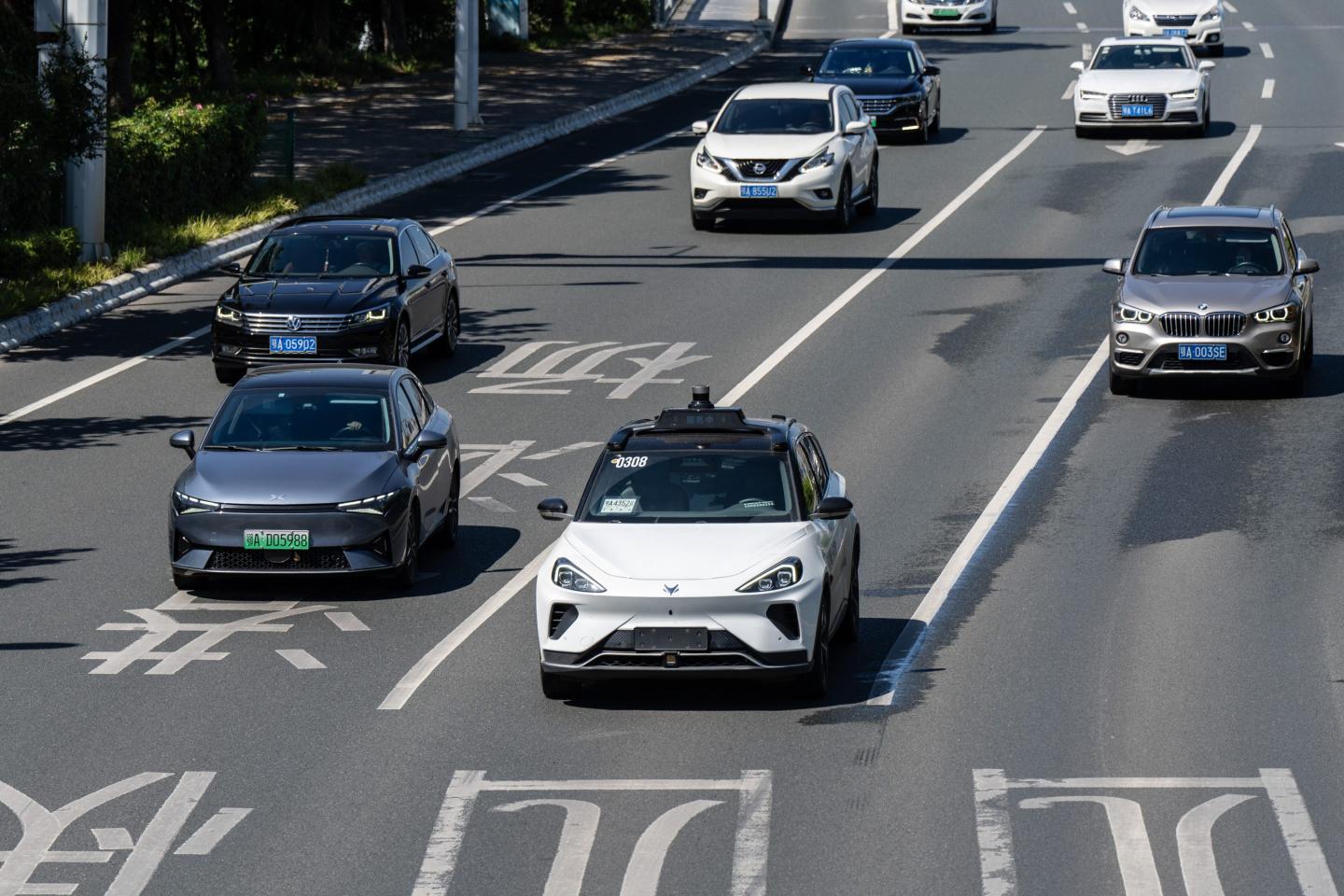
More than 500 electric robotaxis built by Baidu currently operate in Wuhan, China.
Qilai Shen—Bloomberg/Getty Images

The shift toward a robo-transit future

Europe may not have robotaxis yet, but that doesn’t mean autonomy isn’t coming. The focus, however, seems to be on public transit rather than private robotaxis. “In Europe, cities are built around strong public transportation systems,” Brener notes. “That’s why a lot of autonomous investment here is going toward shuttles and buses, not private taxis.”

Keilaf’s company, Innoviz Technologies, is already working with Volkswagen on an autonomous version of its electric bus, the “ID. Buzz,” set to launch in Germany in 2026. Meanwhile, one of the most ambitious autonomous taxi projects in Europe is coming from an unexpected player: Verne, a subsidiary of electric automotive manufacturer Rimac Automobili.

The Croatian startup is aiming to launch self-driving taxis in the country’s capital, Zagreb, by 2026, with expansion into the U.K. and Germany shortly after. Unlike many European automakers that have been slow to embrace Level 4 autonomy, Verne is going all in. The company has designed its vehicles from the ground up for full autonomy—meaning no steering wheels, no pedals, and no human interaction required. Instead of retrofitting existing car models with self-driving tech, Verne is building a vehicle specifically optimized for urban autonomous taxi operations.

Verne’s investors see it as Europe’s best chance to catch up in the robotaxi race. The company is leveraging Rimac’s cutting-edge electric powertrains and battery systems—best known for powering high-performance hypercars—to develop a two-seater autonomous vehicle designed for European cities. With data showing that 90% of taxi rides carry just one or two passengers, Verne argues its compact design meets real-world demand. If it succeeds, Europe may finally have a homegrown answer to Waymo.

Will Europe ever catch up?

The European market may have been slow to embrace robotaxis, but that doesn’t mean it will stay behind forever. Investment is picking up, public-transit-focused autonomy is taking shape, and major players like Volkswagen and Tesla are making moves.

For now, though, don’t expect to see driverless taxis cruising around London or Paris. If you’re a European who wants to experience a robo-ride, your best bet is still a trip to the States.

This article appears in the April/May 2025 issue of Fortune with the headline “Why Are There No Robotaxis In Europe?”

Join us at the Fortune Workplace Innovation Summit May 19–20, 2026, in Atlanta. The next era of workplace innovation is here—and the old playbook is being rewritten. At this exclusive, high-energy event, the world’s most innovative leaders will convene to explore how AI, humanity, and strategy converge to redefine, again, the future of work. Register now.
About the Author
By Samuel Burke
See full bioRight Arrow Button Icon

Latest in Tech

Finance
Lorem ipsum dolor sit amet, consectetur adipiscing elit, sed do eiusmod tempor incididunt ut labore et dolore magna aliqua. Ut enim ad minim veniam
By Fortune Editors
October 20, 2025
Finance
Lorem ipsum dolor sit amet, consectetur adipiscing elit, sed do eiusmod tempor incididunt ut labore et dolore magna aliqua. Ut enim ad minim veniam
By Fortune Editors
October 20, 2025
Finance
Lorem ipsum dolor sit amet, consectetur adipiscing elit, sed do eiusmod tempor incididunt ut labore et dolore magna aliqua. Ut enim ad minim veniam
By Fortune Editors
October 20, 2025
Finance
Lorem ipsum dolor sit amet, consectetur adipiscing elit, sed do eiusmod tempor incididunt ut labore et dolore magna aliqua. Ut enim ad minim veniam
By Fortune Editors
October 20, 2025
Finance
Lorem ipsum dolor sit amet, consectetur adipiscing elit, sed do eiusmod tempor incididunt ut labore et dolore magna aliqua. Ut enim ad minim veniam
By Fortune Editors
October 20, 2025
Finance
Lorem ipsum dolor sit amet, consectetur adipiscing elit, sed do eiusmod tempor incididunt ut labore et dolore magna aliqua. Ut enim ad minim veniam
By Fortune Editors
October 20, 2025

Most Popular

Finance
Lorem ipsum dolor sit amet, consectetur adipiscing elit, sed do eiusmod tempor incididunt ut labore et dolore magna aliqua. Ut enim ad minim veniam
By Fortune Editors
October 20, 2025
Finance
Lorem ipsum dolor sit amet, consectetur adipiscing elit, sed do eiusmod tempor incididunt ut labore et dolore magna aliqua. Ut enim ad minim veniam
By Fortune Editors
October 20, 2025
Finance
Lorem ipsum dolor sit amet, consectetur adipiscing elit, sed do eiusmod tempor incididunt ut labore et dolore magna aliqua. Ut enim ad minim veniam
By Fortune Editors
October 20, 2025
Finance
Lorem ipsum dolor sit amet, consectetur adipiscing elit, sed do eiusmod tempor incididunt ut labore et dolore magna aliqua. Ut enim ad minim veniam
By Fortune Editors
October 20, 2025
Finance
Lorem ipsum dolor sit amet, consectetur adipiscing elit, sed do eiusmod tempor incididunt ut labore et dolore magna aliqua. Ut enim ad minim veniam
By Fortune Editors
October 20, 2025
Finance
Lorem ipsum dolor sit amet, consectetur adipiscing elit, sed do eiusmod tempor incididunt ut labore et dolore magna aliqua. Ut enim ad minim veniam
By Fortune Editors
October 20, 2025
Fortune Secondary Logo
Rankings
  • 100 Best Companies
  • Fortune 500
  • Global 500
  • Fortune 500 Europe
  • Most Powerful Women
  • Future 50
  • World’s Most Admired Companies
  • See All Rankings
Sections
  • Finance
  • Fortune Crypto
  • Features
  • Leadership
  • Health
  • Commentary
  • Success
  • Retail
  • Mpw
  • Tech
  • Lifestyle
  • CEO Initiative
  • Asia
  • Politics
  • Conferences
  • Europe
  • Newsletters
  • Personal Finance
  • Environment
  • Magazine
  • Education
Customer Support
  • Frequently Asked Questions
  • Customer Service Portal
  • Privacy Policy
  • Terms Of Use
  • Single Issues For Purchase
  • International Print
Commercial Services
  • Advertising
  • Fortune Brand Studio
  • Fortune Analytics
  • Fortune Conferences
  • Business Development
  • Group Subscriptions
About Us
  • About Us
  • Editorial Calendar
  • Press Center
  • Work At Fortune
  • Diversity And Inclusion
  • Terms And Conditions
  • Site Map
  • About Us
  • Editorial Calendar
  • Press Center
  • Work At Fortune
  • Diversity And Inclusion
  • Terms And Conditions
  • Site Map
  • Facebook icon
  • Twitter icon
  • LinkedIn icon
  • Instagram icon
  • Pinterest icon

© 2026 Fortune Media IP Limited. All Rights Reserved. Use of this site constitutes acceptance of our Terms of Use and Privacy Policy | CA Notice at Collection and Privacy Notice | Do Not Sell/Share My Personal Information
FORTUNE is a trademark of Fortune Media IP Limited, registered in the U.S. and other countries. FORTUNE may receive compensation for some links to products and services on this website. Offers may be subject to change without notice.


Latest in Tech

A SpaceX Falcon 9 rocket is displayed outside a Space Exploration Technologies Corp. facility in Hawthorne, California.
Startups & VentureElon Musk
SpaceX has filed confidentially for IPO ahead of AI rivals
By Bailey Lipschultz, Edward Ludlow and BloombergApril 1, 2026
10 hours ago
AI ‘slop’ is flooding YouTube Kids—and more than 200 groups and experts are calling for a ban
CybersecurityYouTube
AI ‘slop’ is flooding YouTube Kids—and more than 200 groups and experts are calling for a ban
By Catherina GioinoApril 1, 2026
10 hours ago
Deutsche Bank asked AI if it’s true that AI will solve the economy’s inflation problems. The robots answered
Economydisruption
Deutsche Bank asked AI if it’s true that AI will solve the economy’s inflation problems. The robots answered
By Nick LichtenbergApril 1, 2026
10 hours ago
ntsb
LawAutos
Why hands-free systems in self-driving cars aren’t actually safer, according to the NTSB
By Josh Funk and The Associated PressApril 1, 2026
11 hours ago
Mike Wirth, chief executive officer of Chevron.
EnergyData centers
Microsoft and Chevron enter exclusivity deal on powering West Texas AI data center complex
By Jordan BlumApril 1, 2026
11 hours ago
A chip research center site operations manager stands next to a window overlooking the facility.
EnvironmentData centers
Data centers are so hot their ‘heat island’ effect is raising temperatures up to 6 miles away and impacting 343 million people worldwide, study finds
By Sasha RogelbergApril 1, 2026
13 hours ago

Most Popular

Two-thirds of parents say their adult Gen Z kids still rely on them financially  for support—even though it's putting them under strain
Success
Two-thirds of parents say their adult Gen Z kids still rely on them financially  for support—even though it's putting them under strain
By Fortune EditorsMarch 31, 2026
2 days ago
Jerome Powell says the $39 trillion national debt is ‘not unsustainable,’ but warns the trajectory ‘will not end well’
Economy
Jerome Powell says the $39 trillion national debt is ‘not unsustainable,’ but warns the trajectory ‘will not end well’
By Fortune EditorsMarch 30, 2026
2 days ago
Current price of gold as of April 1, 2026
Personal Finance
Current price of gold as of April 1, 2026
By Fortune EditorsApril 1, 2026
17 hours ago
A man used AI to call 3,000 Irish bartenders to track the cost of Guinness. Now pubs are lowering their prices to compete
AI
A man used AI to call 3,000 Irish bartenders to track the cost of Guinness. Now pubs are lowering their prices to compete
By Fortune EditorsMarch 30, 2026
3 days ago
Current price of oil as of April 1, 2026
Personal Finance
Current price of oil as of April 1, 2026
By Fortune EditorsApril 1, 2026
18 hours ago
Hiring just hit a level not seen since the economy was ‘closed down literally’ during COVID, top economist says
Economy
Hiring just hit a level not seen since the economy was ‘closed down literally’ during COVID, top economist says
By Fortune EditorsMarch 31, 2026
1 day ago