In May, the parent companies of two leading British tea brands reported record sales: Kallo Foods, which owns Clipper Teas, jumped 8% to £121.7 million ($155.5 million) in 2023, while Bettys & Taylors, which owns domestic market leader Yorkshire Tea, grew turnover 14% to £295.7 million ($375.5 million).
Shortly afterward, Twinings—another top brand, owned by Associated British Foods—reported its highest-ever after-tax earnings of £77 million ($97.8 million).
So far, you might say, so unsurprising. Everyone knows the Brits love their tea, which George Orwell once described as “one of the mainstays of civilization” in the country.

But take a closer look, and you’ll see this isn’t quite service as usual.
Tea is indeed popular—the U.K. quaffs about 36 billion cups a year, with half the population partaking daily—but consumption has fallen precipitously, particularly for black tea, volumes of which have been dropping 2% to 3% annually for decades, as the bitter aroma of barista-style coffee wafts increasingly though Britain’s high streets.
So does the recent spate of bumper sales mean the time for tea has come again?
The coffee shop conundrum
If “builder’s tea”—black, dispensed in tea bags, usually served with milk, often with sugar—is making a comeback, it’s not showing in the data.
According to Kiti Soininen, category director in U.K. food and drink at market research firm Mintel, “the ordinary tea bag segment has resumed its long-term volume decline” after a brief hiatus during the pandemic.
This shouldn’t be a surprise, if you consider where the market started.
“If you go back to the 1970s, pretty much the only hot drink we had was tea. We had the odd instant coffee, but we were a tea-drinking nation,” says Ben Newbury, head of brand marketing for Yorkshire Tea at Bettys & Taylors. As the variety and quality of alternative beverages increased, led by but not limited to coffee, the only way was down.
But Newbury believes that this inevitable incumbency effect has been compounded by a sense of apathy and defeatism in the sector. “A lot of other manufacturers and brands just stopped talking about tea and its benefits,” he says.
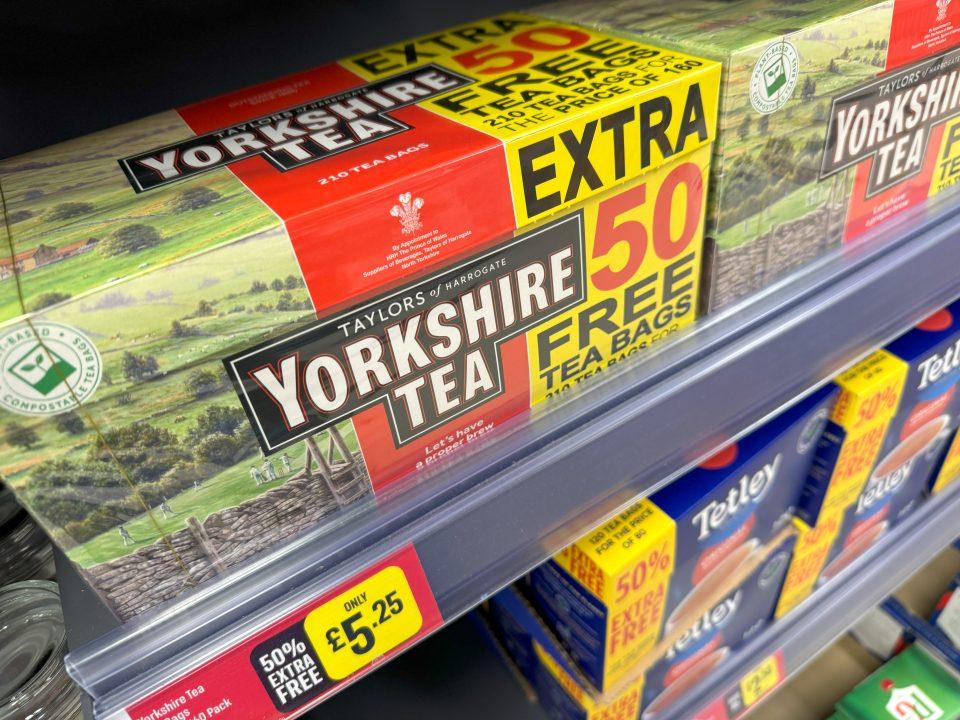
Yorkshire Tea is certainly unusual in having enjoyed recent growth in both value (revenue) and volume (the number of tea bags sold), at 21% and 12%, respectively, in 2023.
It did this by growing market share in black tea, which Newbury attributes to its premium positioning within the mass market. In a cost-of-living crisis, it turns out, Brits found cutting back on £5 ($6.35) skinny lattes more palatable than skimping a few pennies on a tea bag.
Most others reporting strong results did so despite dwindling volumes, with sales growing directly on higher prices as a result of cost inflation.
Yorkshire isn’t the only brand to have realized the advantages of being premium, says Soininen, pointing to Tata-owned Tetley launching its Gold Brew, and Lipton—the world’s largest tea company, spun out from Unilever in 2022 with over 30 brands—relaunching its mass-market U.K. brand PG Tips last year with a higher emphasis on quality.
“Tea has been a bit unloved in the U.K., because of a lack of category leadership,” says Gareth Mead, Lipton’s chief corporate communications and sustainability officer. He points out that PG Tips’ new advertising campaign—featuring British rapper and actor Ashley Walters, and directed by Sir Steve McQueen, of 12 Years A Slave fame—was its first new campaign in nearly eight years.
“If you want consumers to drink more tea, let’s give a reason to buy the product … Our approach has been to reinvest in PG Tips,” says Mead, who adds that first-quarter volumes rose for the first time in years. “There is a huge opportunity to revitalize Britain’s love for tea.”
Given the long-term decline in everyday tea drinking, that’s a bold statement. But Lipton, like Yorkshire and the wider industry, sees potential for new markets in perhaps surprising places.
Teatime for Gen Z
London’s never had a café culture, not in the manner of Paris or Vienna. Traditional silver service tearooms have long since given way to cookie-cutter coffee shops on the city’s streets, surviving only as afternoon tea, which typically takes place out of sight in plush hotels.
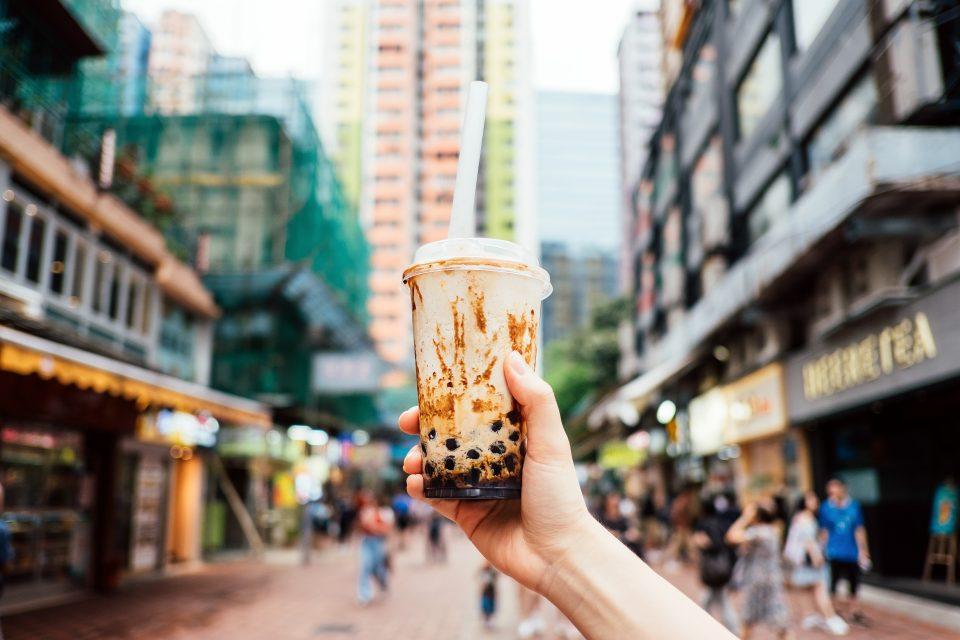
But over the past decade, a Taiwanese import has brought public tea culture back to life—though it’s doubtful Orwell would have recognized it as such.
If you stroll along Shaftesbury Avenue in London’s West End, from Piccadilly Circus to New Oxford Street, you’ll pass by my count at least 10 bubble tea stores, selling cold tea shaken over ice in plastic cups, often startlingly colored, with assorted jellies, popping bobas, and tapioca pearls. Popular flavors include lychee, taro, and winter melon; Darjeeling and Lady Grey, not so much.

The clientele, often queuing outside stores onto Soho backstreets, are overwhelmingly in their teens and twenties, and they can’t get enough of it.
Newbury is under no illusion that younger Britons will ever adopt the tea habits of their parents or grandparents: A YouGov poll found a quarter of those over age 60 drink more than 20 cups a week, compared with only 6% of 16- to 24-year-olds—but he does see bubble tea as emblematic of the way Gen Z can be drawn into new tea drinking experiences.
“It’s fascinating, the younger generation coming into tea. It feels very similar to coffee-shop culture. It’s really about theater and a personalized treat, similar to having a frappé or flavored coffee,” he says.
Neither Yorkshire nor Lipton engage directly with bubble, or boba, tea—now estimated to be a $2.6 billion global market, growing at over 7% annually—but both have embraced ways of drinking tea that would have been unimaginable only a few decades ago.
Mead points to Lipton Cold Infuse (tea designed to be brewed cold as opposed to iced tea; Lipton Iced Tea is an entirely separate entity, remaining a joint venture between Unilever and PepsiCo) and the tea concentrates of its Tazo brand, which have seen particular growth in France and the United States respectively.
“There’s been an image problem. If you try googling Gen Z and tea, you’ll struggle. You’ll see relatively old people looking wistfully into the distance. It’s a personal moment of pleasure, which is great, but very different from the hard-hitting, front-of-mind energy of coffee,” Mead explains.
Beyond variety, vibe, and novelty, he adds, the opportunity for tea among Gen Z comes from its alignment with two mega-trends: health (tea has many proven health benefits, including high levels of polyphenol and flavonoids, which benefit the heart) and sustainability (tea involves little processing and is very light, so has a relatively small environmental footprint).
“Gen Z aren’t regular tea drinkers yet, but they care about those things more than any other generation,” he says. “It’s something we should be very excited about as an industry. It’s our job as the world’s largest tea company to help people rediscover tea, in whatever form suits their needs. There’s no reason it can’t be cooler than coffee.”
Diversification and internationalization
Teas marketed for their health benefits have been standout performers in the category in recent years, according to Mintel’s Soininen, with 19% of brand launches in the U.K. having some kind of “functional” claim, many related to reducing stress or improving sleep.
“Tea is the ultimate elixir. It can get you out of bed. It can be there to have a conversation over. Or for some people it’s what they have before they go to sleep.”
Ben Newbury of Yorkshire Tea
Lipton’s Pukka brand, which specializes in herbal tea, has spread from the U.K. around the world, while Yorkshire has recently launched a herb-infused decaf, and even a Yorkshire Tea kombucha.
Beyond reaching Gen Z, it’s part of a wider trend toward product diversification, as businesses develop tea products or brands to meet divergent niches—whether for different groups, needs, or even times of day.
“Tea is the ultimate elixir. It can get you out of bed. It can be there to have a conversation over. Or for some people it’s what they have before they go to sleep,” says Newbury.
Reflecting this need to hit multiple bases, Yorkshire is part of a group that includes premium specialty tea business Taylors of Harrogate, as well as Taylors coffee and Bettys tearooms. Lipton’s portfolio, on the other hand, includes its eponymous brand (a bestseller in 150 countries) as well as PG Tips, Pukka, Tazo’s fruity and spicy teas, and T2’s blend of premium tea with fine tea-ware, aimed at the luxury gifting market.
Another strategy is to diversify outside Britain. After all, unlike in the U.K. the global at-home tea market—worth $127 billion in 2024, according to Statista—is growing, at a compound annual growth rate of 6%.
Lipton did this long ago. Now based in the Netherlands, its Glasgow-founded flagship brand is no longer for sale in the U.K. But family-owned Yorkshire is also actively targeting sales in growth markets abroad. “They’re making lattes with Yorkshire Gold in some parts of China,” Newbury remarks.
British tea culture still has cachet around the world, and still means something at home. Will it be what it was, the daytime drink, and a mainstay of civilization? Unlikely. Orwell’s time has passed, for better or worse.
But can it survive and start to grow again? Yes. Like anything else, it is evolving, and it is the businesses that recognize this and evolve with it that will ultimately succeed.