
• Home
  • Latest
  • Fortune 500
  • Finance
  • Tech
  • Leadership
  • Lifestyle
  • Rankings
  • Multimedia
FeaturesLondon
Europe

London’s love-to-hate business district Canary Wharf shows the future of work is about more than just the office

Prarthana Prakash
By
Prarthana Prakash
Prarthana Prakash
Europe Business News Reporter
Down Arrow Button Icon
Prarthana Prakash
By
Prarthana Prakash
Prarthana Prakash
Europe Business News Reporter
Down Arrow Button Icon
December 13, 2024, 1:00 AM ET
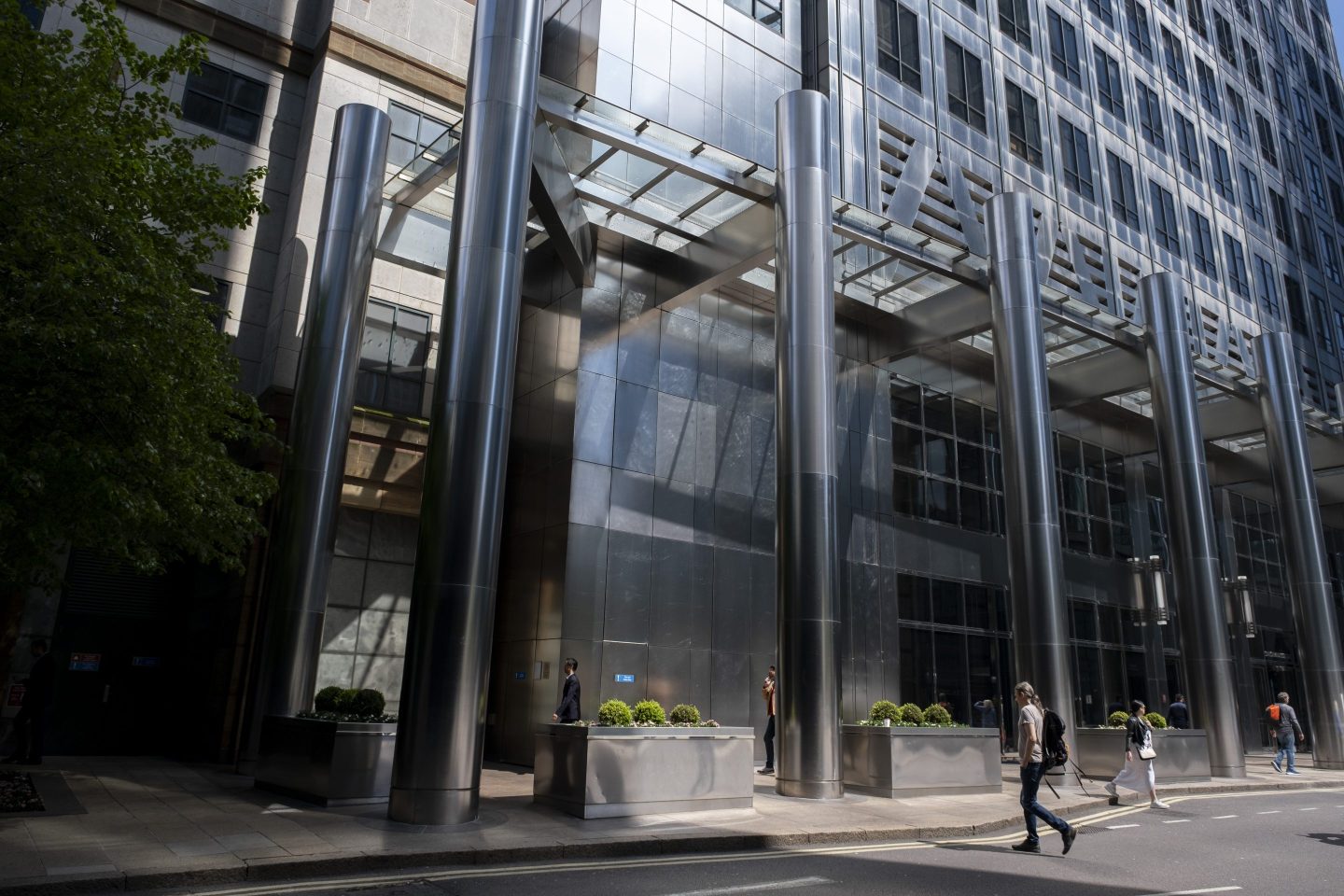
people walking into a building
Mike Kemp—In Pictures/Getty Images

Canary Wharf is a divisive corner of London. 

Recommended Video

Stepping out of the tube station into its vast shopping center, you could be anywhere—Singapore, New York, or even Toronto. Out on the street, you’re surrounded by towering skyscrapers, monuments to the area’s staggering success in attracting the world’s biggest banks and law firms. 

The glass facades on the high-rise buildings turn everything into shades of grey and blue, matching the suit-clad workers who claim the area as their own. Canary Wharf can be likened to any other financial hub area in the world—stoic, functional, and not everyone’s cup of tea.

But walk a few more steps, and you start to see something quite different and, for some, quite unexpected: a pleasant waterfront, rows of restaurants, and clusters of modern residential towers. 

This is Canary Wharf—but not as we know it.

If you ask Londoners, they have strong (often negative) opinions about the area, making it an easy target for criticism. Some describe it as sterile and spiritless compared to rival neighborhoods in London’s Square Mile and the West End. The skyscrapers at the core of Canary Wharf can seem inescapable—especially for those considering living there. 

Like other global hubs, Canary Wharf faced a reckoning during the COVID-19 pandemic. People went from being in the office five days a week to only a handful of days at best. Financial giants from Barclays to Revolut, which are the lifeblood of the Docklands estate, have had to accommodate hybrid working ever since. That’s prompted questions about how well Canary Wharf is equipped for the future. 

High-profile exit announcements from HSBC, Moody’s and Clifford Chance haven’t helped Canary Wharf’s image, plunging the narrative further into doom-and-gloom territory. 

But is that enough to quash Canary Wharf? Probably not, the experts tell Fortune.

The business district, reborn

To get a read on Canary Wharf’s future, it helps to look back at its past. The Docklands, located in the industrial east of London, went from a marshland to an important trade port. Then came World War II in the early 20th century, which turned the area to rubble following German bombing.

After years of rebuilding, the area turned a corner. It became a beacon of hope, and a symbol of reborn Thatcherite Britain, with financial services at its heart. But it wasn’t until the 1980s that Canary Wharf took off and gained its new name. First came the revolutionary (at the time) automated train line, the DLR, and then came Britain’s tallest building for the next two decades, One Canada Square.
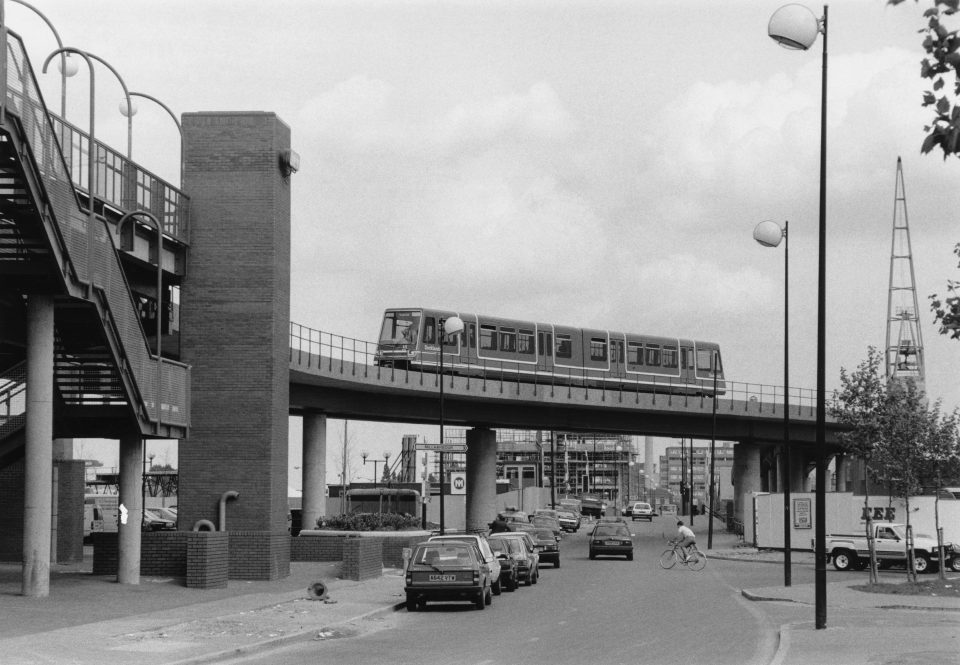
a train on an open-air track
London’s DLR on trial in the Isle of Dog in July 1987.
Keystone/Hulton Archive/Getty Images

When financial deregulation kicked in across Europe, banks needed more space to operate—and the City of London, with its historic buildings and restrictive planning laws, simply couldn’t offer that. That’s when Canary Wharf became the new banking and, eventually, fintech hub.  

“It created this impression that this was a city being built for the future,” Eric Van der Kleij, partner at venture capital firm EdenBase and the former head of Level39, the first tech accelerator established in Canary Wharf, told Fortune.  

Canary Wharf is no stranger to financial turmoil. Over the years, it faced the bleakest of times, such as the Global Financial Crisis when the fall of Lehman Brothers shook the Wharf like never before. 

Then, the COVID-19 pandemic left Canary Wharf’s future in a fog. Yet, the companies that moved to the area have seen nothing but “a decade of growth,” Van der Kleij said.

“It’s cyclical. You’re seeing something similar now,” he added. 

The area can’t be compared to other parts of London that developed over time, Paul Jayson, head of the real estate sector at law firm DLA Piper, told Fortune.

“It was created entirely as an office. It was always considered by the local authority as being a central business district for office tenants, which isn’t the same if you go to Oxford Circus or Kings Cross where it’s been built up more organically,” Jayson said. 

Back on its feet

So, what impact did the pandemic have on Canary Wharf? Vacancy rates, unsurprisingly, went up. In March 2024, vacancies stood at 15.2%—up from 13.4% a year earlier and 4% in 2017, according to commercial real estate analytics group CoStar (although the so-called Grade-A properties managed by the Canary Wharf’s main landlord saw a far lower vacancy rate).  

The rise of remote work is a whole different beast, posing significant challenges for the overall commercial property market, including Canary Wharf, especially when interest rates remain high. 

In 2023, CWG reported a 14.7% drop in the annual value of its property holdings, equivalent to £1.2 billion ($1.5 billion). Although the group’s owners have injected £400 million ($501 million) worth of capital, CWG’s loans are now being refinanced against property that isn’t worth what it was.

Since the scale of change is significant, Van der Kleij suggests a radical rethinking of how office spaces are managed.

“Real estate needs to embrace the Uber equivalent of surge pricing. If it wants to fill space that it’s paying rent for on days that are not well occupied, everything from meeting rooms needs to be priced according to the demand,” Van der Kleij said. “This isn’t new. This is basic economics.”

“Real estate needs to embrace the Uber equivalent of surge pricing”

– Eric Van der Kleij

Today, Londoners spend fewer days a week in the office, typically Tuesday, Wednesday and Thursday, affectionately known as “TWaTs” by the locals. That change has created a demand for buildings that can serve employee flexibility and accommodate for in-person and virtual collaborations—and plays to Canary Wharf’s advantage, Jayson argues. 

 “Buildings that were designed in the 90s, or even in the early 2000s, don’t have that ability. That’s where we’re seeing the benefit of Canary Wharf,” he said. 

Aside from the 9-to-5 grind, Canary Wharf has also attracted big-name retail and food-and-beverage establishments, including Hawksmoor and Gaucho, around newly-created residential areas like Wood Wharf to encourage a new generation of residents to live and work there. 

The gamble appears to have paid off, with retail occupancy as well as visitor numbers hitting record highs in 2022, according to CWG data. The opening of the new Elizabeth Line in Canary Wharf last year significantly bumped up footfall and is expected to continue attracting workers and leisure visitors alike.

As for future tenants, the group hopes that the relatively new entrants in the life science and healthcare space, such as Genomics England and Barts Health NHS Trust will cement its position for the years to come. Some of the Docklands’ loyal tenants, like Morgan Stanley and other professional services companies, have recommitted to stay on, giving the area the much-needed vote of confidence. 

CWG declined to comment further on future plans to adapt to the changing ecosystem.
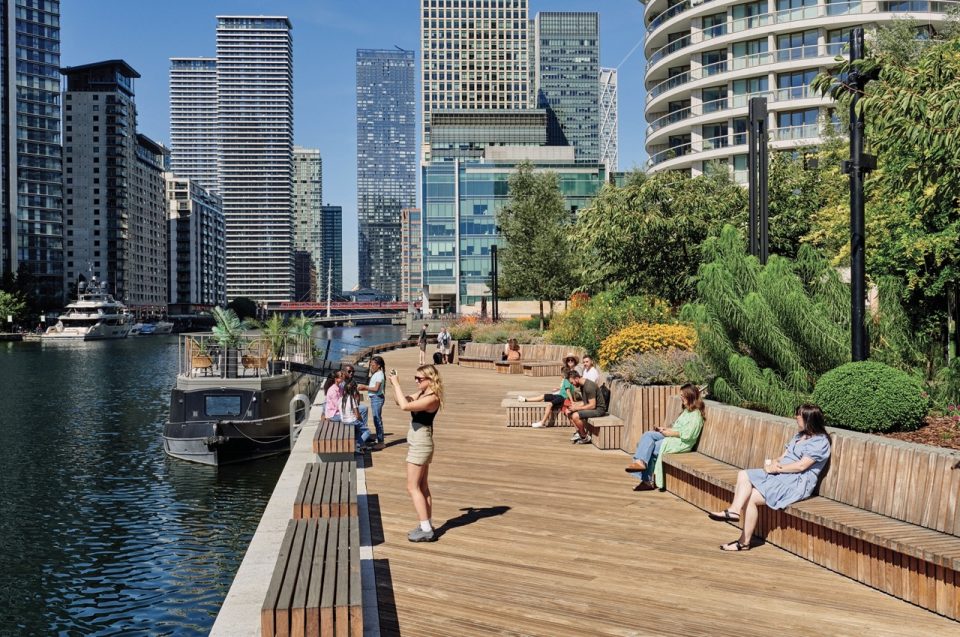
people sitting at Canary Wharf
People seen at the Wharf side.
COURTESY OF CANARY WHARF GROUP

While all the groundwork has been laid for the Docklands’ transition, it won’t be a swift jump from adolescence to adulthood.  

“It [Canary Wharf] is becoming an adult. It’s gone from being a well-funded, shiny office destination to becoming a seven-days-a-week residential mixed-use hotspot—and that’s going to take time,” Jayson said.

For one, shaking off the dry, colorless impression of the area that some Londoners love to hate could take far longer to address.

But history shows us that the story of Canary Wharf is one of resilience. Just like the numerous businesses and residents who call it home, it isn’t afraid to innovate, adapt and thrive in a fast-changing world.

A version of this story originally published on Fortune.com on May 13, 2024.

Join us at the Fortune Workplace Innovation Summit May 19–20, 2026, in Atlanta. The next era of workplace innovation is here—and the old playbook is being rewritten. At this exclusive, high-energy event, the world’s most innovative leaders will convene to explore how AI, humanity, and strategy converge to redefine, again, the future of work. Register now.
About the Author
Prarthana Prakash
By Prarthana PrakashEurope Business News Reporter
LinkedIn icon

Prarthana Prakash was a Europe business reporter at Fortune.

See full bioRight Arrow Button Icon

Latest in Features

Finance
Lorem ipsum dolor sit amet, consectetur adipiscing elit, sed do eiusmod tempor incididunt ut labore et dolore magna aliqua. Ut enim ad minim veniam
By Fortune Editors
October 20, 2025
Finance
Lorem ipsum dolor sit amet, consectetur adipiscing elit, sed do eiusmod tempor incididunt ut labore et dolore magna aliqua. Ut enim ad minim veniam
By Fortune Editors
October 20, 2025
Finance
Lorem ipsum dolor sit amet, consectetur adipiscing elit, sed do eiusmod tempor incididunt ut labore et dolore magna aliqua. Ut enim ad minim veniam
By Fortune Editors
October 20, 2025
Finance
Lorem ipsum dolor sit amet, consectetur adipiscing elit, sed do eiusmod tempor incididunt ut labore et dolore magna aliqua. Ut enim ad minim veniam
By Fortune Editors
October 20, 2025
Finance
Lorem ipsum dolor sit amet, consectetur adipiscing elit, sed do eiusmod tempor incididunt ut labore et dolore magna aliqua. Ut enim ad minim veniam
By Fortune Editors
October 20, 2025
Finance
Lorem ipsum dolor sit amet, consectetur adipiscing elit, sed do eiusmod tempor incididunt ut labore et dolore magna aliqua. Ut enim ad minim veniam
By Fortune Editors
October 20, 2025

Most Popular

Finance
Lorem ipsum dolor sit amet, consectetur adipiscing elit, sed do eiusmod tempor incididunt ut labore et dolore magna aliqua. Ut enim ad minim veniam
By Fortune Editors
October 20, 2025
Finance
Lorem ipsum dolor sit amet, consectetur adipiscing elit, sed do eiusmod tempor incididunt ut labore et dolore magna aliqua. Ut enim ad minim veniam
By Fortune Editors
October 20, 2025
Finance
Lorem ipsum dolor sit amet, consectetur adipiscing elit, sed do eiusmod tempor incididunt ut labore et dolore magna aliqua. Ut enim ad minim veniam
By Fortune Editors
October 20, 2025
Finance
Lorem ipsum dolor sit amet, consectetur adipiscing elit, sed do eiusmod tempor incididunt ut labore et dolore magna aliqua. Ut enim ad minim veniam
By Fortune Editors
October 20, 2025
Finance
Lorem ipsum dolor sit amet, consectetur adipiscing elit, sed do eiusmod tempor incididunt ut labore et dolore magna aliqua. Ut enim ad minim veniam
By Fortune Editors
October 20, 2025
Finance
Lorem ipsum dolor sit amet, consectetur adipiscing elit, sed do eiusmod tempor incididunt ut labore et dolore magna aliqua. Ut enim ad minim veniam
By Fortune Editors
October 20, 2025
Rankings
  • 100 Best Companies
  • Fortune 500
  • Global 500
  • Fortune 500 Europe
  • Most Powerful Women
  • Future 50
  • World’s Most Admired Companies
  • See All Rankings
Sections
  • Finance
  • Leadership
  • Success
  • Tech
  • Asia
  • Europe
  • Environment
  • Fortune Crypto
  • Health
  • Retail
  • Lifestyle
  • Politics
  • Newsletters
  • Magazine
  • Features
  • Commentary
  • Mpw
  • CEO Initiative
  • Conferences
  • Personal Finance
  • Education
Customer Support
  • Frequently Asked Questions
  • Customer Service Portal
  • Privacy Policy
  • Terms Of Use
  • Single Issues For Purchase
  • International Print
Commercial Services
  • Advertising
  • Fortune Brand Studio
  • Fortune Analytics
  • Fortune Conferences
  • Business Development
About Us
  • About Us
  • Editorial Calendar
  • Press Center
  • Work At Fortune
  • Diversity And Inclusion
  • Terms And Conditions
  • Site Map
  • Facebook icon
  • Twitter icon
  • LinkedIn icon
  • Instagram icon
  • Pinterest icon

Most Popular

placeholder alt text
Economy
America borrowed $43.5 billion a week in the first four months of the fiscal year, with debt interest on track to be over $1 trillion for 2026
By Eleanor PringleFebruary 10, 2026
2 days ago
placeholder alt text
Economy
It turns out that Joe Biden really did crush Americans' dreams for the future. Just look at how the vibe changed 5 years ago
By Jake AngeloFebruary 10, 2026
1 day ago
placeholder alt text
Commentary
Something big is happening in AI — and most people will be blindsided
By Matt ShumerFebruary 11, 2026
16 hours ago
placeholder alt text
Law
Law enforcement thought Nancy Guthrie's smart camera was disconnected, but Google Nest still had the tape
By Safiyah Riddle, Michael Liedtke and The Associated PressFebruary 11, 2026
19 hours ago
placeholder alt text
Crypto
Bitcoin reportedly sent to wallet associated with Nancy Guthrie’s ransom letter providing potential clue in investigation
By Carlos GarciaFebruary 11, 2026
12 hours ago
placeholder alt text
Economy
America’s national debt borrowing binge means interest payments will rocket to $2 trillion a year by 2036, CBO says
By Eleanor PringleFebruary 11, 2026
15 hours ago

© 2026 Fortune Media IP Limited. All Rights Reserved. Use of this site constitutes acceptance of our Terms of Use and Privacy Policy | CA Notice at Collection and Privacy Notice | Do Not Sell/Share My Personal Information
FORTUNE is a trademark of Fortune Media IP Limited, registered in the U.S. and other countries. FORTUNE may receive compensation for some links to products and services on this website. Offers may be subject to change without notice.


Latest in Features

FeaturesBlue Ribbon Companies
Blue Ribbon Companies 2026: See which tech giant made more Fortune lists than any other in the past year
By Fortune EditorsJanuary 15, 2026
28 days ago
Bill Gates and Warren Buffett.
InvestingWarren Buffett
Warren Buffett’s blind spot: Did the digital economy leave him behind?
By Adam SeesselDecember 30, 2025
1 month ago
Photo of Sam Altman
AIOpenAI
Inside OpenAI’s fragile lead in the AI race, and the 8-week ‘code red’ to fend off a resurgent Google
By Jeremy Kahn, Alexei Oreskovic and Lee CliffordDecember 17, 2025
2 months ago
FeaturesThe Boring Company
Two firefighters suffered chemical burns in a Boring Co. tunnel. Then the Nevada Governor’s office got involved, and the penalties disappeared
By Jessica Mathews and Leo SchwartzNovember 12, 2025
3 months ago
CoreWeave executives pose in front of the Nasdaq building on the day of the company's IPO.
AIData centers
Data-center operator CoreWeave is a stock-market darling. Bears see its finances as emblematic of an AI infrastructure bubble
By Jeremy Kahn and Leo SchwartzNovember 8, 2025
3 months ago
Libery Energy's hydraulic fracturing, or frac, spreads are increasingly electrified with natural gas power, a technology now translating to powering data centers.
Energy
AI’s insatiable need for power is driving an unexpected boom in oil-fracking company stocks 
By Jordan BlumOctober 23, 2025
4 months ago