
• Home
  • Latest
  • Fortune 500
  • Finance
  • Tech
  • Leadership
  • Lifestyle
  • Rankings
  • Multimedia

Trendingnow

1

'The golden years are not golden': Boomers are hoarding most of America's wealth and power because they're terrified of outliving their money

2

Gen Zers are arriving to college unable to even read a sentence—professors warn it could lead to a generation of anxious and lonely graduates

3

I've sold property on California's Central Coast for decades. The buyers chasing ranch and winery estates are after more than a lifestyle

1

'The golden years are not golden': Boomers are hoarding most of America's wealth and power because they're terrified of outliving their money

2

Gen Zers are arriving to college unable to even read a sentence—professors warn it could lead to a generation of anxious and lonely graduates

3

I've sold property on California's Central Coast for decades. The buyers chasing ranch and winery estates are after more than a lifestyle
FinanceEconomy
Europe

U.S. panic over national debt might mark a culture shift—are Americans becoming more ‘European’ about money?

Ryan Hogg
By
Ryan Hogg
Ryan Hogg
Europe News Reporter
Down Arrow Button Icon
Ryan Hogg
By
Ryan Hogg
Ryan Hogg
Europe News Reporter
Down Arrow Button Icon
April 26, 2024, 7:14 AM ET
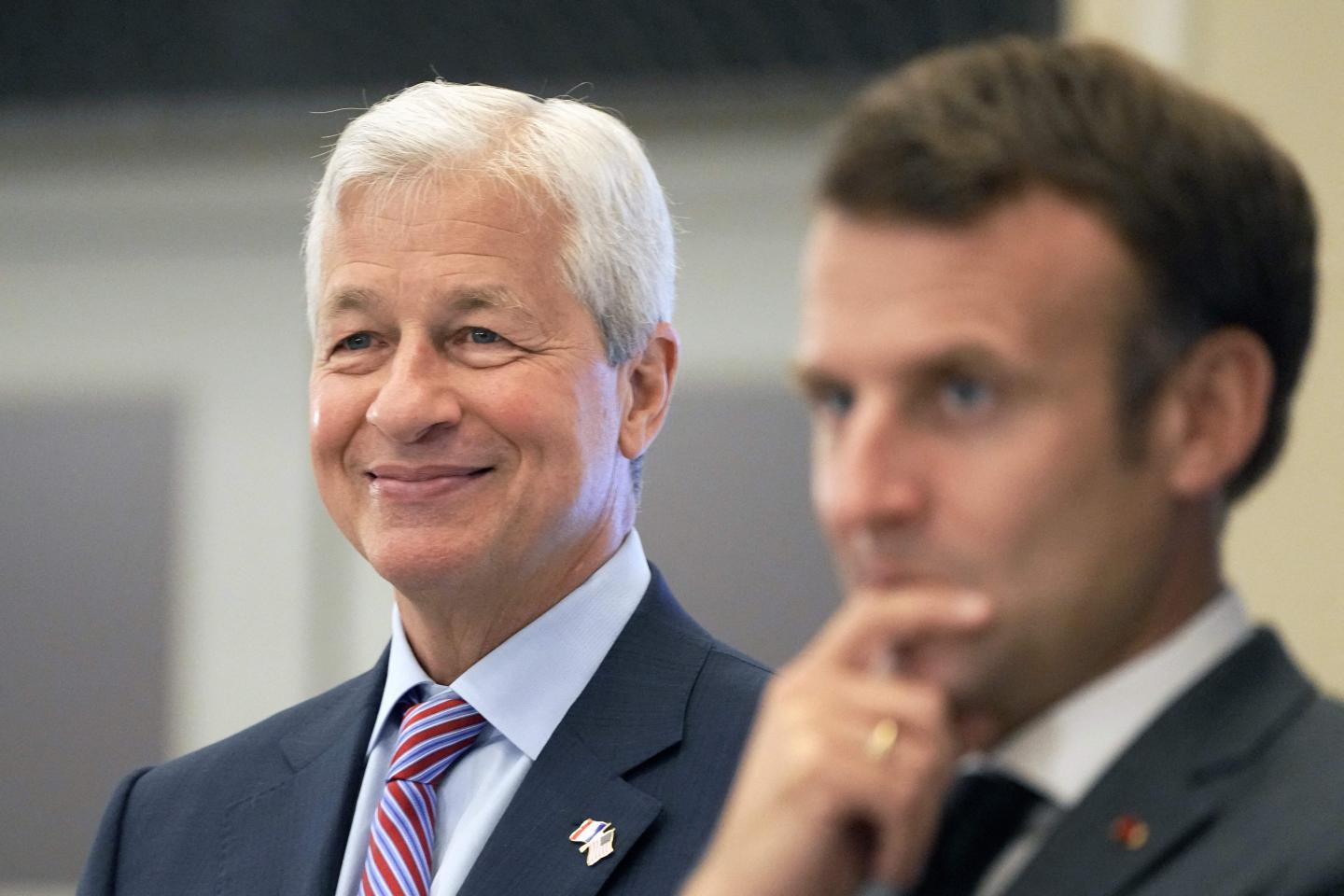
French President Emmanuel Macron (R) and JP Morgan CEO Jamie Dimon (L) react during the inauguration of the new French headquarters of US' JP Morgan bank on June 29, 2021 in Paris.
JPMorgan boss Jamie Dimon (left) and French President Emmanuel Macron have a common enemy: public debt. Michel Euler—AFP/Getty Images

As U.S. citizens swiped their credit cards, took on bumper loans, and applied for mega-mortgages during the pandemic, the U.S. government did the same with COVID-19 stimuli; the potential repercussions of that pileup were far from top of mind. 

Recommended Video

But a recent outcry over public debt suggests the U.S. could be turning a bit more frugal, and, possibly, a bit more European.

U.S. panic

In the U.S., major voices in finance from Jamie Dimon to Jerome Powell have sounded the alarm on outsize levels of public debt. 

The U.S. government has gone debt crazy since the onset of the COVID-19 pandemic, with Trump’s $2.2 trillion COVID stimulus and President Joe Biden’s Inflation Reduction Act elevating national debt levels to record highs. 

At the latest count, the U.S. was sitting on a debt-to-GDP ratio of 121%. The eye-watering $33.1 trillion figure means every American is in equivalent debt to the tune of $100,000. 

As interest rates rise, that unfamiliarly high figure has started to spook analysts. Black Swan author Nassim Nicholas Taleb, who correctly predicted the 2008 financial crisis, worries debt could become the cause of a more predictable crisis for the U.S. government.

JPMorgan CEO Jamie Dimon said the U.S. needed to address debt levels before foreign owners of U.S. bonds staged a “rebellion,” while Fed Chair Jerome Powell said it was time for Americans to have an “adult conversation” about debt levels.

When did the U.S., the land of financial abundance and free-flowing credit, get itself into a mindset that has been more commonplace on the other side of the Atlantic?

Debt aversion

Major policymakers and think tanks are freaking out about debt in a way that would have seemed hysterical just a few years ago.

Prior to and in the early days of the COVID-19 pandemic, historically low interest rates meant governments were effectively benefiting from free money. 

In the U.S., that has combined with historical factors like a strong dollar, a mighty economic growth engine, and consistent demand for the country’s bonds to assure policymakers that debt could always be worked off. But things aren’t as rosy as they once were.

That’s because most countries are dealing with the whiplash of massive public spending drives during the pandemic, now followed by the challenge of making those repayments amid rising interest rates to ward off generationally high levels of inflation.

Indeed, earlier in April the International Monetary Fund (IMF) sent a warning to the U.K. over its debt profile, highlighting it and Italy as two of four major economies that “critically need to take policy action to address fundamental imbalances between spending and revenues.”

Meanwhile, a genuine competitor to the greenback has emerged, following the rising influence of the BRICS bloc of Brazil, Russia, India, China, and South Africa, stoking the possibility of “dedollarization.”

Those pressures are forcing the U.S. into an uncomfortable conversation about its relationship with debt.

A cultural shift

However, it might also mark an unlikely cultural shift in how the U.S. perceives indebtedness. And that change in perspective could result in Americans increasingly resembling Europeans.

U.S. citizens have typically been more comfortable with debt, at least privately. In 2021, more than two-thirds of people in the country owned a credit card compared with about 38% of people in France, for example.

But the trends have been reversing since the onset of the financial crisis. 

In the U.S., private debt as a percentage of GDP has declined from 99% in 2007 to 74% in 2022, according to data from the International Monetary Fund. 

France’s private debt, meanwhile, has jumped from about 46% to 68% in the same time frame.

Several European governments have been historically more hawkish about their levels of personal and public debt. 

Germany, for example, has a constitutional fiscal rule that limits deficits to 0.35% of GDP per year, though that can be extended during economic downturns. This rule has been enough to put a stop to projects in the past. Countries in the eurozone also abide by stricter debt rules. 

Citizens across the continent are more prudent with their personal finances as well. 

“It’s not just about public debt, but also private debt. They don’t like to be indebted,” Zareh Asatryan, corporate director of the Leibniz Centre for European Economic Research (ZEW) corporate taxation and public finance research unit, said of Germans.

“If you look at, for example, mortgage take-ups, only half of Germans own apartments. They don’t like to take mortgages and buy apartments.”

A 2015 Pew survey found there was also a generational shift in how Americans perceived debt. The survey showed 70% of baby boomers viewed loans and credit cards as opportunity-enhancing, while 60% of millennials felt the same. 

“They experienced the Great Recession acutely: Millennials came of age during that period and saw how high levels of debt took a toll on households’ immediate financial security and prevented them from saving enough for later. And Gen Xers endured loss of housing wealth and other consequences of the recession at higher rates than many other Americans,” researchers wrote at the time.

French exit

According to the ZEW’s Asatryan, there is one crucial area where the U.S. continues to diverge from Europe, which means its fight over debt isn’t quite so urgent: economic growth.

The U.S. economy is expected to grow by 2.7% this year, according to the IMF. 

However, it doesn’t look as if it’s been enough to quash debt. The country’s deficit jumped to 5.7% of GDP in 2023, a shift that might be the main culprit behind a recent uproar among analysts. Earlier in April, the IMF called on the U.S. to urgently address this deficit. 

It’s also a dash over the figure in France, where panic over the country’s debt situation is going into overdrive. 

France has turned heads in recent months as the country’s deficit widened to 5.5% in 2023, while economic growth moved at a meager 0.8%.

Economists at ING said a renewed focus on France’s troubling debt situation marked the culmination of a “spectacular turn of events,” all of which were bad news for the country.

Global rating agencies Moody’s and Fitch were both due to publish updated guidance on France’s debt on Friday.

“Ultimately, 2023 was synonymous with a marked deterioration in public finances. The official figures have not all been published yet, but France will find itself among the countries with the worst budget situation in the EU,” ING wrote.

The latter had already downgraded France to AA- last November, citing the country’s high level of government debt as a particular weakness.

A new panic over U.S. debt might mark the culmination of a longer turnaround in how Americans are approaching debt, both at a micro and macro level. 

France’s current predicament, where investors are thinking twice about pouring their funds into the country, might give the country good reason to elevate those fears. 

About the Author
Ryan Hogg
By Ryan HoggEurope News Reporter

Ryan Hogg was a Europe business reporter at Fortune.

See full bioRight Arrow Button Icon

Latest in Finance

Finance
Lorem ipsum dolor sit amet, consectetur adipiscing elit, sed do eiusmod tempor incididunt ut labore et dolore magna aliqua. Ut enim ad minim veniam
By Fortune Editors
October 20, 2025
Finance
Lorem ipsum dolor sit amet, consectetur adipiscing elit, sed do eiusmod tempor incididunt ut labore et dolore magna aliqua. Ut enim ad minim veniam
By Fortune Editors
October 20, 2025
Finance
Lorem ipsum dolor sit amet, consectetur adipiscing elit, sed do eiusmod tempor incididunt ut labore et dolore magna aliqua. Ut enim ad minim veniam
By Fortune Editors
October 20, 2025
Finance
Lorem ipsum dolor sit amet, consectetur adipiscing elit, sed do eiusmod tempor incididunt ut labore et dolore magna aliqua. Ut enim ad minim veniam
By Fortune Editors
October 20, 2025
Finance
Lorem ipsum dolor sit amet, consectetur adipiscing elit, sed do eiusmod tempor incididunt ut labore et dolore magna aliqua. Ut enim ad minim veniam
By Fortune Editors
October 20, 2025
Finance
Lorem ipsum dolor sit amet, consectetur adipiscing elit, sed do eiusmod tempor incididunt ut labore et dolore magna aliqua. Ut enim ad minim veniam
By Fortune Editors
October 20, 2025

Most Popular

Finance
Lorem ipsum dolor sit amet, consectetur adipiscing elit, sed do eiusmod tempor incididunt ut labore et dolore magna aliqua. Ut enim ad minim veniam
By Fortune Editors
October 20, 2025
Finance
Lorem ipsum dolor sit amet, consectetur adipiscing elit, sed do eiusmod tempor incididunt ut labore et dolore magna aliqua. Ut enim ad minim veniam
By Fortune Editors
October 20, 2025
Finance
Lorem ipsum dolor sit amet, consectetur adipiscing elit, sed do eiusmod tempor incididunt ut labore et dolore magna aliqua. Ut enim ad minim veniam
By Fortune Editors
October 20, 2025
Finance
Lorem ipsum dolor sit amet, consectetur adipiscing elit, sed do eiusmod tempor incididunt ut labore et dolore magna aliqua. Ut enim ad minim veniam
By Fortune Editors
October 20, 2025
Finance
Lorem ipsum dolor sit amet, consectetur adipiscing elit, sed do eiusmod tempor incididunt ut labore et dolore magna aliqua. Ut enim ad minim veniam
By Fortune Editors
October 20, 2025
Finance
Lorem ipsum dolor sit amet, consectetur adipiscing elit, sed do eiusmod tempor incididunt ut labore et dolore magna aliqua. Ut enim ad minim veniam
By Fortune Editors
October 20, 2025
Fortune Secondary Logo
Rankings
  • 100 Best Companies
  • Fortune 500
  • Global 500
  • Fortune 500 Europe
  • Most Powerful Women
  • World's Most Admired Companies
  • See All Rankings
  • Lists Calendar
Sections
  • Finance
  • Fortune Crypto
  • Features
  • Leadership
  • Health
  • Commentary
  • Success
  • Retail
  • Mpw
  • Tech
  • Lifestyle
  • CEO Initiative
  • Asia
  • Politics
  • Conferences
  • Europe
  • Newsletters
  • Personal Finance
  • Environment
  • Magazine
  • Education
Customer Support
  • Frequently Asked Questions
  • Customer Service Portal
  • Privacy Policy
  • Terms Of Use
  • Single Issues For Purchase
  • International Print
Commercial Services
  • Advertising
  • Fortune Brand Studio
  • Fortune Analytics
  • Fortune Conferences
  • Business Development
  • Group Subscriptions
About Us
  • About Us
  • Press Center
  • Work At Fortune
  • Terms And Conditions
  • Site Map
  • About Us
  • Press Center
  • Work At Fortune
  • Terms And Conditions
  • Site Map
  • Facebook icon
  • Twitter icon
  • LinkedIn icon
  • Instagram icon
  • Pinterest icon

Latest in Finance

‘We didn’t see this coming’: Wall Street eats its forecasts as stocks sell off globally on fear of AI bubble ahead of SpaceX IPO
EconomyMarkets
‘We didn’t see this coming’: Wall Street eats its forecasts as stocks sell off globally on fear of AI bubble ahead of SpaceX IPO
By Jim EdwardsJune 8, 2026
24 minutes ago
Mortgage rates today, June 8, 2026
Personal Financemortgages
Mortgage rates today, June 8, 2026
By Glen Luke FlanaganJune 8, 2026
3 hours ago
Current refi mortgage rates report for June 8, 2026
Personal FinanceReal Estate
Current refi mortgage rates report for June 8, 2026
By Glen Luke FlanaganJune 8, 2026
3 hours ago
Current ARM mortgage rates report for June 8, 2026
Personal FinanceReal Estate
Current ARM mortgage rates report for June 8, 2026
By Glen Luke FlanaganJune 8, 2026
3 hours ago
‘Yet another way in which 2026 is looking like 1999’: Top analyst fears bubble popping with investors and Wall Street out over their skis
Investingtech stocks
‘Yet another way in which 2026 is looking like 1999’: Top analyst fears bubble popping with investors and Wall Street out over their skis
By Nick LichtenbergJune 8, 2026
4 hours ago
Markets face triple threat of Iran war reigniting, AI bubble popping, and Fed rates rising while epic SpaceX IPO could fuel even more chaos
Investingtech stocks
Markets face triple threat of Iran war reigniting, AI bubble popping, and Fed rates rising while epic SpaceX IPO could fuel even more chaos
By Jason MaJune 7, 2026
11 hours ago

Most Popular

'The golden years are not golden': Boomers are hoarding most of America's wealth and power because they're terrified of outliving their money
Economy
'The golden years are not golden': Boomers are hoarding most of America's wealth and power because they're terrified of outliving their money
By Nick LichtenbergJune 7, 2026
23 hours ago
Gen Zers are arriving to college unable to even read a sentence—professors warn it could lead to a generation of anxious and lonely graduates
Success
Gen Zers are arriving to college unable to even read a sentence—professors warn it could lead to a generation of anxious and lonely graduates
By Preston ForeJune 7, 2026
20 hours ago
I've sold property on California's Central Coast for decades. The buyers chasing ranch and winery estates are after more than a lifestyle
Commentary
I've sold property on California's Central Coast for decades. The buyers chasing ranch and winery estates are after more than a lifestyle
By Lindsey HarnJune 6, 2026
2 days ago
AI CEOs from OpenAI, Anthropic, and Microsoft set aside their rivalry to warn Congress AI is making it too easy to design and create bioweapons
AI
AI CEOs from OpenAI, Anthropic, and Microsoft set aside their rivalry to warn Congress AI is making it too easy to design and create bioweapons
By Marco Quiroz-GutierrezJune 5, 2026
3 days ago
The Strait of Hormuz is more open than previously thought as the U.S. shoots down Iranian drones threatening ships and provides 'naval overwatch'
Energy
The Strait of Hormuz is more open than previously thought as the U.S. shoots down Iranian drones threatening ships and provides 'naval overwatch'
By Jason MaJune 6, 2026
1 day ago
Trump stunned as stocks fall on great jobs report. Barclays explains why ‘we are entering the warning zone'
Big Tech
Trump stunned as stocks fall on great jobs report. Barclays explains why ‘we are entering the warning zone'
By Eva RoytburgJune 7, 2026
18 hours ago

© 2026 Fortune Media IP Limited. All Rights Reserved. Use of this site constitutes acceptance of our Terms of Use and Privacy Policy | CA Notice at Collection and Privacy Notice | Do Not Sell/Share My Personal Information
FORTUNE is a trademark of Fortune Media IP Limited, registered in the U.S. and other countries. FORTUNE may receive compensation for some links to products and services on this website. Offers may be subject to change without notice.