• Home
  • Latest
  • Fortune 500
  • Finance
  • Tech
  • Leadership
  • Lifestyle
  • Rankings
  • Multimedia
CommentaryBrainstorm AI
Asia

Why banks should leverage AI to serve more than the affluent—and build a financial system for everyone

By
Sopnendu Mohanty
Sopnendu Mohanty
Down Arrow Button Icon
By
Sopnendu Mohanty
Sopnendu Mohanty
Down Arrow Button Icon
August 23, 2025, 8:00 PM ET

Sopnendu Mohanty is the group CEO of the Global Finance & Technology Network.

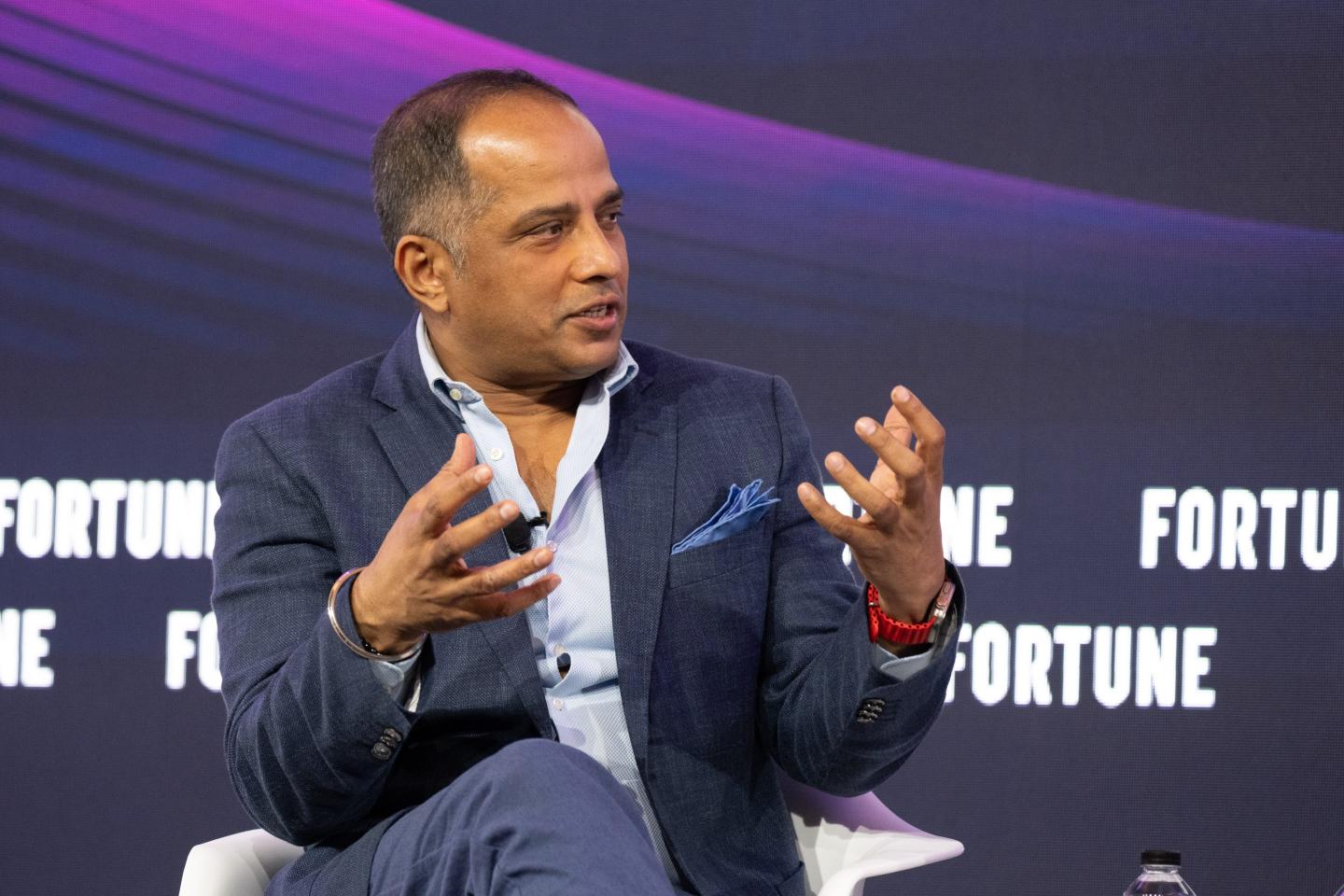
Sopnendu Mohanty, CEO of the Global Finance & Technology Network, speaking at the Fortune Brainstorm AI Singapore conference in July 2025.
Sopnendu Mohanty, CEO of the Global Finance & Technology Network, speaking at the Fortune Brainstorm AI Singapore conference in July 2025. Fortune

Artificial intelligence is no longer just a buzzword thrown around in the boardroom. This technology now powers modern finance, shaping how money moves and how decisions are made. Through rapid trading, personalized wealth management, algorithmic credit scoring, and automated back-office functions, AI is helping financial institutions reduce costs and deliver greater value to their clients.

Recommended Video

Yet these benefits will primarily help those that already have access to a bank—and not the more than one billion that still lack access to formal financial systems. A staggering $5.2 trillion credit gap prevents small businesses in emerging markets from growing. Financial inclusion is stubbornly out of reach for these business and individuals.

AI, combined with Web 3.0 technologies, could expand access to unbanked and underbanked populations, but only if it’s not treated as an afterthought. Financial institutions must harness AI, develop advanced methods to determine consumers’ intent to repay loans, and use alternative datasets to unlock collateral-free credit for those most in need. Collaboration, not disruption, is the way forward.

In Kenya, Indonesia, and Brazil, startups are utilizing alternative datasets, such as mobile usage and merchant transactions, to deliver microloans and insurance to last-mile customers overlooked by traditional banks. In India, multilingual AI chatbots are already breaking down language barriers. In Latin America, fintech platforms have leveraged AI to reach millions of customers, making financial services accessible at scale.

But financial exclusion won’t be eliminated by just another app. Instead, policymakers need to create inclusion frameworks that embed equity and access directly into the financial system.

This requires building global infrastructure where inclusion is the norm, not the exception. For example, the UPI-PayNow bridge between India and Singapore is a real-time payments corridor allowing instant transfers with just a mobile number. But this bridge wasn’t built overnight; it’s the result of years of policy coordination, regulatory alignment, and public-private trust.

Furthermore, in banking, collateral remains the cornerstone of traditional lending: If you want a loan, you must pledge an asset. This approach excludes low-income individuals—millions without property or savings—from accessing formal credit.

While banks use AI mainly for efficiency today, the real potential lies elsewhere. Banks could develop strong behavioral data models using AI, serving as proxies for collateral and indicators of creditworthiness, thereby opening access for those left behind.

Lasting change in any sector requires sustained collective action, not just individual brilliance. Disruptive breakthroughs spark innovation, but when multiple stakeholders work together toward common goals, they can overcome resistance, manage complexities, ensure everyone’s input, and keep up momentum to make progress resilient and deeply rooted.

In finance, AI can have unintended consequences due to opaque algorithms, biases that reinforce risks, and systems that are hard to understand. For AI to promote inclusion, it must be transparent and understandable to regulators. Institutions that use such AI need to be accountable. This involves rigorous bias testing, built-in human oversight, and clear channels for appealing major decisions. Trust is essential: Without it, liquidity dries up, credit markets freeze, and economic growth slows.

As the world enters a new technological age, AI, digital token networks, and quantum information systems are poised to transform global financial inclusion. AI will redefine financial services. Digital token networks will enable borderless, low-cost transactions through asset tokenization, eliminating the need for traditional infrastructure. And quantum information systems will enhance cybersecurity and streamline digital identification, payments, and smart contracts.

Together, these technologies will build a trustworthy financial infrastructure, providing everyone, regardless of location, literacy, or economic status, with safe and affordable access to the global economy.

By embedding inclusion into our financial infrastructure, we’ll have another opportunity to create a system that meets the needs of the world’s eight billion people.

Join us at the Fortune Workplace Innovation Summit May 19–20, 2026, in Atlanta. The next era of workplace innovation is here—and the old playbook is being rewritten. At this exclusive, high-energy event, the world’s most innovative leaders will convene to explore how AI, humanity, and strategy converge to redefine, again, the future of work. Register now.
About the Author
By Sopnendu Mohanty
See full bioRight Arrow Button Icon

Latest in Commentary

Finance
Lorem ipsum dolor sit amet, consectetur adipiscing elit, sed do eiusmod tempor incididunt ut labore et dolore magna aliqua. Ut enim ad minim veniam
By Fortune Editors
October 20, 2025
Finance
Lorem ipsum dolor sit amet, consectetur adipiscing elit, sed do eiusmod tempor incididunt ut labore et dolore magna aliqua. Ut enim ad minim veniam
By Fortune Editors
October 20, 2025
Finance
Lorem ipsum dolor sit amet, consectetur adipiscing elit, sed do eiusmod tempor incididunt ut labore et dolore magna aliqua. Ut enim ad minim veniam
By Fortune Editors
October 20, 2025
Finance
Lorem ipsum dolor sit amet, consectetur adipiscing elit, sed do eiusmod tempor incididunt ut labore et dolore magna aliqua. Ut enim ad minim veniam
By Fortune Editors
October 20, 2025
Finance
Lorem ipsum dolor sit amet, consectetur adipiscing elit, sed do eiusmod tempor incididunt ut labore et dolore magna aliqua. Ut enim ad minim veniam
By Fortune Editors
October 20, 2025
Finance
Lorem ipsum dolor sit amet, consectetur adipiscing elit, sed do eiusmod tempor incididunt ut labore et dolore magna aliqua. Ut enim ad minim veniam
By Fortune Editors
October 20, 2025

Most Popular

Finance
Lorem ipsum dolor sit amet, consectetur adipiscing elit, sed do eiusmod tempor incididunt ut labore et dolore magna aliqua. Ut enim ad minim veniam
By Fortune Editors
October 20, 2025
Finance
Lorem ipsum dolor sit amet, consectetur adipiscing elit, sed do eiusmod tempor incididunt ut labore et dolore magna aliqua. Ut enim ad minim veniam
By Fortune Editors
October 20, 2025
Finance
Lorem ipsum dolor sit amet, consectetur adipiscing elit, sed do eiusmod tempor incididunt ut labore et dolore magna aliqua. Ut enim ad minim veniam
By Fortune Editors
October 20, 2025
Finance
Lorem ipsum dolor sit amet, consectetur adipiscing elit, sed do eiusmod tempor incididunt ut labore et dolore magna aliqua. Ut enim ad minim veniam
By Fortune Editors
October 20, 2025
Finance
Lorem ipsum dolor sit amet, consectetur adipiscing elit, sed do eiusmod tempor incididunt ut labore et dolore magna aliqua. Ut enim ad minim veniam
By Fortune Editors
October 20, 2025
Finance
Lorem ipsum dolor sit amet, consectetur adipiscing elit, sed do eiusmod tempor incididunt ut labore et dolore magna aliqua. Ut enim ad minim veniam
By Fortune Editors
October 20, 2025
Fortune Secondary Logo
Rankings
  • 100 Best Companies
  • Fortune 500
  • Global 500
  • Fortune 500 Europe
  • Most Powerful Women
  • World's Most Admired Companies
  • See All Rankings
  • Lists Calendar
Sections
  • Finance
  • Fortune Crypto
  • Features
  • Leadership
  • Health
  • Commentary
  • Success
  • Retail
  • Mpw
  • Tech
  • Lifestyle
  • CEO Initiative
  • Asia
  • Politics
  • Conferences
  • Europe
  • Newsletters
  • Personal Finance
  • Environment
  • Magazine
  • Education
Customer Support
  • Frequently Asked Questions
  • Customer Service Portal
  • Privacy Policy
  • Terms Of Use
  • Single Issues For Purchase
  • International Print
Commercial Services
  • Advertising
  • Fortune Brand Studio
  • Fortune Analytics
  • Fortune Conferences
  • Business Development
  • Group Subscriptions
About Us
  • About Us
  • Press Center
  • Work At Fortune
  • Terms And Conditions
  • Site Map
  • About Us
  • Press Center
  • Work At Fortune
  • Terms And Conditions
  • Site Map
  • Facebook icon
  • Twitter icon
  • LinkedIn icon
  • Instagram icon
  • Pinterest icon

Latest in Commentary

hegseth
CommentaryMilitary
America shot its arsenal empty in 2 wars. Now it needs Beijing’s permission to reload
By Steve H. Hanke and Jeffrey WengApril 30, 2026
5 hours ago
Duncan Tait, CEO of Inchcape
Europecar manufacturing
“Competition is good for the industry”. Inchcape CEO’s case for optimism in automotive’s next chapter
By Duncan TaitApril 30, 2026
8 hours ago
agentic
CommentaryAI agents
Why your data infrastructure — not your AI model — will determine whether Agentic AI scales
By Jeffrey Sonnenfeld, Stephen Henriques, Catherine Dai and Zander JeinthanuttkanontApril 30, 2026
11 hours ago
hoskins
Commentaryoffices
Gensler Co-Chair: Hot-desking was supposed to save money. It may be costing you your culture
By Diane HoskinsApril 30, 2026
13 hours ago
tillis
CommentaryCongress
Thom Tillis: Free markets built American prosperity. Government intervention puts it at risk
By Thom Tillis and John StanfordApril 30, 2026
14 hours ago
iran
CommentaryIran
The Strait of Hormuz is a data problem, not just a military one
By Erik Bethel and Ami DanielApril 30, 2026
15 hours ago

Most Popular

Apple cofounder Ronald Wayne—whose stake would be worth up to $400 billion had he not sold it in 1976—says that at 91, he has no regrets
Success
Apple cofounder Ronald Wayne—whose stake would be worth up to $400 billion had he not sold it in 1976—says that at 91, he has no regrets
By Preston ForeApril 27, 2026
3 days ago
Google Cloud revenue is now 18% of Alphabet's business. Is this the beginning of the end of Google's search identity?
Big Tech
Google Cloud revenue is now 18% of Alphabet's business. Is this the beginning of the end of Google's search identity?
By Alexei OreskovicApril 29, 2026
21 hours ago
‘They left me no choice’: Powell isn’t going anywhere—blocking Trump from another Fed appointee
Banking
‘They left me no choice’: Powell isn’t going anywhere—blocking Trump from another Fed appointee
By Eva RoytburgApril 29, 2026
1 day ago
Jamie Dimon gets candid about national debt: ‘There will be a bond crisis, and then we’ll have to deal with it’
Economy
Jamie Dimon gets candid about national debt: ‘There will be a bond crisis, and then we’ll have to deal with it’
By Eleanor PringleApril 29, 2026
2 days ago
‘The cost of compute is far beyond the costs of the employees’: Nvidia executive says right now AI is more expensive than paying human workers
AI
‘The cost of compute is far beyond the costs of the employees’: Nvidia executive says right now AI is more expensive than paying human workers
By Sasha RogelbergApril 28, 2026
3 days ago
With no end in sight, Trump considers new options in Iran war—including the ‘Dark Eagle’ hypersonic missile
Big Tech
With no end in sight, Trump considers new options in Iran war—including the ‘Dark Eagle’ hypersonic missile
By Jim EdwardsApril 30, 2026
13 hours ago

© 2026 Fortune Media IP Limited. All Rights Reserved. Use of this site constitutes acceptance of our Terms of Use and Privacy Policy | CA Notice at Collection and Privacy Notice | Do Not Sell/Share My Personal Information
FORTUNE is a trademark of Fortune Media IP Limited, registered in the U.S. and other countries. FORTUNE may receive compensation for some links to products and services on this website. Offers may be subject to change without notice.