• Home
  • Latest
  • Fortune 500
  • Finance
  • Tech
  • Leadership
  • Lifestyle
  • Rankings
  • Multimedia
TechGeely
Asia

Geely, one of China’s biggest carmakers, resists the push to go all-electric

Nicholas Gordon
By
Nicholas Gordon
Nicholas Gordon
Asia Editor
Down Arrow Button Icon
Nicholas Gordon
By
Nicholas Gordon
Nicholas Gordon
Asia Editor
Down Arrow Button Icon
December 18, 2024, 7:00 AM ET
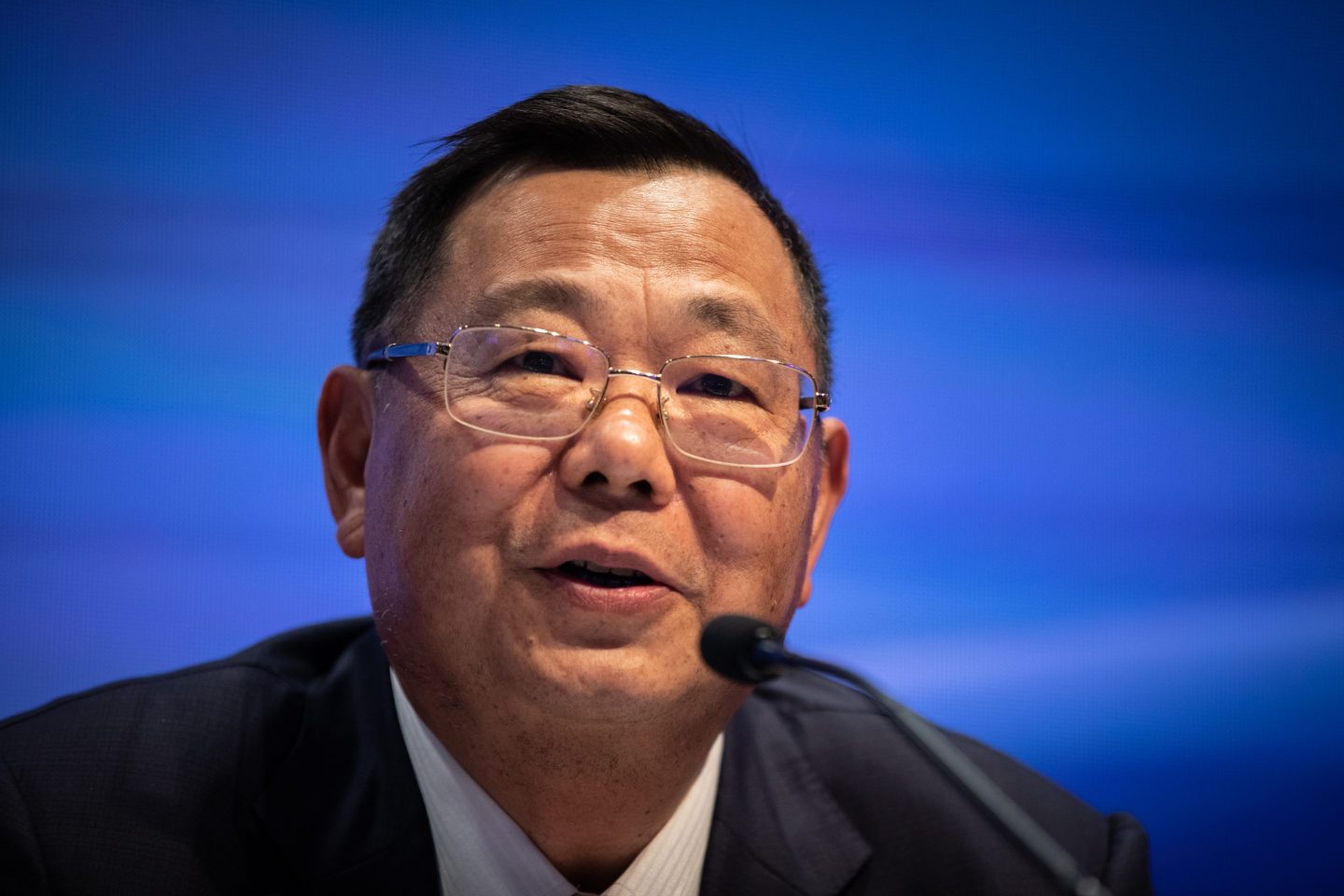
Gui Shengyue, CEO of Geely Automobile Holdings, said in a recent interview that leaving petrol cars behind would mean losing a “profit growth engine.”
Gui Shengyue, CEO of Geely Automobile Holdings, said in a recent interview that leaving petrol cars behind would mean losing a “profit growth engine.”Jessica Lee—Bloomberg/Getty Images

Even in a car market as EV-crazy as China’s, some auto executives aren’t completely convinced by electrification. 

Recommended Video

Gui Shengyue, CEO of Geely Automobile Holdings, one of China’s largest automakers, believes that internal combustion engine (ICE) cars are going to be a key part of the company’s business. “As a carmaker, you will lose a profit growth engine if you do not make petrol cars,” Gui told the South China Morning Postin an interview published Wednesday, noting that EVs “do not entirely reflect” the car market. 

Geely Auto sold 1.97 million cars in the first 11 months of 2024, close to its annual sales target of 2 million. Around 777,000 of those sales were “new energy vehicles,” a Chinese term that includes both battery electric vehicles and plug-in hybrids.

While some of its electrified models are performing well with Chinese consumers, Geely is still dwarfed by the biggest player in China’s EV market—BYD, the market leader, which sold 3.8 million new energy vehicles between January and November.

Caution on going all in on EVs

Gui isn’t the only car executive to be cautious over the EV shift. 

Toyota chairman Akio Toyoda is a long skeptic of the push for battery-powered electric vehicles, instead supporting a “multi-pathway” approach that includes hybrid engines and ICE cars that run on alternative fuels. 

Other global automakers are scaling back their ambitious EV plans as demand cools. In May, Volkswagen said it would produce more plug-in hybrids in response to slower demand for battery EVs. In July, GM walked back its production target of 1 million EVs by the end of next year. Ford also shrunk its EV ambitions in August, canceling plans for an electric SUV. 

Nominations are now open:
Fortune is now accepting nominations for the 2025 Southeast Asia 500—the definitive ranking of the region’s largest companies. Start your nomination here.

Still, Gui’s skepticism is novel in China, whose car industry has radically shifted to embrace EVs. China accounted for 70% of all EV sales in November, according to data from research firm Rho Motion.

Last year, China overtook Japan as the world’s largest auto exporter, in part owing to its affordable EVs. 

Yet petrol cars are still a major part of China’s car sector. In addition to fulfilling domestic demand, Chinese carmakers are exporting petrol cars to markets that have yet to embrace EVs, like the Middle East, Latin America, and, increasingly, Russia. Chinese car manufacturers, including Geely, have rushed to sell petrol cars to Russian consumers to replace Western automakers that left after Moscow’s invasion of Ukraine. 

But Geely’s Gui still expects petrol cars to change with the times. Petrol cars will “have to be fuel-efficient to support the global efforts to reduce emissions,” he told the South China Morning Post. “They will be made more intelligent, like electric cars,” he continued, referring to the new technology found in China-made EVs.

Fortune has contacted Geely for comment.

Geely’s sprawling empire

Geely is part of a sprawling auto empire owned by Zhejiang Geely Holding Group, No. 185 on Fortune’s Global 500 and founded by Li Shufu in 1986. Geely Automobile Holdings is the group’s Hong Kong–listed arm.

Geely produces several EV brands targeting different segments of the Chinese car market, including Zeekr, a premium brand that tries to compete with Tesla and local EV startups like Nio and Xpeng. Zeekr raised $440 million in an IPO on the New York Stock Exchange earlier this year, a rare U.S. listing for a Chinese company. 

Zhejiang Geely Holding Group also owns the Swedish carmaker Volvo. In September, Volvo scrapped its plans to only sell electric cars by 2030. 

Both Geely Auto and Volvo own stakes in Polestar, a Swedish manufacturer dedicated to EVs. Polestar has struggled to meet sales targets amid a slowdown in the broader EV market. The company replaced its CEO in October, appointing Michael Lohscheller, a veteran car CEO, to the position. 

Geely also has a 49.9% stake in Malaysian automaker Proton, which debuted its first locally made EV this week in a launch ceremony attended by Malaysia Prime Minister Anwar Ibrahim.

Last week, Ji Yue, an EV joint venture between Geely and Chinese tech company Baidu, admitted that it needed to restructure its operations to stay afloat in China’s fiercely competitive car market. The company then took to social media to reassure customers that it would continue to deliver cars, even as videos of employees challenging the CEO spread on social media. 

On Friday, both Baidu and Geely announced that they would help Ji Yue make key payments and ensure delivery of after-sale services, according to Caixin. 
Join us at the Fortune Workplace Innovation Summit May 19–20, 2026, in Atlanta. The next era of workplace innovation is here—and the old playbook is being rewritten. At this exclusive, high-energy event, the world’s most innovative leaders will convene to explore how AI, humanity, and strategy converge to redefine, again, the future of work. Register now.
About the Author
Nicholas Gordon
By Nicholas GordonAsia Editor
LinkedIn iconTwitter icon

Nicholas Gordon is an Asia editor based in Hong Kong, where he helps to drive Fortune’s coverage of Asian business and economics news.

See full bioRight Arrow Button Icon

Latest in Tech

AIchief executive officer (CEO)
Microsoft AI boss Suleyman opens up about his peers and calls Elon Musk a ‘bulldozer’ with ‘superhuman capabilities to bend reality to his will’
By Jason MaDecember 13, 2025
2 hours ago
InvestingStock
There have been head fakes before, but this time may be different as the latest stock rotation out of AI is just getting started, analysts say
By Jason MaDecember 13, 2025
7 hours ago
Politicsdavid sacks
Can there be competency without conflict in Washington?
By Alyson ShontellDecember 13, 2025
8 hours ago
InnovationRobots
Even in Silicon Valley, skepticism looms over robots, while ‘China has certainly a lot more momentum on humanoids’
By Matt O'Brien and The Associated PressDecember 13, 2025
9 hours ago
Sarandos
Arts & EntertainmentM&A
It’s a sequel, it’s a remake, it’s a reboot: Lawyers grow wistful for old corporate rumbles as Paramount, Netflix fight for Warner
By Nick LichtenbergDecember 13, 2025
14 hours ago
Oracle chairman of the board and chief technology officer Larry Ellison delivers a keynote address during the 2019 Oracle OpenWorld on September 16, 2019 in San Francisco, California.
AIOracle
Oracle’s collapsing stock shows the AI boom is running into two hard limits: physics and debt markets
By Eva RoytburgDecember 13, 2025
15 hours ago

Most Popular

placeholder alt text
Economy
Tariffs are taxes and they were used to finance the federal government until the 1913 income tax. A top economist breaks it down
By Kent JonesDecember 12, 2025
2 days ago
placeholder alt text
Success
Apple cofounder Ronald Wayne sold his 10% stake for $800 in 1976—today it’d be worth up to $400 billion
By Preston ForeDecember 12, 2025
1 day ago
placeholder alt text
Success
40% of Stanford undergrads receive disability accommodations—but it’s become a college-wide phenomenon as Gen Z try to succeed in the current climate
By Preston ForeDecember 12, 2025
1 day ago
placeholder alt text
Economy
The Fed just ‘Trump-proofed’ itself with a unanimous move to preempt a potential leadership shake-up
By Jason MaDecember 12, 2025
1 day ago
placeholder alt text
Economy
For the first time since Trump’s tariff rollout, import tax revenue has fallen, threatening his lofty plans to slash the $38 trillion national debt
By Sasha RogelbergDecember 12, 2025
1 day ago
placeholder alt text
Success
Apple CEO Tim Cook out-earns the average American’s salary in just 7 hours—to put that into context, he could buy a new $439,000 home in just 2 days
By Emma BurleighDecember 12, 2025
1 day ago
Rankings
  • 100 Best Companies
  • Fortune 500
  • Global 500
  • Fortune 500 Europe
  • Most Powerful Women
  • Future 50
  • World’s Most Admired Companies
  • See All Rankings
Sections
  • Finance
  • Leadership
  • Success
  • Tech
  • Asia
  • Europe
  • Environment
  • Fortune Crypto
  • Health
  • Retail
  • Lifestyle
  • Politics
  • Newsletters
  • Magazine
  • Features
  • Commentary
  • Mpw
  • CEO Initiative
  • Conferences
  • Personal Finance
  • Education
Customer Support
  • Frequently Asked Questions
  • Customer Service Portal
  • Privacy Policy
  • Terms Of Use
  • Single Issues For Purchase
  • International Print
Commercial Services
  • Advertising
  • Fortune Brand Studio
  • Fortune Analytics
  • Fortune Conferences
  • Business Development
About Us
  • About Us
  • Editorial Calendar
  • Press Center
  • Work At Fortune
  • Diversity And Inclusion
  • Terms And Conditions
  • Site Map

© 2025 Fortune Media IP Limited. All Rights Reserved. Use of this site constitutes acceptance of our Terms of Use and Privacy Policy | CA Notice at Collection and Privacy Notice | Do Not Sell/Share My Personal Information
FORTUNE is a trademark of Fortune Media IP Limited, registered in the U.S. and other countries. FORTUNE may receive compensation for some links to products and services on this website. Offers may be subject to change without notice.