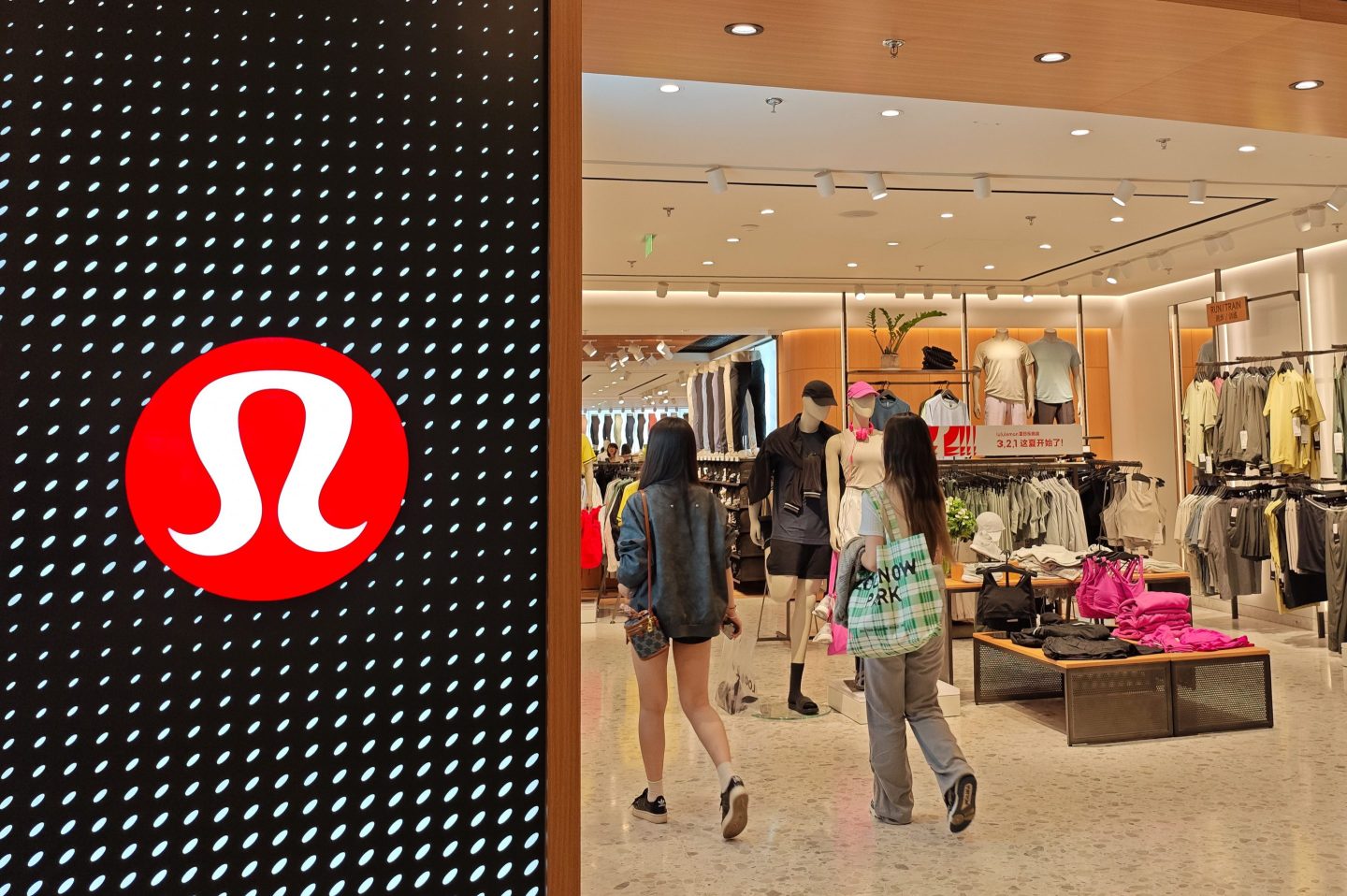
Near-facsimiles of some of the world’s most popular fashion staples, from Lululemon Athletica Inc.’s yoga tights to Hermès International SCA’s handbags, are appearing in closets across China for a fraction of the price.
Known in Chinese as “pingti” and Gen Z shopping parlance as “dupes,” their popularity reflects a backlash against brands among formerly label-loving Chinese shoppers. But they’re not cheap counterfeits either: these local makers sell products at relatively high prices by promising the same quality as top global brands—just without the logos.
That includes items like a 3,200-yuan ($450) herringbone tweed overcoat from fashion apparel maker Chicjoc, which says it’s made from Italian fabrics obtained from a supplier to Prada SpA and Bottega Veneta.
Sales have skyrocketed since last year, as Chinese consumers search for better value amid faltering economic confidence. In the 12 months ending in July, some of the top local labels selling cheaper alternatives saw double-to-triple-digit growth on China’s dominant e-commerce platforms, Alibaba Group Holding Ltd.’s Taobao and Tmall, data from analytics firm Hangzhou Zhiyi Technology Co. show. At the same time, some of the foreign brands whose products they emulate saw slower growth or declines on the platforms, according to the data.
While online sales aren’t the full picture for foreign brands that have brick-and-mortar shops, the meteoric rise of dupes are the latest threat facing global retail giants who can’t seem to figure out what Chinese shoppers want. The economic slowdown is turning consumers more frugal, but even midrange brands like Nike Inc. and Fast Retailing Co.’s Uniqlo are stumbling. Instead, the rise of pingti likely reflects what Uniqlo called “a new set of consumer values”—the same instinct that’s pushing consumers to seek out products sold directly by manufacturers, cutting out the brand middlemen.
“Chinese consumers’ understanding of luxury goods is changing, as the traditional mindset that a luxury handbag could signal prestige status is no longer their only preference,” said Blair Zhang, a senior luxury and fashion analyst with Mintel in Shanghai. “There’s no more blind trust in well-known brands under the currently-cautious spending trends. Instead, there’s more rational shopping decisions that spur active discussions on cheaper alternatives.”
Pingtis’ biggest impact might be on the luxury sector, which has taken a beating in China, as facsimiles using similar quality materials and craftsmanship—but without the logos or branding—proliferate. Dupes are impacting the exclusivity that’s made high-end items so desirable and could hurt their future growth in China, consultancy Yaok Group said in a report this month.
Leather goods manufacturer Sitoy Group Holdings Ltd. says on social media videos that the quality of its $100 handbags is almost identical to those sold for upwards of $1,000 when churned out by the same production lines that manufacture for for luxury brand clients such as Prada, Tumi and Michael Kors.
Meanwhile Chicjoc, one of the biggest Chinese fashion apparel labels on Taobao and Tmall, markets products it claims are made with Copenhagen-produced animal fur from the same supplier to LVMH and Fendi. The company has annual sales of about 1 billion yuan in its Taobao store, the Zhiyi data show.
‘Beyond My Expectation’
Shenzhen stock analyst Ding Xiaoying stopped splashing out thousands of dollars on designer labels after China’s market routs slashed her annual bonuses in half. In recent months, she said she’s purchased pingti versions of Victoria’s Secret pajamas and shirts modeled on items from Ralph Lauren Co. and Kering SA’s Bottega Veneta.
“I’ve shifted some of my clothes spending to those no-name brands,” she said, praising the dupes’ textile quality. “I trust them now, and I even want them to start their own designs to avoid being sued as copycats.”
Local brands have been selling cheaper alternatives for decades, but they were generally derided by middle-class shoppers who splashed out on labels as status symbols. Pingti retailers entered the mainstream as COVID lockdowns kept people home and dependent on online shopping, giving rise to new direct-to-customer channels on social media platforms and livestreaming shows similar to the U.S.’s QVC home shopping network.
People mostly find pingti items online and can score bragging rights from sharing finds with the closest resemblance to branded products. Millions of social media videos feature vloggers boasting about price points and quality. Shoppers can usually place orders directly into chat boxes, and receive items within days.
For Sitoy, one of the most prominent dupe retailers—and one of the few to be listed—private brands contributed nearly a third of some HK$841 million ($108 million) in total sales during the six months ended last December. Sitoy’s two main stores on TikTok’s Chinese cousin Douyin posted around 200 million yuan in sales in the past 12 months as of July—more than doubling the amount from the previous year, according to Zhiyi data.
Sitoy, which started out as a manufacturer for outside clients, has seen orders slow amid economic and geopolitical uncertainty, it’s said in financial reports. To counter the slide, it’s investing in dupes, transforming a four-story building at its factory in southern city Dongguan into an e-commerce center for its own labels—complete with livestreaming studios, retail stores and showrooms.
Producing items for global brands “isn’t something worth bragging about,” one woman says in a company sales video posted to Douyin. “So we decided to come to the front, using the same level of material and craftsmanship as luxury brands—and the same experienced workers—to make our own home-grown brands.”
Sitoy, Chicjoc, Chando, VFU, Hermès, Lululemon, Prada, Tumi’s parent company Samsonite International SA, Michael Kors owner Capri Holdings Ltd. and SK-II’s parent Procter & Gamble Co. didn’t reply to requests for comment.
Most consumers maintain there’s little to no difference between pingti and the branded items they mimic. A 330-millileter bottle of Japanese cosmetics maker SK-II’s bestselling Facial Treatment Essence, featuring a natural fermentation product, typically sells for nearly 1700 yuan—compared to a 569 yuan dupe from Chinese alternative Chando touting a similar ingredient.
Popular Lululemon pingti brand VFU charges just 200 yuan for a pair of high-waisted black workout tights similar to the athleisure giant’s, typically costing four times as much.
Despite the rush, it’s unclear if local upstarts will have the same staying power as the global giants they’re copying.
People selling cheap counterfeits often try to muscle in on pingti channels. There’s little oversight of online and social channels—a sort of Wild West where factories and retailers can advertise products however they want—making it difficult for consumers to know what they’re really buying. And there’s generally no punishment from e-commerce and social platforms for sellers who falsely claim to be producing for known brands.
For now, that’s not stopping shoppers like 45-year-old financial programmer Jessica Wang. She recently spent 3,700 yuan on a pingti of a Hermès Lindy purse, which usually sells for thousands of dollars, from a WeChat seller whose handbags mirror luxury designs.
“It was beyond my expectation in so many ways: The leather is so soft, the stitching is delicate, and its packaging is nice and neat,” Wang said. “I’m going to order other bags from that shop.”