• Home
  • Latest
  • Fortune 500
  • Finance
  • Tech
  • Leadership
  • Lifestyle
  • Rankings
  • Multimedia

Trendingnow

1

As Big Tech showers employees with perks to win the talent war, Nvidia built a nearly $5 trillion company by making people pay for their own lunch

2

MacKenzie Scott alone accounted for one-third of America's $19.2 billion in megagifts last year

3

Current price of oil as of July 1, 2026

1

As Big Tech showers employees with perks to win the talent war, Nvidia built a nearly $5 trillion company by making people pay for their own lunch

2

MacKenzie Scott alone accounted for one-third of America's $19.2 billion in megagifts last year

3

Current price of oil as of July 1, 2026
CommentaryWorld Trade Organization (WTO)
Asia

The WTO isn’t solving the problems of global trade. Maybe the answer is for it to try to do less

By
Jaemin Lee
Jaemin Lee
Down Arrow Button Icon
By
Jaemin Lee
Jaemin Lee
Down Arrow Button Icon
August 24, 2024, 5:00 PM ET

Jaemin Lee is currently Professor of Law at School of Law, Seoul National University in Seoul, South Korea. His major areas of teaching and research are international economic law and international dispute settlement.

The WTO’s value comes in providing an arena for counties to come together and talk about trade. So how do we reconfigure the WTO’s modus operandi to protect that?
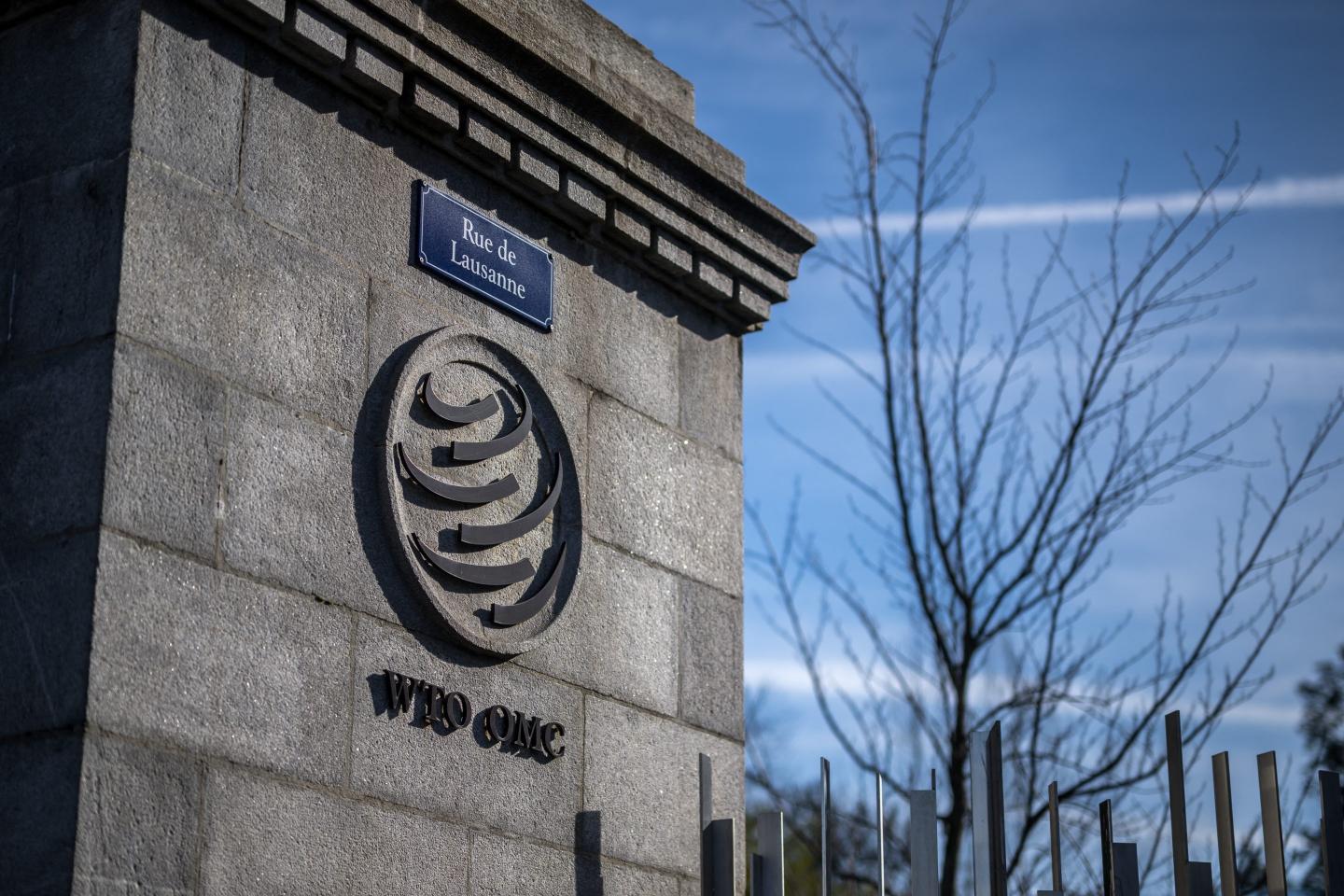
The WTO’s value comes in providing an arena for counties to come together and talk about trade. So how do we reconfigure the WTO’s modus operandi to protect that? Fabrice Coffrini—AFP via Getty Images
Add Fortune on Google for similar content.

In late February, 4,000 delegates from 164 countries gathered in Abu Dhabi for the most important decision-making meeting for the World Trade Organization. The international organization faces a long list of thorny issues: some long-lasting, like dispute settlement mechanisms and agriculture subsidies, and some novel, like AI and data governance in global trade.

Ministers met for four days, then gave themselves a two-day extension. There were some meaningful achievements, like an agreement to facilitate foreign direct investment into developing countries. But ministers largely agreed to keep talking, ahead of future meetings. Unfortunately, there was no discussion of AI or how to use data, two of today’s hottest topics.

The result of the 13th Ministerial Conference (MC-13) was far from the comprehensive reform package that WTO watchers, like myself, think the trade body desperately needs to keep functioning and respond to the pressing needs of today’s global market. And it’s a disappointing result after two years of hard work since the previous ministerial conference in June 2022, and months of intense negotiations leading up to Abu Dhabi.

Trade officials may shrug their shoulders and start planning for the next ministerial conference in Cameroon in two years’ time. But that would be wrong. The failure of MC-13 shows that the WTO is gradually becoming detached from the real world of trade.

Negotiations to adopt new norms for the digital economy have reached a deadlock. The guidelines around cross-border data transfers and server localization are still fuzzy. Assessing the repercussions of generative AI hasn’t even begun.

Take global supply chain restructuring, as countries pursue “friendshoring” and “onshoring” agendas. It’s become an important agenda item for many governments, pursuing both legitimate and dubious policy objectives.

And yet the WTO has stayed silent on this fundamental issue of global trade, despite the fact that it strikes at the heart of the organization: the long-cherished non-discrimination principle. Governments are confident enough to admit publicly that they want to change the rules of global trade.

Yet the WTO remains unresponsive.

The 1994 Uruguay Round designated the WTO as a global governing body with binding legal norms and a strong dispute settlement mechanism. However, its early successes have been gradually overshadowed by its inability to resolve complex and sensitive disputes. It’s fighting a losing battle against sovereign states that are unwilling to cede their regulatory authority, leading to endless talk and negotiations as AI, bitcoin, and other digital technologies threaten to transform the world economy.

Sadly, the WTO in its current form can’t cater to the demands of the new global community. Dispensing with it is not an option; more chaos and confusion will ensue.

The WTO’s value comes in providing an arena for countries to come together and talk about trade. So how do we reconfigure the WTO’s modus operandi to protect that?

Some trade issues—customs proceedings, sanitary regulations, anti-dumping enforcement, and so on—can still be handled under the WTO’s current model as an enforcer of international rules with a strong dispute settlement process.

Yet these are long-settled and long-understood issues. The WTO will need a different modus operandi for the new issues of the digital economy, such as AI regulation, subsidy policy, supply chain reformulation, and the scope of national security.

In this case, the WTO should take a step back, performing the role of a facilitator rather than an organization that actively drives change.

This is unlikely to lead to sweeping global agreements, but instead plurilateral agreements where states form their own blocs with like-minded countries. The WTO can then monitor and oversee these different agreements, facilitate negotiations of future agreements, and offer its dispute settlement mechanism for states participating in these blocs.

It’s not a pure coincidence that two of the three agreements adopted by the WTO since its inception have “facilitation” in their titles: The Trade Facilitation Agreement of 2013 and the Investment Facilitation for Development Agreement of 2024. Perhaps “facilitation,” rather than “action,” is the only thing an increasingly polarized global trade community can agree on.

Alternate dispute resolutions could offer new ways to resolve complex, politically charged trade disputes, such as the U.S.-China semiconductor dispute or the EU-China EV feud. Mediation may turn out to be useful, helping countries by breaking away from strict binding legal norms towards something more flexible and creative. These solution-oriented dispute settlements prove useful in resolving complex state-to-state disputes where legal norms ended up being outdated, vague, or just absent, such as when the Gulf Cooperation Council facilitated reconciliation between Qatar and Saudi Arabia in 2021.

Becoming a consultative body would not mean giving up on the WTO’s ambition to drive global policy. Consider the recent success of the OECD in adopting global rules on digital tax. The international body succeeded in reaching an agreement on digital taxes in October 2021, and as many as 137 countries got on board. Critically, the U.S. and China both agreed to the framework, which is notable given their confrontations in the global economy.

Why did the OECD succeed, when the WTO has yet to even start the discussion? Perhaps, as a consultative body, the OECD produced a space where states can discuss sensitive and complex issues in a more open, candid, and creative manner.

A less ambitious, more consultative WTO can show meaningful leadership in tackling newly emerged global issues. Sometimes, less is more.

The opinions expressed in Fortune.com commentary pieces are solely the views of their authors and do not necessarily reflect the opinions and beliefs of Fortune.

About the Author
By Jaemin Lee
See full bioRight Arrow Button Icon
Add Fortune on Google for similar content.

Latest in Commentary

Finance
Lorem ipsum dolor sit amet, consectetur adipiscing elit, sed do eiusmod tempor incididunt ut labore et dolore magna aliqua. Ut enim ad minim veniam
By Fortune Editors
October 20, 2025
Finance
Lorem ipsum dolor sit amet, consectetur adipiscing elit, sed do eiusmod tempor incididunt ut labore et dolore magna aliqua. Ut enim ad minim veniam
By Fortune Editors
October 20, 2025
Finance
Lorem ipsum dolor sit amet, consectetur adipiscing elit, sed do eiusmod tempor incididunt ut labore et dolore magna aliqua. Ut enim ad minim veniam
By Fortune Editors
October 20, 2025
Finance
Lorem ipsum dolor sit amet, consectetur adipiscing elit, sed do eiusmod tempor incididunt ut labore et dolore magna aliqua. Ut enim ad minim veniam
By Fortune Editors
October 20, 2025
Finance
Lorem ipsum dolor sit amet, consectetur adipiscing elit, sed do eiusmod tempor incididunt ut labore et dolore magna aliqua. Ut enim ad minim veniam
By Fortune Editors
October 20, 2025
Finance
Lorem ipsum dolor sit amet, consectetur adipiscing elit, sed do eiusmod tempor incididunt ut labore et dolore magna aliqua. Ut enim ad minim veniam
By Fortune Editors
October 20, 2025

Most Popular

Finance
Lorem ipsum dolor sit amet, consectetur adipiscing elit, sed do eiusmod tempor incididunt ut labore et dolore magna aliqua. Ut enim ad minim veniam
By Fortune Editors
October 20, 2025
Finance
Lorem ipsum dolor sit amet, consectetur adipiscing elit, sed do eiusmod tempor incididunt ut labore et dolore magna aliqua. Ut enim ad minim veniam
By Fortune Editors
October 20, 2025
Finance
Lorem ipsum dolor sit amet, consectetur adipiscing elit, sed do eiusmod tempor incididunt ut labore et dolore magna aliqua. Ut enim ad minim veniam
By Fortune Editors
October 20, 2025
Finance
Lorem ipsum dolor sit amet, consectetur adipiscing elit, sed do eiusmod tempor incididunt ut labore et dolore magna aliqua. Ut enim ad minim veniam
By Fortune Editors
October 20, 2025
Finance
Lorem ipsum dolor sit amet, consectetur adipiscing elit, sed do eiusmod tempor incididunt ut labore et dolore magna aliqua. Ut enim ad minim veniam
By Fortune Editors
October 20, 2025
Finance
Lorem ipsum dolor sit amet, consectetur adipiscing elit, sed do eiusmod tempor incididunt ut labore et dolore magna aliqua. Ut enim ad minim veniam
By Fortune Editors
October 20, 2025
Fortune Secondary Logo
Rankings
  • 100 Best Companies
  • Fortune 500
  • Global 500
  • Fortune 500 Europe
  • Most Powerful Women
  • World's Most Admired Companies
  • See All Rankings
  • Lists Calendar
Sections
  • Finance
  • Fortune Crypto
  • Features
  • Leadership
  • Health
  • Commentary
  • Success
  • Retail
  • Mpw
  • Tech
  • Lifestyle
  • CEO Initiative
  • Asia
  • Politics
  • Conferences
  • Europe
  • Newsletters
  • Personal Finance
  • Environment
  • Magazine
  • Education
Customer Support
  • Frequently Asked Questions
  • Customer Service Portal
  • Privacy Policy
  • Terms Of Use
  • Single Issues For Purchase
  • International Print
Commercial Services
  • Advertising
  • Fortune Brand Studio
  • Fortune Analytics
  • Fortune Conferences
  • Business Development
  • Group Subscriptions
About Us
  • About Us
  • Press Center
  • Work At Fortune
  • Terms And Conditions
  • Site Map
  • About Us
  • Press Center
  • Work At Fortune
  • Terms And Conditions
  • Site Map
  • Facebook icon
  • Twitter icon
  • LinkedIn icon
  • Instagram icon
  • Pinterest icon

Latest in Commentary

rn
CommentaryCryptocurrency
Former Iran director at NSC: Crypto legislation is a ticket to sanctions evasion
By Richard NephewJuly 2, 2026
7 hours ago
m
Commentary250 Years of Innovation
McKinsey chairs: Building a more resilient industrial base may require $2 trillion in investment
By Eric Kutcher and Shubham SinghalJuly 2, 2026
7 hours ago
em
Commentary250 Years of Innovation
America’s 250th birthday has Elon Musk and a record IPO. Its 15th had Alexander Hamilton — and a stock market bubble
By Owen LamontJuly 2, 2026
11 hours ago
paramount
CommentaryAntitrust
How Paramount’s theater commitments could boost local economies across the nation
By Ike BrannonJuly 2, 2026
11 hours ago
elon
CommentaryChina
China has 400 private space companies. The West is barely paying attention
By Rainer ZitelmannJuly 2, 2026
13 hours ago
senate
CommentaryCongress
One rare bipartisan AI bill is moving through Congress. Here’s why it deserves to pass
By Neil Björkman and Betsy BrewerJuly 1, 2026
1 day ago

Most Popular

As Big Tech showers employees with perks to win the talent war, Nvidia built a nearly $5 trillion company by making people pay for their own lunch
Big Tech
As Big Tech showers employees with perks to win the talent war, Nvidia built a nearly $5 trillion company by making people pay for their own lunch
By Marco Quiroz-GutierrezJuly 1, 2026
2 days ago
MacKenzie Scott alone accounted for one-third of America's $19.2 billion in megagifts last year
Success
MacKenzie Scott alone accounted for one-third of America's $19.2 billion in megagifts last year
By Sydney LakeJune 25, 2026
8 days ago
Current price of oil as of July 1, 2026
Personal Finance
Current price of oil as of July 1, 2026
By Joseph HostetlerJuly 1, 2026
1 day ago
Trump got a $78K pension from the Screen Actors Guild in 2025 because he appeared in Home Alone 2 in 1992
Politics
Trump got a $78K pension from the Screen Actors Guild in 2025 because he appeared in Home Alone 2 in 1992
By Sasha RogelbergJuly 1, 2026
1 day ago
Today, Emily Blunt is worth $80 million thanks to her Hollywood career—but she actually wanted to be a UN Spanish translator on $80K
Success
Today, Emily Blunt is worth $80 million thanks to her Hollywood career—but she actually wanted to be a UN Spanish translator on $80K
By Orianna Rosa RoyleJuly 2, 2026
15 hours ago
CEO of $248 billion cybersecurity company says workers are about to face a ‘Darwinian moment’ thanks to AI: Evolve or get cut
Success
CEO of $248 billion cybersecurity company says workers are about to face a ‘Darwinian moment’ thanks to AI: Evolve or get cut
By Emma BurleighJuly 1, 2026
1 day ago

© 2026 Fortune Media IP Limited. All Rights Reserved. Use of this site constitutes acceptance of our Terms of Use and Privacy Policy | CA Notice at Collection and Privacy Notice | Do Not Sell/Share My Personal Information
FORTUNE is a trademark of Fortune Media IP Limited, registered in the U.S. and other countries. FORTUNE may receive compensation for some links to products and services on this website. Offers may be subject to change without notice.