• Home
  • Latest
  • Fortune 500
  • Finance
  • Tech
  • Leadership
  • Lifestyle
  • Rankings
  • Multimedia

Trendingnow

1

Erin Brockovich, the activist who defeated a utility giant and inspired a Julia Roberts film, is pushing data centers to be more transparent

2

The Iran conflict has disrupted oil supply. Gulf states are now looking to multi-billion-dollar investments in renewables 

3

Current price of oil as of June 1, 2026

1

Erin Brockovich, the activist who defeated a utility giant and inspired a Julia Roberts film, is pushing data centers to be more transparent

2

The Iran conflict has disrupted oil supply. Gulf states are now looking to multi-billion-dollar investments in renewables 

3

Current price of oil as of June 1, 2026
CommentarySemiconductors
Asia

The U.S. and its allies want to bring the entire chip supply chain in-house—and that could create an OPEC-style cartel for the digital age

By
Jaemin Lee
Jaemin Lee
Down Arrow Button Icon
By
Jaemin Lee
Jaemin Lee
Down Arrow Button Icon
March 28, 2024, 5:00 PM ET
The "Chip 4 Alliance" between the U.S., Japan, South Korea and Taiwan could create chip companies that have to listen to government and political directives.
The "Chip 4 Alliance" between the U.S., Japan, South Korea and Taiwan could create chip companies that have to listen to government and political directives. Caitlin O'Hara—Bloomberg via Getty Images

The U.S., Japan, South Korea and Taiwan are on a mission to restructure the global chip supply chain. The proposed “Chip 4 Alliance” wants to internalize all parts of the semiconductor business—research and development, design, manufacturing, packaging, sales and consumption—in-house. This chip clique will only reach outside the circle in strictly controlled circumstances.

These four economies constitute almost the entire global semiconductor industry, accounting for 82% of the global market share, and 74% of the semiconductor global value chain with 84% of chip design. They collectively occupy a 77% share in the market for manufacturing equipment and as high as 99% for memory chips. Thus, the Alliance is more than just cooperation and coordination: What these four governments determine will shape the global market.  

But the Chip 4 Alliance raises a critical and complicated question: Can countries control production and manage trade for a product defined by innovation and competition?

If they can, we’re looking at something very new: an OPEC-style cartel for the digital age.

To the extent that participating members in the Chip 4 Alliance promise to regulate their respective domestic semiconductor industries in a coordinated way, and orient their businesses in a certain direction, this endeavor may introduce something akin to a state-owned enterprise, operated collectively and managed multinationally.

Put bluntly, the four Alliance members can lay out, in the long run, which companies do what, who produces parts and materials, how they are sourced, and where chips are distributed and sold. They will also align their R&D, financial support, and incentives. The chip sector will feature government-arranged financial support, on-going governmental influence, public-private joint business planning, and public mandate fulfilment.

This is none other than a well-known recipe for SOEs, a topic which took center stage in recent trade agreements such as the Indo-Pacific Economic Framework (IPEF), the Comprehensive and Progressive Agreement for Trans-Pacific Partnership (CPTPP) or the United States-Mexico-Canada Agreement (USMCA).

Economists have long argued that enterprises under the direction or indirect control of the government sap economic efficiency and hamper market competition.

It’s thus ironic that a new scheme for the global semiconductor industry could create a new type of SOE: the “multinational SOE,” distinct from the national SOEs targeted by by recent regulations and investment agreements.

If key decisions of the semiconductor businesses of the four members are made at the request (if not direction) of respective government agencies, those businesses are presumably set to be a new breed of state enterprise for the digital age.

What’s more, if their business decisions are coordinated and orchestrated by the pool of governments—whether an alliance, network or any other title—they will be virtually under the collective control of the participating governments.

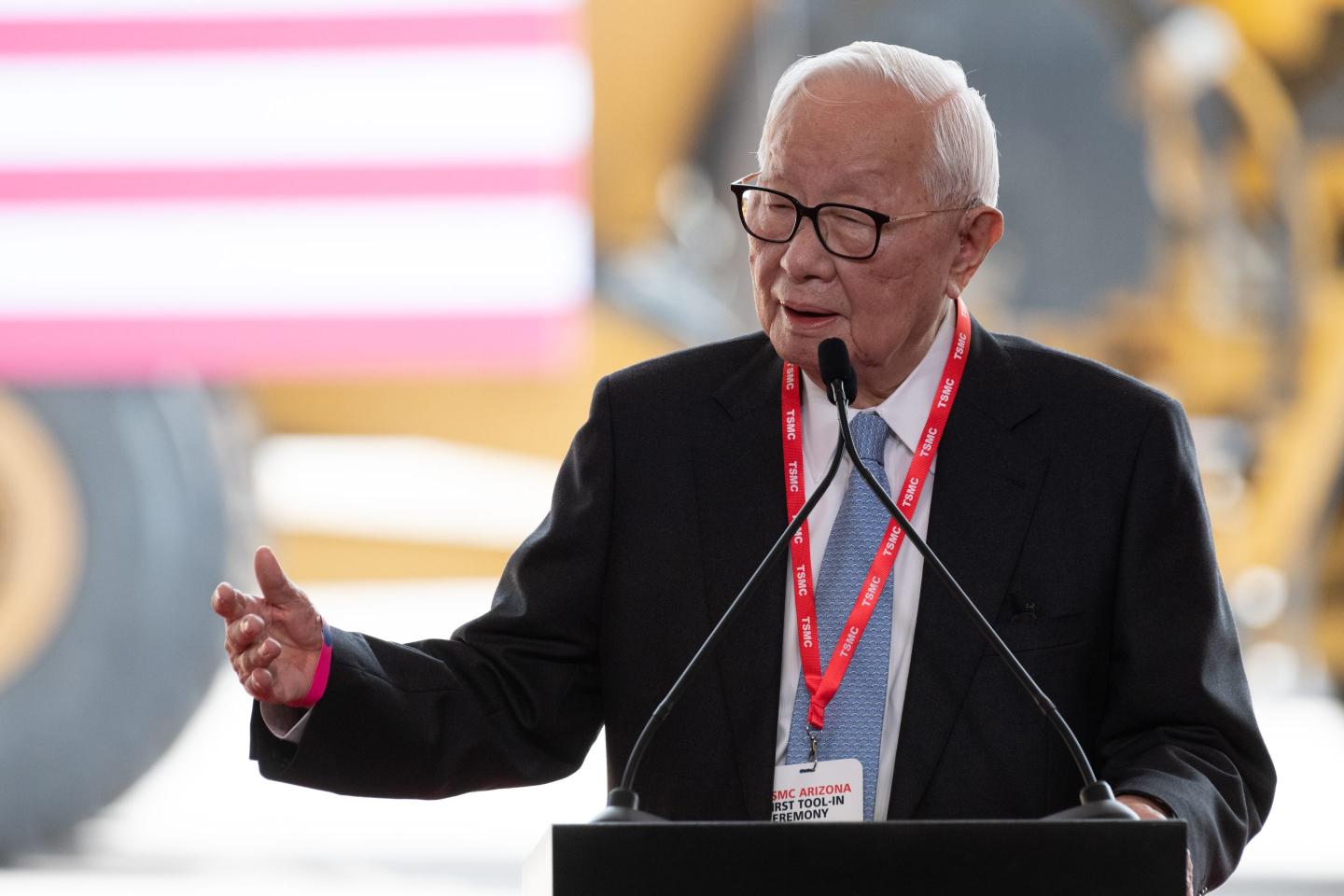
Consider, for example, TSMC’s decision to build fabs in Phoenix, Arizona and Kumamoto, Japan, or Samsung’s new fab in Taylor, Texas. These locations don’t offer the same benefits as TSMC’s home of Taiwan, or Samsung’s home of Korea: less expertise, higher costs and more troublesome regulations. Why, then, did these chip giants decide to invest in the U.S. and Japan? Geopolitics is one obvious possibility. 

Granted, the Chinese chip industry has also received a massive amount of financial support from both central and local governments. Beijing raised a semiconductor fund in the amount of $19 billion in 2014 and $27 billion in 2019, respectively. It is now planning to raise a new fund of $41 billion. Clearly a number of Chinese chipmakers can be called SOEs.

Yet endeavors like the Chip 4 Alliance risk creating a behemoth to fight a behemoth. One side may win against the other—then may wither because of stifled innovation and competition.

For chip companies, this whole plan is a Catch-22. In the course of restructuring the global supply chain, chipmakers are encouraged, if not forced, to discuss coordinating business activities with their counterparts. This line of close consultation reveals the Achilles’ heel of global corporations: the web of competition rules and antitrust sanctions in various states.

Members of the Chip 4 Alliance might downplay their competition rules, but non-participating governments, like the European Union, China, or others, might think otherwise when they feel short-changed from a new supply chain.

Semiconductors are just the most high-profile area where countries are using friendshoring to shift away from “countries of concern.” Yet if these policies become the norm, then the global system could end up with much less competition and much less innovation—dominated by a new breed of state-owned enterprise.

Jaemin Lee is currently Professor of Law at School of Law, Seoul National University in Seoul, South Korea. His major areas of teaching and research are international economic law and international dispute settlement.

The opinions expressed in Fortune.com commentary pieces are solely the views of their authors and do not necessarily reflect the opinions and beliefs of Fortune.

About the Author
By Jaemin Lee
See full bioRight Arrow Button Icon

Latest in Commentary

Finance
Lorem ipsum dolor sit amet, consectetur adipiscing elit, sed do eiusmod tempor incididunt ut labore et dolore magna aliqua. Ut enim ad minim veniam
By Fortune Editors
October 20, 2025
Finance
Lorem ipsum dolor sit amet, consectetur adipiscing elit, sed do eiusmod tempor incididunt ut labore et dolore magna aliqua. Ut enim ad minim veniam
By Fortune Editors
October 20, 2025
Finance
Lorem ipsum dolor sit amet, consectetur adipiscing elit, sed do eiusmod tempor incididunt ut labore et dolore magna aliqua. Ut enim ad minim veniam
By Fortune Editors
October 20, 2025
Finance
Lorem ipsum dolor sit amet, consectetur adipiscing elit, sed do eiusmod tempor incididunt ut labore et dolore magna aliqua. Ut enim ad minim veniam
By Fortune Editors
October 20, 2025
Finance
Lorem ipsum dolor sit amet, consectetur adipiscing elit, sed do eiusmod tempor incididunt ut labore et dolore magna aliqua. Ut enim ad minim veniam
By Fortune Editors
October 20, 2025
Finance
Lorem ipsum dolor sit amet, consectetur adipiscing elit, sed do eiusmod tempor incididunt ut labore et dolore magna aliqua. Ut enim ad minim veniam
By Fortune Editors
October 20, 2025

Most Popular

Finance
Lorem ipsum dolor sit amet, consectetur adipiscing elit, sed do eiusmod tempor incididunt ut labore et dolore magna aliqua. Ut enim ad minim veniam
By Fortune Editors
October 20, 2025
Finance
Lorem ipsum dolor sit amet, consectetur adipiscing elit, sed do eiusmod tempor incididunt ut labore et dolore magna aliqua. Ut enim ad minim veniam
By Fortune Editors
October 20, 2025
Finance
Lorem ipsum dolor sit amet, consectetur adipiscing elit, sed do eiusmod tempor incididunt ut labore et dolore magna aliqua. Ut enim ad minim veniam
By Fortune Editors
October 20, 2025
Finance
Lorem ipsum dolor sit amet, consectetur adipiscing elit, sed do eiusmod tempor incididunt ut labore et dolore magna aliqua. Ut enim ad minim veniam
By Fortune Editors
October 20, 2025
Finance
Lorem ipsum dolor sit amet, consectetur adipiscing elit, sed do eiusmod tempor incididunt ut labore et dolore magna aliqua. Ut enim ad minim veniam
By Fortune Editors
October 20, 2025
Finance
Lorem ipsum dolor sit amet, consectetur adipiscing elit, sed do eiusmod tempor incididunt ut labore et dolore magna aliqua. Ut enim ad minim veniam
By Fortune Editors
October 20, 2025
Fortune Secondary Logo
Rankings
  • 100 Best Companies
  • Fortune 500
  • Global 500
  • Fortune 500 Europe
  • Most Powerful Women
  • World's Most Admired Companies
  • See All Rankings
  • Lists Calendar
Sections
  • Finance
  • Fortune Crypto
  • Features
  • Leadership
  • Health
  • Commentary
  • Success
  • Retail
  • Mpw
  • Tech
  • Lifestyle
  • CEO Initiative
  • Asia
  • Politics
  • Conferences
  • Europe
  • Newsletters
  • Personal Finance
  • Environment
  • Magazine
  • Education
Customer Support
  • Frequently Asked Questions
  • Customer Service Portal
  • Privacy Policy
  • Terms Of Use
  • Single Issues For Purchase
  • International Print
Commercial Services
  • Advertising
  • Fortune Brand Studio
  • Fortune Analytics
  • Fortune Conferences
  • Business Development
  • Group Subscriptions
About Us
  • About Us
  • Press Center
  • Work At Fortune
  • Terms And Conditions
  • Site Map
  • About Us
  • Press Center
  • Work At Fortune
  • Terms And Conditions
  • Site Map
  • Facebook icon
  • Twitter icon
  • LinkedIn icon
  • Instagram icon
  • Pinterest icon

Latest in Commentary

adc
CommentaryLeadership
AI is turning workers into superhumans. Their leadership teams haven’t kept up
By Adrienne Down CoulsonJune 2, 2026
4 hours ago
liaquat
CommentaryBubbles
I won a Pulitzer for explaining the Great Depression. The AI spending boom terrifies me
By Liaquat AhamedJune 2, 2026
8 hours ago
Allison Danielsen is CEO, Tallo.
CommentaryCareers
My wrist injury derailed my college plans. It’s why I’m a CEO today
By Allison DanielsenMay 31, 2026
2 days ago
treble
CommentaryElections
I built a startup from scratch and still nearly died because of a broken healthcare system. That’s why I’m running for Congress
By Jonathan TrebleMay 31, 2026
2 days ago
bn
CommentaryEducation
Bill Nye: Companies say there’s a skills gap. They’re wrong — and students can prove it
By Bill NyeMay 31, 2026
2 days ago
soccer moms
CommentarySports
Why soccer moms are shaping the future of football in the U.S.
By Ruslan BashirovMay 31, 2026
2 days ago

Most Popular

Erin Brockovich, the activist who defeated a utility giant and inspired a Julia Roberts film, is pushing data centers to be more transparent
Environment
Erin Brockovich, the activist who defeated a utility giant and inspired a Julia Roberts film, is pushing data centers to be more transparent
By Marco Quiroz-GutierrezJune 1, 2026
23 hours ago
The Iran conflict has disrupted oil supply. Gulf states are now looking to multi-billion-dollar investments in renewables 
Energy
The Iran conflict has disrupted oil supply. Gulf states are now looking to multi-billion-dollar investments in renewables 
By Melissa HancockJune 1, 2026
1 day ago
Current price of oil as of June 1, 2026
Personal Finance
Current price of oil as of June 1, 2026
By Joseph HostetlerJune 1, 2026
1 day ago
Current price of silver as of Monday, June 1, 2026
Personal Finance
Current price of silver as of Monday, June 1, 2026
By Joseph HostetlerJune 1, 2026
1 day ago
After issuing more than $20 billion in tariff refunds, the Trump administration is now pursuing legal action to bring the process to a standstill
Law
After issuing more than $20 billion in tariff refunds, the Trump administration is now pursuing legal action to bring the process to a standstill
By Sasha RogelbergJune 1, 2026
1 day ago
Cognizant CEO is swimming against the tide on AI: he's hiring over 20,000 graduates this year and says AI tokenmaxxing is a 'vanity metric'
Conferences
Cognizant CEO is swimming against the tide on AI: he's hiring over 20,000 graduates this year and says AI tokenmaxxing is a 'vanity metric'
By Preston ForeJune 1, 2026
18 hours ago

© 2026 Fortune Media IP Limited. All Rights Reserved. Use of this site constitutes acceptance of our Terms of Use and Privacy Policy | CA Notice at Collection and Privacy Notice | Do Not Sell/Share My Personal Information
FORTUNE is a trademark of Fortune Media IP Limited, registered in the U.S. and other countries. FORTUNE may receive compensation for some links to products and services on this website. Offers may be subject to change without notice.