Today, the world’s two largest economies find themselves in a tit-for-tat as the U.S. looks to ward off the rising challenge from China. The Americans first banned exports of chips, semiconductor equipment and software to Chinese technology giants. China retaliated by banning the import of lower-grade U.S. chips. The U.S. continued with further bans on chips to Chinese cloud providers. China replied with a shot across the bow on rare earths. Most recently, the White House announced an executive order restricting the flow of U.S. capital to specific sectors within the Chinese technology industry. While understandable in a short-term context, what characterizes the American actions against China is an overall naiveté regarding the history of the second and third-order effects of such actions.
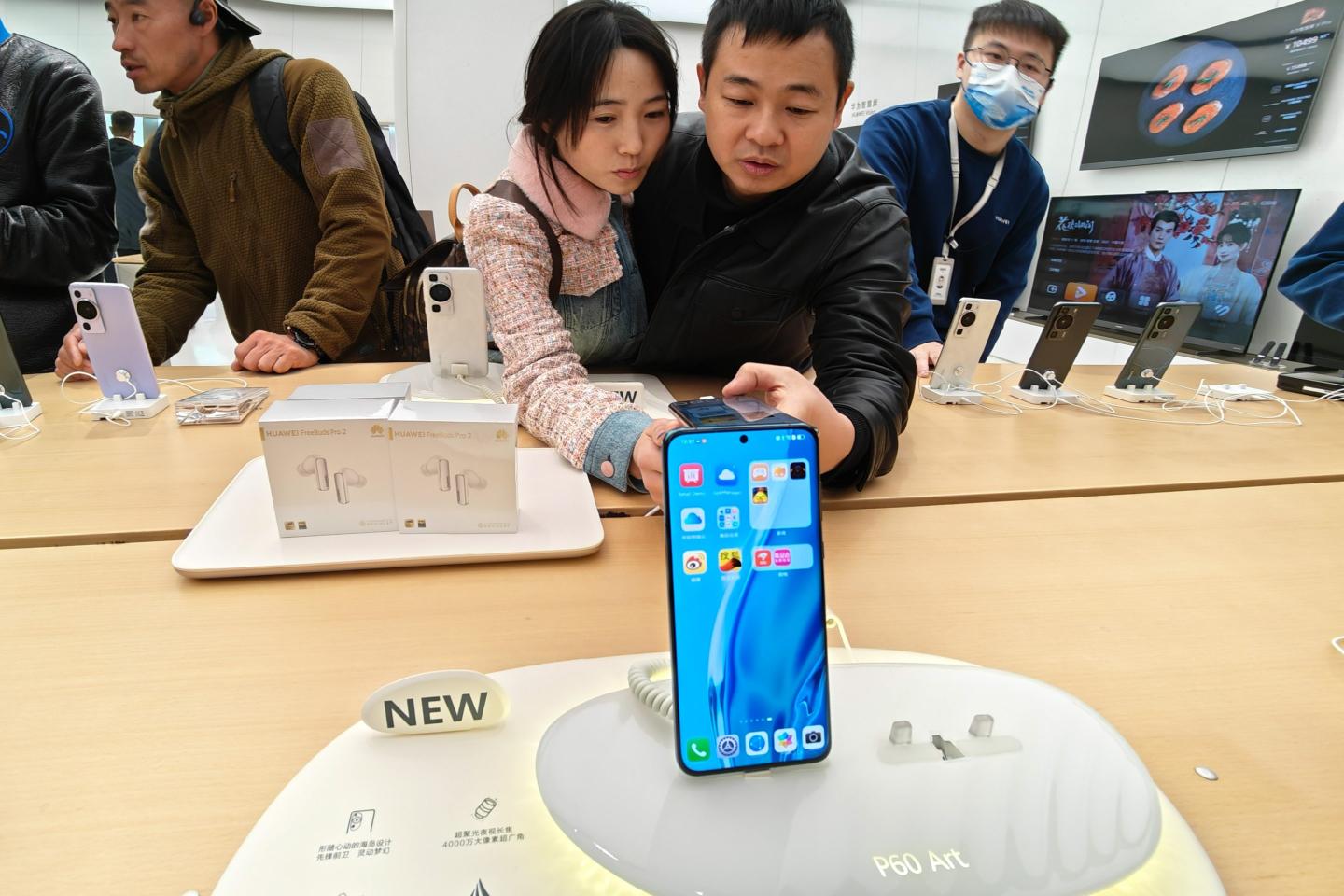
China has been goaded into building self-sufficiency far earlier than it would have otherwise. Prior to the ZTE and Huawei components bans, Chinese companies were content to continue purchasing American chips and focusing on the front-end hardware. Today, the success of the Huawei Mate 60, with its domestically produced 5G chip, underscores the risks of driving Chinese innovation and self-sufficiency through decoupling. America now faces the short-term threat of losing the critical revenue that has fueled the research and development that made us an innovation leader, as well as the long-term inevitability that China will build its own full-scale semiconductor ecosystem. Ultimately, these actions will undermine American technological leadership and geopolitical leverage.
Throughout history, unilateral or extraterritorial enforcement efforts of China’s technological rise have failed. After the Second World War, the USSR withheld nuclear weapons technology, so the Chinese launched their own Manhattan Project in the early 1960s and succeeded in testing their first nuclear weapon by 1964. Russian nuclear leverage over China ended that day.
In 1993, the Clinton Administration tried to restrict China’s access to satellite technology. Today, China has 541 satellites in space and is launching a competitor to Starlink. The same principle played out with GPS. When the U.S. restricted China’s access to the geospatial data system in 1999, the Chinese simply built their own parallel BeiDou GPS system, which by some measures has exceeded its inspiration.
American unilateral or extraterritorial enforcement regimes have historically failed to meet their objectives and have damaged U.S. geopolitical alliances. They cut access for American firms to the next wave of high-growth markets, hollow out the core ingredients for American innovation leadership (talent, capital, and raw materials), and embolden nationalists in the targeted country by enabling them to shift blame for their own failures.
The CHIPS and Science Act cannot go on indefinitely subsidizing the U.S. semiconductor industry–and there is no other global demand base to replace China’s. Another nation’s chip producers will inevitably break ranks and sell to the Chinese (as has been the case historically) and the American actions will be for naught. In banning exports of chips and other core inputs to the Chinese, the U.S. handed China the economic war plan 10 years ahead of the battle.
For American technology export restrictions in the core technology space to be effective, allied chip-producing nations must hold the line. The U.S. has therefore commenced an extraterritorial enforcement regime that draws on Dutch, Japanese, Taiwanese, and Korean support for its export restrictions on China. Despite American claims that a consensus has been reached, we’ve seen suspiciously few comments from these other chip producers on supporting U.S. initiatives. The Koreans are in a particularly precarious position. As the Chinese retaliate via export restrictions of rare earths, the stability of Korea’s mobile hardware industry leaders who are dependent on these Chinese inputs is jeopardized. While the Dutch have recently come on board, they likely do not view China’s chip demand through the same national security lens as the Americans. And herein lies the broader issue: This is largely a U.S.–initiated economic war aimed at protecting incumbent interests. Self-serving unilateralism will be challenging to sell to allies and is predictably starting to backfire. The G7 is panicked regarding its future growth prospects. In France, the four largest companies are luxury goods brands that are largely dependent on Chinese demand. Emmanuel Macron brought along the nation’s largest-ever foreign delegation when he traveled to China for a charm offensive in April. Germany sells nearly 40% of its cars to China. Neither wants to risk Chinese retaliatory measures by aligning in an American campaign that ultimately serves to protect U.S. national champions rather than European commercial interests.
In emerging markets, the break from American imperatives is even more stark. Decades of American misadventures in the Middle East have wrought a growing core of dissent among regional leaders. Tolerance for self-serving requests from Washington, such as demands to increase oil production in Saudi Arabia to drive down the price at the pump in Iowa, now fall on deaf ears.
China is the largest trading partner to 120 countries, including most of the largest markets in Asia, the European Union, the Middle East, and South America. There is a clear divergence in interests as America unwinds decades of built-up global goodwill in its obsession with keeping China down. Saudi Arabia rolled out a far thicker red carpet for Xi Jinping during his December 2022 visit than for Biden in July 2023. These nations, like those in Southeast Asia and Africa, don’t want to be told that there is a binary decision to be made between American and Chinese core telecommunication infrastructure. They desire open tenders to select providers based on an objective review of terms and specifications, not forced to take American products under duress. Alibaba Cloud, for instance, just won a major open tender in Saudi Arabia, beating out Microsoft Cloud.
In many tech stack verticals, such as affordable mobile handsets and 5G infrastructure, there is no viable U.S. alternative to the Chinese. Forcing blanket decisions on the market means that even areas where America does present a superior offering fall into the basket of Chinese competitors. American pressure accelerates decoupling and the balkanization of regional technology ecosystems, resulting in reduced market access and lost business opportunities for the very U.S. technology giants these policies aim to protect.
Additionally, China builds superior mobile-first technology in finance, entertainment, e-commerce, and social applications for this digital native generation. If you force an 18-year-old Spaniard to choose between Facebook or TikTok, an Egyptian consumer to elect between Shein or Amazon, or an Indonesian businessman to choose between an Apple or Oppo phone, the answers are simple–and the outcomes are unequivocally bad for the Americans. Today, 4 of the top 5 apps on the U.S. iPhone Store are Chinese-built. There is a paradigm shift underway building a new world shaped in China’s image. If decoupling continues its current trajectory, America risks ceding its remaining economic–and resulting political–influence over emerging markets to the Chinese.
Rather than undermining our interests and fortifying a geopolitical and economic competitor at the expense of our own values and the global liberal economic order that we built, we must practice a more enlightened technology policy. The focus must be placed on initiatives that sustainably support and extend America’s innovation leadership, while surgically removing specific national security threats. Keeping capital markets closely integrated gives the U.S. greater leverage over China. Chinese companies should be listed on U.S. exchanges and owned by U.S. sources of capital. Forcing China into a parallel financial world only results in less U.S. oversight and greater opacity. We must develop a consistent policy for all foreign technology companies operating in the U.S., including rules on domestic ownership, data storage, security risks, and related platform access.
In lieu of a zero-sum framing of the U.S.-China technology competition, we must consider the benefits to both countries and humanity if we can find a sustainable structure for collaboration. Most Western emission reduction targets cannot be met without participation from the Chinese, who hold many of the patents and core inputs for solar, wind, and electric battery power. Joint research programs, clinical trials, and data sets are critical for solving chronic global health issues such as cancer. If we don’t co-build, co-monitor, and co-regulate the proliferation of potential doomsday technologies such as AI and nuclear, one side could build something with massively destructive global ramifications.
Decoupled technology ecosystems not only retard advancement but also create other endemic risks resulting from parallel development and unilateral regulation. Ultimately, the U.S., China, and the world are net beneficiaries of a globally integrated technology ecosystem.
Ben Harburg is the managing partner of the global investment firm MSA Capital.
The opinions expressed in Fortune.com commentary pieces are solely the views of their authors and do not necessarily reflect the opinions and beliefs of Fortune.