
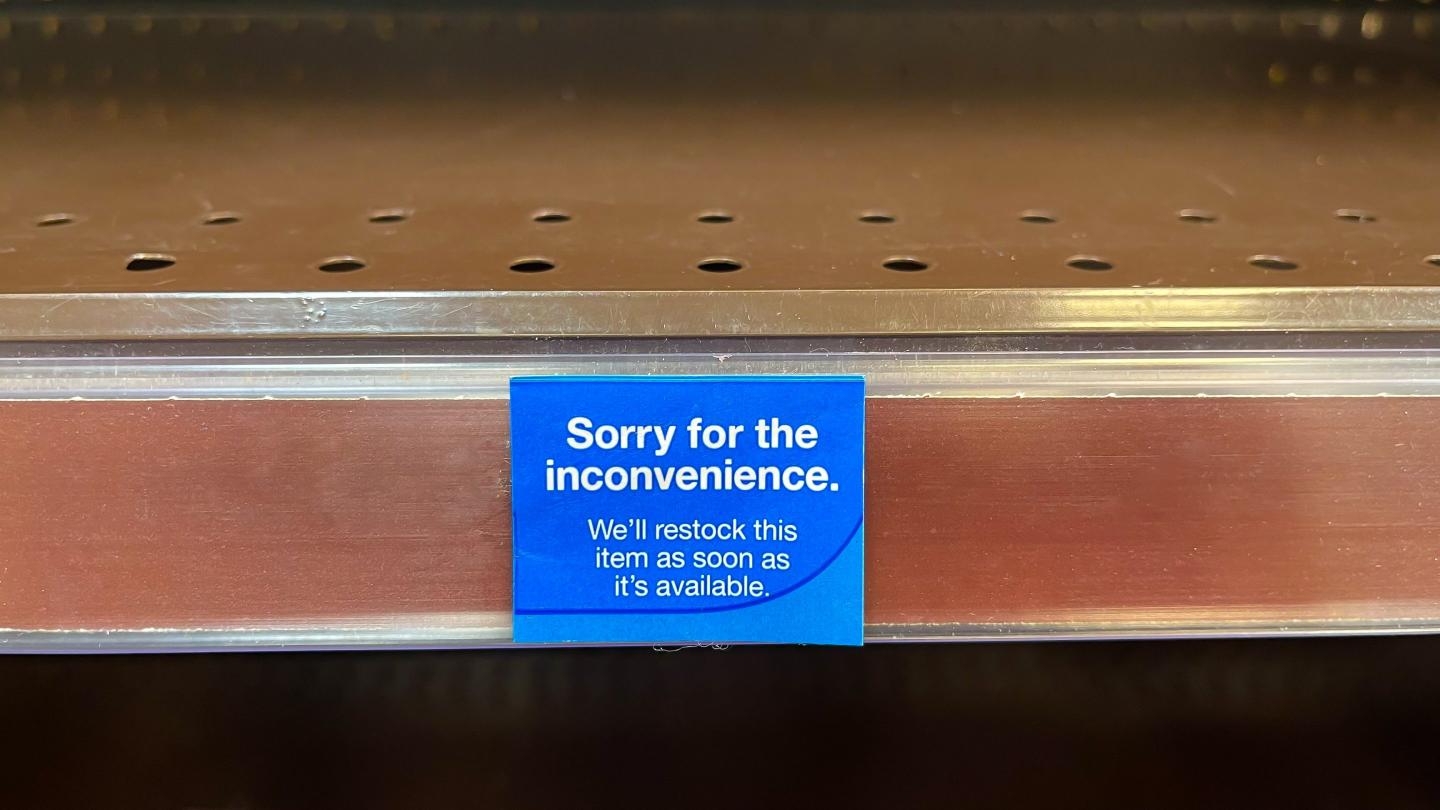
Stories and images of empty ports on the West Coast have stoked fears that Americans will soon feel the direct effects of President Donald Trump’s ongoing tariff war. And according to supply-chain experts and other analysts, they are right to be worried—it promises to be a cruel summer for consumers, retailers, and the broader economy alike.
As Trump’s 145% tariff on Chinese goods remains in place, with no trade deal in sight, there has already been a decline in manufacturing orders from China, and freight bookings and sailings to the U.S. have also dropped.
Analysts have been ringing alarm bells about the consequences of tariffs for weeks, and now the fallout is beginning to take shape in what could add up to a slow-moving disaster. It takes freight ships weeks to travel from China to the U.S., meaning increasing or decreasing trade isn’t as simple as flipping a switch.
Instead, the effects will be felt in stages, according to Apollo Global Management. And the U.S. is reaching the tipping point.
- Early May: Consumers could start to feel effects in the next two weeks, when the arrival of containerships to U.S. ports begins to stop.
- Mid-May: With less to transport, demand for trucking could slow, leading to empty shelves across the country.
- Late May, early June: Apollo expects layoffs to begin in the trucking and retail industries as companies react to a slowdown in sales. Freight layoffs have already escalated.
- Mid-June: Torsten Slok, Apollo’s chief economist, expects a recession to quickly follow, in summer 2025.
Of course, the exact timeline will vary based on the product the U.S. imports. Apparel and footwear are likely to be impacted quickly, as the U.S. gets much of its supply of each from China. Fast fashion, in particular, could be harder to find. Kids’ toys and back-to-school items are also likely to be scarce.
Executives from Amazon, Home Depot, and Walmart visited the White House last week to plead with Trump against tariffs that could disrupt their businesses, but it is not clear where negotiations stand between the U.S. and China, with the countries giving conflicting accounts of the progress made so far.
“Starting in a couple of weeks, we are just going to start running out of stuff,” Sean Stein, president of the U.S.-China Business Council, told NBC News last week, comparing the shortages to the early days of the COVID-19 pandemic. “If the administration waits to resolve the problem until we have shortages and hoarding, that is just too late.”
Preorders won’t save U.S.
For the Trump administration’s part, Treasury Secretary Scott Bessent more or less shrugged off concerns about empty shelves Monday.
“We have some great retailers,” Bessent said during a Fox News interview. “I assume they preordered.”
There is evidence that some companies, particularly the larger big-box retailers, front-loaded inventory earlier this year. The Port of Los Angeles, the largest port in North America, and the Port of Long Beach reported import cargo growth in February, and noted that retailers were moving goods ahead of “anticipated tariffs placed on some imported goods and materials.” In fact, though February is typically the slowest month of the year for cargo from China owing to the Lunar New Year, it was the busiest February in three years, according to Hackett Associates, which provides research and advisory services to the international maritime industry.
While ports have not reported the figures that Hackett Associates analyzes for March yet, it is expected the data is expected to reflect another busy month. May, however, will be a different story.
“At this point, retailers are expected to pull back and rely on built-up inventories, at least long enough to see what will happen next,” Jonathan Gold, vice president for supply chain and customs policy at the National Retail Federation, said earlier this month.
But that inventory will run out, and retailers and consumers could face shortages in the aftermath. Imports are expected to fall at least 20% year over year during the second half of 2025, according to Hackett Associates.
Sea-Intelligence, a supply-chain researcher that focuses on container shipping, reports the number of blanked sailings—when an ocean carrier skips a scheduled stop at a port—on transpacific trade routes already “increased drastically yet again this past week,” often with little to no notice.
“When we look at the data, it is quite evident that the impact of the trade war has caused many shippers to pause, or outright cancel, shipments,” Alan Murphy, CEO of Sea-Intelligence, said in a press release. “This in turn reduces demand for capacity on container vessels, to which carriers respond by canceling sailings.”