During periods of inflation or economic uncertainty, gold and silver once again become a hot conversation starter. Investing in gold and silver is often viewed as a smart way to diversify away from stocks and bonds—and even fight inflation. It’s not a sure thing, but precious metals do have an intrinsic value that fiat currencies just don’t, making them a strong choice as a store of value that can help protect your purchasing power.
If you’re thinking about buying gold or silver, you may be wondering which one suits your situation and financial goals best. Let’s examine how to decide which is right for you and how best to invest once you decide which metal you’re after.
Gold vs. silver: Key similarities and differences
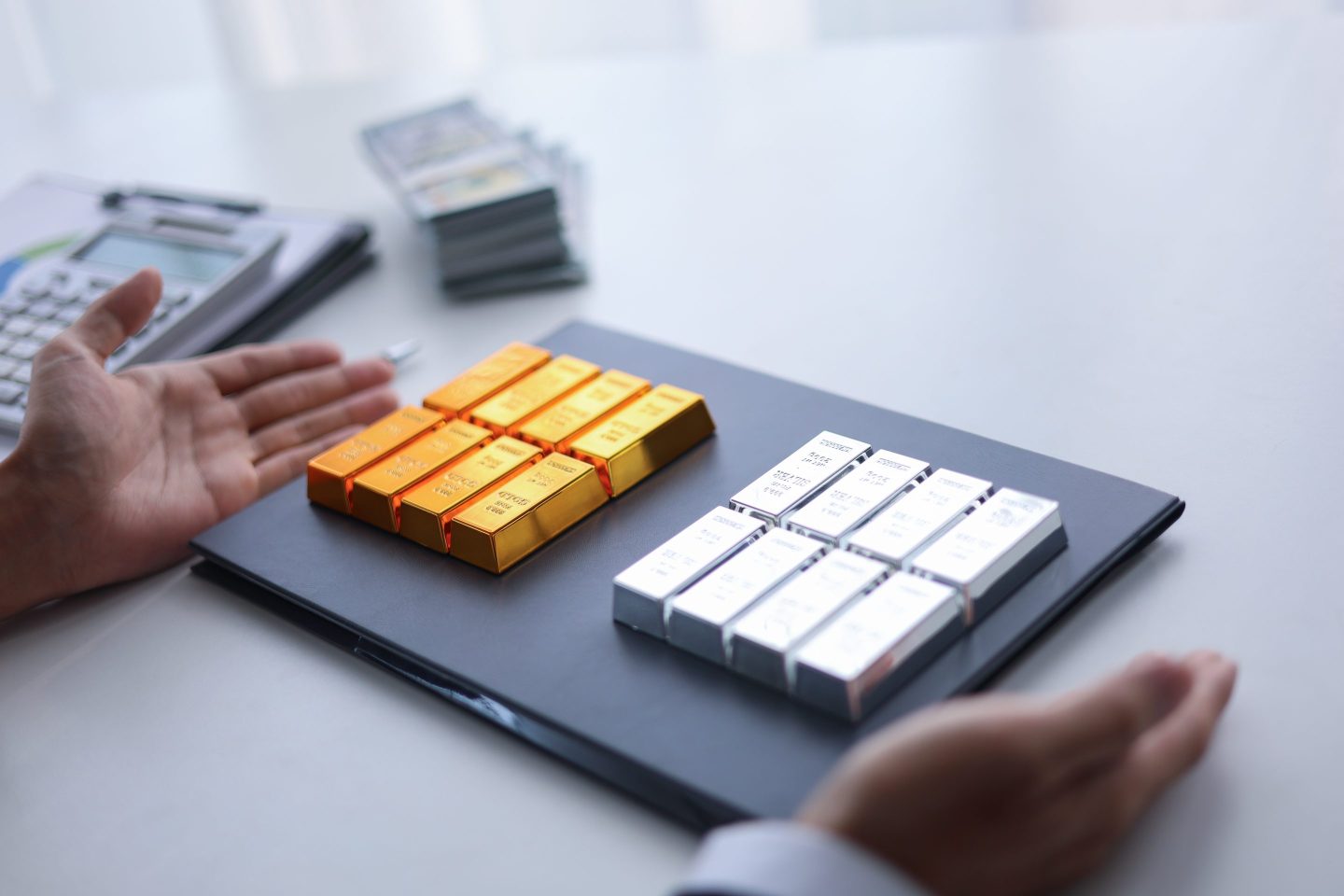
Gold and silver are both precious metals that get their value from, among other things, scarcity and collectability. You can find them both in common forms, such as physical bars, rounds, coins. You’ve also got indirect and “paper” investments to choose from, including stocks and ETFs (we’ll dive into that later).
They’re also comparatively easy to liquidate when sticking to mainstream products such as government-minted coins and bullion that comes from well-known and trusted refiners. All to say, the process for buying and selling one is virtually the same as for buying and selling the other.
But these two metals have plenty of differences, as well.
As we’ll discuss, gold is primarily valued due to its rarity. Silver also has a rarity aspect to its value, but it’s an industrial commodity too. It’s used much more than gold for other purposes, such as for electronic, energy, and medical applications. This means its value rises and falls with industry demand.
Gold is also much more expensive than silver. At the time of writing, an ounce of gold is more than 60 times the price of an ounce of silver. This makes silver appear more approachable than gold. However, it’s possible to invest in less than an ounce of gold through products like fractional gold and ETFs.
Pros and cons of investing in gold
Pros
- Not tied to a single government or company
- Potential hedge against inflation
- Solid way to diversify your portfolio
Cons
- Ancillary expenses can make investing in physical gold pricey
- APY is locked in and doesn’t account for inflation
- CDs are illiquid, so you cannot easily access funds without penalties
Pros and cons of investing in silver
Pros
- Not tied to a single institution or government
- Potential hedge against inflation
- Likely bigger potential gains than gold
Cons
- Silver has proven to be volatile in the short term
- Precious metals can be volatile in the short term
- Likely bigger potential losses than gold
How to choose: Gold vs. silver for your financial goals
While gold and silver are both stores of wealth, they behave differently as investments. Here’s a rundown of questions to ask yourself when deciding whether to invest in gold or silver. And if you want a mix of both qualities, there’s certainly nothing wrong with investing in both.
What’s the primary goal—wealth preservation or growth?
Gold is generally better when it comes to preservation. It’s not a sure thing, but its trajectory tends to be less bumpy than silver. If wealth preservation is the goal, your better option is gold.
If you’d like to try and juice your returns, silver is likely the way to go. It’s got more upside thanks to its ties to industry, but it also has more potential to tumble.
How much price volatility can you handle without panicking?
On a related note, those prone to making knee-jerk decisions based on the short-term performance of an investment may find gold to be the friendlier metal. Silver’s comparative unpredictability makes it a nailbiter for those who tend to check prices constantly and second-guess themselves.
How much attention do you want to give to your investment?
Silver more closely tracks the stock market than gold due to its many industrial applications. If you’d prefer not to think about your metals investment every time stocks move, go the gold route, which typically sits quietly in the background.
How do you plan to store your investment?
Storing silver is more expensive than storing gold. That’s because, dollar-for-dollar, silver takes up far more space. Again, gold is worth more than 60 times as much as silver at the time of writing, meaning silver storage can take up considerable real estate—whether you’re storing it yourself or you pay a company to store it for you. This is a big consideration if you’re thinking about buying physical bullion.
Ways to invest in gold and silver
There’s a wide variety of ways to invest in gold and silver, each with a unique set of advantages and disadvantages. The below options are popular ways to diversify your portfolio with precious metals:
- Physical gold and silver: Buy physical coins or bullion bars and rounds. Investment-grade gold is generally at least 99.5% purity, while investment-grade silver is at least 99.9% purity (there are exceptions). Investment-grade metals make it easier to buy and sell it.
- Digital gold and silver: You’ll get many of the same benefits of physical metals without having to store, insure, or ship them. You’ll simply buy from a company that will store it for you, giving you the ability to sell ownership instantly to someone else. The tradeoff is that you’re trusting said company to stay solvent. It’s riskier than caring for the gold yourself.
- Precious metals stocks: Instead of betting directly on precious metals, you can instead invest in companies who benefit directly from gold and silver. Buy a share in a mining company or precious metals processor, for example, to get indirect exposure. This can amplify your gains or losses, as you’re betting on things like revenue, production growth, and the like.
- Gold and silver equity funds: While buying a precious metals stock is an investment in a single company, you can instead buy a mutual fund or ETF composed of a basket of various gold- and silver-related companies. This lowers your risk by spreading money across multiple businesses; if one has a rough day, your investment can potentially be buoyed by the other companies.
- Retirement accounts: You can either buy new gold and silver as part of your 401(k) or IRA investment (beholden to annual IRS-enforced maximums), or you can use your current retirement funds to purchase gold and silver to be kept in your retirement account. Only certain types of gold and silver are eligible (read our guides to the best gold IRA companies and the best silver IRA companies for more details).
Augusta Precious Metals
| A+ BBB rating, AAA BCA rating – unmatched trust and credibility |
| Over 1,000 verified 5-star reviews from real customers |
| Highest buyback guarantee – You’re in control. Switch easily if we fall short |

at Augusta Precious Metals
The takeaway
Both gold and silver are popular investments during periods of inflation and economic turmoil. They’re not a slam dunk for everyone, but they have held value much better than, say, the U.S. dollar—especially over long periods of time when cash values historically erode.
Frequently asked questions
Is gold safer than silver during a stock market crash?
To be clear: No investment is 100% safe. That said, gold tends to be safer than silver during a stock market crash because silver is more closely tied to economic activity. Its many applications in industry can screech to a halt during recessions, which drops its demand. Gold isn’t used as heavily in industry, so it doesn’t behave in this way.
Should I buy physical gold and silver or invest through ETFs?
The answer as to whether you should buy physical metals or invest through ETFs depends on things like your risk tolerance and how hands-on you want to be with your investment. Having the gold and silver in your possession means you’ve got complete control. That said, it’s less convenient and a bit more cumbersome to trade.
How much of my portfolio should be in gold vs. silver?
You should invest no more than 15% of your total portfolio into precious metals, experts recommend. If you’re investing in both gold and silver, keep in mind that recommended maximum applies to precious metals overall. You’ll have to determine the appropriate split between the two based on the factors we’ve mentioned above, including storage space, tolerance for volatility, etc.
Should I invest in gold or silver mining stocks instead of the metals themselves?
It depends on your goals. Investing in mining stocks instead of the metals means you’re rooting for the companies that are mining and producing gold and silver. It’s riskier because these stocks are in no way a store of value as the precious metals themselves. That said, there’s more potential for big wins depending on how the company performs.
Are gold or silver better for short-term trading or long-term holding?
Silver in general tends to be better for short-term trading, as it typically sees the largest swings in value. Gold is likely better for long-term holding, though both metals can be worthwhile over the long haul.