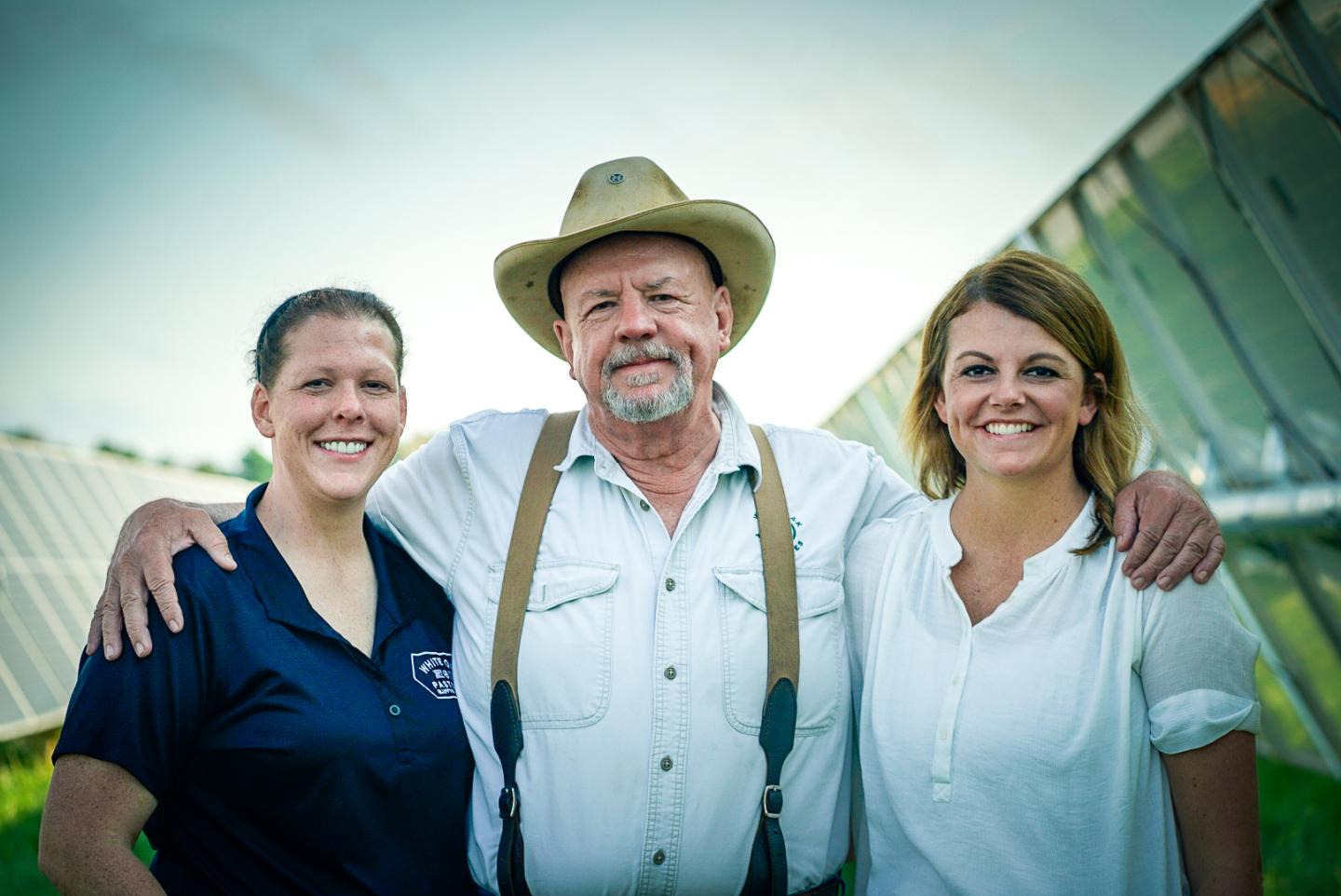
Cows have roamed Will Harris’s 3,200-acre home farm in southwestern Georgia since 1866, when his great-grandparents got up at dawn six days a week to tend the land. They raised and slaughtered chickens, ducks, hogs, and cows, and would load up the meat in a mule-drawn wagon and drive it up the two-mile dirt road to the town of Bluffton, which had a population of 117 people at the last census, to peddle.
Now Harris, 71, has grown its operations into White Oak Pastures, a 5,700-acre farming ecosystem that he told Fortune is the largest private employer in the county and employs 170 people, almost everyone in Bluffton who isn’t retired or can’t work for other reasons. White Oak’s workforce is larger than the town itself.
“Just about everybody in town that works, works for us,” Harris said.
His business, which raises livestock, processes the meat and sells it directly to consumers, brings in $30 million a year. But Harris says the cycle that built farms like his has broken. Record cattle prices once would have sent ranchers rushing to rebuild their herds. Now the land to do it costs more than cattle can pay for, as investors and developers outbid farmers across rural Georgia. So instead of expanding, he is training new ranchers and is open to a data center coming to his county, because he isn’t sure the old way of building a farm still works.
“I don’t know how this is going to end,” he said.
The U.S. cattle herd is at a 75-year low due to droughts and record-high operating costs, and the price of ground beef, typically the most affordable part of the animal for consumers, hit a record $6.90 per pound earlier this year. Farmland is also harder to buy as farmers are outbid by institutional investors and developers, including the data center companies spreading across rural Georgia. Harris said a data center was approved for construction in his Clay County, but hasn’t started construction.
“If you can get a tremendous amount of money to sell the land, most people sell it. It happens every day, and it’s not just data centers,” Harris said. “The land is moving out of the hands of the farmer or cattle producers into the hands of others.”
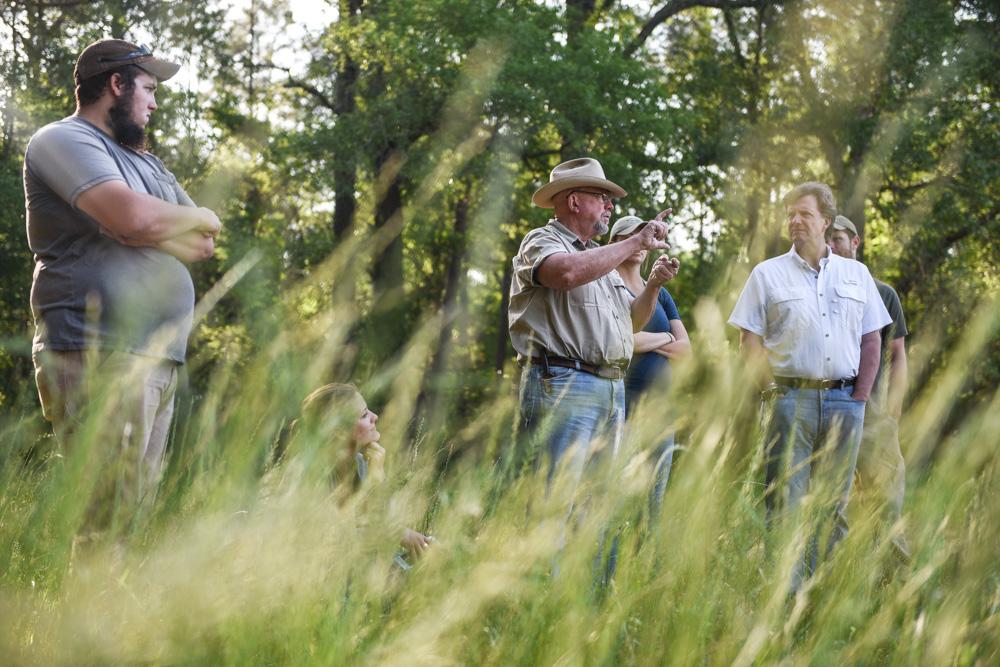
Living through the ups and downs of the cattle industry
White Oak wasn’t always run the way it is now, which is as a regenerative farm, a concept Harris defines as “not breaking the cycles of nature.” When Harris’s father inherited the farm after World War II, he got rid of everything except for cattle and started selling calves to feedlots instead of slaughtering and delivering meat himself, using pesticides and chemical fertilizers to cut costs. Harris went to college and studied animal science, then returned to run the farm similarly for 20 years until 1995.
“I wanted nothing in my pastures except cattle and Tifton 85 Bermuda grass, and if you were not a cow or Tifton 85 Bermuda grass, I would kill you,” he said. “I went to my pastures every single day with the focus of looking for something to kill.”
But then he saw how hard this was on the animals and the land, and changed his approach to reflect “the very old-fashioned way of farming” of his great-grandparents—raising cattle alongside sheep, pigs, goats, and poultry; dropping pesticides; and allowing in more types of grasses.
“It was not easy, but I went from raising cattle very industrially to raising cattle in a very natural manner,” he said. “Now, when I go to the pastures, I’m looking for how to keep everything alive and prospering.”
The shift paid off in the early 2000s, when Harris said “the messaging for grass-fed beef” became more widespread and shoppers started looking for it. That let him put his beef on shelves at Whole Foods and Publix, since the four meatpackers that control 85% of U.S. beef supply had little of it. He said sales grew to about $25 million in 2015, and then the U.S. changed its country-of-origin labeling rules for beef, opening the door for imported beef from places like Australia, Brazil, and Argentina processed or packaged in the U.S. to carry a “Product of USA” label. While Harris kept selling the same volume of beef, his business became unprofitable because he had to cut prices to compete.
“We went from being quite profitable to not being profitable because of that change, and I had a few rough years,” he said.
That changed this year. Since Jan. 1, the USDA has reserved the “Product of USA” label for meat from animals born, raised, slaughtered and processed in the U.S.
The pandemic had already given White Oak a new path. The big meatpackers had to shutter some operations, but also Harris’s daughter came home from college and launched White Oak’s online store with which they could sell directly to customers instead of going through the grocery stores. Harris even opened his first physical store in Atlanta this year, though he has no further plans of expansion.
“We want to do better, not bigger,” he said.
Supporting the next generation of farmers
Harris is teaching other farmers to do what he does. He said most industrial farmers can’t easily switch to regenerative methods because they’ve already invested so much into equipment—saying a cotton picker costs about $1.4 million and a grain combine nearly $1 million—and like him, learned how to do it from their predecessors.
“I don’t want to make it sound like I’m doing it right and they’re not and they’re bad people,” he said. “These farmers are doing it the way they learned from their granddad and dad, the way they learned at the land grant university.”
His nonprofit, the Center for Agricultural Resilience, takes six interns per quarter for three months on the farm, and White Oak offers jobs to about half of them. Harris also runs week-long courses on raising cattle and hogs about once a month, drawing 25 to 30 people from across the country and even from England, Spain, Germany, and Mexico.
“They’re frequently young people that are just out of college, or maybe they’ve taken an entry-level job and didn’t like it,” he said. “There are some people who have inherited farms at 30, 40, 50 years of age, and then they come, so it’s all over the board.”
He said counties like his own in Georgia once thrived on farming, but since World War II, companies like Tyson and Cargill took a bigger share of the profits from agriculture, leaving less for those communities. This is why he’s more open to data centers despite having concerns, though he said he’s not part of the opposition because he doesn’t know enough yet.
“These agricultural counties in southwest Georgia are economically impoverished, and we need some other things going on,” he said. “I don’t know if data centers are what we need, but it is some initial relief, and we will see how it goes.”