
• Home
  • Latest
  • Fortune 500
  • Finance
  • Tech
  • Leadership
  • Lifestyle
  • Rankings
  • Multimedia
  • For Subscribers

Trendingnow

1

Ex-Super Micro executive, married to Jensen Huang's ex-sales chief, says she took a CEO job at an Nvidia customer days before a $2.5 billion China smuggling scandal broke

2

Someone did the math on the Democrats’ first-100-days agenda: It saves $30 billion on the Iran war but adds $4.1 trillion to the national debt

3

TJMaxx’s parent company is spending one-third of its $463 million in tariff refunds on corporate bonuses—and it’s not the only one
EconomyChina

The AI bust is a growing threat to China’s economy and a ‘moment of real danger’ for President Xi Jinping, analyst warns

Jason Ma
By
Jason Ma
Jason Ma
Weekend Editor
Down Arrow Button Icon
Jason Ma
By
Jason Ma
Jason Ma
Weekend Editor
Down Arrow Button Icon
November 21, 2026, 4:45 PM ET
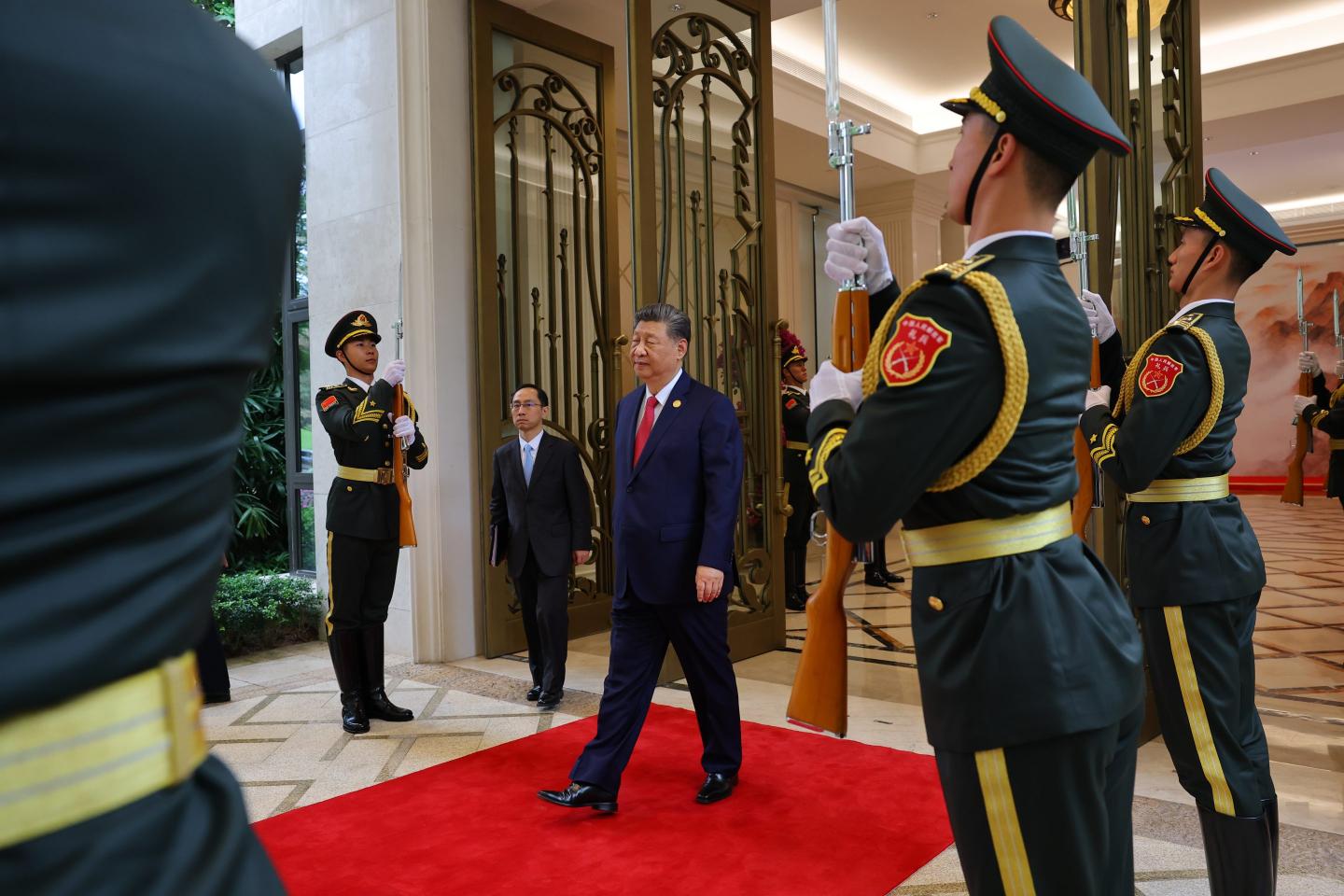
Chinese President Xi Jinping walks out to receive U.S. President Donald Trump for a bilateral meeting at the Asia-Pacific Economic Cooperation (APEC) Economic Leaders' Meeting on November 16, 2026 in Shenzhen, China.
Chinese President Xi Jinping walks out to receive U.S. President Donald Trump for a bilateral meeting at the Asia-Pacific Economic Cooperation (APEC) Economic Leaders' Meeting on November 16, 2026 in Shenzhen, China.Carlos Barria-China Pool/Getty Images
Google source logo
Add Fortune on Google for similar content.

U.S. investors are facing a meltdown in tech stocks and the possible end of the AI boom, but the bubble has already popped in China, where an even worse market crash threatens the economy and President Xi Jinping, according to Yardeni Research.

Recommended Video

China’s tech-heavy STAR 50 index has tumbled 44% from its high this summer, while the Nasdaq is down 18% from its record—even after U.S. stocks suffered their worst week since the early days of the COVID-19 pandemic.

That’s thrown a wrench into Xi’s plans for the economy, Yardeni said in a note earlier this month. While the Chinese leader was riding high as host to global leaders this week, the market’s downturn jeopardizes his plan to turn China’s savers into stock investors who can finance the AI buildout and de-emphasize the property market.

Real estate accounts for roughly 70% of household wealth in China and was traditionally a place to stash savings. But the housing crash has weighed on consumer demand, even producing intermittent deflation. Business investment is also falling, with October data showing property investment sank nearly 22%.

With the domestic market still weak, Beijing has instead relied on a flood of cheap exports to keep the economy growing while also deploying the “national team” of state-backed banks to pump money into the stock market.

But according to Yardeni, Chinese stocks collapsed this year due in part to cutthroat competition, heavier tax burdens, higher energy costs, tariffs, and the risk that China’s trading partners will block exports being sold at ultra-low prices.

“To keep AI funding flowing, Xi needs a buoyant stock market,” the note said. “Otherwise, AI risks being folded into the state-owned enterprise (SOE) universe that his team has pledged to shrink since 2013, further crowding out the private sector.”

Retail investors are also skittish about Chinese stocks after Xi’s government cracked down on the tech sector in 2020. The market’s reputation as a rigged casino that favors politically connected insiders doesn’t help either. In fact, the Shanghai Composite remains well below its October 2007 peak despite China’s GDP exploding nearly sixfold.

Many households now have “financial PTSD” after repeated stock busts, including a crash in the summer of 2015 that required an aggressive national team rescue, Yardeni added.

To be sure, China remains a leader in AI, and mom-and-pop investors still drive most of the trade, even as they treat the market more like high-stakes gambling than a place to grow retirement savings.

“Yet this is a moment of real danger for Xi. A bursting AI bubble would not merely erase wealth or dent China’s technological prestige. It would weaken Beijing’s attempt to replace a broken property model with a stock-market-led one,” Yardeni warned.

“China can build world-class AI models, train engineers, and spend billions on chips. But if its households still view Shanghai as a casino with odds set by the Politburo, Xi’s dream of creating a Chinese version of Wall Street may remain just that: a dream.”

Underscoring its importance to Beijing, Premier Li Qiang told a State Council executive meeting earlier this month that stabilizing capital markets was the top priority for the rest of the year. 

It followed securities regulators sharply easing requirements for company buybacks that help lift stock prices and discouraging IPOs and large share sales to prevent stock dilution that triggers selloffs.

But the spy scandal that dethroned Jensen Huang as CEO of Nvidia represents a new risk to China’s AI ambitions. Backlash over the advanced U.S. chips and computing capacity that China had access to has spurred the Trump administration to impose new technology curbs.

“By targeting both indirect chip shipments to China and its access to overseas computing power, the new controls threaten to slow the catch-up of China’s leading AI models and to slow China’s AI rollout,” analysts at Capital Economics wrote on Tuesday.

Fortune Daily breaks the traditional barrier between audience and newsroom. The show transforms Fortune’s trusted reporting into actionable, conversational, and entertaining insights for an emerging class of business leaders. Watch here.
About the Author
Jason Ma
By Jason MaWeekend Editor

Jason Ma is the weekend editor at Fortune, where he covers markets, the economy, finance, and housing.

See full bioRight Arrow Button Icon
Google source logo
Add Fortune on Google for similar content.

Latest in Economy


Most Popular

Fortune Secondary Logo
Rankings
  • 100 Best Companies
  • Fortune 500
  • Global 500
  • Fortune 500 Europe
  • Most Powerful Women
  • World's Most Admired Companies
  • See All Rankings
  • Lists Calendar
Sections
  • Finance
  • Fortune Crypto
  • Features
  • Leadership
  • Health
  • Commentary
  • Success
  • Retail
  • Mpw
  • Tech
  • Lifestyle
  • CEO Initiative
  • Asia
  • Politics
  • Conferences
  • Europe
  • Newsletters
  • Personal Finance
  • Environment
  • Magazine
  • Education
Customer Support
  • Frequently Asked Questions
  • Customer Service Portal
  • Privacy Policy
  • Terms Of Use
  • Single Issues For Purchase
  • International Print
Commercial Services
  • Advertising
  • Fortune Brand Studio
  • Fortune Analytics
  • Fortune Conferences
  • Business Development
  • Group Subscriptions
About Us
  • About Us
  • Press Center
  • Work At Fortune
  • Terms And Conditions
  • Site Map
  • About Us
  • Press Center
  • Work At Fortune
  • Terms And Conditions
  • Site Map
  • Facebook icon
  • Twitter icon
  • LinkedIn icon
  • Instagram icon
  • TikTok icon
  • YouTube icon

    Recommended For You

    © 2026 Fortune Media IP Limited. All Rights Reserved. Use of this site constitutes acceptance of our Terms of Use and Privacy Policy | CA Notice at Collection and Privacy Notice | Do Not Sell/Share My Personal Information
    FORTUNE is a trademark of Fortune Media IP Limited, registered in the U.S. and other countries. FORTUNE may receive compensation for some links to products and services on this website. Offers may be subject to change without notice.