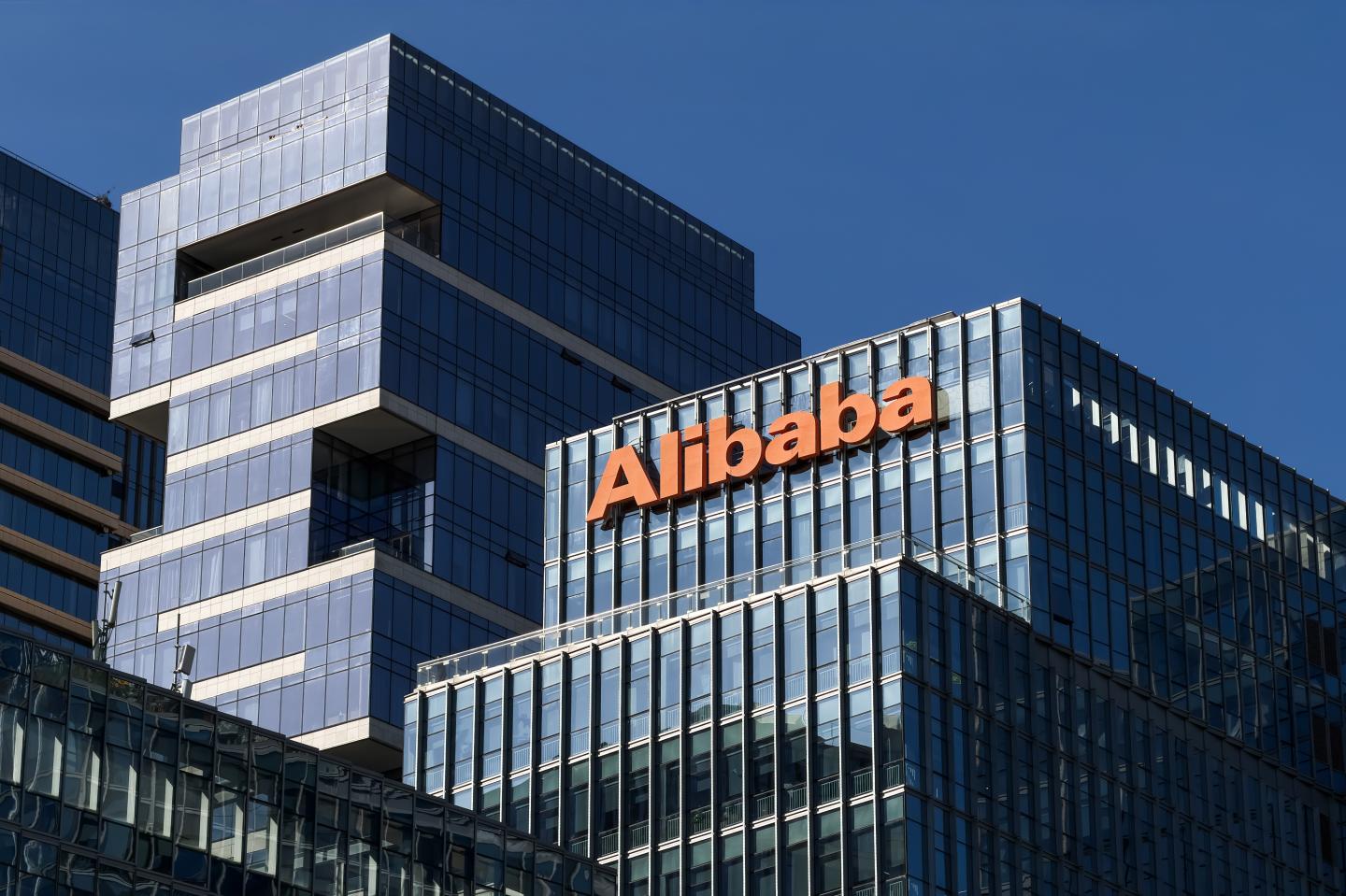
Tencent and Alibaba said this week that domestic chips can cushion their cloud businesses from new U.S. restrictions on access to advanced AI processors, yet acknowledged that they could still slow the development of new AI models.
Both tech giants reported earnings after the U.S. Department of Commerce released an interim rule expanding export controls on Monday, making them some of the first Chinese corporate responses to the restrictions.
Chipmakers and exporters now need a license to sell advanced chips to data centers in Malaysia, Singapore, Thailand, Indonesia, and Brazil. The rule also requires a license for large data centers to offer substantial computing power to Chinese customers. Together, the measures are likely to restrict the amount of computing power available to Chinese companies like Alibaba and Tencent as they develop AI models and offer them to users.
Tencent
Tencent executives, in the company’s earnings call, drew a distinction between the computing power needed to train new models and running existing ones.
“We actually don’t see an impact because our cloud business today is primarily running inference,” James Mitchell, Tencent’s chief strategy officer, told analysts on Wednesday. (Inference is the running of AI models, as opposed to training them.)
Mitchell added that Tencent had reached a stage where the inference could run on what he called a “surprisingly limited number” of domestically produced chips.
Martin Lau, Tencent’s president, agreed that the domestic supply chain should be able to cover inference, particularly for Tencent’s smaller, more efficient models.
Still, Lau called the restrictions “unfortunate” and admitted that it would now take longer for Tencent to train the next version of its Hunyuan model. “It sets everyone back in China,” he said.
In the long run, Lau predicted that U.S. controls would “speed up” the development of China’s domestic chip industry. “We believe all Chinese players would actually have to rely on domestic supply chains and domestic chips.”
Tencent reported 207.3 billion yuan ($31 billion) in revenue for the third quarter of 2026, up 8% year-on-year. Fintech and business services revenue, which includes cloud computing, rose 9.4% to reach 63.6 billion yuan ($9.5 billion).
Net profit rose 0.3% to 65.1 billion yuan ($9.8 billion). Capital expenditure rose 527% to 81.4 billion yuan ($12.2 billion).
Alibaba
On Thursday, on its earnings call, Alibaba said its 2030 targets—including $100 billion in external cloud revenue and a 20% EBITDA margin—remain on track despite the new restrictions.
“Our own progress in developing domestic computing power is in fact already ahead of our original expectations,” Alibaba CEO Eddie Wu told analysts on the call. The company has invested heavily in its in-house chip division, T-Head, which it plans to list in Hong Kong.
Alibaba reported 271.5 billion yuan ($40.5 billion) in revenue for the third quarter of 2026, up 10% year-on-year. AI and cloud revenue rose 53% to reach 61.0 billion yuan ($9.1 billion).
Net profit also rose by 213% year-on-year to 64.4 billion yuan ($9.6 billion). Capital expenditure rose by 60% to reach 50.5 billion yuan ($7.5 billion).
Alibaba’s confidence in its longer-term targets came with a warning about the near term.
“The new compute export control rules will affect next year’s products and services, and there is still uncertainty as regards the supply chain,” Wu said during the earnings call. He suggested that cloud revenue growth could slow to between 30% and 45%, then rebound to 50% or higher by 2028.
Wu said it was “too early at this stage” to know how U.S. restrictions might affect the development of its Qwen family of models, though he added that the company’s current T-Head chips “are already capable of fully supporting the training of large-scale, including ultra-large-scale, models.” Wu predicted that T-Head production would ramp up in 2027 or 2028. “Once we get there, we will actually be in a better position to control and pace the speed at which we iterate our foundation models,” he said.
Alibaba, however, is in the spotlight after the Nvidia scandal, which toppled CEO Jensen Huang last week. Nvidia’s sales team introduced Alibaba to Alice Huang, a former Megaspeed executive, before U.S. chip export controls took effect in 2022, the Information reported. Megaspeed, a Singapore-based cloud computing company, is suspected of funneling advanced AI chips to China in violation of U.S. export controls; Megaspeed denies the allegations.
On Thursday, a group of Alibaba shareholders sued the company, accusing it of concealing its ties to Alice Huang and Megaspeed. The shareholders said media reports of the ties contributed to a 14% drop in Alibaba’s share price over four days, and accused it of understating the risk that export-control violations could harm its business.
Alibaba did not immediately respond to a request for comment.
Chip controls
The Commerce Department faces increased scrutiny over whether it has done enough to keep advanced chips out of China. On Thursday, the House Foreign Affairs Committee released data showing the department had approved nearly 880,000 AI chips for Chinese companies—including 75,000 for Alibaba and 150,000 for Tencent—out of more than 3.4 million chips that Nvidia and AMD sought to export to Chinese companies.
Chinese AI developers beyond Tencent and Alibaba are preparing for the likely impact of tighter U.S. chip restrictions. The Information reported Thursday that Moonshot AI, the Beijing-based developer of the Kimi models, had scrapped a $150 million deal to access Nvidia’s Blackwell chips through an Indonesian data center.
The new controls also constrain the ability of Chinese companies to manufacture their own semiconductors using overseas foundries. New U.S. rules narrow the exemptions that chip manufacturers can use to ship advanced chips without a license. The Financial Times reports that Taiwan Semiconductor Manufacturing Company and Samsung Electronics have suspended some chip shipments to Chinese customers.