The AI gold rush as we knew it is over. The technology will keep advancing, but unlimited spending and unquestioned valuations is finished. The biggest threat to the AI boom sits in the financing that holds the ecosystem together. The trend line is heading precipitously down. Global AI funding was $239.1 billion in Q1 of 2026, $153.1 billion in Q2 and $103.3 billion in Q3. Is this the bottom? The company at the core of the AI industry may be key to finding that answer.
The great repricing has begun
Nvidia has lost nearly $2 trillion in market value since its October 6 record, over 30% of what was the most valuable company on earth, gone in under six weeks. On Nov. 12, Jensen Huang resigned after 33 years. The CFO is interim CEO and Congress has called Huang to testify. The company at the center of the AI economy now carries succession risk and national security exposure at the same time. Recent earnings reports may have softened the sting, but questions still must be answered.
Having great technology does not justify every valuation. The people behind the tech must be able to responsibly steward a company and its mission.
The $570 billion question
Bloomberg’s chart of circular AI financing puts Nvidia at the center of a global web that includes Microsoft, Google, Amazon, OpenAI, Anthropic, Oracle and CoreWeave. Billions move between them as equity stakes, chip purchases, cloud contracts and guarantees. But, how much of this demand is organic and how much is financed by the companies that benefit from it?
Chipmakers invest in AI companies, which buy their chips. Cloud providers invest in AI developers, which commit billions back to cloud. Lenders then finance data centers against those commitments. Nvidia has guaranteed up to $105 billion in lease obligations on an Ohio data center campus built for OpenAI, Nvidia’s own customer.
Capital circulates and valuations rise. This loop can power real growth, but also make independent demand look stronger than it is. When suppliers finance their customers and both valuations rest on the same revenue, one default travels fast.
Calling the whole system a Ponzi scheme would be irresponsible, but calling it safe would be worse. Morgan Stanley projects nearly $570 billion in global AI-related debtissuance in 2026, more than double last year. Nearly $236 billion was issued by the end of May alone. Someone has to pay for all that capacity.
The credit market’s verdict
In October, the yield on CoreWeave’s 2031 bonds passed 16%, a level traditionally signaling distress. According to Reuters there is a nearly 63% chance of default within five years. This happened even with an Nvidia agreement in place to buy unsold CoreWeave capacity through 2032.
Lenders are now asking for higher yields and tighter covenants. Credit investors have started to separate financial strength from AI enthusiasm. With tighter credit we have to begin to ask who in this circle is going to absorb all the loss that is sure to come?
Proof wins, speculation loses in the world of data centers
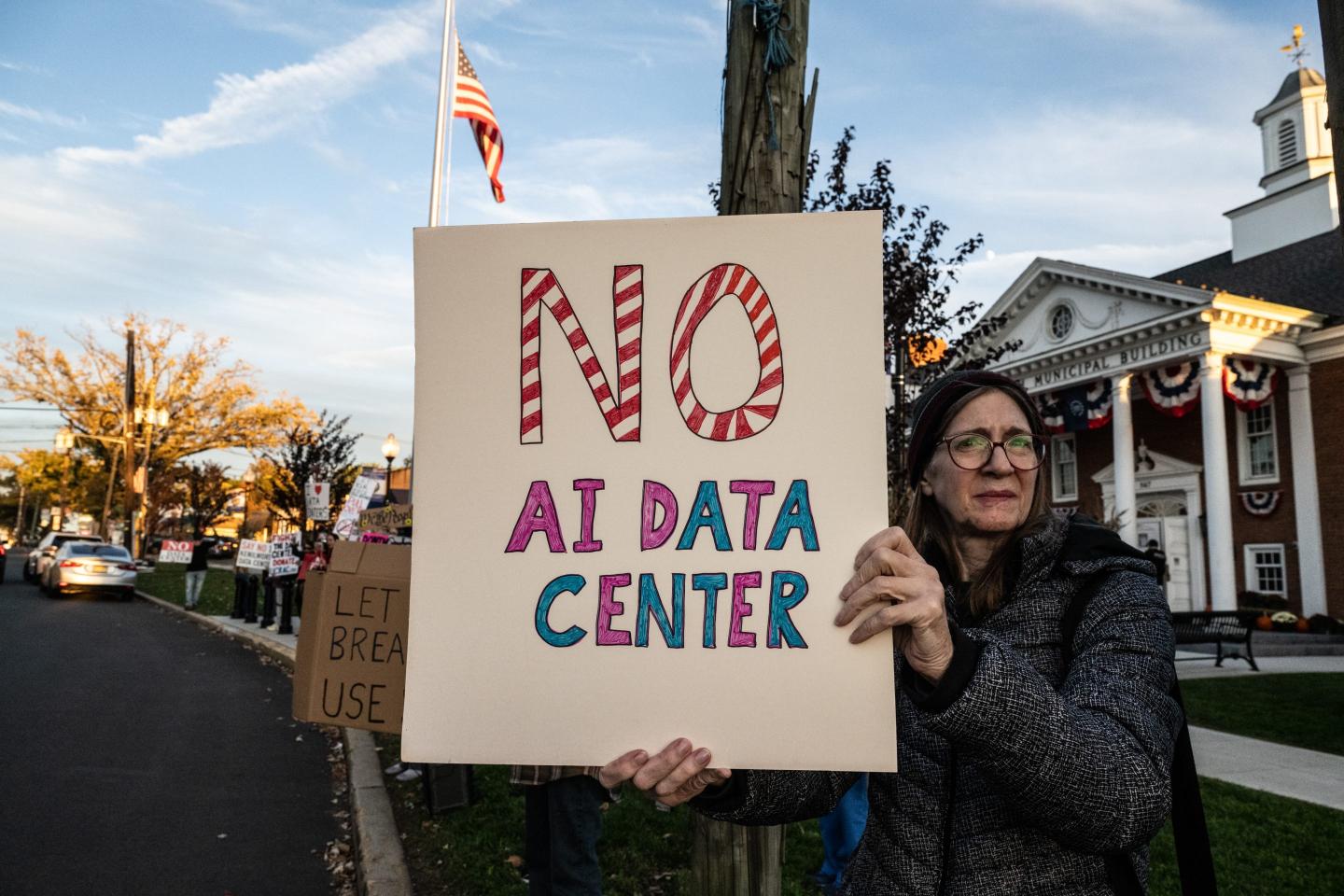
Yes, Nvidia remains highly profitable. Microsoft, Google and Amazon still have extremely deep pockets. But, debt-heavy neoclouds and data center developers live in a world of power shortages, construction delays, rising borrowing costs, and local opposition.
Billions have been committed to AI campuses before demand and profitability are proven. Data centers are here to stay, but the speculative ones are in trouble. I expect a wave of distressed and underused projects between 2028 and 2031. The survivors will have cheap power and creditworthy customers on long contracts. A gigawatt announced is not a dollar earned.
AI politics are changing
The EU AI Act is already reshaping compliance. Individual US states are drafting and passing different legislation, and after the recent midterm elections Washington will press harder on safety, energy costs, competition and national security. The idea of building first and answering questions later no longer exists. Regulation will decide who can scale and who cannot.
An encore of the fiber build-out
The fiber buildout of the late 1990s produced real technological progress, but destroyed vast amounts of investor capital. The internet survived, but many of the companies that financed it did not. AI is real and demand for compute is large. Technological inevitability does not guarantee financial sustainability, but I remain bullish on what AI will do for economies and industries over the long run. I am far less bullish on the financial engineering around it.
Today falls short of a debt crisis. But, what we are watching is the first serious stress test of the financial system behind AI. The risk is that financing assumptions break before the technology delivers its economic returns. The winners of the next phase will be the companies that earn sustainable returns on invested capital. GPU counts and gigawatt announcements will matter less.
As time passes on this current test, the most interconnected players may find that their biggest customers and their biggest creditors sit in the same circle.
The opinions expressed in Fortune.com commentary pieces are solely the views of their authors and do not necessarily reflect the opinions and beliefs of Fortune.