
• Home
  • Latest
  • Fortune 500
  • Finance
  • Tech
  • Leadership
  • Lifestyle
  • Rankings
  • Multimedia
  • For Subscribers

Trendingnow

1

Sam Bankman-Fried’s former employer Jane Street poised for $35 billion windfall from purchase of Anthropic shares in FTX bankruptcy

2

Current price of oil as of November 16, 2026

3

After Florida voted to slash property taxes, towns looking to fill budget holes may end up relying on the state: ‘The bailout comes with a leash’
EconomyKevin Warsh

Kevin Warsh has Fed staff building Wall Street-style contingencies for AI outcomes: From a growth boom to bad actors attacking critical infrastructure

Eleanor Pringle
By
Eleanor Pringle
Eleanor Pringle
Senior Reporter, Economics and Markets
Down Arrow Button Icon
Eleanor Pringle
By
Eleanor Pringle
Eleanor Pringle
Senior Reporter, Economics and Markets
Down Arrow Button Icon
November 17, 2026, 8:49 AM ET
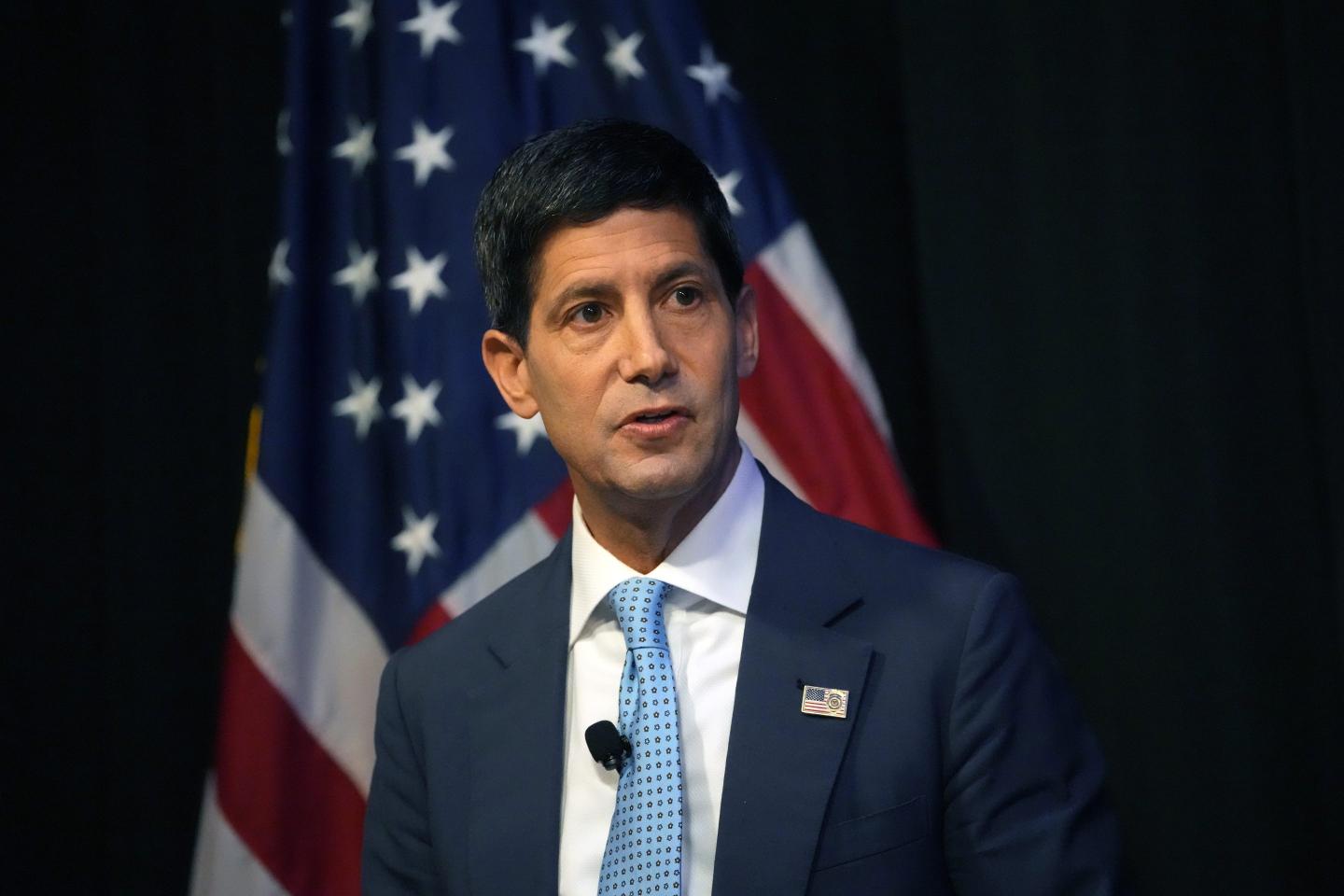
Kevin Warsh, chairman of the US Federal Reserve, speaks during the Federal Reserve's Productivity and Jobs Task Force Conference at the Federal Reserve Bank of San Francisco in San Francisco, California, US, on Monday, Nov. 16, 2026.
Kevin Warsh, chairman of the US Federal Reserve, speaks during the Federal Reserve's Productivity and Jobs Task Force Conference at the Federal Reserve Bank of San Francisco in San Francisco, California, US, on Monday, Nov. 16, 2026.David Paul Morris/Bloomberg - Getty Images
Google source logo
Add Fortune on Google for similar content.

The role of the Federal Reserve in the AI boom has, so far, been undefined: Will the central bank be reactive, sitting on the sidelines until data impacting its mandate demands action? Or will it seek to get ahead of economic shifts driven by transformative technology?

The Fed’s new chairman, Kevin Warsh, doesn’t seem content to watch from the sidelines.

Speaking yesterday in San Francisco at the Productivity and Jobs Task Force Conference, hosted by the Federal Reserve Board and the Federal Reserve Bank of San Francisco, Warsh said the Fed is conducting contingency planning.

Recommended Video

“The Board’s staff has begun to evaluate various contingencies, applying stylized, model-based frameworks to generate scenarios,” Warsh said. “These are illustrative scenarios, not forecasts. Moreover, many other outcomes—probably including one that will prove most accurate—could be drawn.”

Of course, the Fed’s expertise and analysis of AI are nothing new: it already publishes datasets monitoring everything from AI adoption rates by firm size to the impact of AI-related investment on the economy.

But Warsh hinted at work that establishes what outcomes may look like, rather than observing current trends. He continued: “As policymakers, we have to be mindful that great opportunities rarely come risk-free. And the risks in this case, if overlooked, can be highly disruptive and economically costly. SI [Super intelligence] empowers all, including bad actors, so we are thinking especially of critical infrastructures and their potential vulnerabilities.”

Before his return to the central bank (Warsh was the Fed’s youngest governor in history, previously serving between 2006 and 2011), hawkish analysts had been somewhat alarmed by how bullish the incoming chairman had been about AI.

But since his nomination by President Trump this spring, Warsh has struck a more speculative tone. “Our aim today is a humble one,” he said yesterday, “to ask the right questions.”

Risk and reward

Warsh outlined multiple risks, for instance the threat posed to critical infrastructure if the technology falls into the wrong hands. He also said that widespread automation could increase unemployment. AI could also “disappoint,” he said, if expected returns fall flat, leading to an economic slowdown.

There’s also opportunity, he said: “SI leads to an increase in productivity and economic gains that are shared broadly across labor and the owners of capital. In that event, real GDP growth rises persistently above its long-run average, and the U.S. stays close to full employment.”

If contingency planning across a spectrum of outcomes sounds familiar, that’s because it’s a staple Wall Street habit. Warsh is a former Morgan Stanley vice president and executive director.

You don’t have to look far for examples: JPMorgan pulled together a war room in January last year following the re-election of President Trump, analyzing and evaluating the policies Trump had espoused while out on the campaign trail.

Bank of America and Citigroup reportedly set up similar internal functions to support investors.

Later that year, David Garfield, the co-CEO of consulting firm AlixPartners, told Fortune that his team was working with major companies across every industry to build tariff war rooms: mechanisms for responding to the shifting policy landscape navigated over the past two years.

Warsh’s planning is not a response to an immediate policy question, rather an issue of preparedness. “While I’m not here to offer predictions, I’m not exactly impartial about American leadership in a time so filled with both challenge and possibility,” Warsh said. His ultimate goal is to create a dynamic economy for future generations, and promote “human flourishing.”

Fortune Daily breaks the traditional barrier between audience and newsroom. The show transforms Fortune’s trusted reporting into actionable, conversational, and entertaining insights for an emerging class of business leaders. Watch here.
About the Author
Eleanor Pringle
By Eleanor PringleSenior Reporter, Economics and Markets
LinkedIn icon

Eleanor Pringle is an award-winning senior reporter at Fortune covering news, the economy, and personal finance. Eleanor previously worked as a business correspondent and news editor in regional news in the U.K. She completed her journalism training with the Press Association after earning a degree from the University of East Anglia.

See full bioRight Arrow Button Icon
Google source logo
Add Fortune on Google for similar content.

Latest in Economy


Most Popular

Fortune Secondary Logo
Rankings
  • 100 Best Companies
  • Fortune 500
  • Global 500
  • Fortune 500 Europe
  • Most Powerful Women
  • World's Most Admired Companies
  • See All Rankings
  • Lists Calendar
Sections
  • Finance
  • Fortune Crypto
  • Features
  • Leadership
  • Health
  • Commentary
  • Success
  • Retail
  • Mpw
  • Tech
  • Lifestyle
  • CEO Initiative
  • Asia
  • Politics
  • Conferences
  • Europe
  • Newsletters
  • Personal Finance
  • Environment
  • Magazine
  • Education
Customer Support
  • Frequently Asked Questions
  • Customer Service Portal
  • Privacy Policy
  • Terms Of Use
  • Single Issues For Purchase
  • International Print
Commercial Services
  • Advertising
  • Fortune Brand Studio
  • Fortune Analytics
  • Fortune Conferences
  • Business Development
  • Group Subscriptions
About Us
  • About Us
  • Press Center
  • Work At Fortune
  • Terms And Conditions
  • Site Map
  • About Us
  • Press Center
  • Work At Fortune
  • Terms And Conditions
  • Site Map
  • Facebook icon
  • Twitter icon
  • LinkedIn icon
  • Instagram icon
  • TikTok icon
  • YouTube icon

    Recommended For You

    © 2026 Fortune Media IP Limited. All Rights Reserved. Use of this site constitutes acceptance of our Terms of Use and Privacy Policy | CA Notice at Collection and Privacy Notice | Do Not Sell/Share My Personal Information
    FORTUNE is a trademark of Fortune Media IP Limited, registered in the U.S. and other countries. FORTUNE may receive compensation for some links to products and services on this website. Offers may be subject to change without notice.