Coinbase CEO Brian Armstrong once sent an executive from San Francisco to New York with the goal of making inroads with the storied Wall Street firm Cantor Fitzgerald. It did not go well. Arriving alone, the executive recalls he was greeted by Cantor’s then-CEO Howard Lutnick and a dozen lieutenants, who ridiculed his General Manager title: “So I sat down with this big, sharp-elbowed financial company, trying to work a deal…The CEO laughs at me and goes ‘Hey GM, are you going to make my coffee?’ I came out to New York and got my ass handed to me by old-school traders.”
That anecdote, which I recount in my history of Coinbase’s early years, took place in 2016. A decade later, things are a little different. In Miami last week, Lutnick’s son Brandon presided over Cantor Converge, an annual summit dedicated to blockchain and other new technology—where this year’s keynote speaker was none other than Brian Armstrong.
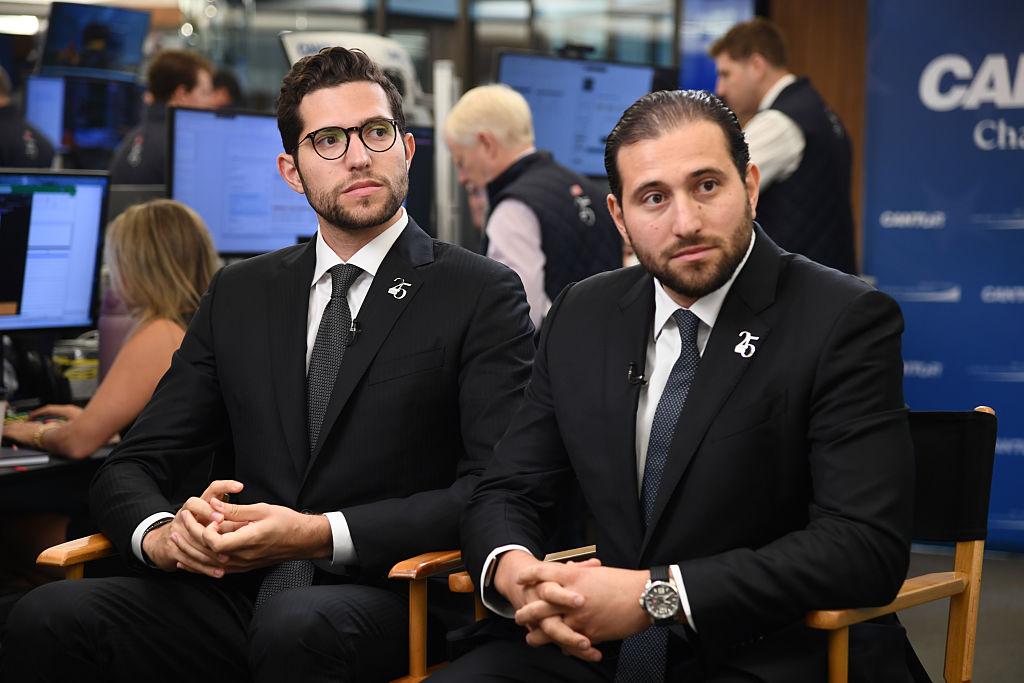
I sat down with the younger Lutnick, whose dress and appearance are every inch that of a Wall Street banker, but who speaks fluent crypto. He revealed that he is bullish about four parts of the sector in particular: Bitcoin, stablecoins, remittances, and exchanges like Coinbase that are crypto native but now offer everything from tokenized equities to prediction markets.
In the long term, I suspect he’s correct on all four counts. But it is his and Cantor’s ties to stablecoins, and in particular Tether, that are most intriguing. Those include an arrangement that saw Cantor become the custodian for Tether’s massive reserves, receiving a small stake of the stablecoin giant in return.
As part of this tie-up, Brandon Lutnick has seen the workings of Tether up close. That includes a stint in Switzerland where he physically examined a hoard of gold bars used to back Tether’s gold stablecoin, which currently has a market cap of around $3 billion. As for the company’s flagship USDT product, Lutnick views it not only as the world’s biggest stablecoin, but also as a strategic asset—one that cements the influence of the U.S. dollar in countries around the world. (He is not alone in that view.)
In one of the more memorable moments from last week’s Miami conference, Tether’s CEO Paolo Ardoino took the stage with a background showing larger-than-life AI images of the future. Those images included a hologram of Hari Seldon, the protagonist from Isaac Asimov’s acclaimed Foundation sci-fi series, as well as scenes of decentralized cellphone and AI infrastructure in Africa. In his address, Ardoino made the case that, just as stablecoins offer a form of money beyond control of the state, it’s possible (and perhaps urgent) to build out a host of other decentralized technologies.
The presentation left some in the standing-room audience (including the Polish equities analyst at my table) looking puzzled. But elements of it also provided a valuable look into the mind of Tether’s CEO and his global ambitions.
Cantor’s shindig also included appearances by Binance founder Changpeng Zhao and CFTC Chairman Michael Selig, who reaffirmed his position that crypto and other new financial technologies should be built in the U.S.
The most notable moments for me, though, came in the form of comments by Armstrong and the CEO of quantum computing firm IonQ, Niccolo de Masi. Both chief executives warned that the recent wave of cyberattacks are going to persist, with Armstrong stating matter-of-factly that there is an employee at every company—including his own—with malware on their computers. For his part, de Masi said that cyber attackers currently have the upper-hand over defenders, and that there is not much time left to secure our networks from quantum-based exploits. Whether we like it or not, cybersecurity is going to be in the news a lot.
Jeff John Roberts
jeff.roberts@fortune.com
@jeffjohnroberts
DECENTRALIZED NEWS
Crypto prices are taking a beating as, in the words of one analyst, "people are chucking stuff like Bitcoin and gold" in favor of yield-bearing assets that can offset inflation (Fortune)
Anthropic pre-IPO contracts on Hyperliquid, which can be seen as a "derivative of a derivative," point to a $1.8 billion valuation for the AI giant (WSJ)
The "just sports" prediction market Novig is now the third-biggest behind Kalshi and Polymarket despite only launching this summer (Fortune)
The Airwallex-allied startup Alta raised a $48M Series A for its compliance-focused blockchain that looks to compete with Stripe and Canton (Fortune)
Miami-Dade County announced it will accept property tax payments in Bitcoin, the latest example of crypto spreading into the world of real estate (TheRealDeal)
MEME OF THE MOMENT