
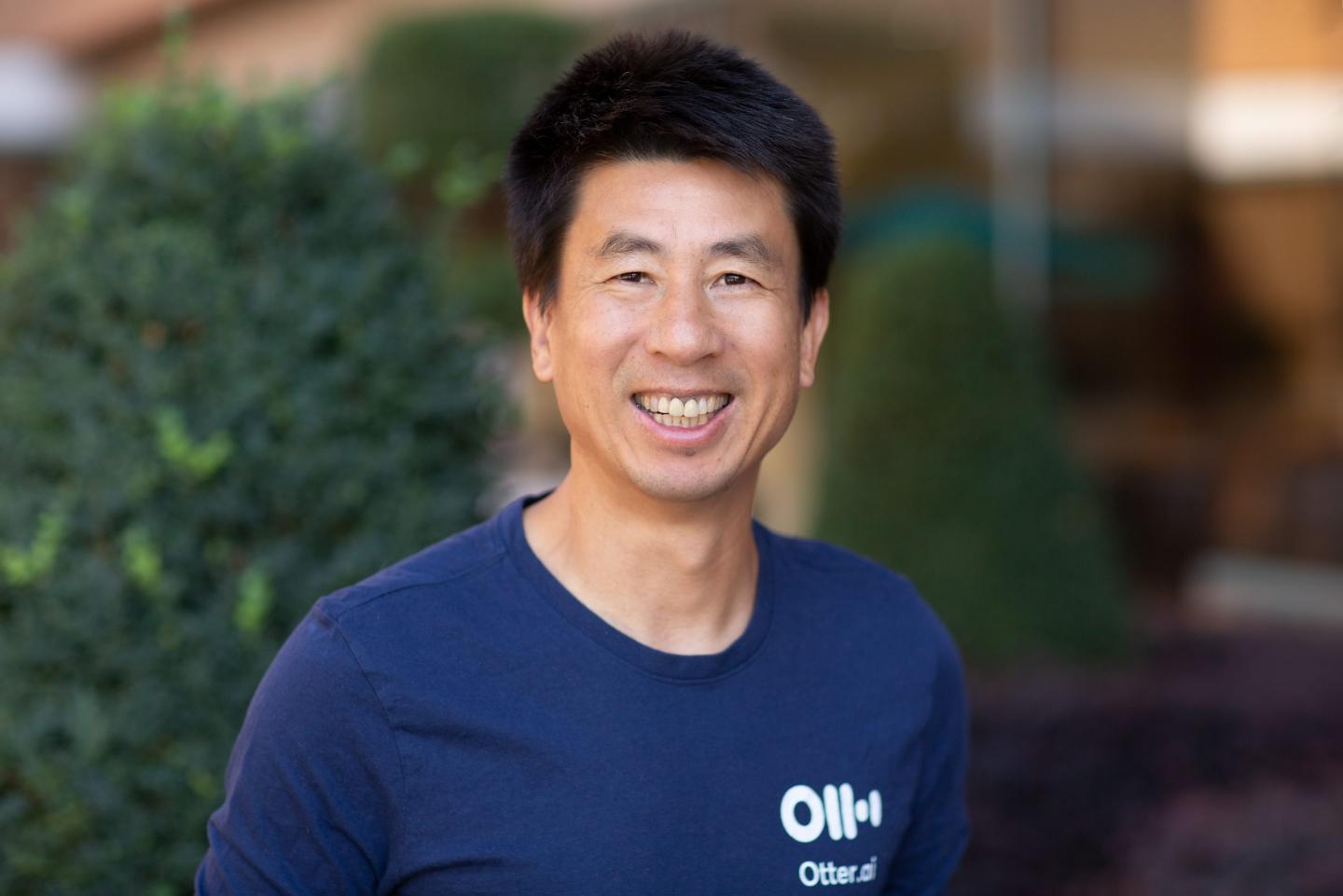
When Sam Liang, the milliomaire CEO and co-founder of Otter.ai, moved from China to the U.S. to study, he could barely understand his professors because of the language barrier. So he took a Sony Walkman to class, recorded every lecture, and replayed the tapes until he understood them.
That became the inspiration for the AI notetaker, Otter.ai, that he co-founded in 2016. The company says it has since transcribed more than 1 billion meetings for over 40 million users. Last month, it secured $320 million in financing, and investors include early backers of Google, Zoom and Tesla.
Growing up in China, Liang always dreamed of studying in America—and that’s exactly what he did, first at the University of Arizona and then Stanford for his PhD. There, he hit the jackpot with his faculty advisor: David Cheriton, who famously mentored Larry Page and Sergey Brin and wrote them a $100,000 check to launch Google.
“He instilled in me the importance of true big thinking, and ignited my drive to one day set up a company of my own,” Liang tells Fortune.
He got his start with Silicon Valley engineering jobs at Cisco and Tropos Networks, before joining Google in 2006 as a tech lead. His work on the “blue dot” became the backbone of Google Maps. He quit his cushy job in 2010 to co-found his first startup, Alohar Mobile, which was acquired by Alibaba in 2013 for millions, and gave him the taste of entrepreneurship.
But when he started pitching his idea for Otter, voice data was expensive and AI wasn’t on people’s radars yet.
“Many investors thought we were crazy,” he recalls. “We were well ahead of the game, long before ChatGPT and the proliferation of AI meeting assistants.
They weren’t crazy, just early. Liang and his co-founder Yun Fu, spent two years building the technology under the name AISense before launching a free version of Otter in February 2018, followed three months later by a paid tier.
Then the pandemic moved the world’s meetings onto Zoom. Otter’s revenue grew 800% from 2019 to 2020. By the time it raised $50 million in Series B funding in February 2021, it had transcribed more than 100 million meetings.
The company now has more than 240 employees, has hit $100 million a year in revenue, its user base keeps growing by the millions, and it’s currently being integrated with OpenAI, Claude, and Google, to name a few.
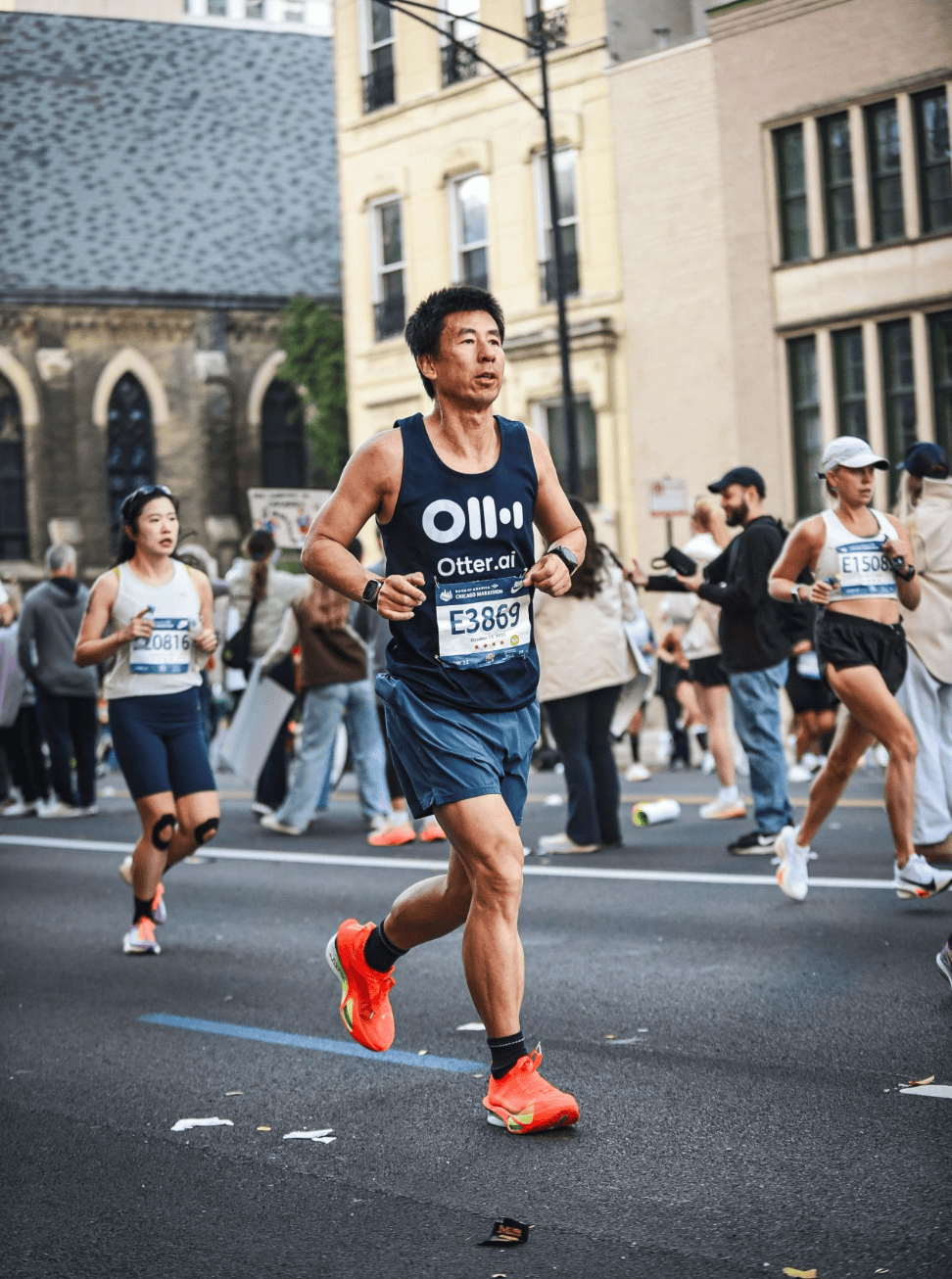
But shaped by his Chinese upbringing, Liang still lives frugally. He skips the free lunch Otter provides staff and instead drinks Arnold Schwarzenegger’s smoothie recipe, split across three bottles for breakfast, lunch and an afternoon snack. His one indulgence is flying around the world to run marathons. He has run 12, including London earlier this year with his wife. And he has zero plans to slow down.
—
Fortune’s series, The Good Life, shows how up-and-coming leaders spend their time and money outside of work.
Being in the C-suite is a high-pressure job with long hours, board responsibilities, and intense scrutiny. But what is it like to be a top executive when you’re off the clock? Here’s what he told us.
The Money
What’s the best financial decision you’ve ever made, and how much did it make or save you?
The best financial decision I ever made was leaving a stable job at a large tech company to build startups. Of course, it was a risk, and it wasn’t obvious that it would pay off financially at first. But taking a risk on a startup has to be about more than chasing financial goals. You have to believe in what you’re building and perhaps, as it has for me, it’ll eventually turn into the best financial decision ever made.
And the worst?
I’ve been pretty conservative with money most of my life, so thankfully I haven’t had any bad financial decisions.
What’s in your wallet?
I carry a little bit of cash, just because sometimes it’s easier to use cash for certain things, like tips, but most of the time I use Apple Pay.
What’s the one area of your life where you’re surprisingly tight with money, even now?
I grew up in China during and after the Cultural Revolution, when even food was rationed. That experience taught me to live very simply. I don’t feel I need luxury; the basics are good enough, so I don’t feel comfortable with anything that feels excessive in price.
That same instinct shows up in how I run Otter. I’d rather build conservatively and frugally than spend for the sake of appearances. Every dollar should earn its way into the budget, whether it’s headcount, tools, or marketing. Growing up with so little makes you naturally suspicious of excess, and I think that discipline has made Otter a stronger, more resilient company.
What’s your most ridiculous ongoing expense?
Probably my most “ridiculous” ongoing expense is traveling the world to run marathons. I started running in 2019 and have since completed 12 marathons in various cities around the world. Flying to different places just to run 26.2 miles is probably not everyone’s preferred expenditure, but it’s a passion of mine.
Do you invest in shares?
Mostly, I put money into index funds and hold them for the long term. My mindset is that instead of spending too much energy on someone else’s company, I should invest my time in my own.
What personal finance advice would you give your 20-year-old self?
I would tell my 20‑year‑old self to invest in yourself first. When you’re young and starting your career, it might feel like you’re just working for your employer, but in reality you’re building your own skills, experience, and reputation. Every extra hour you put into your work, you’re also becoming a better professional. So don’t be afraid to work hard and go beyond the minimum. If you do that well, you’ll likely give yourself more freedom later on, including the ability to take risks like starting a company.
The Routine
What are your living arrangements like: Swanky apartment in the city or suburban sprawling?
I live in the suburbs of Mountain View, near Palo Alto, close to our office. I like being near the HQ so I can go into the office every day and I still sometimes join events at the Stanford computer science and EE departments, so being nearby is very convenient.
How have you managed the juggle between work and family—and what has it cost you, financially and personally?
Building a startup is hard, and there are a lot of sacrifices. In the early days, my wife was the only one earning while I tried to get the company off the ground. And I wish I’d had more time to spend with my children before they went to college, but a startup demands a lot of your time and attention.
These days we have a weekly family Zoom call. It’s our way of staying close, talking about our week and what’s going on in everyone’s life. That’s become very precious to me.
What does your morning routine actually look like—be honest?
I usually get up between 7 and 8 a.m., as I often work into the evenings. Every morning, after a quick check of Slack and emails, I head out for a run, typically around three miles on a weekday. Running gives me a chance to clear my head and think about my day ahead. After that, I take a shower and head into the office. I live close enough that the commute is short, and sometimes I bike to work.
How much do you spend each day on your caffeine hit?
I’m definitely not obsessed with coffee rituals or expensive caffeine habits; I’ll usually just grab a coffee when I get to work and get on with my day.
What about eating on the go?
After my morning run, I make a big smoothie with nuts, oatmeal, fruits, and protein powder. It’s actually Arnold Schwarzenegger’s smoothie recipe. I drink about a third in the morning, then pour the rest into two big bottles for my lunch and an afternoon snack. At the office, Otter provides free lunch for the team, which we think is an important benefit, though I usually stick to a smoothie.
How often in a week do you dine out versus cook at home?
My weekday eating is handled by my smoothie and then usually a healthy home-cooked meal in the evenings. I prioritize my health and fueling for my morning run. When I eat out during the week, it’ll typically be for a business meeting.
What’s the 5-to-9, after your 9-to-5 look like?
As a founder, you don’t really have a strict 9-to-5. I often work into the evenings, answering emails and Slack, thinking through the product, or planning.
My main “after work” activity is running, especially on weekends.
How do you unwind from the top job?
Running is my main way to unwind. On Saturdays, I usually do a long run anywhere from 13 to 18 miles, which can take two to three hours.
Those long runs give me a completely different perspective. Being outdoors, away from screens, lets my mind relax and also solve problems in the background. Sometimes when I’m running, I’ll use Otter to capture ideas that come to me so that I don’t have a to-do list constantly in my head.
My advice for other leaders would be, find an activity that pulls you out of the office and into a different headspace. It doesn’t have to be marathons, but it should be something that’s just for you and not another meeting on your calendar.
What’s your take on work-life balance at the top?
Building a startup is really challenging, and I think it’s honest to say that the perfect balance is hard to find. I don’t count hours per week, but in a sense, Otter is 24/7 for me. I’m thinking about Otter on my runs, in the car, in the evenings. What I try to do is make the time I do have very intentional, spent with my family or on the hobbies I enjoy.
The Rewards
What’s the one subscription you can’t live without?
I use Strava to track my training, see progress, and stay connected with other runners. For me, it’s worth paying for because running is such a big part of how I stay healthy, energized, and creative as a founder. I’d love to set up an Otter and Strava integration one day.
Are you the proud owner of any tech gadgets?
I work in tech, so naturally I enjoy using gadgets. I have my iPhone and my other favorite is my running watch (Garmin) to track my runs. I tend to look at technology very practically: will this help me build Otter faster, collaborate better, or stay healthier? If the answer is yes, I’ll invest.
How do you celebrate a big win? Do you still treat yourself when you hit a career milestone?
For most milestones, I might go out for a nice dinner with colleagues or family.
What’s the most expensive bonus treat you’ve bought yourself?
The London Marathon isn’t cheap.
How many days annual leave do you take a year?
I actually don’t take much vacation, and that’s my choice, as I’m very focused on building Otter. When I do travel, it tends to be across America for work or globally to pursue my running goals.
What’s the most extravagant trip you’ve ever taken, and was it worth every penny?
Earlier this year, I took a trip to the U.K. with my wife to run the London Marathon. Race fees on top of travel aren’t cheap, but the experience was well worth it, running past iconic sights, feeling the atmosphere from the crowd, and pushing myself to finish a tough course.
After everything you’ve built, what’s the ultimate reward?
I don’t have a specific retirement date in mind, nor do I daydream about sitting on a beach doing nothing. I’m more interested in continuing to build, learn, and contribute for as long as I’m healthy and curious.
Fortune wants to hear from leaders on what their “Good Life” looks like. Get in touch: orianna.royle@fortune.com