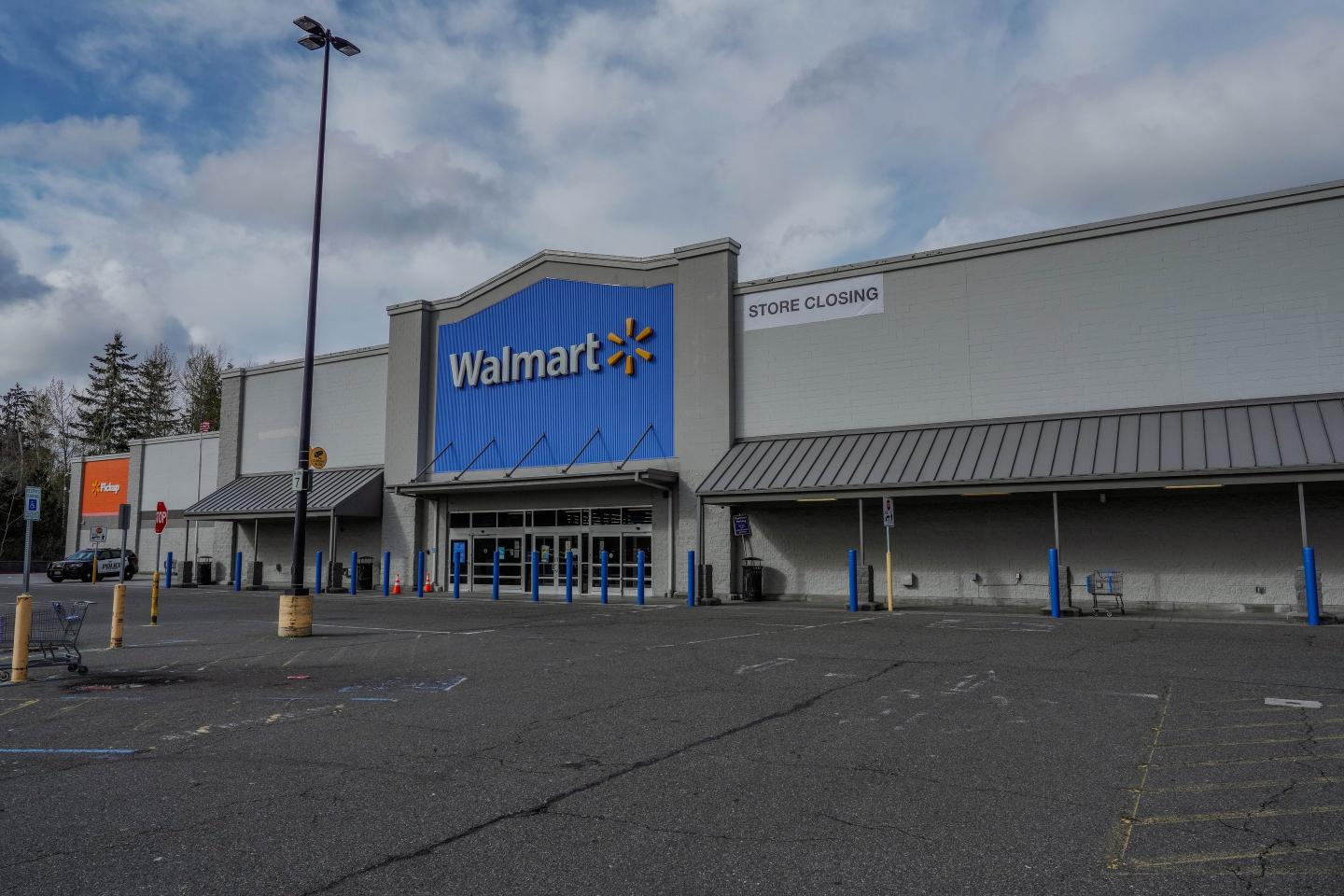
Shoppers often greet the closure of a Walmart with dismay, while competitors find cause to celebrate.
Among critics of the big-box behemoth, a long-held assumption is that once a Walmart disappears, shoppers seeking groceries, household goods, meals and services will flow to businesses down the road.
But what if the economic downside of a closure is bigger?
We are marketing scholars who have studied dozens of Walmart closures in the United States. We found that nearby stores saw a slump in both monthly shopper traffic and sales revenue by roughly a quarter in contrast to comparable stores near Walmart locations that remained open. Our sample covered 39 Walmart stores that closed across 20 states from 2019 to 2026.
This finding suggests a large retailer can play two roles at once. Walmart competes with neighboring businesses for shopper visits and spending. But it can also act as an anchor, giving people a reason to travel to a shopping area in the first place. When that anchor disappears, the loss of shared shopper traffic can outweigh the benefit of having one less competitor.
The benefits of an anchor
Our finding underscores that retailers don’t operate as isolated dots on a map. Shoppers often decide where to go before deciding which stores they’ll visit once they get there. A trip to Walmart can generate a stop at a nearby restaurant, pharmacy, salon, specialty retailer or service business.
Economists call this kind of benefit an agglomeration effect: Businesses can gain from being near other businesses because the location itself attracts shoppers. Shopping center owners have long recognized this logic by using prominent stores to anchor a mix of tenants.
Other researchers have found that Walmart’s entry into a shopping area causes sales in nearby existing stores to drop. But these shops can adjust their product assortment, prices and promotions to mitigate this effect, follow-up studies suggest. What has not been studied until now is what happens when a Walmart store – or any other anchor store – closes.
A Walmart closure creates a tug-of-war between two forces, we argue. Competitive relief helps nearby businesses because a formidable rival is gone. But agglomeration loss hurts them because fewer shoppers have a reason to visit the area.
This means a store can capture a larger share of local consumer demand after Walmart leaves and still end up worse off if the total pool of shoppers arriving in the area shrinks enough.
What happened after a Walmart closed
We combined closure dates with monthly store-level shopper traffic and spending data. For each closed Walmart, we identified nearby non-Walmart businesses and compared their post-closure performance with that of businesses near Walmarts that stayed open.
We discovered not just a sizable decline in both shopper traffic and sales revenue after closure but a worsening trend in both over time. Specifically, following a Walmart’s closure, nearby stores experienced a roughly 5% drop in the following month and 6% in the month thereafter. The decline keeps getting worse, reaching about 17% in the ninth month and 20% a year after the anchor store closes.
That parallel movement in traffic and sales matters. If nearby stores were simply selling less to the same number of shoppers, we would expect spending per visit to fall. Instead, what was also happening is that fewer shoppers visited nearby businesses after the anchor disappeared.
In short, competitive relief didn’t overcome the loss of traffic that would have been generated by trips to the anchor store. But not all nearby businesses were affected equally.
Stores that competed more directly with Walmart had better post-closure sales than noncompeting stores. That is what we would expect if competitive relief is real: Grocery stores and other close substitutes are better positioned to capture some of the displaced consumer demand.
Well-known brand stores also fared relatively better than unbranded businesses. A recognizable brand can give shoppers an independent reason to visit, reducing reliance on traffic generated by the nearby anchor. And stores surrounded by more outlets with its own brands also had more favorable post-closure sales.
Another important factor is digital reach. Not surprisingly, the more a business engages with customers online, the less it depends on people physically traveling to a cluster of stores. We found that stores with a higher share of revenue from online orders saw a less severe drop in sales after a Walmart closed.
These patterns suggest that managers have options and can act: Opening another location or expanding online sales can protect a retailer from an anchor closure.
Why a store closing can become a neighborhood shock
A large retailer decides whether to keep a store open based primarily on what makes sense for its own portfolio. But the surrounding businesses face a different calculation. A location that looks weak from the anchor retailer’s perspective can still drive valuable traffic to neighboring stores.
That creates what economists call an externality – a positive or negative effect of an economic activity that impacts other parties even though market prices don’t reflect it. In this case, some of the economic value produced by an anchor sits outside the anchor’s own sales and profits.
For neighboring businesses, the lesson is not to assume that a powerful competitor’s departure will create a windfall. Rather, managers need to know how many customers arrive because of the broader shopping destination, not merely how much their store’s products overlap with the anchor’s.
Meanwhile, commercial property owners should treat losing an anchor as more than risking an empty storefront. It can also hurt the rest of their portfolio by reducing consumer demand. Replacing the tenant quickly matters, but so does finding a replacement that can generate trips to the area.
Finally, local governments and economic development organizations need to understand that a major retail closure may affect businesses with no contractual relationship to the closed store. So their responses should extend beyond the vacant property itself – whether it’s speeding redevelopment, coordinating with local businesses and property owners to improve shoppers’ access, or helping create a new destination that restores shopper traffic.
Vivek Astvansh, Associate Professor of Quantitative Marketing and Computational Data Science, Binghamton University, State University of New York; Preetinder Kaur, Assistant Professor of Marketing, University of Guelph, and Pushpinder Gill, Assistant Professor of Marketing, Toronto Metropolitan University
This article is republished from The Conversation under a Creative Commons license. Read the original article.
