
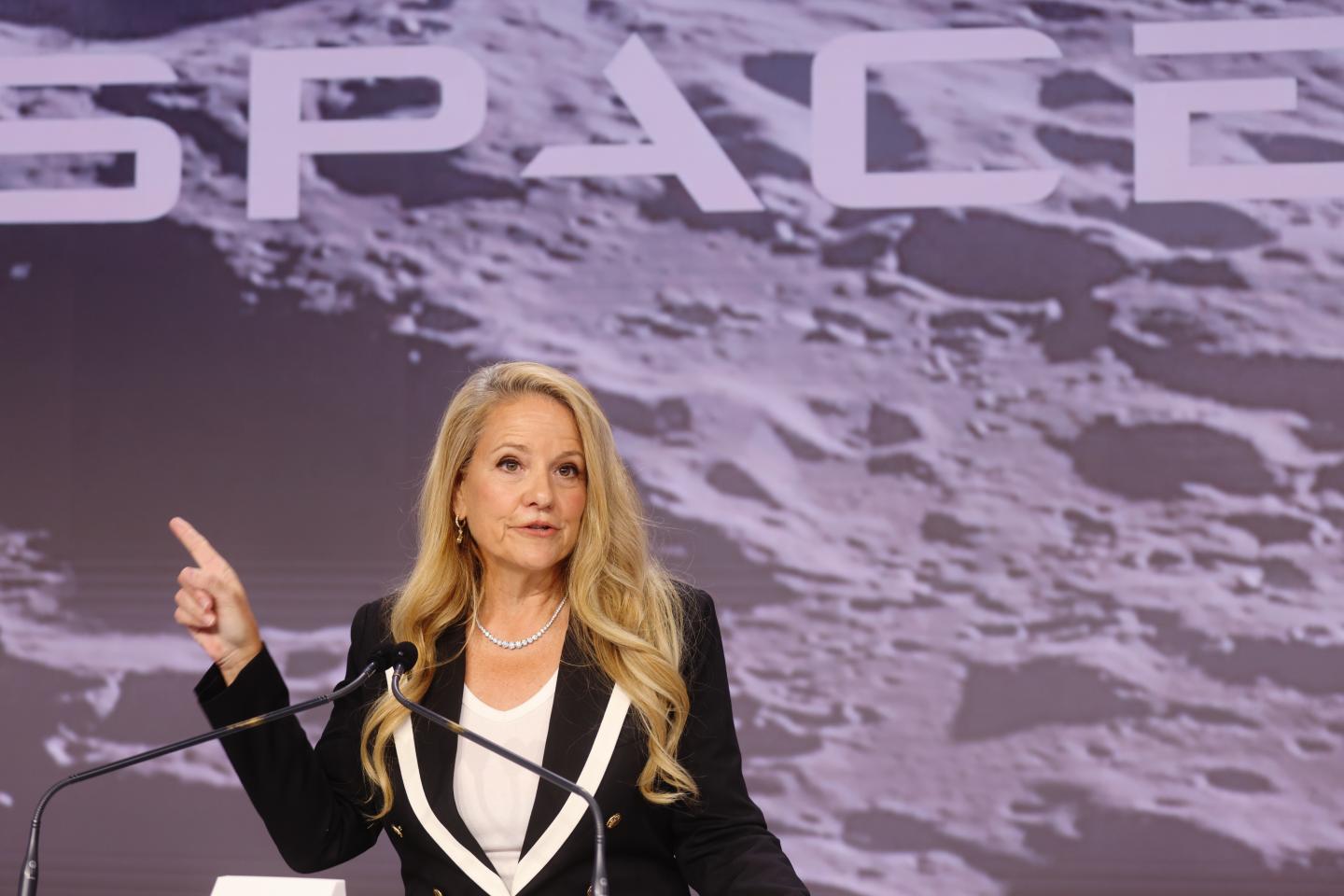
Gwynne Shotwell officially became a billionaire in SpaceX’s June IPO. Now, we’re seeing what the SpaceX COO will do with her new resources—including a brand-new kind of philanthropy.
New Treasury rules let billionaires give their own company’s stock to kids across the U.S. Shotwell and her husband will distribute more than 2 million SpaceX shares to children’s Trump Accounts in December.
Trump Accounts are tax-advantaged investment accounts for children under 18, and contributions began July 4. Eligible kids born from 2025 through 2028 can get a one-time $1,000 deposit from the federal government if a parent elects it, and families and others can add up to $5,000 a year. The money generally can’t be withdrawn before the year the child turns 18.
The first round of Shotwell’s gift goes to 11- to 17-year-olds who live in ZIP codes with a median family income of $57,000 or less, plus kids in ZIP codes with too few residents for the census to report a median family income. A second gift, which she said will be finalized in a few weeks, will cover 11- to 17-year-olds in military families serving overseas, kids in foster care, and more children in counties near the couple’s Texas home where the median family income is $90,000 or less.
Shotwell, who was SpaceX’s 11th employee and ranked No. 32 on this year’s Most Powerful Women list, first pledged the gift in July. At the time, President Donald Trump valued it at $325 million.
Shotwell’s approach to giving stands apart from how other women philanthropists operate. MacKenzie Scott gives quietly, often skipping major announcements and allowing nonprofits to decide how to spend her money. Melinda French Gates picks a cause and is vocal about why it matters. Lauren Sánchez Bezos works through big institutional vehicles, steering the $10 billion Bezos Earth Fund and announcing large, cause-specific commitments like grants for ocean conservation. Michael and Susan Dell also committed $6.25 billion to put $250 into the Trump Accounts of 25 million kids aged 10 and younger, and those deposits have now been made.
When I reported on Shotwell’s pledge in October, it was clear this is a new kind of philanthropy. Treasury rules that took effect Sept. 30 let donors, working through charities such as private foundations, put shares of publicly traded U.S. companies directly into the accounts. Before that, money in Trump Accounts went into low-cost index funds.
For the ultrawealthy, whose fortunes are often tied up in their own companies, the tax math is appealing. There’s no deduction for giving to a Trump Account itself, but donors who move long-held stock into a private foundation first can generally deduct its full market value, up to IRS limits, and never sell it or owe tax on the gain.
But the same rules acknowledge that recipients take on more risk when their savings are concentrated in a single company. Families can’t choose the stock or—for now—refuse it, and shares generally must be held for five years or until the end of the year a child turns 17.
Treasury, for its part, wrote that donors hope holding the shares will make families “feel that they have a stake in the fate of the corporation”—in this case, Elon Musk’s business that ultimately aims to determine humanity’s future in space.
Want to learn more about Trump Accounts? Read my full story on how billionaires can give away their own company’s stock through Trump Accounts.
Sydney Lake
sydney.lake@fortune.com
The Most Powerful Women Daily newsletter is Fortune’s daily briefing for and about the women leading the business world. Today’s edition was curated by Emma Hinchliffe.
ALSO IN THE HEADLINES
New CFO appointments ticked up last quarter, but women got fewer of the jobs. Women accounted for 22.9% of CFOs appointed globally, down from 25% a year earlier.
Poppi's founder wants to disrupt water next. You may think the electrolyte market is crowded, but after selling Poppi to PepsiCo for close to $2 billion Allison Ellsworth is trying to shake it up. Her new brand Jetty aims to be hydration for "normal people" rather than workout obsessives and is inspired by her experience on a GLP-1, which can make people less thirsty. Meanwhile, Poppi recently saw its earnout cut by PepsiCo.
Learning about Lori Huang. Amid Jensen Huang's affair with a Chinese spy, more attention is on his wife, Lori. The pair have been married for more than 40 years. She's president of the Jen-Hsun Lori Huang Foundation, which had $9 billion in assets as of 2024, but has been very private. Now she's been thrust into the club of billionaire wives who must deal with public infidelity.
Melania Trump is for female CEOs, but not DEI. The NYT dives into the apparent contradictions between her initiative Imperia, announced in September, and the Trump administration's policies. "DEI, we’re not talking about that anymore," the first lady said that month.
ON MY RADAR
Dollywood after Dolly Vanity Fair
Alison Roman's tomato sauce costs $12.99 a jar—and it keeps selling out Fortune
What being the default caregiver at home is costing women at work Washington Post
PARTING WORDS
"Let us be big and beautiful. I know that’s intimidating, but please let us, because it only makes great things."
—Florence Pugh on the characters she plays. She's part of Elle's Women in Hollywood issue.