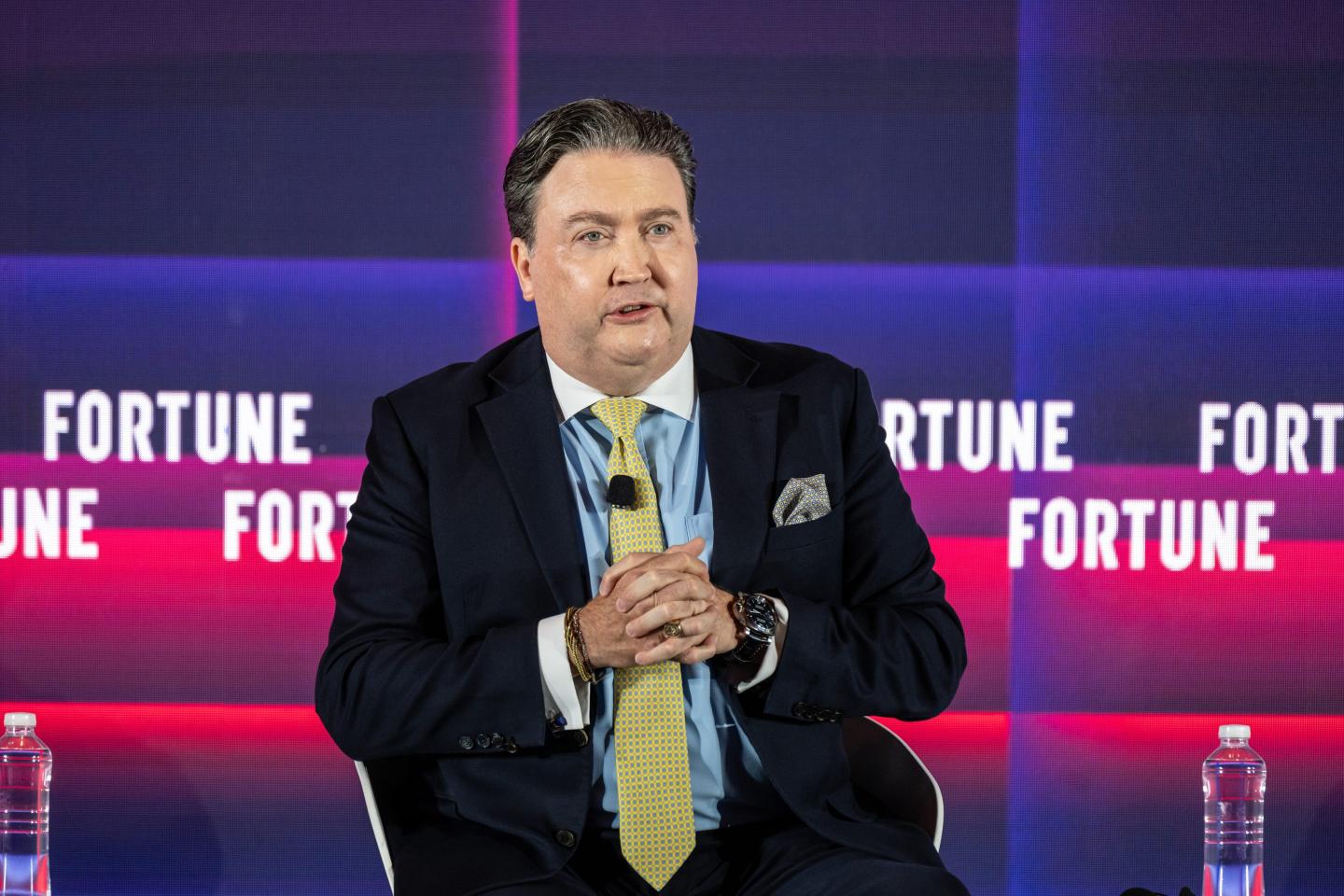
Only a “very small percentage” of Vietnam’s exports to the U.S. are illegally transshipped, Marc Knapper, the former U.S. ambassador to Vietnam, said on Nov. 3, as the Trump administration tries to apply the term to a wider set of supply chain activities.
“The term transshipment has come to mean different things to different people,” Knapper, who served as the U.S.’s top diplomat in Vietnam from 2022 to 2026, explained at the Fortune Southeast Asia 500 Summit in Ho Chi Minh City.
Illegal transshipment is the falsification of a good’s country of origin to evade tariffs. For example, a Vietnamese exporter that imports a finished product from China, labels its country of origin as Vietnam, and then exports it to the U.S., is conducting illegal transshipment. Such activity is “fraudulent,” Knapper said, adding that Vietnam has been “cracking down pretty hard” on it, working with counterpart customs agencies, including U.S. Customs and Border Protection.
However, elements of the Trump administration have offered a more expansive definition of transshipment that includes what Knapper called “broader supply chain activity…the kind of things that every country does, including the United States, which is [to] assemble things based on inputs from neighboring countries.” He added that “some have falsely labeled normal supply chain activities as transshipment.”
The Trump administration claims that this activity—shifting some parts of a Chinese supply chain overseas to take advantage of lower tariffs—hurts the U.S. economy and denies it tariff revenue. In August, the White House Office of Trade and Manufacturing Policy accused over 40 economies of running a “Great Transshipment Scam” with estimated federal revenue losses of $19 billion to $26 billion a year.
Vietnam’s goods trade surplus with the U.S. reached $140 billion in the first ten months of the year. Knapper pointed out this surplus grew “in spite of the tariffs imposed by the United States on Vietnam…American consumers, American manufacturers, love made in Vietnam.”
Under an initial trade agreement announced in July 2025, Vietnam accepted a 20% tariff on its regular exports to the U.S., and a 40% tariff on goods deemed to have been transshipped from China, though the deal didn’t specify how that would be calculated. (That deal is now in limbo following the U.S. Supreme Court’s decision in February deeming most of U.S. President Donald Trump’s tariffs to be unlawful).
Currently, the U.S. levies a 12.5% tariff on many Vietnamese goods, imposed after a Section 301 investigation alleged the country hadn’t done enough to combat forced labor.
‘Chuhai’
Many companies have shifted parts of their supply chains out of China and into Southeast Asia in recent years in what’s become known as a “China plus one” strategy. Rising U.S. protectionism, increasing costs in China, and a greater push for supply-chain resilience are encouraging this shift.
Chinese companies are also eager to expand into the region, seeing it not just as manufacturing destination but also as a new consumer market. “They call it their chuhai strategy, which means getting out of China and doing business in Southeast Asia and Vietnam,” Yap Kwong Weng, CEO of Vietnam SuperPort, said. “The question is, can companies come into Vietnam now, seize the opportunity, and really gain a competitive advantage from it?
China-ASEAN trade exceeded $1 trillion for the first time in 2025, according to China’s State Council.
In August, Vietnam’s National Assembly approved an additional $3.3 billion for a railway linking the country to China. While the project has faced setbacks because of delays in land clearance, officials target completion by 2030.