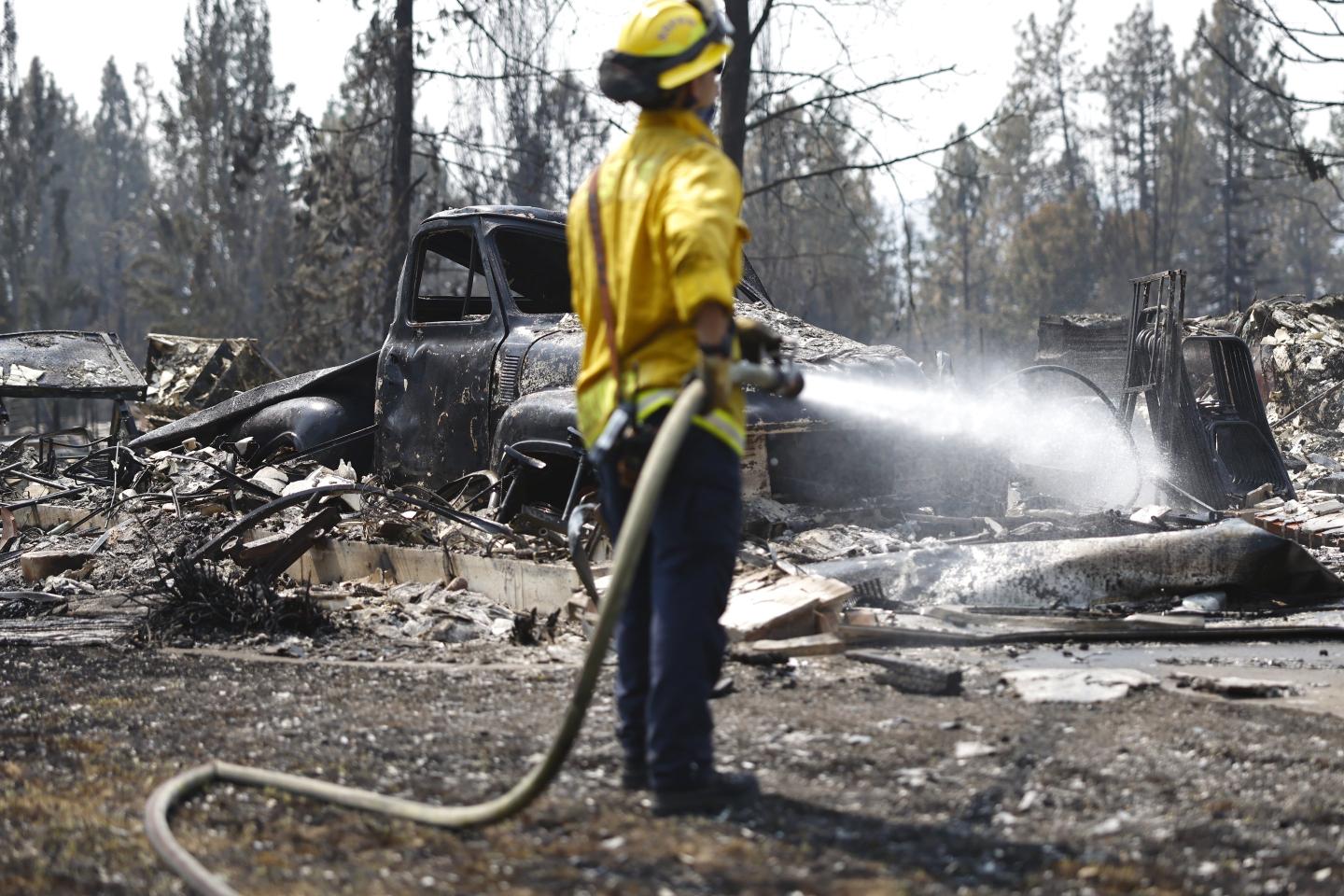
As temperatures rise and development expands, the number of homes and other structures damaged or destroyed by wildfires across the U.S. is on pace to triple by mid-century, my colleagues and I found in a study just published.
The 2026 wildfire season has been a sharp reminder of that risk and why making homes and properties less vulnerable to wildfires is increasingly crucial. Fortunately, strategies to lower the risk of losing a home to wildfire don’t have to be overly expensive.
The 2026 western fire season
The 2026 wildfire season began with historically low mountain snowpack, early snowmelt and exceptional warmth across much of the West. Even before the nation’s hottest summer on record intensified drought and dried vegetation, fires were breaking out.
Colorado’s Aspen Acres Fire destroyed hundreds of structures in June. Four firefighters died from injuries suffered when the fast-moving Knowles Fire overtook them near the Colorado–Utah border in July. In August, wind-driven fires swept into neighborhoods in Spokane, Washington, damaging more than 800 homes and forcing tens of thousands of residents to evacuate.
In Colorado, the summer monsoon season brought rainfall, helping firefighters gain ground. Across the Rocky Mountain region, lightning continued to start fires, but rain helped keep many fires small in many areas despite above-average temperatures.
Despite this reprieve, Colorado fires had burned more than 318,000 acres by late October, nearly twice the annual average since 2000. Nationally, the total area burned was also well above average. The U.S. spent 48 consecutive days at Preparedness Level 5 – the highest level, indicating that firefighting resources were stretched nationally – compared with a 10-year average of 25 days annually.
Reasons for rising fire risk
Fire is a natural and often beneficial part of many ecosystems, shaping vegetation and supporting biodiversity. However, a century of fire suppression has allowed dry vegetation to accumulate in forests that historically had frequently burned.
Rising temperatures caused by human activities such as burning fossil fuels have increased the rate at which the atmosphere pulls moisture from the land, drying soils and vegetation. Researchers estimate that this drying nearly doubled the area burned in western U.S. forests between 1984 and 2015 compared with what would have burned without human-caused climate change.
More people also now live in and at the edges of wildland areas, raising the risk of fires reaching neighborhoods. Human activity has extended the fire season beyond summer, when most lightning-caused fires occur, too. Power lines, vehicles, machinery, burning of debris and campfires can spark fires year-round.
These interacting factors have helped nearly quadruple the annual area burned in the western United States since 2000.
They also contribute to the growing threat of fast-growing fires, which can overwhelm emergency response.
In a 2024 study, my colleagues and I used satellite imagery to measure daily fire growth across the contiguous United States from 2001 to 2020. “Fast fires,” defined as those that burned more than 4,000 acres in a single day, represented just 2.7% of fires analyzed but accounted for 78% of documented structures destroyed and 61% of reported firefighting costs.
A brief burst of growth, often fueled by strong winds or highly flammable materials, can matter enormously, even if a fire’s eventual size is relatively small. And in many ecosystems, fires are getting faster.
More homes in harm’s way
The number of people and buildings in harm’s way has also been increasing in the U.S., raising the risk of damage.
Between 1945 and 2015, development in regions of the country with the highest wildfire risk expanded tenfold, increasing the amount of human exposure to wildfires while also introducing ignition sources and buildings that can burn. Once embers enter a neighborhood, fire can spread quickly from building to building.
My team’s new research suggests that without further action to reduce wildfire risk, the annual number of structures damaged or destroyed nationwide could nearly triple by mid-century. That would mean up to 449,000 structures lost between 2026 and 2060.
We used historical data about development patterns, wildfire area and the fires’ effects to reconstruct the past fire risk, then modeled future fire risk by incorporating weather, climate and housing-density expectations.
We found that roughly one-third of western neighborhoods facing the greatest future risk are low-income communities. In these communities, people may struggle to afford measures to protect their homes, maintain insurance coverage and recover financially after a fire.
How to lower your wildfire risk
These projections are sobering, but actual losses will depend partly on the choices people make now.
For example, homes can be made less likely to ignite with Class A fire-resistant roofs and ember-resistant vents that reduce the potential for burning particles to enter homes. Removing flammable debris, mulch, firewood and vegetation from around buildings also reduces the risk of fire spreading to the home. Community programs are available in many areas to help low-income homeowners reduce their home’s fire risk.
Building homes to be wildfire-resilient can also cost less than people may expect. In a study of new home construction, my colleagues and I found that meeting the two protection levels established by the Colorado fire code increased minimum construction costs by approximately 0.6% and 4.2%. Access to lower-cost materials and homeowner education can help make wildfire resilience more affordable.
Wildfire-resilient construction can lower the risk of losing a home, but it does not completely eliminate it.
Beyond individual buildings, prescribed burning and appropriately designed forest-thinning operations can reduce fuels and alter fire behavior before flames reach neighborhoods. Utilities can strengthen infrastructure and reduce the probability of ignition while limiting disruptions from preventive power shut-offs. Insurance companies can reward measurable risk reduction and help sustain coverage in communities working to become safer.
These measures work best when they reinforce one another. The odds of losing a home to wildfire depend on its construction, its immediate surroundings and the broader neighborhood. There is no one-size-fits-all solution to wildfire risk. As the threat grows, strategies tailored to the environmental, social and economic realities of each community are more important than ever.
Virginia Iglesias, Earth Lab Director, University of Colorado Boulder
This article is republished from The Conversation under a Creative Commons license. Read the original article.
