
Good morning. While we’re all distracted by U.S. domestic politics, the nation’s international trade stance remains…complicated!
A new report from Reuters says that about 600,000 of Nvidia’s H200 chips—those would be the Hopper-architecture AI accelerators cleared for sale to China, rather than the company’s current flagship Blackwell GPUs—are sitting in Hong Kong waiting to cross the border into mainland China.
It’s not for lack of demand. Beijing, keen to support its domestic semiconductor industry, refuses to approve large-scale imports by its big internet companies. (Officials have reportedly allowed smaller imports, to the tune of about 10,000 chips.)
Will Jensen Huang and company ever see China revenue bounce back to what it once was? At this rate, not anytime soon, regardless of what happens in Washington. But hey—at least he can blame both political parties.
Today’s tech news follows. Have a wonderful weekend. —Andrew Nusca
Thoughts? Suggestions? Hot tip? Drop me a line.
THE BIG STORY
Tech stocks suffer their biggest selloff since Covid
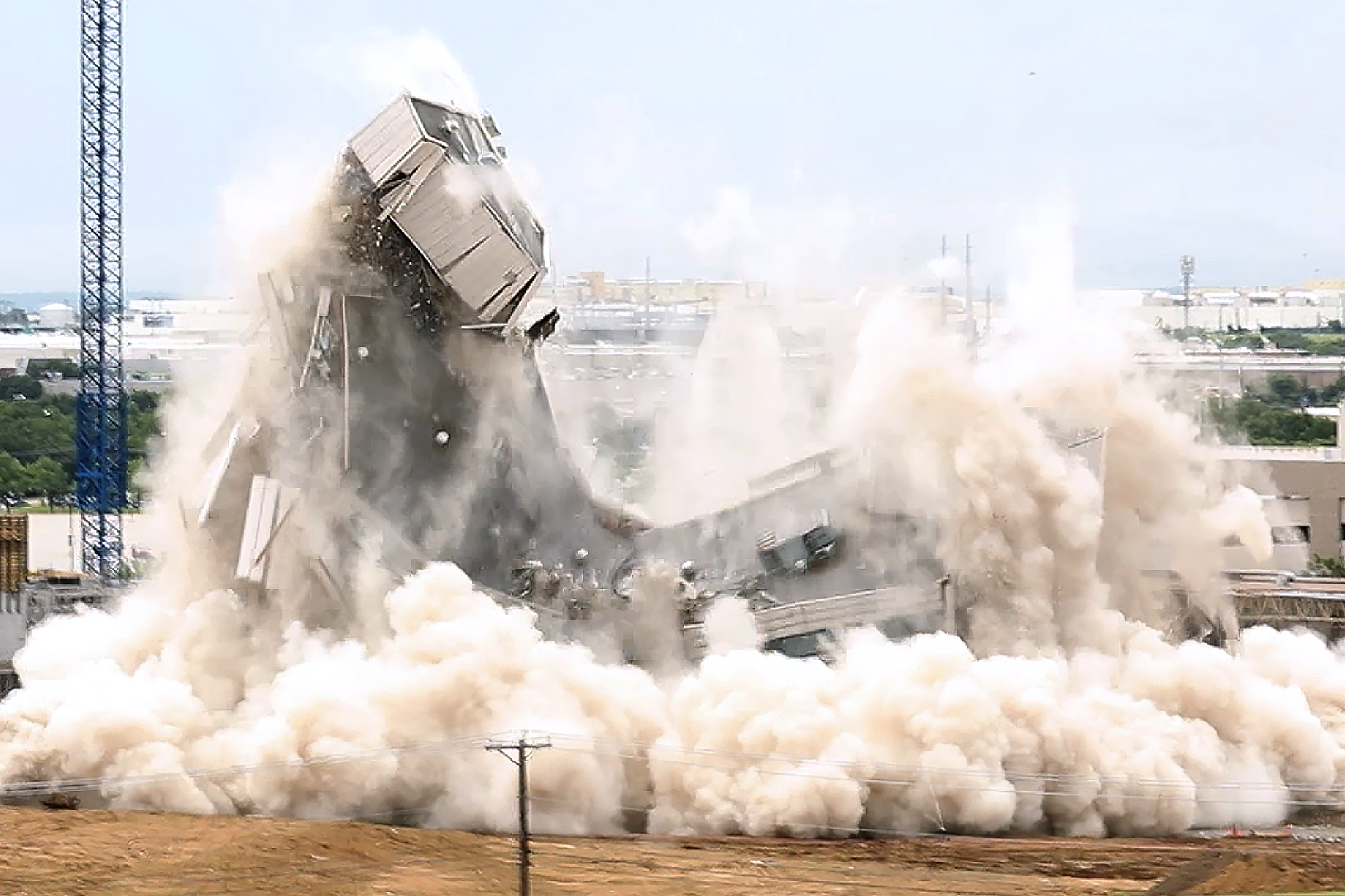
It may have been Blue Tsunami on Tuesday, but it was a sea of red that washed over tech stocks on Thursday, covering everything from chips and data center companies to software and gig economy firms, as investors panicked that the U.S. midterm election results will bring the AI boom to a premature halt, or at least, a significant slowdown.
The tech-heavy Nasdaq was down more than 1,340 points, or 5.2% in midday trading, shedding more than $3 trillion in market cap, and representing its biggest daily drop since the Liberation Day tariff announcement in April 2025, according to Bloomberg data.
The Philadelphia Semiconductor Sector index, which tracks the 30 largest companies in the chips business, was down more than 1,000 points—on track for its single biggest day loss since March 2020.
Some of the biggest names in tech took it on the chin, with Facebook parent company Meta down 3.4%, Microsoft down 2.8%, and Nvidia down 8%.
Thursday’s selloff dragged down the entire market, marking a sharp reversal from Wednesday, when shares rallied following the Democrats’ retaking of the Senate and House of Representatives in the midterm elections. Voters overwhelmingly approved candidates and ballot measures that sought to curtail the buildout of AI data centers in the U.S.
That reality seems to have hit tech stock investors more forcefully on Thursday, as some early signs of the changing business conditions came into focus.
Meta President Dina Powell McCormick, speaking at an industry conference Wednesday, acknowledged the new hurdles. Building data centers in the U.S. is “going to be harder,” she said. “I can also tell you that every hyperscaler is now thinking about ‘Do we need to build outside the United States?’ Because they’re enormous investments, hedging those investments is a wise thing to do.”
Dan Ives, the usually bullish analyst at Yorkville Ives, wrote in a note to investors Thursday that he now expects the tech industry’s capex growth to peak next year, instead of in 2028 or 2029.
That capex spree has been an engine of the U.S. economy over the past two years as companies such as Alphabet, Microsoft, Amazon, Meta, and Oracle, as well as new so-called neocloud companies, raced to build data centers to run AI services.
“We estimate on the low end 10% of the planned 800–1,000 AI focused data centers in the U.S. will now be wiped off the roadmap, with potentially up to 20% of these facing a much longer regulatory road that could further impact the capacity buildout in the U.S. over the next few years,” Ives wrote. —Alexei Oreskovic
THE BLIND BOX
“We’re installing an AI accelerator about every 14 seconds.”
THE RUNDOWN
—OpenAI promises changes to its data center deals, including no NDAs and lower power usage, in the wake of election results.
—Apple joins the list of objectors to the tokenized stock plan pushed by the owner of the NYSE.
—Nintendo quarterly profit drops 16% from last year as rising Switch 2 component costs cut into its margins.
—Sony beats estimates for Q2 revenue and profit as Grand Theft Auto VI lifts sales of its PlayStation 5 Pro console.
—OpenAI debuts a new cybersecurity-focused AI model, GPT-6 Cyber, as alarm grows about AI-driven cyber attacks.
—Google, Meta, and TikTok file lawsuits to block a California law that bans “psychologically exploitative features” for children under 16.
—Microsoft reportedly audits data center projects with IREN, Nebius, and Nscale as the neocloud outlook gets more cloudy.
—Uranium Digital raises $16.5 million as Big Tech’s interest in nuclear power grows.
THE PARTING SHOT

The credit card giant Visa recently dispatched 22 different AI agents to go shopping for products like televisions and laptop computers.
The result? The ‘bots successfully purchased them only about half the time (and at best, two out of three times).
Buying stuff: A surprisingly human activity, it turns out.