While votes were still being counted in the U.S. midterm elections, administration figures in Washington were already inviting speculation over how the results might be connected to the conflict with Iran.
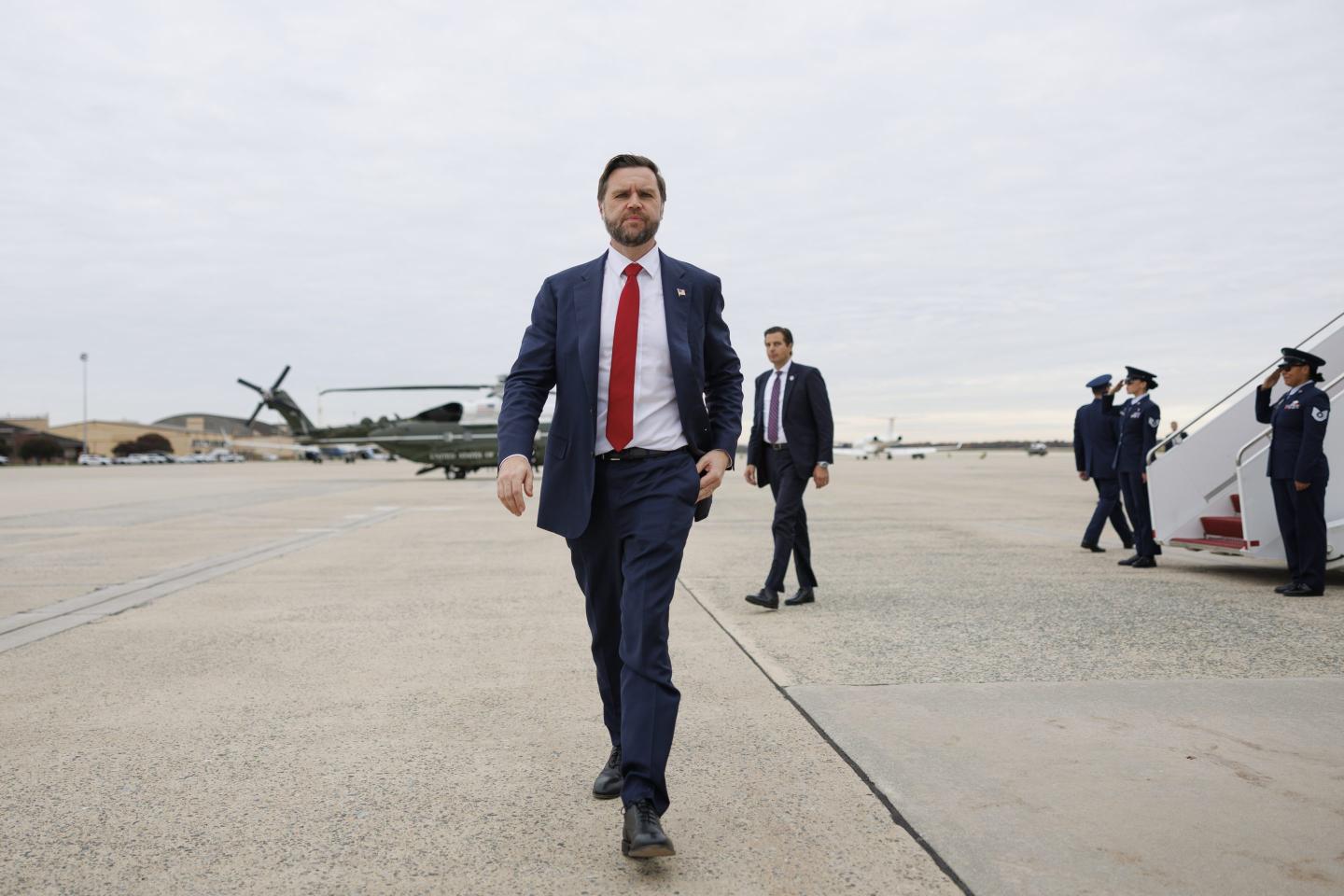
On the morning after the election, Vice President JD Vance wrote on X that the major reason for the dramatic loss for Republicans was the American public’s opposition to the war. “Everyone knows why we lost. And any honest conversation about where we go from here must start there,” he wrote, in reference to the ongoing conflict that began with U.S.-Israeli airstrikes against Iran in late February 2026.
While it is rare for a vice president to make such a critical proclamation about their own administration’s policy, President Donald Trump later stated that he did not disagree with Vance’s appraisal of the role that frustration with the Iran war played in voters’ minds.
But whether this changes Trump’s view on next steps in the ongoing conflict remains unclear. Reporting over the past few weeks has indicated that the U.S. military has been actively preparing options and increasing capabilities in the Persian Gulf region in the event the president directs a resumption of hostilities.
As an expert on Middle East affairs and a former senior official at the National Security Council during the first Trump administration, I’m aware that months of conflict have failed to bring Iran to its knees, force regime change or militarily defeat a perceived threat to U.S. assets and allies. Escalating now is unlikely to change those realities – and it carries the additional risk of further damaging Republicans in the eyes of Americans voters as they turn toward the 2028 presidential race.
Even if Trump were to ratchet up the conflict, moreover, it’s unclear how much wiggle room he’ll have come January facing a Democratic Congress almost uniformly opposed to the war.
Sunk costs
Part of the issue facing Iran war hawks in Washington now is that the conflict has caused serious setbacks for the regime in Tehran without satisfying the officially stated strategic reasons for going to war.
They argue that pulling back now – as welcome as that might be for Americans struggling with the associated rising cost of fuel – may allow Iran to rebuild before the conflict is “won.” Moreover, it would render the military and reputational costs already sunk by Washington as wasted.
Among the achievements of this war touted by the Trump administration has been the death of former Supreme Leader Ali Khameini, along with the killing of scores of senior leaders within the Islamic Revolutionary Guard Corps – including individuals like the former head of Iran’s National Security Council Ali Larijani. Significant elements of Iran’s air defense and radar network, ballistic missile and drone production, and storage and launch sites have also been destroyed. And Iran’s already outdated navy and air force has been further degraded.
Meanwhile, the U.S.-imposed naval blockade against Iranian-linked shipping in the Persian Gulf cut off a crucial lifeline for Iran’s economy. And additional sanctions and economic penalties imposed by Washington have served to further devalue Iran’s currency and deprive Iran of additional financial links to the international banking system.
Down but not out
Yet for all the U.S. successes in degrading the Iranian military by limitless aerial bombardment and the significant financial pressure against the Iranian economy, an obvious endgame remains elusive.
Despite weakening the Iranian government – now led by Ali Khameinei’s son, Mojtaba, and a new echelon of senior IRGC commanders – the Islamic Republic remains intact. Moreover, it still possesses enough ballistic missiles and drones to hold the region at risk, while continuing to impose significant control over its population.
Meanwhile, U.S. military spending continues to rise. In September, the U.S. Congressional Budget Office assessed that the military costs of the Iran War had already totaled US$38 billion. Since then, that number has only increased. And that is to say nothing of the associated global economic costs that have resulted from Iran’s de facto closure of the Strait of Hormuz – a key shipping route for oil and gas.
Should Trump decide to change course on Iran, he – and others – may think that the money, effort and lives of 19 American servicemen killed in the conflict would have been spent with no obvious objective achieved. Yet continued military expenditure with no strategic endgame could only magnify those same costs.
To Iran, the midterm results have not changed its public position. Mojtaba Khameini has issued statements directing the IRGC to widen the conflict in the region and perhaps beyond should the U.S. and Israel attack again. At the same time, a statement attributed to him indicates that hostilities between the United States and Iran will persist regardless of the balance of party political power in Washington.
This raises questions about the prospects for diplomacy. During the summer, the U.S. and Iran agreed to an initial 14-point memorandum of understanding that, if finalized, could have brought a permanent end to the hostilities. But since the 60-day clock on that agreement lapsed, no parallel diplomatic agreement has emerged.
No practical solution
Even with the major shift in the U.S. political landscape, it remains unclear whether Trump will resume operations against Iran before the new Congress is sworn in. The messy election result in Israel – which has left the pro-war, and potentially outgoing, Prime Minister Benjamin Netanyanu with potentially more reason to double-down in Iran – only complicates matters.
The U.S. military certainly appears to be ready to engage in a new round of attacks against Iran if so directed, and Iran is ready to retaliate. But given the shortcomings in the U.S. inventory – with munitions and missile and air defense capabilities depleted by eight months of war – escalation is something Trump and his inner circle will have to consider with caution.
Iran might force the issue by engaging in asymmetric attacks in the region or beyond that they have not attempted already. Or it could launch a coordinated offensive with its partners in the region – notably the Houthis in Yemen, who have become more active in their own conflict with Saudi Arabia in recent months.
But save an event that the Trump administration perceives is giving it cover to act, there are no clear indications emerging from Washington as to which way it will move.
Vance diagnosed a widely perceived political problem for Republicans: Voters don’t want more war. But what he noticeably didn’t mention was a practical solution. The Middle East conflict – and the United States’ role in it – are, as such, locked in a stalemate.
America and Iran have both borne significant political, military and economic costs. A decision not to pursue an endgame would leave those sunk; doing so may only increase them.
Javed Ali, Associate Professor of Practice of Public Policy, University of Michigan
This article is republished from The Conversation under a Creative Commons license. Read the original article.
