With communities across the U.S. rebuffing data centers, there’s growing political pressure to curtail their construction. But thousands of miles away, South America’s biggest country is already a top AI market and making the buildout easier.
Brazilians send 215 million messages to ChatGPT messages per day, according to OpenAI, making the country the chatbot maker’s third biggest market for weekly users after the U.S. and India.
Google said it plans to double its cloud infrastructure there by 2030 in response to growing demand, and even signed a sponsorship deal with the Brazilian Football Confederation in March to integrate Gemini across the country’s men’s, women’s, and youth national teams.
Other tech giants are investing too. Amazon Web Services has spent more than $3.8 billion on data center infrastructure there since 2011 and pledged another $1.8 billion through 2034, while Microsoft committed $2.7 billion to cloud and AI infrastructure over three years.
Local demand, rather than American companies moving operations abroad, has driven much of Latin America’s data center growth. But Carlos Barrera, CEO of Atlas Renewable Energy, thinks that could change.
“We do see the region as actually an attractive release valve for some of the U.S. capacity constraints that you see now,” he said.
With a population of almost 214 million people spread out across an area larger than the contiguous 48 U.S. states, Brazil makes sense as a country for hyperscalers to court.
Its electricity supply is also a major draw and costs less than half what it does in the U.S. According to a report from its Ministry of Mines and Energy, the country generates nearly 87% of it from renewable sources, and its rapid growth of wind and solar power has also led to a surplus.
“U.S. backlash isn’t pushing hyperscalers out of the country so much as pushing them toward wherever power shows up first,” James Mercer, a principal at data center advisory firm Metro Colo Advisory, told Fortune.
But Brazil’s cheap electricity could also become more expensive. Barrera said Brazil will need more transmission lines to connect large data centers to the grid, and government officials are split on whether electric bills will go up or not.
Another obstacle to Brazil’s AI growth is the tax code. High federal import taxes made building big data centers more expensive compared to other countries in the region.
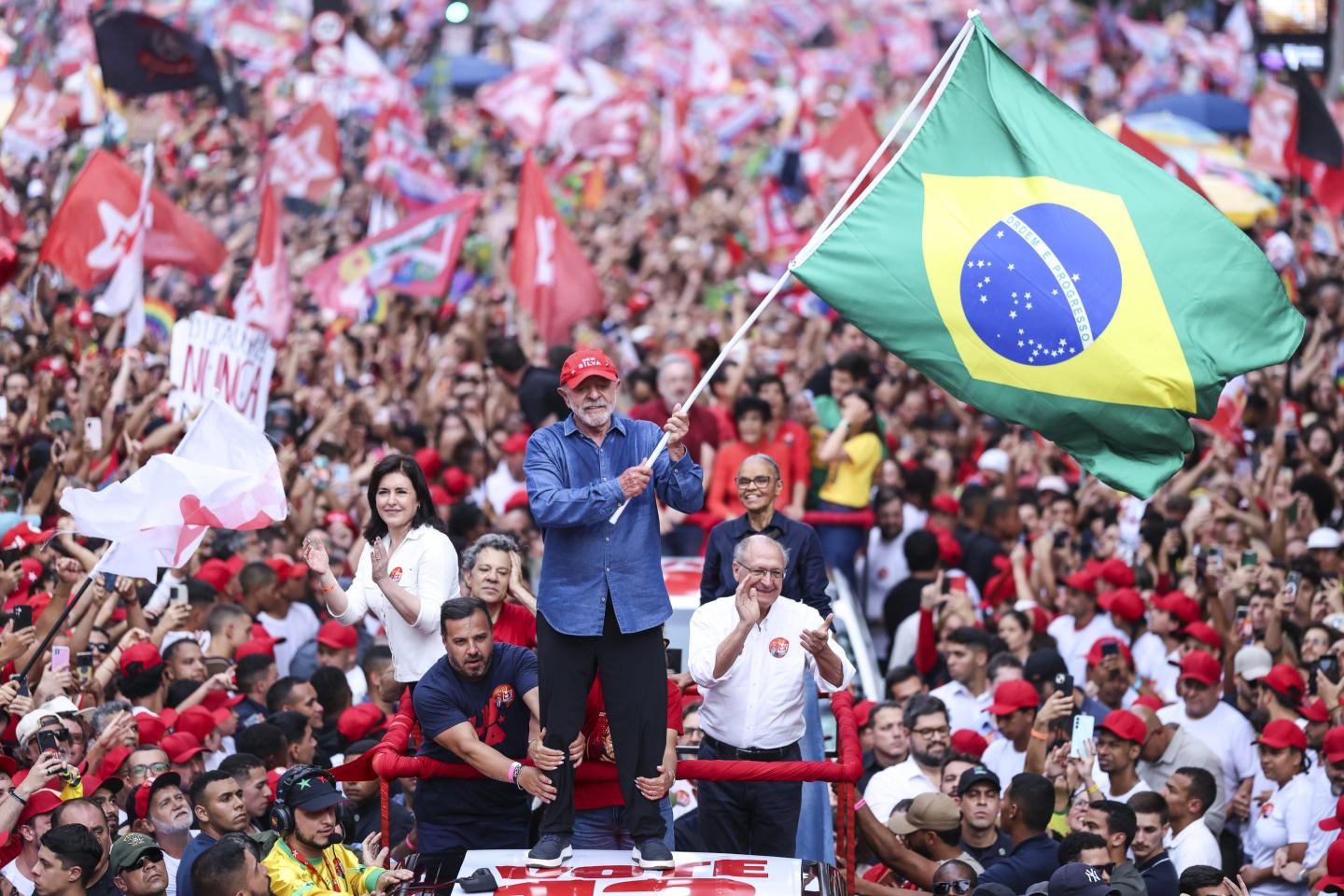
To fix that, President Luiz Inácio Lula da Silva signed a law on Sept. 15 cutting taxes on qualifying data center equipment. This contrasts with some U.S. lawmakers proposing taxing data centers’ electricity use and output.
“If Brazil wanted to be a player in the data center space, it had to do this tax law change,” Christopher Torto, the CEO of Latin America’s largest data center and connectivity service provider Ascenty, told Fortune.
Data sovereignty
Lula’s government hopes that the tax break, by bringing more computing capacity into the country, will help Brazilian businesses develop AI products and rely less on foreign services. Currently 60% of Brazilian digital data is processed abroad, according to the country’s Ministry of Development.
Under the legislation, called REDATA, companies must offer at least 10% of their qualifying computing services to Brazilian customers and invest 2% of the value of the tax-benefitted equipment in Brazilian research and development.
“It’s to improve the data sovereignty of Brazil, so we won’t rely so much on foreign services, especially in a time with Trump,” Ana Carolina de Assis Nunes, a Brazilian anthropologist and data center researcher at nonprofit policy institute Data & Society, told Fortune.
Nunes pointed out Brazil wants to depend less on foreign technology but is giving tax breaks to the same companies that dominate the industry
Torto admitted Brazil is unlikely to develop its own Google or Microsoft. Still, having local data centers in the country could improve latency and keep more data in the country.
“It’s not just the model or the data center themselves; it’s everything that goes around them that will be really the larger investment long term,” he said.
Potential for backlash
While Brazil hasn’t seen the same scale of backlash to data centers as the U.S., some resistance has emerged. Days before REDATA became law, Brazilian federal prosecutors went to court over a TikTok-linked data center project. They wanted an environmental impact study and consultation with the Indigenous Anacé people prior to the data center becoming operational.
Nunes said opposition to data centers in Brazil isn’t as politically united as in the U.S., where they’ve drawn criticism from the left and the right. She said foreign investment still carries prestige in parts of Brazil, especially for people who see it as a chance to join the global economy.
“For people who are so marginalized and pushed away from global systems, it’s just like ‘oh, Google is coming here, that’s great,’” she said.
Growing up in Goiânia, in central Brazil, Nunes lived near a Unilever factory that made tomato paste. She recalled how proud her mom was of the connection to a global company, even as others worried about the factory’s use of local resources.
“It felt like we were part of something big because we lived close to that company,” Nunes said.