
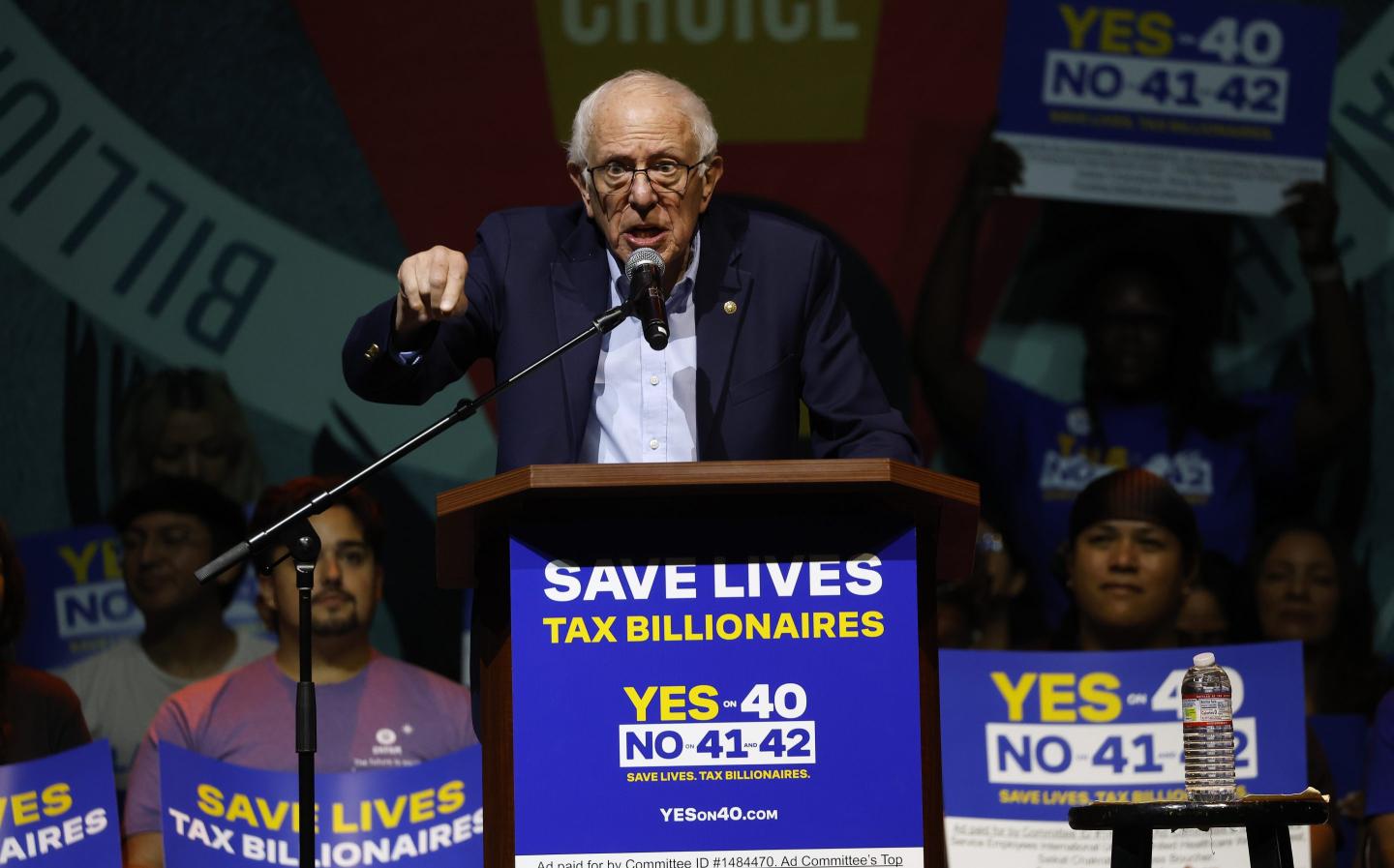
California voters will decide on Proposition 40 soon, but looming over the controversial billionaire wealth tax proposal is another state ballot measure from nearly 50 years ago.
In 1978, voters approved Proposition 13, which capped property taxes at just 1% of assessed value, limited annual hikes to 2%, and allowed reassessments to market value only after sales or substantial renovations.
It came amid a wider tax revolt leading up to Ronald Reagan’s election as president and an era of conservative governance in America. After Prop 13’s passage, the state had to find other ways to raise more revenue and relied more on taxing incomes, including capital gains.
California now has the most progressive income-tax structure in the country with a top marginal rate of 13.3%. When combined with federal income tax rates, that can send the total to more than 50%.
The top 1% of earners account for up to half of state revenue, though it also means state coffers are volatile and swing on stock market returns. At the same time, the ultra-wealthy often don’t receive much income and instead leverage assets to finance their lifestyles, avoiding some taxes.
Now enter the billionaire tax, which calls for residents worth more than $1 billion to pay a one-time tax equivalent to 5% of their assets. The union pushing Prop 40 has said the wealth tax could raise $100 billion in revenue and help offset federal cuts to health spending.
Supporters point to the AI boom and say California’s ultra-rich would still be among the world’s wealthiest. Opponents have warned about the impact the tax could have on economic growth and startups. They have also said it would force founders to sell big pieces of their companies and eventually cause the wealthy to flee to another state, resulting in a net loss of revenue over time.
If California is looking for a large source of undertaxed wealth, “a much better, bigger target lies right beneath their feet,” according to Princeton economist Owen Zidar and University of Chicago Booth School of Business economist Eric Zwick, authors of the book The Everywhere Millionaire.
“The original sin underlying California’s tax structure is Prop 13, the 1978 law that rewrote the rules of property ownership,” they wrote in a recent New York Times op-ed. “Getting rid of it would be a more efficient and durable way to make the rich pay their fair share.”
Prop 13 also contributed to rapidly increasing home values, which have risen faster than property taxes. As a result, California homeowners pay an average of just 0.8% tax on their property, Zidar and Zwick estimated, generating $100 billion in revenue in fiscal 2025.
By contrast, Texas homeowners pay 2% on average. If California matched Texas, overall residential property tax revenue would more than double, while also easing home prices by around 13%, they added.
To be sure, property taxes in Texas have stirred their own voter revolt during the midterm election season. While the state doesn’t levy income taxes, Texans complain that the overall tax burden remains onerous due to property taxes, which are levied by local governments as well.
And getting rid of Prop 13 in California wouldn’t go down well with voters either as many would suffer big increases on their property taxes. Still, California’s tax base is already narrow, and Prop 40 would make it even more top-heavy. Meanwhile, the state plans to spend $540 billion this fiscal year.
“It is simply not possible to fund the state’s needs by leaning on a few hundred people, as politically appealing as that may be,” Zidar and Zwick argued. “For California to tax wealth in a progressive fashion and meaningfully improve its fiscal position, it needs to broaden the aperture beyond billionaires to the hundreds of thousands of other very wealthy people who could easily afford to contribute more by paying a real estate tax that finally works.”
Laura Tyson, a former White House economic adviser, and Lenny Mendonca, a former chief economic adviser to California Governor Gavin Newsom, warned billionaires respond strongly to estate taxes when deciding where to live.
Already, six billionaires who would have owed about one-quarter of Prop 40’s expected revenues left the state before the proposed effective date on the wealth tax, they pointed out in a Project Syndicate column.
And since Prop 40 proposes a new, untested method of taxation based on all assets, it would fuel a “tidal wave of litigation, rendering the promised funding both speculative and unreliable,” they wrote.
“Instead of a tax on billionaires, the U.S. needs to raise taxes on the capital income that feeds wealth,” Tyson and Mendonca argued. “There are a variety of ways to do so: through higher corporate tax rates; through taxes on realized and unrealized capital gains; by closing the most egregious loopholes, like carried interest; and by increasing inheritance taxes.”