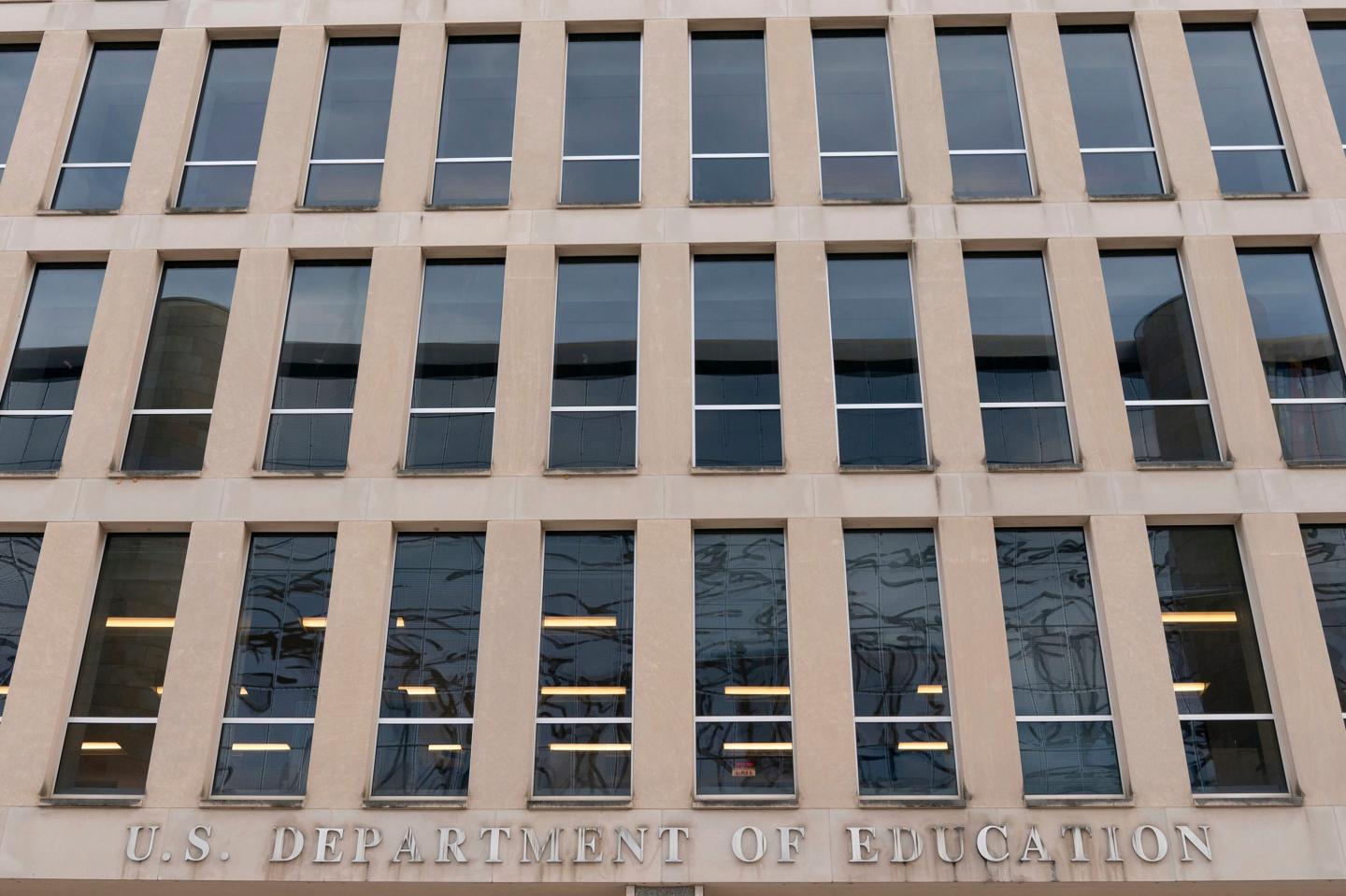
Many people are not familiar with the Office for Civil Rights, an office within the U.S. Department of Education that enforces statutes that protect students from discrimination. So, it might help to consider a recent example of this office’s work.
In December 2022, the Office for Civil Rights, or OCR, found that Ottumwa Community School District, about 90 miles southeast of Des Moines, Iowa, had violated Title VI of the Civil Rights Act of 1964 by failing to address racial harassment. Title VI bars schools receiving federal funds from discriminating based on race, color or national origin.
The harassment was so severe that the office found that the student “was subjected to a racially hostile environment.” OCR also found that the school and district “failed to address the pervasive racial harassment of which it was aware.”
The harassment spanned two school years, during which that student was called “blackie,” “slave,” “cotton picker” and other racial slurs. One white student knelt on a Gatorade bottle and said, “It can’t breathe,” mocking the murder of George Floyd, according to the complaint.
Ottumwa Community School District entered a resolution agreement with OCR and agreed to reimburse the student’s family for therapy. The district also agreed to train students and staff on nondiscrimination policies, among other actions.
We spent a combined 17 years at the U.S. Department of Education – one of us in the Office of the General Counsel from 1999 to 2004 and the other in OCR from 2013 to 2025. We saw firsthand the pivotal role that OCR plays in protecting students’ civil rights.
In June 2026, the Trump administration announced a new interagency agreement that provides a way to shift OCR’s day-to-day civil rights enforcement responsibilities from the Department of Education to the Department of Justice.
The administration has not released details on whether OCR has begun to transfer enforcement responsibilities to the Department of Justice under the June 2026 interagency agreement or what, exactly, that would look like.
But this reorganization may mean that most complaints filed with OCR will never be investigated, and those that are could take years to resolve.
‘From soup to nuts’
In fiscal year 2024 – October 2023 through September 2024 – OCR received over 22,000 complaints related to discrimination based on race, color, national origin, sex and disability.
Individuals and families who file complaints with OCR may want to avoid the expense of filing a lawsuit in a federal court or to secure relief for a student more quickly than a federal court can provide it.
OCR typically seeks to resolve any violations of the laws that it enforces through voluntary resolution agreements, initiating proceedings to terminate federal funding to school districts only when voluntary resolution is not possible, which has historically been rare.
The Department of Education and Department of Justice announced in June 2026 that they had entered an interagency agreement to “deepen their partnership to secure equal access to education.”
Assistant Attorney General for Civil Rights Harmeet Dhillon explained that the Department of Justice would handle OCR’s complaints “from soup to nuts,” taking on “99 percent” of that work.
This is another step toward the Trump administration’s 2025 promise to close the Department of Education, though only Congress can do that.
Moving the Office for Civil Rights’ enforcement responsibilities to the Department of Justice will significantly change how Title VI and other federal civil rights laws are enforced in schools.
The Department of Justice’s Educational Opportunities Section has long jointly enforced most of the laws that OCR enforces, with each agency generally separately handling its own cases under these laws.
However, there are a few important distinctions between how OCR and the Department of Justice enforce civil rights laws.
Not the same kind of federal response
First, the Office for Civil Rights is legally required to consider every complaint that it receives. It also must promptly investigate complaints that show possible violations of federal civil rights laws.
A January 2026 Government and Accountability Office report found that OCR dismissed about 90% of complaints for part of 2025, raising questions about whether OCR was dismissing complaints without full review during that time. Historically, however, we have seen OCR comply with the requirement to consider all complaints.
In contrast, the Department of Justice’s Educational Opportunities Section selects only a small fraction of cases to pursue, usually tackling systemic or particularly severe discrimination in federal courts.
Both agencies carry out important civil rights work.
But shifting OCR’s enforcement responsibilities to the Department of Justice will mean that students lose their guarantee that a federal agency will review and evaluate their allegations that a school district violated their civil rights.
A different approach to civil rights enforcement
Another distinction is that the Office for Civil Rights typically resolves complaints on its own, without involving federal courts.
OCR has traditionally aimed to resolve complaints within 180 days of receipt, because unresolved discrimination hinders students’ ability to learn.
It can sometimes take longer than this to reach a resolution. Between October 2023 and September 2024, for example, OCR did not resolve approximately 30% of the complaints received within 180 days.
In contrast, the Department of Justice’s Educational Opportunities Section can sometimes take years to resolve its cases in court.
Department of Justice cannot handle OCR’s caseload
A third distinction is that the Department of Justice’s Educational Opportunities Section is not staffed to handle the volume of civil rights complaints that the Office for Civil Rights receives.
From October 2023 through September 2024, OCR received a record high of 22,687 complaints and employed just under 600 full-time equivalent employees.
OCR investigations and resolutions were still backlogged during the early 2020s.
The number of complaints filed with OCR climbed even higher between October 2024 and September 2025.
The Department of Education reported there were 446 staff employed at OCR in November 2025.
In contrast, the Department of Justice’s Educational Opportunities Section employed about 40 lawyers in January 2025 and had lost the majority of its staff by June 2025. The Educational Opportunities Section has not published a more recent estimate of its staffing.
Chronic understaffing at OCR
Even before the Trump administration, OCR was held back by inadequate funding.
The number of civil rights complaints submitted to OCR has skyrocketed over the past decade, but staffing has not kept pace.
In the early 1980s there was about one staff member for every three new complaints filed at OCR.
By 2024 that ratio had increased to one staff member for every 39 new complaints filed.
During the Biden administration, Congress denied repeated requests from the White House to increase funding to OCR.
Civil rights under the Trump administration
Since January 2025, the administration has closed seven of OCR’s 12 regional offices. The administration also tried to lay off approximately half of OCR’s workforce in March 2025, with additional layoffs in October, but withdrew those layoffs following successful legal challenges.
OCR reached resolution agreements in less than 1% of pending cases in 2025, down from 5% in 2024, according to findings from a U.S. Senate committee report chaired by Sen. Bernie Sanders.
That 1% focused heavily on the administration’s enforcement priorities, such as ending transgender students’ use of restrooms consistent with their gender identity. It did not include a single resolution agreement resolving a complaint of sexual harassment, restraint or seclusion, racial harassment or discriminatory student discipline.
We believe these actions have severely hamstrung OCR’s effectiveness and undermined students’ access to traditional civil rights protections.
These changes raise troubling questions about how and whether a complaint like the one lodged against Ottumwa Community School District would be resolved if it were filed today. They also prompt serious concerns about our nation’s commitment to guaranteeing equal educational opportunity.
Bridget Joyce, Director of Programming at Education Rights Institute, University of Virginia and Kimberly Robinson, Professor of Law, Education and Public Policy, University of Virginia
This article is republished from The Conversation under a Creative Commons license. Read the original article.
