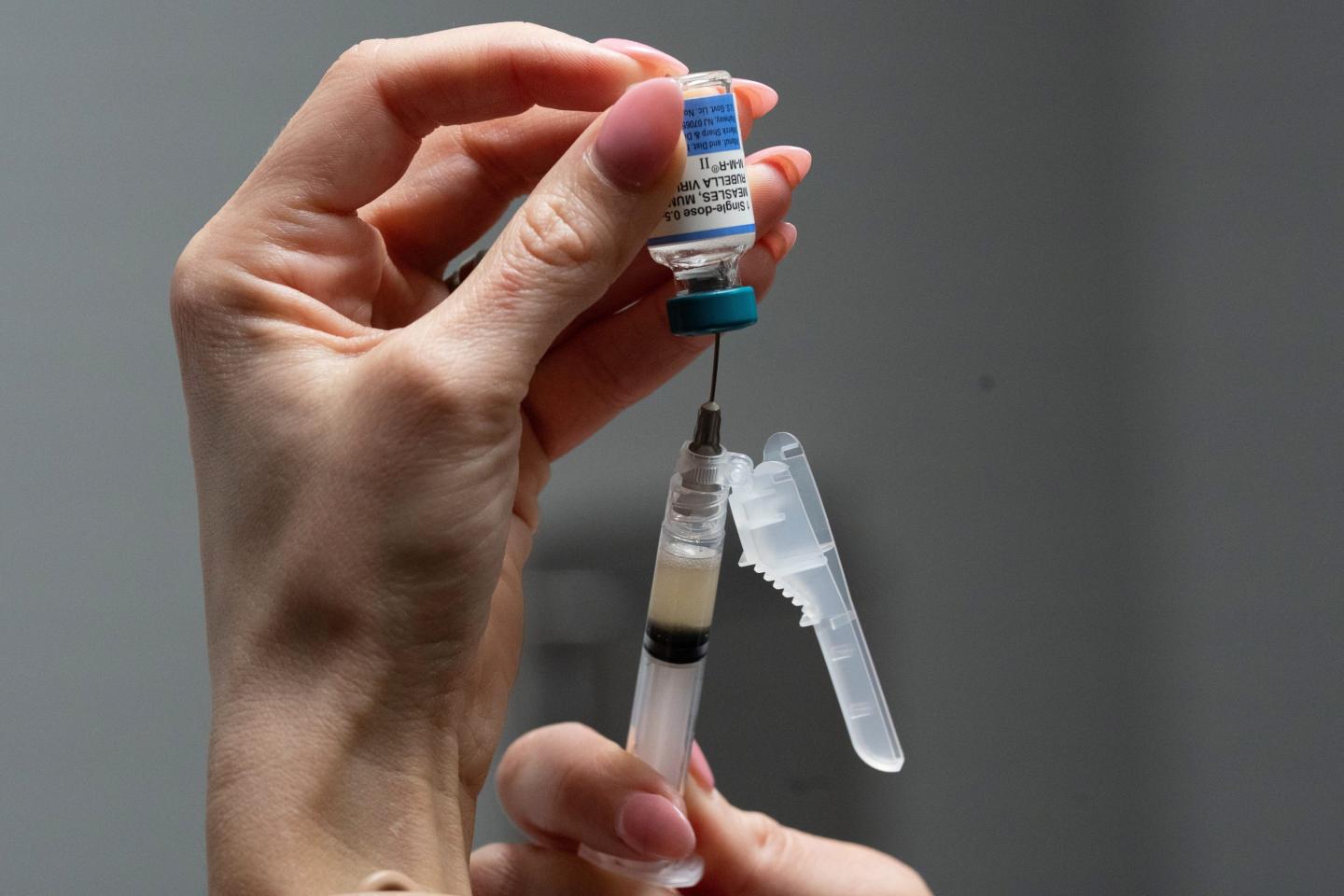
The Florida Department of Health held a hearing in October 2026 on a proposal to remove four vaccine requirements for entry into school and childcare: Haemophilus influenzae type b, or Hib, chickenpox, pneumococcal and hepatitis B.
These vaccines entered use in the U.S. at different times from the early 1980s through 2000. Prior to that, there were millions of chickenpox cases and thousands of serious bacterial infections and preventable deaths among American children each year. Vaccination has dramatically reduced the toll of these diseases.
Many parents today grew up during the transition to widespread vaccination for these diseases and may never have witnessed the severe complications these vaccines help prevent. I’m an epidemiologist who studies vaccine-preventable illnesses and health communication, and I worry that perhaps the luxury of forgetting about these diseases could end up giving rise to a generation of children who aren’t vaccinated against them.
What Florida would be choosing
School vaccination requirements help communities establish herd immunity, which is when enough people are vaccinated to prevent a disease from easily spreading. When vaccination rates fall, infections can spread among susceptible children throughout the community, placing those who are too young to be fully vaccinated, as well as those who cannot develop adequate protection due to medical conditions, at greater risk.
Florida’s proposal would not eliminate these four vaccines, nor would ending a mandate mean that every family would stop using them. However, it would weaken one of the policies designed to maintain high vaccination coverage. If fewer children are vaccinated as a result, the risks will extend beyond the families making that choice.
The consequences could be devastating.
Hib: The bacterium that can cause meningitis
Before Hib vaccines became widely used in the late 1980s, pediatricians sometimes faced a terrifying emergency: an infant with fever, lethargy and a stiff neck. Testing of cerebrospinal fluid would reveal bacterial meningitis caused by Haemophilus influenzae type b, or Hib, an infection that could kill a child or leave lasting neurological damage.
Today, many doctors have never even seen a single case. The bacterium has not disappeared, but widespread vaccination has made serious Hib disease in young children far less common.
Before the vaccine, Hib was the leading cause of bacterial meningitis. In the early 1980s, there were 20,000 invasive Hib infections among American children under 5 years old, 12,000 of which were meningitis. Between 3% and 6% of those children died, and between 15% and 30% of the survivors were left deaf or with brain damage.
Hib infection did not manifest in dramatic outbreaks. Healthy young children carried it silently, and some, unpredictably, became seriously ill.
After the introduction of conjugate vaccines for Hib in the late 1980s, cases among young children declined by 99%. In 2023, the United States reported only 13 cases in children under 5. In 2026, that number is up to 28.
Chickenpox: The ‘harmless’ rite of passage
By the early 1990s, there were more than 4 million cases of chickenpox annually in the United States. Of those infected, 10,500 to 13,500 were hospitalized, and 100 to 150 died. More than 90% of cases and about 70% of hospitalizations occurred in children, as did roughly half of the deaths.
But even those who had manageable cases of childhood chickenpox are at risk for shingles later in life, which can lead to painful and sometimes permanent health complications.
Children are contagious before the rash appears, and each case has an incubation period of up to three weeks. A single infection could spread through a school or daycare in waves for a month or more. Since vaccination began in 1995, deaths from chickenpox in people under 20 years old have been virtually eliminated.
Pneumococcus: Serious infections
Pneumococcal bacteria can live harmlessly in a child’s upper respiratory tract – that is, the nose – but if it moves into the blood or organs, it can cause serious damage.
Before the introduction of the childhood vaccine in 2000, pneumococcal disease caused about 17,000 invasive infections annually in American children under 5 years old, including about 700 cases of meningitis and 200 deaths. On top of that, pneumococcal disease caused approximately 5 million ear infections.
Hepatitis B: The silent threat
Hepatitis B can spread from an infected mother to her baby during childbirth and through contact with infected blood. People with chronic hepatitis B may have no symptoms and may not know they are infected, allowing the virus to spread unknowingly within families and communities. Infected infants and young children also are often asymptomatic.
Yet the consequences can be serious. Infants who become infected with hepatitis B have about a 90% chance of developing chronic hepatitis B, which over time can cause cirrhosis and liver cancer. The risk of chronic infection falls sharply with age, making prevention of infection early in life particularly important.
Before the hepatitis B vaccine became available in the U.S. in 1982, an estimated 20,000 American children were infected each year.
In 1991, the U.S. Centers for Disease Control and Prevention recommended universal infant hepatitis B vaccination as part of a comprehensive strategy to prevent transmission. The CDC estimates that perinatal hepatitis B infections in the United States declined by 75% between 1987 and 2000.
Florida’s future
Florida’s historical records for these diseases are incomplete. For example, chickenpox was not a disease tracked by the Florida Department of Health until late 2006. That makes it difficult to reconstruct the state’s prevaccine impact of these diseases from surveillance records alone.
But Florida doesn’t have to imagine what happens when vaccination is neglected: Measles has resurfaced in the state this year. It had previously been eliminated nationally in 2000, meaning sustained endemic transmission had been interrupted. The disease has never been eradicated globally, and imported infections can trigger outbreaks when they reach undervaccinated communities.
An outbreak at Ave Maria University outside of Naples infected at least 62 people, and the state reported 162 cases as of Oct. 17, 2026. This is the most recent available data at the time of this article’s publication.
The proposal to stop requiring vaccines for hepatitis B, chickenpox, Hib and pneumococcal comes as only 88.9% of Florida kindergartners received the measles, mumps, rubella – or MMR – vaccine during the 2025-26 school year. This is below both the U.S. national average of 92.4% and the recommended threshold of 95% to create herd immunity.
Unfortunately, it’s been difficult to know current measles rates in Florida. In May 2026, the Florida Department of Health removed county-level disease data from its website. The data has since been replaced, but there is currently no measles dashboard to track cases in the state. The department’s 2026 counts have often been delayed, and public tracking systems disagree on the statewide total.
An entire generation of parents has been spared the experience of seeing a child with Hib meningitis, or young adults with liver problems from chronic hepatitis B. Nor have they had to deal with finding alternate childcare for a month because a chickenpox outbreak has shut down their child’s preschool. These are achievements of vaccination – and a reminder of what can be forgotten when prevention works.
Read more of our stories about Florida.
Katrine L. Wallace, Assistant Professor of Epidemiology and Biostatistics, University of Illinois Chicago
This article is republished from The Conversation under a Creative Commons license. Read the original article.
