
Good morning. Mark Zuckerberg’s top advisor in Washington is leaving the company after 15 years.
Why is chief global affairs officer Joel Kaplan moving on one month before the U.S. midterm elections? Neither man nor employer elaborated. Perhaps Kaplan, who formerly advised George W. Bush and who helped Meta build a rapport with the Trump administration, is keen to exit ahead of a predicted wave of Republican losses. Perhaps he’s departing because Meta president Dina Powell McCormick, a former Trump advisor who Meta hired only nine months ago, may be a better line into the administration. Or perhaps he’s leaving because Zuckerberg thinks Muse can do the job.
I kid. For what it’s worth, I asked Muse if AI can replace a policy advisor. “Partly, but not fully, and that distinction matters,” Meta’s personal AI agent replied. The most likely outcome “isn’t replacement so much as reshaping” the role. And what about replacing a CEO? “Even less likely,” Muse said. Smart ‘bot.
Today’s tech news follows. —Andrew Nusca
Thoughts? Suggestions? Hot tip? Drop me a line.
THE BIG STORY
Gray Swan revamps red-teaming contest for AI agents
Gray Swan, an AI security startup that helps frontier AI companies including Anthropic, OpenAI, and Google DeepMind stress-test their models before release, is overhauling its public red-teaming platform to keep it relevant for the era of AI agents.
The Pittsburgh-based company on Tuesday launched a redesigned version of its Arena, an online platform where participants compete for prize money by trying to trick AI models into violating their guardrails.
Alongside the relaunch, which Gray Swan CEO Matt Fredrikson refers to as Arena 2.0, the company is running its largest competition yet: a challenge called Indirect Prompt Injection (IPI) Black, with $300,000 in prizes sponsored by Anthropic, Meta, Google DeepMind, and Reflection AI. New attack scenarios will be released each week through Nov. 2.
In an indirect prompt injection, an attacker hides instructions in content an AI agent will come across while doing a task—a web page or a forum post, for instance—hoping to hijack the agent. It has become a major security concern as companies let AI agents browse the web and take action on users’ behalf. The red-teaming platform includes sandbox environments where these tests can be run safely, without risking real world damage.
Fredrikson told Fortune that anything on the public Arena is a guardrailed version of a model. (Gray Swan also runs private arenas for frontier AI labs, sometimes using unguardrailed models, with vetted participants who sign nondisclosure agreements.) For all its tests, the company builds realistic simulated environments, red teams these environments itself and with third parties to see whether they can be escaped, and monitors what agents do.
“Are we seeing signs that it might have found a zero day vulnerability and has now broken out of the sandbox environment? We can monitor that,” Fredrikson said.
When Gray Swan launched the original red-team Arena in September 2024, Fredrikson said, most AI applications were chatbots, and the models were bad at following their policies. In that first competition, it was relatively easy for contestants to jailbreak AI models from all of the AI vendors, he told Fortune.
Since then, the AI labs have made their models substantially more robust, and what companies deploy has changed. Configuring these test environments and setting up the attacks now requires significantly more technical expertise.
“It’s not chatbots anymore. There might be a chat-like interface, but it’s these systems, agents that are operating,” Fredrikson said. —Jeremy Kahn
THE BLIND BOX
“They’re going to have to burn the furniture.”
THE RUNDOWN
—DeepSeek says a U.S.federal agency ban is an “overstretching of the concept of national security.”
—Meta’s Muse AI agent saw almost 11 million downloads since its September debut.
—Apple adds a U.S. titanium supplier for its new iPhone Duo.
—Banks experience a multi-hour outage in London after a “power event” knocked out Google Cloud.
—OpenAI acquires Orchestra Bio, which builds AI agents for managing drug development.
—Daytona valued at $1 billion. The U.S. startup is building an “agentic cloud.”
—Mural raises $15 million. Founded by former Palantir engineers, the startup aims to connect banks to the emerging bot economy.
—Google lets AI apps run on TPUs and Google Cloud without a code rewrite.
THE PARTING SHOT
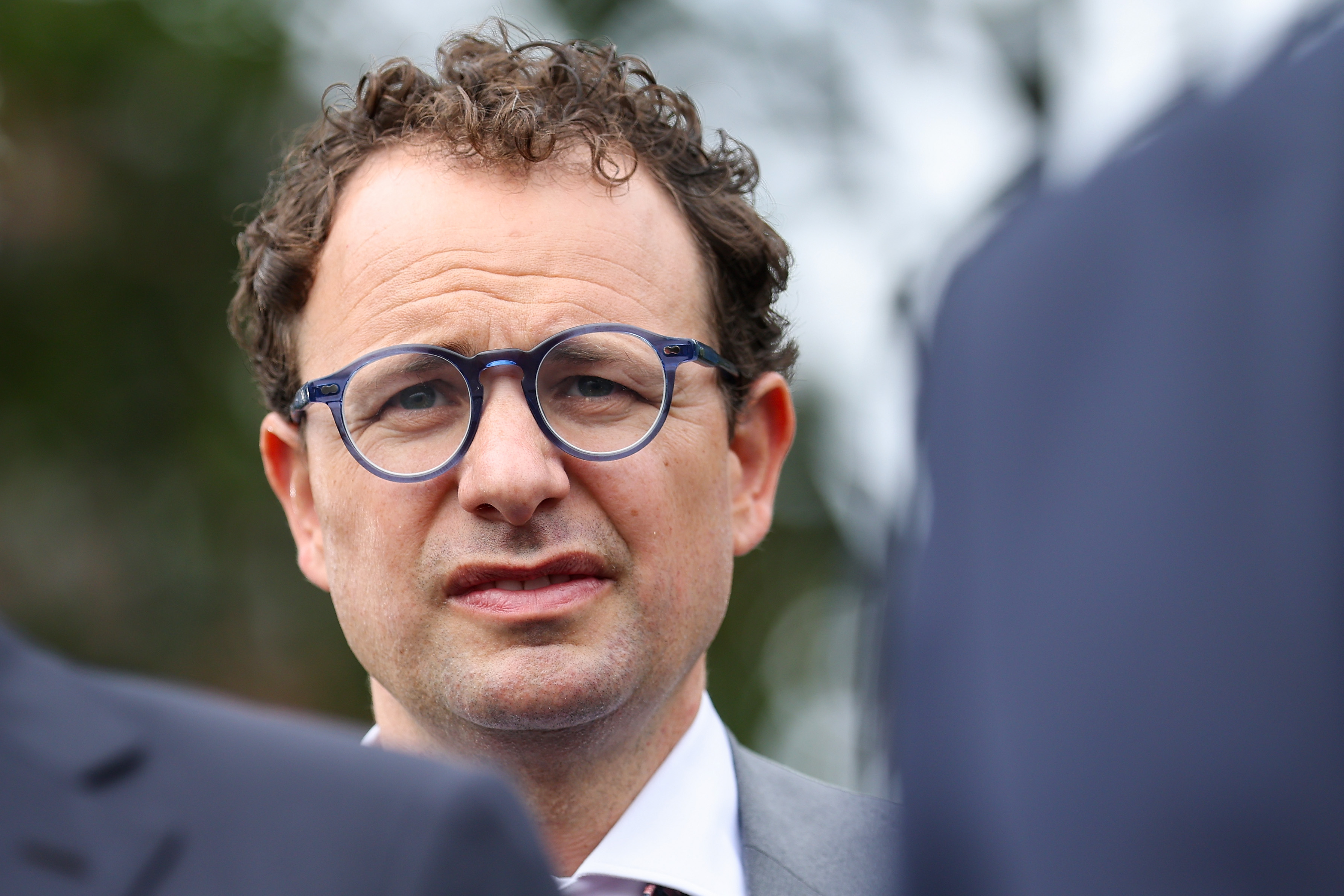
Anthropic’s SEC Form S-1 has leaked ahead of the AI company’s planned IPO. (The company filed confidentially in June.)
Three takeaways:
—Anthropic lost more than $80 billion in the first half of this year
—Anthropic could spend $750 billion on compute in the coming years
—One-fifth of Anthropic’s $16.3 billion in revenue for the first half of 2026 came from just two customers (Who? Based on prior reports, possibly Amazon and Google)