
• Home
  • Latest
  • Fortune 500
  • Finance
  • Tech
  • Leadership
  • Lifestyle
  • Rankings
  • Multimedia

Trendingnow

1

Europe sent its gold to the U.S. for safekeeping during World War II. Central banks are now reshuffling their reserves for a new era of uncertainty

2

France is rioting over surging inflation, skyrocketing national debt, and crumbling schools. America is its sleeping twin

3

Zuckerberg spent years building on Apple’s terms. His $100 billion-plus AI bet is about owning everything
Economynational debt

No wonder the White House wants Warsh to cut: A 1% Fed rate hike costs the Treasury an extra $95 billion a year in national debt interest

Eleanor Pringle
By
Eleanor Pringle
Eleanor Pringle
Senior Reporter, Economics and Markets
Down Arrow Button Icon
Eleanor Pringle
By
Eleanor Pringle
Eleanor Pringle
Senior Reporter, Economics and Markets
Down Arrow Button Icon
October 20, 2026, 9:04 AM ET
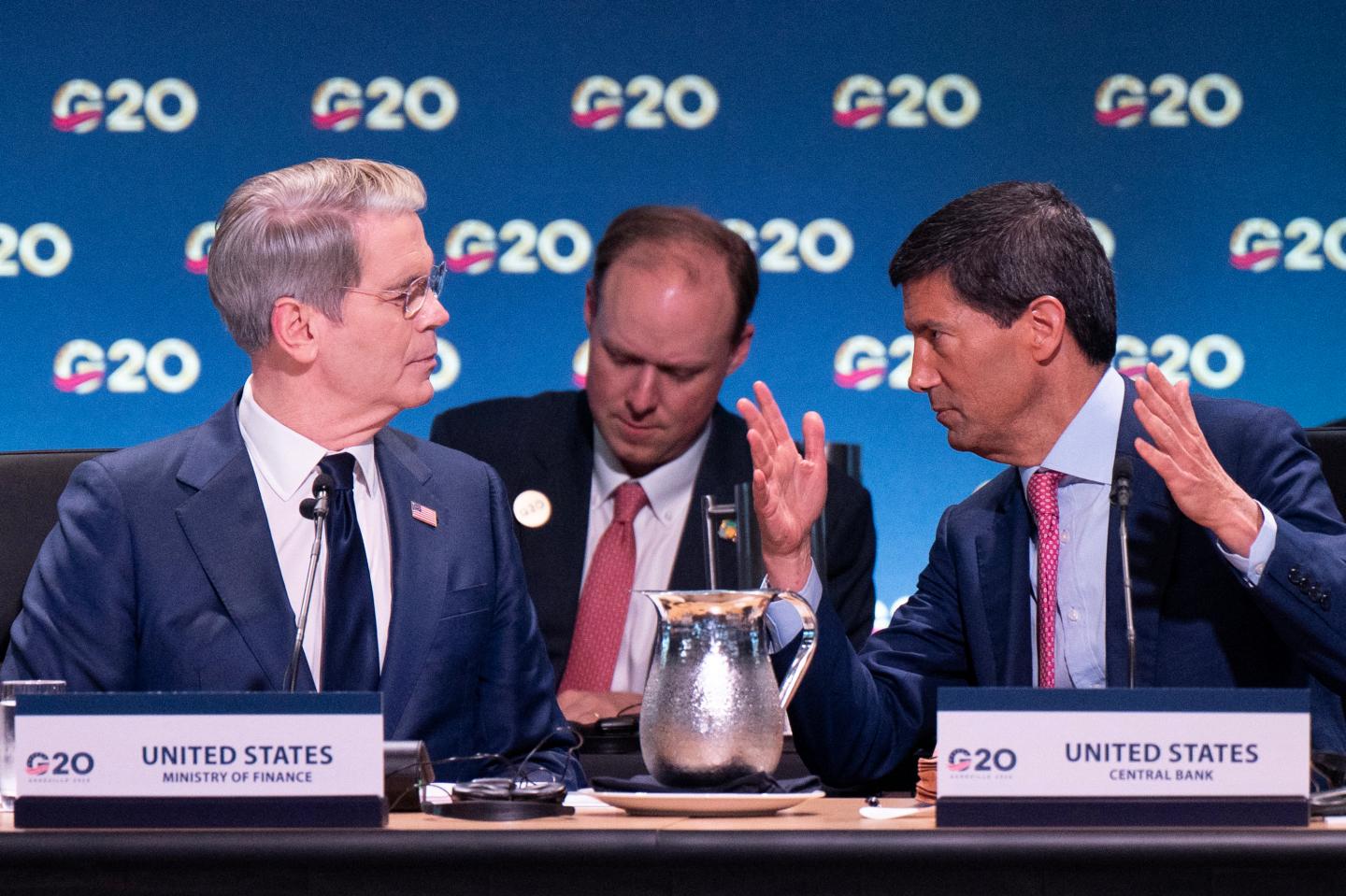
(L/R) US Secretary of Treasury Scott Bessent speaks with US Federal Reserve Chair Kevin Warsh during the G20 Finance Ministers and Central Bank Governors' meeting in Asheville, North Carolina, on September 1, 2026.
(L/R) US Secretary of Treasury Scott Bessent speaks with US Federal Reserve Chair Kevin Warsh during the G20 Finance Ministers and Central Bank Governors' meeting in Asheville, North Carolina, on September 1, 2026.Allison Joyce / AFP via Getty Images
Google source logo
Add Fortune on Google for similar content.

There are many—none particularly surprising—reasons politicians and policymakers push central banks for a lower base interest rate. It makes borrowing cheaper and stimulates the economy, potentially leading to more jobs and home purchases.

It also, conveniently, makes the government’s own borrowing costs cheaper.

While leaders the world over have lobbied for lower base rates for these reasons, none have done quite so forcefully as President Donald Trump and his team: First, going to extraordinary lengths—including personal insults and a criminal investigation—against previous Fed chairman Jerome Powell, and now the broader Federal Open Market Committee (FOMC) led by new chairman Kevin Warsh.

Recommended Video

Trump and his team have suggested that rates are too high, hurting consumers’ chances of owning a home as a result (mortgage rates are tied to long-dated rates). But Bank of America has also put a figure on the cost to the government of elevated interest rates.

“Clients are concerned about U.S. fiscal deficit risks. We are too,” wrote BofA analysts Meghan Swiber, Stephen Juneau, Mark Cabana, and Ralph Axel. “Higher rates become increasingly costly the longer they persist. The near-term deficit outlook has changed little, but the rates backdrop has changed the longer-run fiscal math.”

“Higher yields compound into materially greater interest expense and Treasury financing needs over time, while raising the risk that the effective interest rate on the debt eventually exceeds nominal growth. Debt spiral starts when interest costs exceed nominal growth.”

Treasury payments to service the $40 trillion national debt surpassed $2 trillion for the 2026 fiscal year, the department recently announced.

In a recent analysis, the Congressional Budget Office (CBO) forecasted the alterations to projected service payments on the debt under two interest rate scenarios. In the first, rates were 150 basis points higher than current projections between 2026 and 2036, and in the second, rates were just 50 basis points higher.

In the first scenario, in which interest rates are 1.5% higher than forecasts, deficits are $6 trillion larger, with a  $4.9 trillion increase in net interest costs. A 0.5% increase results in $1.9 trillion added to current debt projections, with an extra $1.6 trillion added in net interest costs.

“Even if primary deficits remain largely unchanged, the growing interest burden materially increases the government’s financing needs,” the analysts wrote.

“We estimate that interest expense rises $95 billion a year for every 100bps of Fed hikes,” the team wrote.

Rising concern

Bank of America and its clients aren’t the only ones concerned that the U.S. fiscal picture is at something of a tipping point.

Over the weekend, Mark Zandi, chief economist at Moody’s, wrote that global investors are digesting the U.S. spending habits and “appear to be demanding a higher rate to compensate for the mounting risk.”

He explained: “The 10-year Treasury yield is up about a percentage point this year, among the biggest increases of any major economy, and the countries with the heaviest interest burdens have generally seen the biggest increases.

“A vicious cycle threatens to take hold, with higher rates adding to the interest payments and debt load, which in turn pushes rates up even more.”

BofA’s team seems inclined to agree, writing that the bottom line means an unchanged deficit picture is becoming a “bigger financing problem.” They added: “As elevated yields feed through to the debt stock, interest expense compounds, financing needs rise and the fiscal trajectory becomes less sustainable.”

Fortune Daily breaks the traditional barrier between audience and newsroom. The show transforms Fortune’s trusted reporting into actionable, conversational, and entertaining insights for an emerging class of business leaders. Watch here.
About the Author
Eleanor Pringle
By Eleanor PringleSenior Reporter, Economics and Markets
LinkedIn icon

Eleanor Pringle is an award-winning senior reporter at Fortune covering news, the economy, and personal finance. Eleanor previously worked as a business correspondent and news editor in regional news in the U.K. She completed her journalism training with the Press Association after earning a degree from the University of East Anglia.

See full bioRight Arrow Button Icon
Google source logo
Add Fortune on Google for similar content.

Latest in Economy


Most Popular

Fortune Secondary Logo
Rankings
  • 100 Best Companies
  • Fortune 500
  • Global 500
  • Fortune 500 Europe
  • Most Powerful Women
  • World's Most Admired Companies
  • See All Rankings
  • Lists Calendar
Sections
  • Finance
  • Fortune Crypto
  • Features
  • Leadership
  • Health
  • Commentary
  • Success
  • Retail
  • Mpw
  • Tech
  • Lifestyle
  • CEO Initiative
  • Asia
  • Politics
  • Conferences
  • Europe
  • Newsletters
  • Personal Finance
  • Environment
  • Magazine
  • Education
Customer Support
  • Frequently Asked Questions
  • Customer Service Portal
  • Privacy Policy
  • Terms Of Use
  • Single Issues For Purchase
  • International Print
Commercial Services
  • Advertising
  • Fortune Brand Studio
  • Fortune Analytics
  • Fortune Conferences
  • Business Development
  • Group Subscriptions
About Us
  • About Us
  • Press Center
  • Work At Fortune
  • Terms And Conditions
  • Site Map
  • About Us
  • Press Center
  • Work At Fortune
  • Terms And Conditions
  • Site Map
  • Facebook icon
  • Twitter icon
  • LinkedIn icon
  • Instagram icon
  • TikTok icon
  • YouTube icon

    Recommended For You

    © 2026 Fortune Media IP Limited. All Rights Reserved. Use of this site constitutes acceptance of our Terms of Use and Privacy Policy | CA Notice at Collection and Privacy Notice | Do Not Sell/Share My Personal Information
    FORTUNE is a trademark of Fortune Media IP Limited, registered in the U.S. and other countries. FORTUNE may receive compensation for some links to products and services on this website. Offers may be subject to change without notice.