
• Home
  • Latest
  • Fortune 500
  • Finance
  • Tech
  • Leadership
  • Lifestyle
  • Rankings
  • Multimedia

Trendingnow

1

Susan Dell is the one running the Dells’ $10 billion giving operation—and her biggest bets are on kids, health care, and UT Austin

2

Melinda French Gates has a 48-hour rule for criticizing employees. The billionaire philanthropist says it’s because ‘being clear is kind’

3

Official data show China is dumping more U.S. Treasury debt. But it may actually be a stealth buyer, with a big stash suspiciously piling up in Canada
Economynational debt

The U.S. national debt is approaching the point where bond traders see ‘mounting risk’ of a ‘vicious cycle,’ Moody’s top economist says

Eleanor Pringle
By
Eleanor Pringle
Eleanor Pringle
Senior Reporter, Economics and Markets
Down Arrow Button Icon
Eleanor Pringle
By
Eleanor Pringle
Eleanor Pringle
Senior Reporter, Economics and Markets
Down Arrow Button Icon
October 19, 2026, 10:13 AM ET
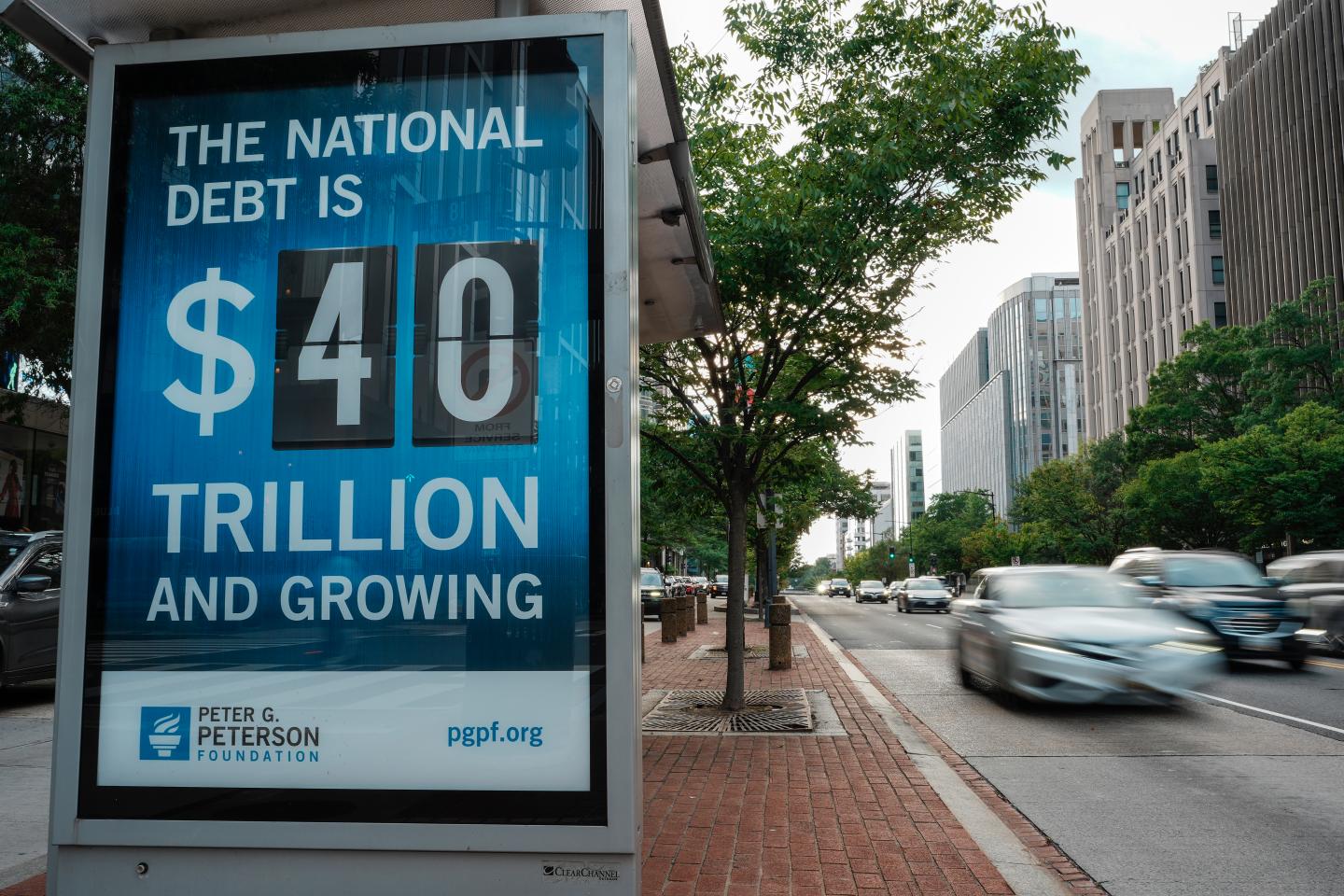
A view of a bus shelter at 18th and K St's NW where a poster and electronic billboard displays the current U.S. National debt per person and as a nation at 40 Trillion dollars on August 30, 2026 in Washington, DC.
A view of a bus shelter at 18th and K St's NW where a poster and electronic billboard displays the current U.S. National debt per person and as a nation at 40 Trillion dollars on August 30, 2026 in Washington, DC.Jemal Countess/Getty Images for the Peter G. Peterson Foundation
Google source logo
Add Fortune on Google for similar content.

Policy optimists have long waved off concerns about a fiscal crisis in the U.S.: the moment at which the debt burden would grow so large that it would be either impossible to finance repayments or would require economic consequences. The national debt burden now stands at more than $40 trillion, but the U.S. remains the largest economy on the planet—why worry?

Borrowing advocates also suggest that interest rates are elevated across many markets; the U.S. isn’t alone in relatively higher rates and therefore does not stand out as a cause for concern.

But Moody’s top economist, Mark Zandi, believes he is seeing the first signs of discomfort in the Treasury market. He also says that while many nations will have to wrangle with their borrowing burdens, the scale of the U.S. economy means its situation is “far and away the most important one.”

Recommended Video

Zandi isn’t an outlier in his outlook. For many years, debt hawks (those concerned about the eye-watering levels of government borrowing) have warned that just because no crisis has happened yet, it doesn’t mean it won’t happen at all. Their concern is not necessarily the value of public debt, but rather the country’s debt-to-GDP ratio.

This reveals the extent to which the government is borrowing to sustain necessary spending on services and operations, relative to its economic growth and, therefore, how comfortably it can repay its debts. At the time of writing, the U.S. ratio stands at 126%.

The potential form of a fiscal crisis varies depending on which policymaker or economist you ask: Bridgewater Associates founder Ray Dalio believes America will suffer an economic “heart attack,” while Kent Smetters, professor of business economics and public policy at the University of Pennsylvania’s Wharton School, previously told Fortune he believes the U.S. will inflate its way out of a crisis.

Zandi wrote in a note late Sunday night that he is seeing the early signs of a spiral. His warning comes as the U.S. Treasury confirmed a $2 trillion deficit for the fiscal year ending in October, more than half of which was on interest payments alone.

“But arguably most significant is that global investors see all this and appear to be demanding a higher rate to compensate for the mounting risk,” Zandi wrote. “The 10-year Treasury yield is up about a percentage point this year, among the biggest increases of any major economy, and the countries with the heaviest interest burdens have generally seen the biggest increases.

“A vicious cycle threatens to take hold, with higher rates adding to the interest payments and debt load, which in turn pushes rates up even more.”

Further afield

The U.S. isn’t alone in its wrangling over the burden of higher repayment rates. The IMF said in a note last week that long-term sovereign yields have “increased sharply” for a number of major advanced economies. Between February and September of 2026, it noted, the G7’s average 10-year government bond yield increased by over 1 percentage point, reaching its highest level in nearly two decades. 

Treasury Secretary Scott Bessent has noted this, suggesting higher U.S. yields would be a cause for concern if they were “idiosyncratic” rather than matching a global trend.

But Zandi suggests the magnitude of the U.S. economy makes it notable despite the context, writing: “The U.S. isn’t the only country approaching a fiscal reckoning, but given that Treasuries are the global benchmark, it is far and away the most important one.”

Fortune Daily breaks the traditional barrier between audience and newsroom. The show transforms Fortune’s trusted reporting into actionable, conversational, and entertaining insights for an emerging class of business leaders. Watch here.
About the Author
Eleanor Pringle
By Eleanor PringleSenior Reporter, Economics and Markets
LinkedIn icon

Eleanor Pringle is an award-winning senior reporter at Fortune covering news, the economy, and personal finance. Eleanor previously worked as a business correspondent and news editor in regional news in the U.K. She completed her journalism training with the Press Association after earning a degree from the University of East Anglia.

See full bioRight Arrow Button Icon
Google source logo
Add Fortune on Google for similar content.

Latest in Economy


Most Popular

Fortune Secondary Logo
Rankings
  • 100 Best Companies
  • Fortune 500
  • Global 500
  • Fortune 500 Europe
  • Most Powerful Women
  • World's Most Admired Companies
  • See All Rankings
  • Lists Calendar
Sections
  • Finance
  • Fortune Crypto
  • Features
  • Leadership
  • Health
  • Commentary
  • Success
  • Retail
  • Mpw
  • Tech
  • Lifestyle
  • CEO Initiative
  • Asia
  • Politics
  • Conferences
  • Europe
  • Newsletters
  • Personal Finance
  • Environment
  • Magazine
  • Education
Customer Support
  • Frequently Asked Questions
  • Customer Service Portal
  • Privacy Policy
  • Terms Of Use
  • Single Issues For Purchase
  • International Print
Commercial Services
  • Advertising
  • Fortune Brand Studio
  • Fortune Analytics
  • Fortune Conferences
  • Business Development
  • Group Subscriptions
About Us
  • About Us
  • Press Center
  • Work At Fortune
  • Terms And Conditions
  • Site Map
  • About Us
  • Press Center
  • Work At Fortune
  • Terms And Conditions
  • Site Map
  • Facebook icon
  • Twitter icon
  • LinkedIn icon
  • Instagram icon
  • TikTok icon
  • YouTube icon

    Recommended For You

    © 2026 Fortune Media IP Limited. All Rights Reserved. Use of this site constitutes acceptance of our Terms of Use and Privacy Policy | CA Notice at Collection and Privacy Notice | Do Not Sell/Share My Personal Information
    FORTUNE is a trademark of Fortune Media IP Limited, registered in the U.S. and other countries. FORTUNE may receive compensation for some links to products and services on this website. Offers may be subject to change without notice.