
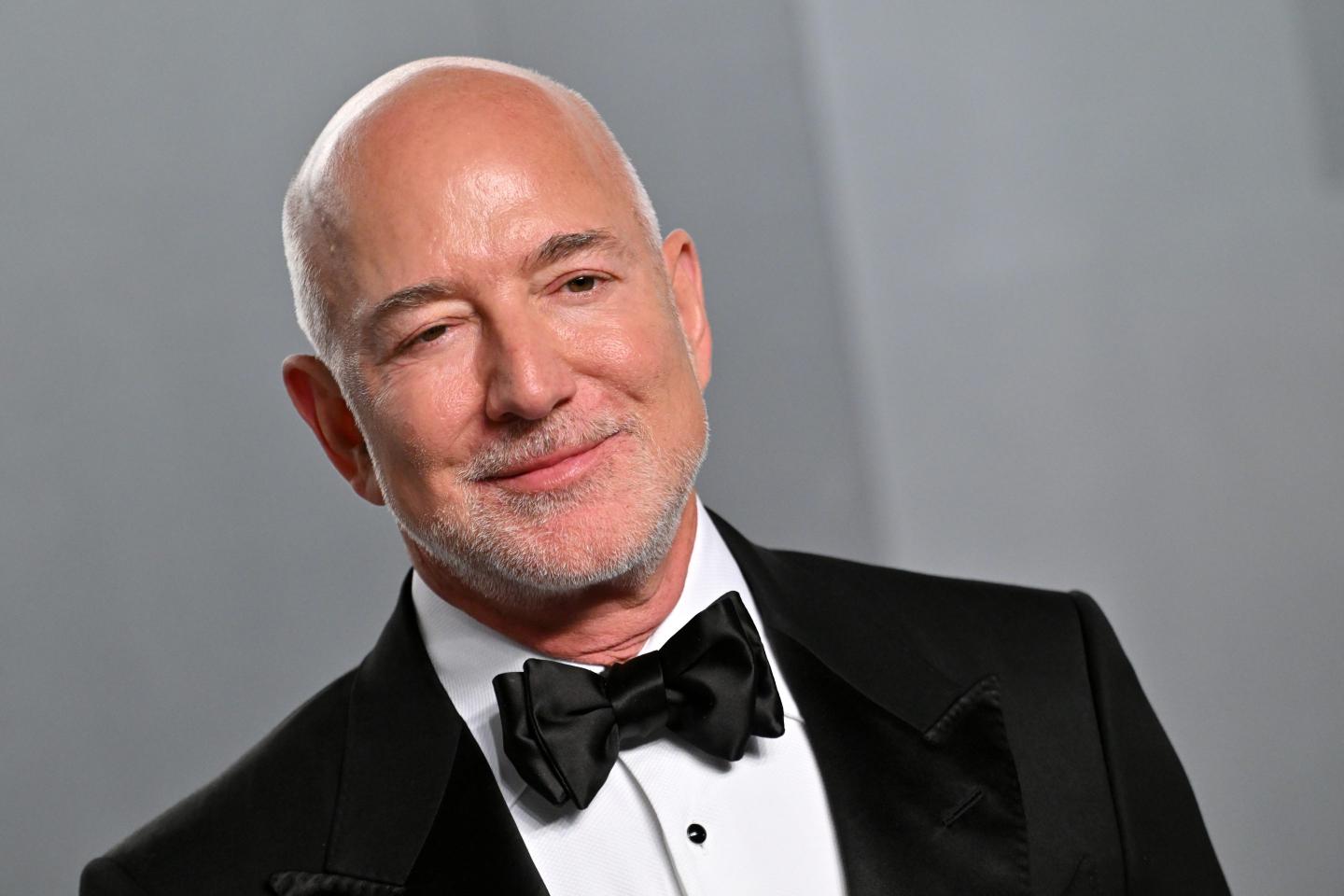
Jeff Bezos has taken Amazon from an online bookstore he founded in his garage in 1995—to the No. 1 company on the Fortune 500. His own net worth has soared, too, with a net worth of $372 billion making him the second-richest person in the world.
However, the 62-year-old argues that people who view extreme wealth like his own as a bad thing have been taught to think about success the wrong way.
“I think we live in an environment where some people have been taught, I think incorrectly, but taught, that this whole kind of oppressor/oppressed framework, and success is villainy,” Bezos recently told Fox News.
“Success is not villainy. You can be a billionaire if you started a hamburger stand.”
Bezos pointed to how someone could start with a simple food stand with 10 or so workers, grow it into a business with thousands of locations and employees, and eventually become a billionaire.
“This is how it works,” he said. “There’s nothing wrong with making unbelievably good chicken that people love. And it doesn’t make him a bad person.”
As Americans question billionaire wealth, Jeff Bezos argues for tackling affordability
Many people, particularly younger generations, may disagree with Bezos’s assessment. Some 18% of Americans view being extremely rich as “morally wrong,” a figure that nearly doubles to about 33% among Gen Z adults aged 18 and 29, according to a 2025 Pew Research study.
That skepticism comes as billionaire wealth continues to soar. In 2025, the fortunes of the world’s billionaires reached a record $18.3 trillion, according to Oxfam. Meanwhile, the American Dream of buying a home has increasingly felt out of reach for many households, particularly younger Americans struggling with housing costs.
Bezos, for his part, acknowledged that the country races real affordability problems. But he argued that voters should be wary of politicians who focus on assigning blame rather than addressing the underlying problems.
“You can’t pretend there’s no problems,” he said. “Young people look at the cost of housing and think, I have to live two hours out of town. I can’t live close to my job.”
It’s the same problem-solving approach he expects from executives at his own companies.
“If there’s somebody at Amazon or Blue Origin or Prometheus, an executive at one of my companies, instead of working on a root cause and a real fix, all they did is point fingers and blame people, we would exit them quickly,” Bezos said. “They wouldn’t be here long.”
Earlier this year, Bezos floated a proposal to ease the tax burden on lower-income Americans, suggesting that the bottom half of U.S. income earners—roughly 76 million households—should pay no federal income taxes.
“The bottom half of income earners in this country pay only 3% of the taxes,” Bezos told CNBC in May. “I think it should be zero.”
The 62-year-old billionaire pointed to a hypothetical health care worker in Queens who makes $75,000 a year—but pays more than $1,000 a month in taxes.
“To me, it’s kind of absurd that we’re doing this,” Bezos said. “We shouldn’t be asking this nurse in Queens to send money to Washington. They should be sending her an apology. It really makes no sense.”
From Howard Schultz to Jamie Dimon, billionaire CEOs agree with Bezos that success shouldn’t be vilified
Bezos isn’t alone in pushing back against the idea that success—and the billions of dollars that can come with it—should be viewed as inherently bad.
Former Starbucks CEO Howard Schultz, who has about $3.4 billion to his name, has also argued that his fortune reflects years of hard work rather than an unfair advantage.
“This moniker ‘billionaire,’ let’s get at that okay?” Schultz said during a heated U.S. Senate committee hearing in 2023. “I grew up in federally subsidized housing, my parents never owned a home, I came from nothing. I thought my entire life was based on the achievement of the American dream. Yes I have billions of dollars, I earned it. No one gave it to me.”
JPMorgan Chase CEO Jamie Dimon, who has a net worth of about $3 billion, has similarly acknowledged concerns about wealth inequality while pushing back against the idea that wealthy people should be vilified simply for their success.
Dimon told 60 Minutes in 2019: “I think you should vilify Nazis, but you shouldn’t vilify people who’ve worked hard to accomplish things.”