
• Home
  • Latest
  • Fortune 500
  • Finance
  • Tech
  • Leadership
  • Lifestyle
  • Rankings
  • Multimedia

Trendingnow

1

Palantir’s billionaire CEO says only two kinds of people will succeed in the AI era: trade workers—‘or you’re neurodivergent’

2

Nvidia built a $5 trillion company while making employees pay for their own lunch—but they get far more lucrative perks like stock discounts

3

Jeff Bezos says a 3-day workweek and more single-income households are on the way thanks to AI: ‘It’s going to be difficult to hire people’

1

Palantir’s billionaire CEO says only two kinds of people will succeed in the AI era: trade workers—‘or you’re neurodivergent’

2

Nvidia built a $5 trillion company while making employees pay for their own lunch—but they get far more lucrative perks like stock discounts

3

Jeff Bezos says a 3-day workweek and more single-income households are on the way thanks to AI: ‘It’s going to be difficult to hire people’
EconomyDebt
Asia

China’s debt interest costs are soaring above U.S. levels and growing faster than any other budget category as Beijing struggles to prop up growth

Jason Ma
By
Jason Ma
Jason Ma
Weekend Editor
Down Arrow Button Icon
Jason Ma
By
Jason Ma
Jason Ma
Weekend Editor
Down Arrow Button Icon
October 11, 2026, 3:56 PM ET
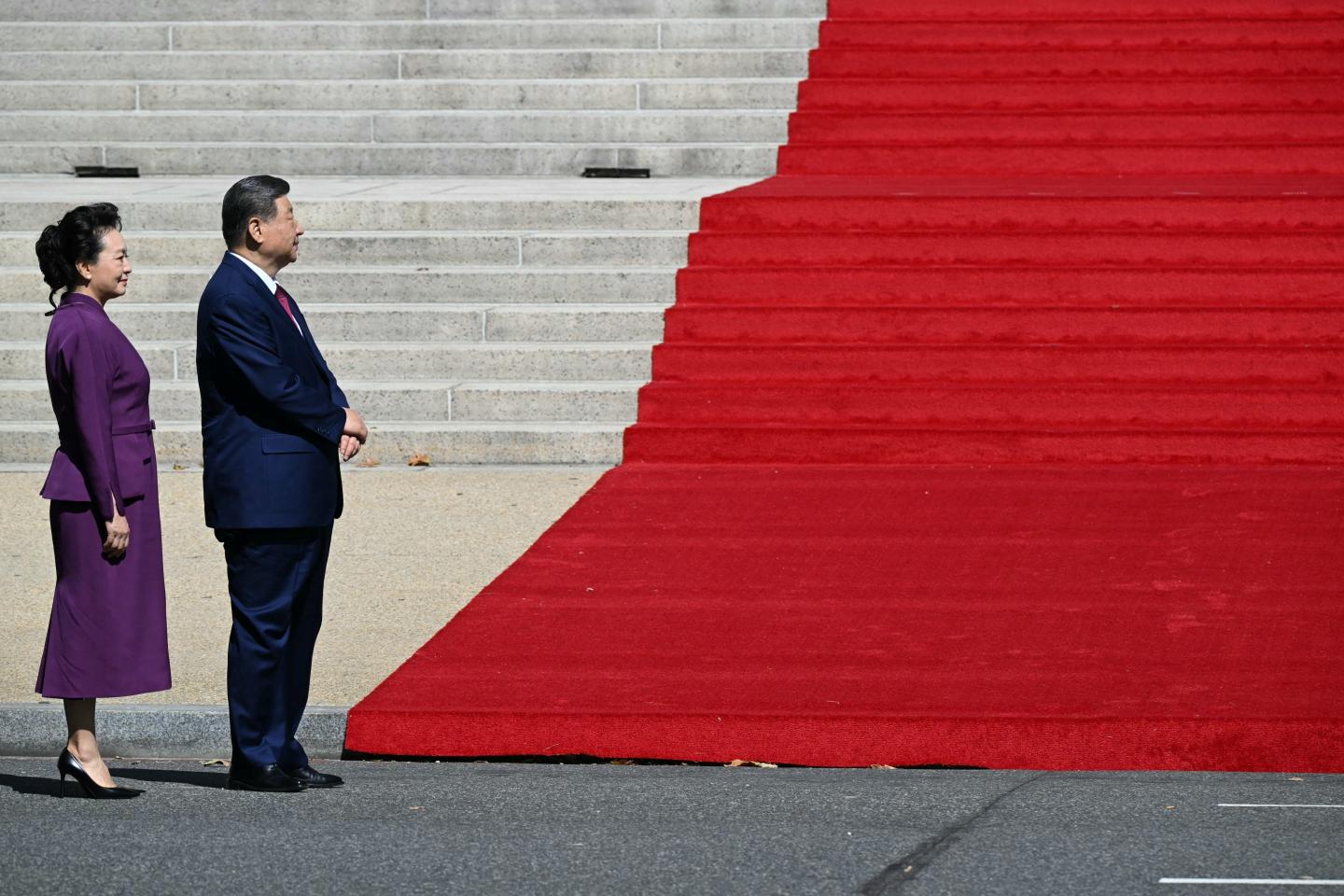
China's President Xi Jinping and his wife Peng Liyuan stand together as they arrive with US President Donald Trump and First Lady Melania Trump to visit the National Archives in Washington, DC on September 25, 2026.
China's President Xi Jinping and his wife Peng Liyuan stand together as they arrive with US President Donald Trump and First Lady Melania Trump to visit the National Archives in Washington, DC on September 25, 2026.SAUL LOEB / AFP via Getty Images
Google source logo
Add Fortune on Google for similar content.

The world is flooded with debt, but while the U.S. and Europe have caused angst on global markets lately, China’s fiscal situation isn’t looking so great either.

Recommended Video

In fact, China’s debt has shot up so much in recent years that interest payments on all its borrowing are commanding a bigger share of public spending.

Debt-servicing payments will account for 19.2% of the central government’s general public budget this year, up from 12% in 2014, according to new Conference Board estimates cited by the Financial Times.

That tracks with a separate report earlier this year from the Center for Strategic and International Studies, which also found that 19% of Beijing’s spending is earmarked for interest on debt. That’s more than the 14% of the U.S. federal budget that goes to interest costs, though less than Japan’s 25.6%.

CSIS added that China’s spending on interest payments skyrocketed 341% between 2013 and 2025, faster than any other major budget category. By comparison, total spending jumped 102% in that span, with outlays on social security and employment up 207%, science and technology up 137%, and defense up 141%.

To be sure, U.S. debt-interest spending looks grim too and has surged about 390% since 2013 to $1 trillion, which also tops the Pentagon’s budget.

But the world’s two biggest economies have been diverging in key ways with implications for future growth and indebtedness.

The U.S. economy is accelerating, helped by the AI boom, and despite high inflation, resilient consumers have continued to spend. Unemployment is low and signals full employment, while stock markets are at or near record highs.

Of course, hyperscalers are racing to issue bonds to fund their data centers and chip purchases, but they are also raising money with fresh stock offerings and IPOs.

Meanwhile, China’s GDP has been decelerating and is on pace to undercut its annual target of 4.5%-5%. And while export-facing sectors are growing at a fast clip, trade partners are putting up barriers, Chinese consumers remain reluctant to spend, investment is weak, the property sector is still digging out from an epic crash, and Chinese stocks have been anemic.

Beijing has also steered state banks to provide financing to priority industries like electric vehicles, robotics, artificial intelligence and renewable energy.

But under pressure to lend, many loans went to questionable borrowers. Business debt has doubled since 2019, while revenues are only 30% higher. Creditors continue to roll over loans to keep struggling firms afloat, even as nearly a third of them are losing money.

China’s state-led growth model now looks like it’s running out of steam, and the rapidly expanding mountain of debt is a warning sign as local governments often seek to boost favored industries with low-cost loans.

According to the International Monetary Fund, China’s general government gross debt hit 107% of GDP this year, up from 41% in 2015 and on a path to reach 124% in 2030.

A broader measure of indebtedness across the public and private sectors reveals an even worse picture. China’s total debt-to-GDP ratio, excluding the financial sector, doubled since 2010 and has now topped 300%, Capital Economics estimated earlier this year.

But in the U.S., total public and private debt last year was about 265% of GDP, down sharply from pandemic-era highs.

Not only has China’s debt boom hit diminishing returns, but it’s also becoming a drag on the economy.

“The irony is that one driver of both government borrowing and the lax lending standards of [state-owned] banks is the desire to prop up economic growth and prevent job losses,” Mark Williams, chief Asia economist at Capital Economics, wrote in May. “But the product of a credit boom that has been underway for 18 years is a banking system propping up unproductive firms, widespread losses across industry, and entrenched overcapacity.”

Fortune Daily breaks the traditional barrier between audience and newsroom. The show transforms Fortune’s trusted reporting into actionable, conversational, and entertaining insights for an emerging class of business leaders. Watch here.
About the Author
Jason Ma
By Jason MaWeekend Editor

Jason Ma is the weekend editor at Fortune, where he covers markets, the economy, finance, and housing.

See full bioRight Arrow Button Icon
Google source logo
Add Fortune on Google for similar content.

Latest in Economy


Most Popular

Fortune Secondary Logo
Rankings
  • 100 Best Companies
  • Fortune 500
  • Global 500
  • Fortune 500 Europe
  • Most Powerful Women
  • World's Most Admired Companies
  • See All Rankings
  • Lists Calendar
Sections
  • Finance
  • Fortune Crypto
  • Features
  • Leadership
  • Health
  • Commentary
  • Success
  • Retail
  • Mpw
  • Tech
  • Lifestyle
  • CEO Initiative
  • Asia
  • Politics
  • Conferences
  • Europe
  • Newsletters
  • Personal Finance
  • Environment
  • Magazine
  • Education
Customer Support
  • Frequently Asked Questions
  • Customer Service Portal
  • Privacy Policy
  • Terms Of Use
  • Single Issues For Purchase
  • International Print
Commercial Services
  • Advertising
  • Fortune Brand Studio
  • Fortune Analytics
  • Fortune Conferences
  • Business Development
  • Group Subscriptions
About Us
  • About Us
  • Press Center
  • Work At Fortune
  • Terms And Conditions
  • Site Map
  • About Us
  • Press Center
  • Work At Fortune
  • Terms And Conditions
  • Site Map
  • Facebook icon
  • Twitter icon
  • LinkedIn icon
  • Instagram icon
  • TikTok icon
  • YouTube icon

    Latest in Economy


    Most Popular

    © 2026 Fortune Media IP Limited. All Rights Reserved. Use of this site constitutes acceptance of our Terms of Use and Privacy Policy | CA Notice at Collection and Privacy Notice | Do Not Sell/Share My Personal Information
    FORTUNE is a trademark of Fortune Media IP Limited, registered in the U.S. and other countries. FORTUNE may receive compensation for some links to products and services on this website. Offers may be subject to change without notice.