
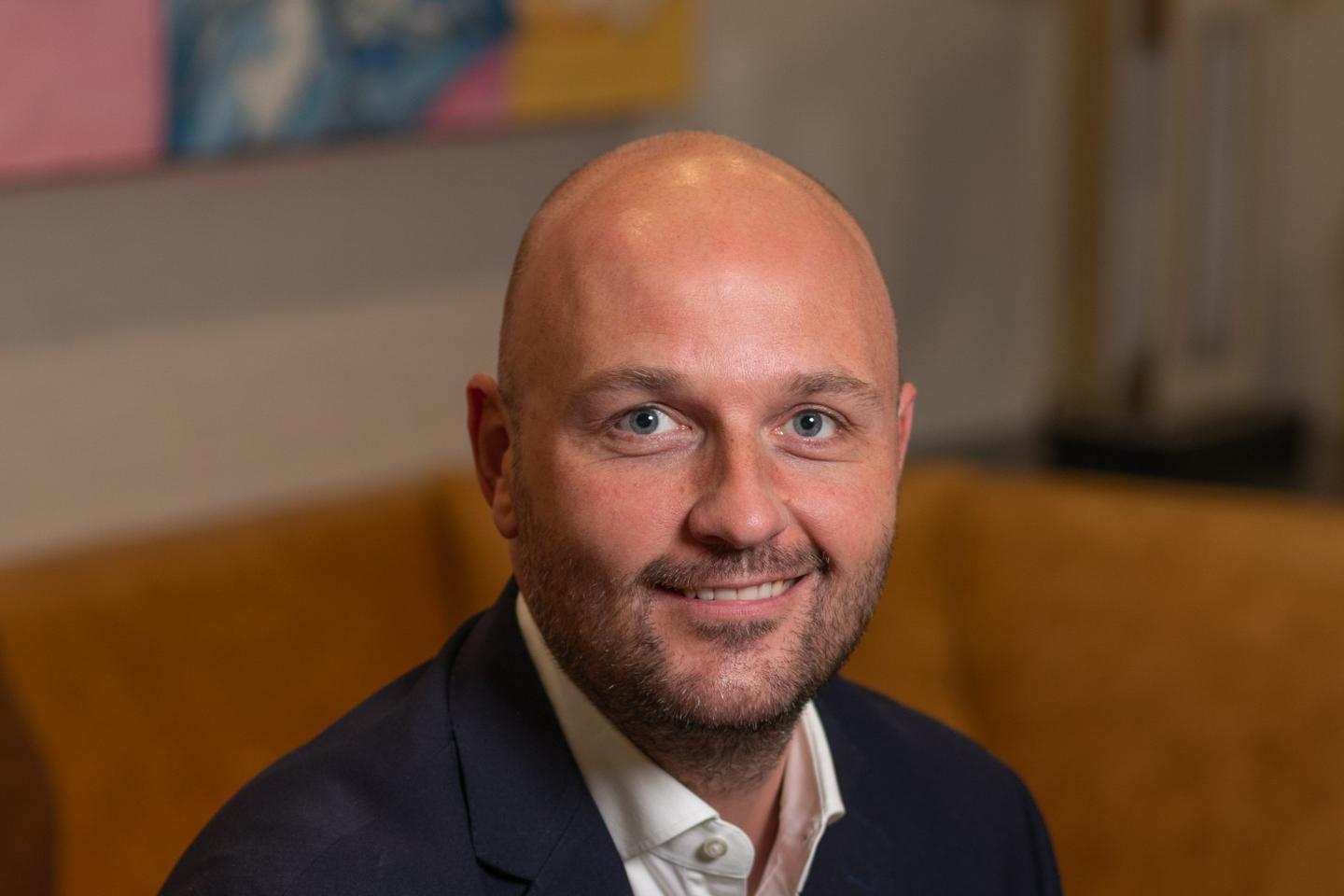
Darren Ellis and his older brother were the first in their family to go to university. It didn’t take him long to notice that many of his classmates came from very different backgrounds.
“If it wasn’t for the fact I played sport at a high level, I’m not sure I would have had the confidence to interact with the people on my course,” says Ellis, now Standard Chartered’s chief financial officer for Europe, Americas, Africa and Middle East. “Other people won’t have that.”
His mum worked in a school kitchen, his dad in a factory. He understood the value of money from an early age. “If I broke something, it did not get replaced,” he says. It left him with a firm belief in effort. “Hard work is the bedrock of everything that we do. People who work hard should be given the opportunity,” he adds.
Standard Chartered ranks 84th on Fortune 100 Best Companies to Work for — Europe 2026 list. Since taking over as U.K. chair of its socio-economic mobility working group in January 2026, Ellis has encouraged the bank to treat class background with the same rigor as it applies to gender or ethnicity. “Where you come from shouldn’t dictate where you finish,” he says.
In the U.K. financial services sector, employees from lower-income backgrounds take 16% longer than peers from higher socio-economic backgrounds to reach senior roles, according to 2025 research by the Bridge Group and Progress Together, and only 26% of senior leaders come from lower socio-economic backgrounds. This is despite the City of London’s socio-economic diversity taskforce setting a target for half of senior leaders to come from working-class or non-professional backgrounds by 2030.
84
Standard chartered’s rank on fortune 100 best companies to work for — europe
People from lower socio-economic backgrounds face numerous barriers to starting a career in finance, according to Ellis. Many opportunities are advertised online and through professional networks that people from lower-income homes are less likely to be in, he says. “First of all, you have to know that the opportunity is there. Then you’ve got to have the confidence to put yourself forward.”
One of the challenges businesses face is a lack of data. Unlike gender pay gaps, there is no socio-economic background reporting requirement for U.K. employers, and only 15% ask about the class background of employees’ parents, according to the Sutton Trust. In 2024, Standard Chartered started polling employees on their backgrounds to get a better understanding of socio-economic diversity within the business.
Disclosure has risen from just under 25% at the start of this year to 31%, with a target to reach 50% by 2028. External consultants have helped redesign how the bank encourages people to disclose, simplifying the process and building trust that the information won’t be used against them. Ellis and other senior leaders have shared their own backgrounds on the bank’s intranet and blog to make others feel more comfortable discussing their upbringing.
“If you try to create maximum impact to start with, without understanding the data or creating awareness, you run the risk of not achieving a great deal,” Ellis says.
The group also runs quarterly listening sessions where staff talk about the barriers they face. These sessions have helped Ellis develop a better understanding of the challenges others have overcome. “We have unbelievably talented people who have done incredible things to get where they’ve gotten to,” he says. “But they still don’t feel like they necessarily have the confidence or the opportunities that others do.”
Those sessions led directly to a talent progression program, launched in June 2026, for high-potential employees from lower-income backgrounds. Each of the 10 participants has been paired with a senior managing director as their sponsor, to give them advocacy, visibility, and access to roles they might otherwise miss.
The bank is also working further up the pipeline. Its Spring insights program, a three-day, in-person workshop allows first-year university students to gain experience of working in Standard Chartered’s corporate and investment bank. Last year it brought 50 students from underrepresented backgrounds to its offices in the U.K. and U.S., and 10 of them went on to summer internships.
Standard Chartered has also partnered with HSBC to run a schools outreach scheme, which will start in the first quarter of 2027. The initiative aims to demystify finance and show students role models from different backgrounds. “Naturally we [HSBC and Standard Chartered] are competitors,” Ellis says. “But on this, the competition goes out the window. Working together creates many more opportunities for young people.”
Standard Chartered also works with Progress Together, the industry body founded in 2022. For the first time, three of the 10 program participants will join its cross-company sponsorship scheme, each sponsored by a senior leader at another firm. “I’m more than happy to have the conversation with anyone who wants to work with us that will help advance the agenda,” Ellis says.
Cultural and societal differences can also represent a challenge for global businesses when trying to assess socio-economic diversity. In the U.K. and U.S., gathering data on employees’ parents’ jobs when they were children is regularly used as an indicator of socio-economic background. However, in India there is less of a link.
“We can’t take what we’ve done in the U.K. and the U.S. and use that in India,” Ellis says. The bank is being guided by its Indian workforce in the design of its local program.
Buy in from senior leadership is also important. “If you want to make any sort of meaningful progress then you need strong sponsorship on the ground,” Ellis says. “Senior leaders play a critical role in driving visibility, building momentum, and ultimately demonstrating that socio-economic mobility matters, and it matters to the organization.”
Alex Mason, CEO of Standard Chartered’s innovation arm SC Ventures, and Paul Day, global chief internal auditor, became joint global sponsors for the bank’s social mobility program last year.
For other companies seeking to improve socio-economic mobility, Ellis advises collecting data and improving awareness first before introducing new schemes. Token efforts, he warns, can leave employees from lower socio-economic backgrounds feeling more shut out than before.
For the latest insights into the companies on Fortune 100 Best Companies To Work For – Europe list, visit this page.
Quick note: As the CFO mandate keeps expanding, Fortune is convening C-Suite Conversations: In Conversation with Finance Leaders on 28 October. CFOs from Loewe, Standard Chartered Bank, and MUFG Americas join Fortune's Sam Birchall to discuss building the next generation of finance leadership. Register here.