
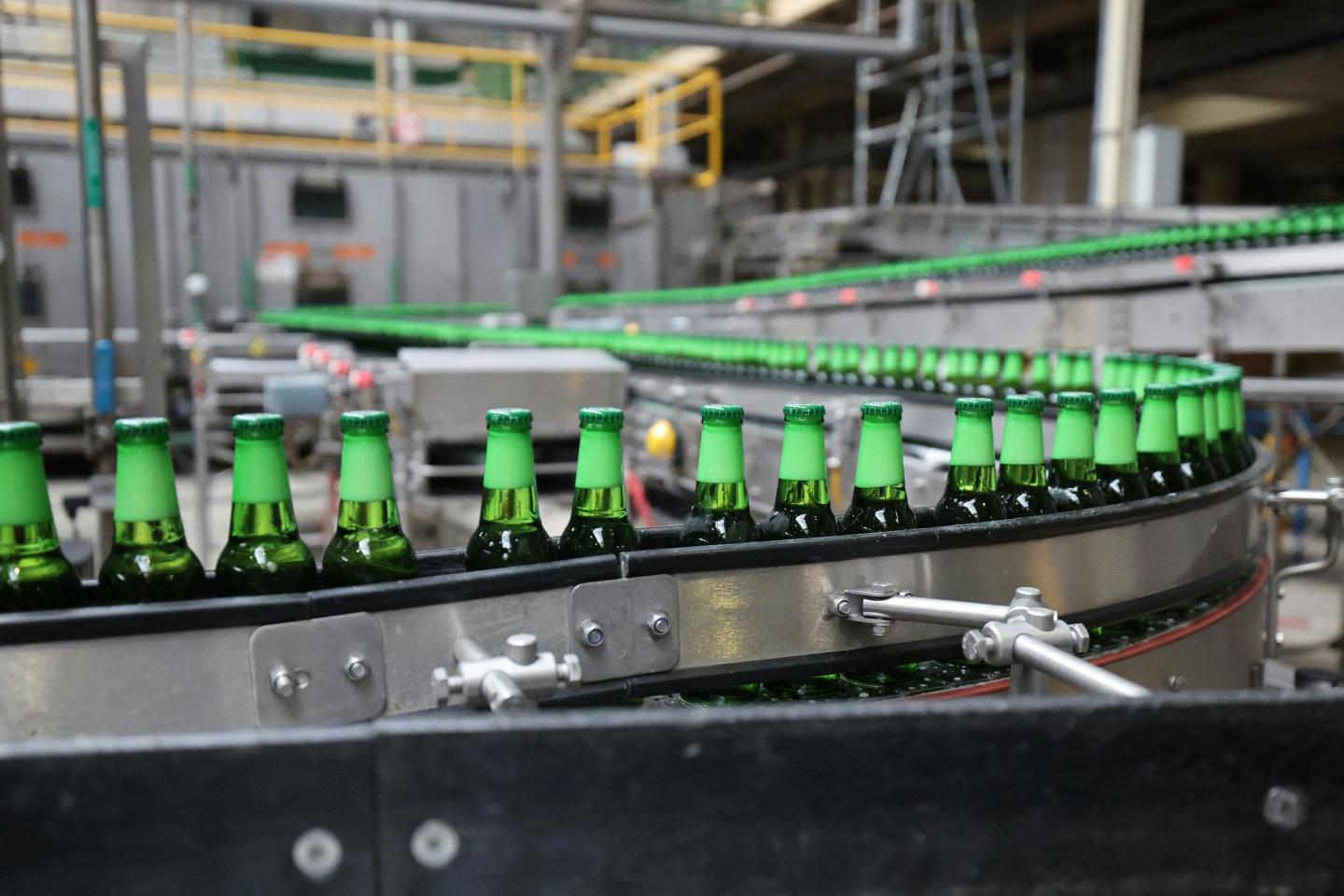
This summer was a bright moment for Europe’s brewers. Hot weather and the FIFA World Cup packed out beer gardens, and in Britain, the night that England beat Panama was pubs’ busiest of the year, with card transactions five times the daily average, according to Barclays.
But behind the sunny terraces, a longer slump has been brewing. European consumers drink less beer than they did before the pandemic. Consumption fell 3.2% in 2025 and is down 9.2% since 2019, according to a report by the industry trade body Brewers of Europe.
The slump has been pinned on sober-curious Gen Z drinkers and, more recently, weight-loss drugs like Ozempic. Glenn Caton, Europe president at Heineken, the world’s second-largest brewer, points to costs. “There’s no question that price inflation has impacted consumer consumption over time,” he told Fortune.
Brewers had barely recovered from the pandemic when Russia’s 2022 invasion of Ukraine sent energy and grain prices soaring. “Clearly raising prices has been necessary,” Caton said. Heineken raised what it charges British pubs for draught beer by 2.97% in February 2025 and another 2.7% this February. The average U.K. pint rose 17p to £5.34 in the year to April, according to The Morning Advertiser.
Although Heineken returned to growth this year, volumes rose 1.6% in the second quarter of 2026, this was not thanks to European drinkers. While beer sales in Asia Pacific and Africa and the Middle East rose, in Europe they’ve been falling. Across Europe and the U.S., Caton said, beer is in “structural decline.”
Cutting costs
Europe is Heineken’s biggest region by sales but has its thinnest margins. Europe brought in nearly two-fifths (38.4%) of first-half sales but only a quarter of operating profit. Having already raised prices in the region, Caton is now focusing on cutting costs.
In February, Heineken announced plans to cut up to 6,000 jobs globally over the next two years under EverGreen 2030, a strategy that aims to save the company up to €500 million a year ($559 million) and boost profits by focusing on its fastest-growing markets. The savings, Caton says, are also meant to offset rising energy and raw-material costs so the company can “mitigate price inflation for the consumer.”
About 3,000 jobs were cut in the first half of 2026, and chief financial officer Harold van den Broek has signaled that Europe will bear much of the burden. “Europe is a big component” of the cuts, he said at the half-year results in August.
Caton declined to say how many European jobs will go, citing ongoing consultation with staff and the European Works Council. Some of the changes will see roles move to Heineken’s business services hubs in places such as Kraków and India. “You never like to make difficult decisions that impact people you know and respect,” Caton said, “but it is necessary for the health of the company.”
Heineken is also merging nine country businesses into four multi-country operating units in Europe, including one bringing together Belgium and the Netherlands and another for Germany, Austria, and Switzerland. Caton says this is a departure from Heineken’s traditionally local-first way of operating. The aim, he said, is a business that is “lean, fast and agile,” with costs low enough to offer drinkers better value.
The overhaul also ran for nine months without a permanent chief executive. Rafael Oliveira took over on Oct. 1, but Caton insists the plan never slowed and that the new boss is there to help execute. “It’s not about a radically new strategy,” he said. “My job is to run Europe, and hopefully he’ll let me get on with that.”
Growing the non-alcoholic pie
To keep drinkers who trade down, Heineken sells at every price point, from premium Birra Moretti to mainstream Cruzcampo and budget Foster’s. It is also betting on alcohol-free beer, which lets drinkers cut back without leaving its brands. Zero-alcohol beers, Caton said, is “enabling more consumers to moderate the decline in alcohol.”
Before Heineken 0.0 launched in 2017, the category’s big problem “was taste,” he added. Heineken’s version, designed to taste “near identical to the original” and backed by a Formula 1 sponsorship, is now one of the leading alcohol-free beers. The group’s low- and no-alcohol volumes rose 12% in the first half of 2026. Competition in the alcohol-free beer market is growing. “It makes our job harder,” Caton added, “but for the category overall, it’s a good thing, because it’s growing the whole pie.”
Alcohol-free accounts for one in 12 beers drunk in the EU, according to Brewers of Europe, and Carton admitted that take-up is uneven across the continent. As a result Heineken is innovating “in both directions,” with flavored 0.0s such as Lemon & Elderflower in the U.K., an orange Cruzcampo, and lagers of around 3.5% alcohol, below the usual 4.5% to 5%.
Pubs and bars make up about half of Heineken’s European business, according to Caton. In the U.K., it owns about 2,350 pubs through Star Pubs & Bars, mostly leased to independent operators, and is reportedly in talks to acquire Stonegate as part of a £300 million ($396 million) deal, which would add around 300 more pubs to its portfolio. Caton said the deal is still ongoing.
“Good pubs in the U.K. are thriving,” Caton said. “People still want to socialize physically.” The numbers only partly back him up. British pubs are struggling, with 161 shutting in the first quarter of 2026, up 26% on a year earlier. But the British Beer & Pub Association blames tax and overheads, and across the EU, the share of beer drunk in pubs, bars, and restaurants has stopped shrinking after years of decline.
Heineken is also making the case that bars are a key part of the economy. Tourists spend almost €2.5 billion a year on its beers, it estimates, mostly in pubs and bars, and 35% of tourists in a survey the brewer commissioned said they had visited a neighborhood specifically because of a local bar.
For Caton, returning Europe to growth will be reliant on creating more value for consumers by reducing the price of drinks in both shops and bars and creating new low-alcohol options for health-conscious consumers. “If you offer great value and a great experience, you bring punters in the door,” he said. And he isn’t worried about beer itself. “It’s been around 5,000 years. It’s not going anywhere.”