
“China plus one” has been a winning strategy for Southeast Asia. The proposition was simple: Draw in global manufacturers pivoting away from China due to rising costs and geopolitical tensions, and win stronger growth, higher wages, and more jobs for local economies.
Yet despite winning billions of dollars of investment in new factories, the region is reaping fewer benefits than its leaders may have hoped.
“China plus one has been a net gain for Southeast Asia, but a conditional and uneven one,” says Meng-Chun Liu, the director of the Chung-Hua Institution for Economic Research (CIER), a Taiwan-based think tank. “It brought factories, exports and jobs to the region, but not the design, core components and process know-how that captures most of the value.”
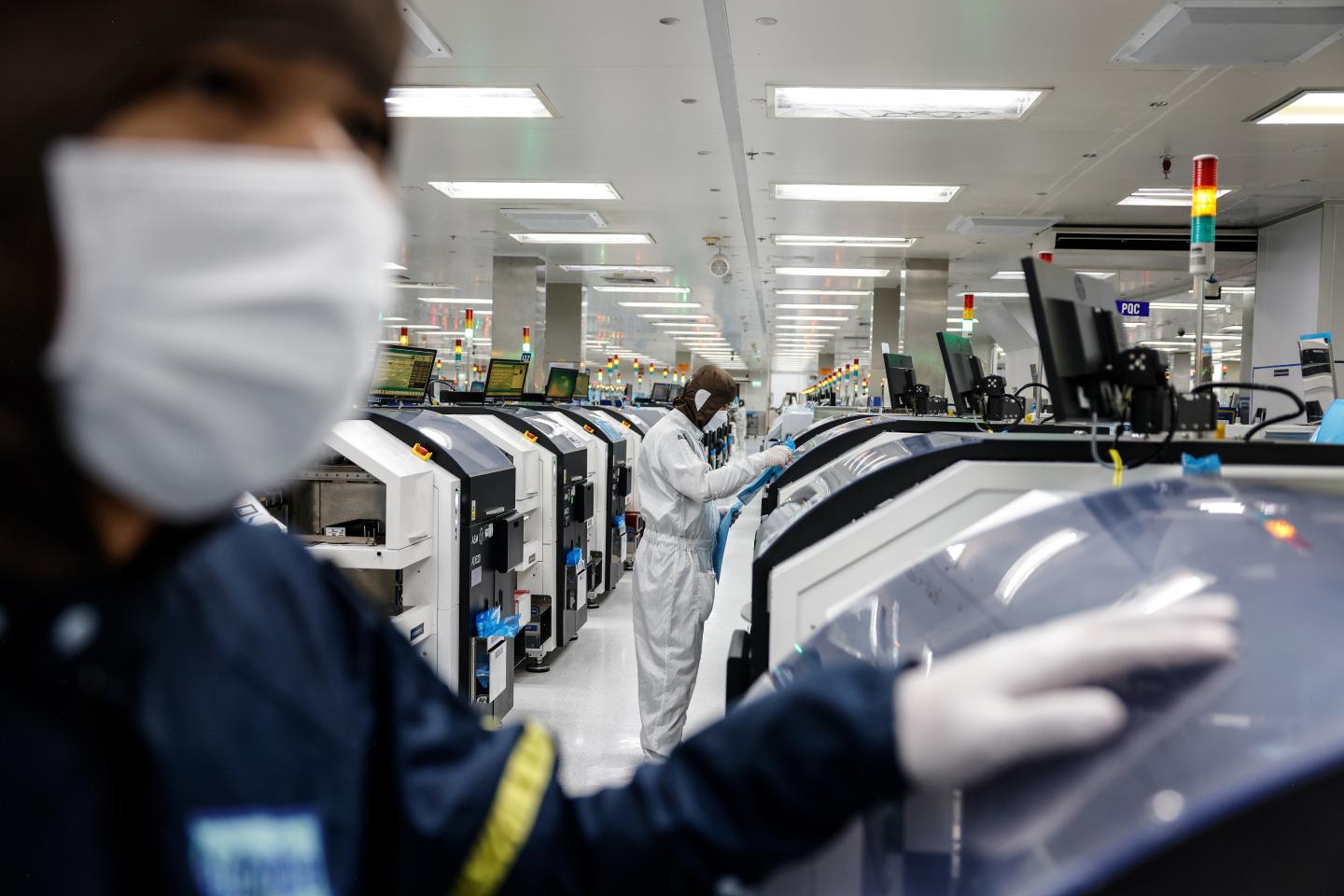
Vietnam, the star economy of Southeast Asia, focuses primarily on final assembly before export to developed markets, rather than manufacturing intermediate components. To make matters worse, companies like Target—frustrated by an underdeveloped Southeast Asian factory ecosystem—are moving supply chains back to China.
And now Southeast Asia faces a bigger challenge: as Chinese firms increasingly view Southeast Asia as a region of consumers, not workers, a flood of cheap exports could end up undercutting the region’s manufacturing gains.
Flying geese returning home
The “flying geese” model, formulated by Japanese economist Kaname Akamatsu in the 1930s, suggests that manufacturing automatically flows from economically advanced countries to less-advanced ones. Over time, these follower nations also become too expensive for manufacturing, and so factories shift to nations even further along the frontier.
Yet, according to Liu, this model no longer holds. “The old ‘flying geese’ pattern, in which China passed lower-end manufacturing on to its neighbors, is breaking down: China now aims to keep the full supply chain at home and to sell into Asia, rather than hand production over to it,” he says.
A key factor holding Southeast Asia back is its fragmented manufacturing capabilities. Vietnam specializes in electronics assembly, Thailand in automotives, and Malaysia in chip packaging.
Yet without fully mature local ecosystems, Southeast Asian factories source inputs from China to keep production running. Apple, even as it shifts final assembly to Vietnam and India, still leans on Chinese suppliers for batteries, optics and enclosures.
“While jobs are created in Southeast Asia, they are largely low-skill assembly roles,” Christopher Tang, a supply chain management expert from UCLA’s Anderson School of Management, explains. “This caps the immediate creation of high-value industries.”
China, by contrast, has spent decades building a hyper-efficient manufacturing ecosystem that provides raw material processing, component manufacturing, advanced logistics and engineering support.
“Alternative manufacturing hubs struggle to replicate the massive, vertically integrated ‘factory ecosystem’ of Shenzhen,” Tang says.
Who’s winning from China plus one
A handful of countries have captured most of the gains from the “China plus one” shift.
Vietnam is clearly the largest beneficiary. Its GDP grew 8.0% in 2025, accelerating from 7.1% in 2024. Exports to the U.S. jumped 28.1% to $153.2 billion last year, from $119.6 billion in 2024. Yet imports from China climbed nearly 30% to roughly $183 billion.
Malaysia, too, is carving its own niche in the semiconductor space. Data center investment currently amounts to nearly 18% of the country’s GDP—the highest share globally, according to HSBC analysts. Homegrown chip design firm SkyeChip also enjoyed a blockbuster IPO on the Bursa Malaysia stock exchange in May, surging 300% on its main market debut.
Regional politicians, however, note the limits of Southeast Asia’s place in the global AI supply chain. “The Global South cannot simply become a destination for data centers, while decisions about AI are made elsewhere,” Malaysian Foreign Minister Datuk Seri Mohamad Hasan said during his Sept. 27 statement at the UN General Assembly.
Some Southeast Asian countries are trying to leverage their strengths to capture more of the value chain. Indonesia imposed a ban on nickel ore exports to encourage smelters to move refining operations to the country; the country is now pushing to attract more of the EV value chain, including car and battery manufacturing.
Singapore is also benefitting from its role “as a regional hub for orchestrating the supply chain and investments in the region”, says Goh Puay Guan, an associate professor at the National University of Singapore (NUS).
Undercut by the U.S.
Southeast Asia is also at the mercy of U.S. trade policy, a big driver of the “China plus one” shift. As Washington placed more tariffs on Chinese goods, supply chains shifted to Southeast Asia to take advantage of lower import duties.
Yet Washington is increasingly scrutinizing that practice. Earlier this year, the White House released a report accusing 40 countries, including several in Southeast Asia, of engaging in a “transshipment scam,” or diverting Chinese-made goods through other locations to evade U.S. tariffs.
Experts say it’s still possible for Southeast Asia to survive in an increasingly multipolar world, as long as its countries ensure that trade flows are as transparent as possible.
“Southeast Asian nations may have to explicitly divide their industrial parks: establishing one vertically integrated supply chain compliant with Western standards, and a separate one aligned with Chinese networks serving the Global South,” Tang says.
The tariff differential between China and Southeast Asia has also shrunk. After the Trump administration expanded Section 301 tariffs in July, goods from Singapore, Thailand, Vietnam and the Philippines are now subject to a higher tax rate of 12.5%, while Cambodia, Indonesia and Malaysia face a 10% duty.
China, by comparison, faces an average tariff rate of 21%—and after Xi’s recent visit to the U.S., both countries are now pursuing $30 billion worth of tariff reductions across an array of non-sensitive goods, including furniture and toys.
“When the U.S. tariff gap between China and Vietnam narrowed for notebook computers, several major PC brands moved production from Vietnam and Thailand back to China,” Liu points out.
Exporters turned consumers
But the long-term threat to Southeast Asia may be that it turns from being the final stage in a Chinese supply chain to being a market for Chinese goods.
Exports have been a bright spot for China’s economy, which is otherwise struggling with slumping consumption and a years-long property market slump. In August, exports grew by 25% year-over-year, while retail sales rose by just 0.4%.
Trade between China and ASEAN surpassed $1 trillion for the first time in 2025, according to official statistics. Yet for some Southeast Asian manufacturers, the influx of goods from China has taken a toll.
“In the long term, this may lead to an acceleration of premature deindustrialisation in Southeast Asia, which brings serious implications for economic growth and social stability,” Lee Jones, a professor of international politics at Queen Mary University of London (QMUL), warns.
Thailand, for instance, has seen national GDP growth slow to 2%, in part due to pressure from Chinese EVs and consumer goods. “The U.S. tariffs and China’s retaliatory tariffs cause an influx of Chinese goods into the Thai market, intensifying competition for Thai producers in the domestic market, especially in industries sensitive to price competition,” wrote Supasyn Itthiphatwong, an economist at Krungsri Research, in a research report.
Then there’s what China presents to those Southeast Asian countries that are even further behind: Cambodia, Laos, and ASEAN’s newest member, Timor-Leste.
In those cases, the risk isn’t that local manufacturers get outcompeted, but rather that they never get a chance to take flight.
The Fortune Southeast Asia 500 Summit will convene executives from the Fortune Southeast Asia 500, policymakers, and investors to examine the forces reshaping one of the world's most important growth regions—and how business and government can position it for resilient, inclusive growth. November 3 in Ho Chi Minh City. Apply here.